-
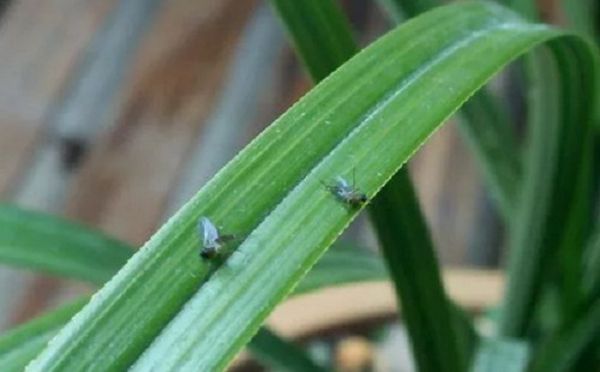
How to Deal with Small Flying Insects in Flower Pots? Effective Methods to Teach You
What to Do If There Are Small Flying Insects in Flower Pots?
-

Occurrence and Control Methods of Major Diseases, Insect Pests and Rodent Pests of Lilies
Lily, also known as night lily, mountain lily, Zhongpeng flower, etc., is a plant that combines medicinal, edible and ornamental uses, with a large market demand. Lily is also a traditional export specialty of China and is planted throughout the country. However, with the expansion of lily planting area, diseases, insect pests and rodent pests have become increasingly serious, becoming the main factors restricting stable and high yields of lilies. The occurrence and control methods of the main diseases, insect pests and rodent pests of lilies are introduced as follows: 1 Main diseases and control 1.1 Main diseases There are many kinds of lily diseases, but fungal diseases such as gray mold and Fusarium wilt are the main ones.
-
How to treat scale insects on boxwood hedges? Try these clever tips
In recent years, scale insects have become fairly common in landscaping, with boxwood hedges suffering the most severe damage. Through years of exploration and experimentation, the author has mastered the following technical points: (1) Before spring bud break, spray 3 to 5 degrees Baume lime sulfur mixture or 3 to 5% diesel emulsion to eliminate overwintering nymphs. (2) When female scale insects are carrying eggs and their body weight increases sharply, before egg laying, use a high-pressure water hose to wash the insects off the branches, then supplement with chemical protection. (3) Before chemical control during the hatching period, give the hedge a heavy pruning, which helps
-
What are the control methods for scale insects on privet hedges?
In recent years, with the widespread use of golden privet (Ligustrum sinense 'Variegatum') and small-leaf privet (Ligustrum quihoui) in urban landscaping, pests and diseases on privet have become a major problem in garden maintenance and management. The scale insect occurring on Ligustrum landscaping plants is mainly the white wax scale (Ericerus pela). It has been reported that comstock mealybug (Pseudococcus comstocki) has occurred on privet hedges in Hebei. The identification characteristics and control measures of the white wax scale are described below: Distribution and damage. The white wax scale Ericerus pela (Chavannes) belongs to the order Homoptera, family Coccidae. It is widely distributed in China. It damages
-
What is the box tree pyralid, an insect found beside vegetable fields?
As spring warms and flowers bloom, insects begin to become active. During a recent science-and-technology outreach activity in the countryside, it was found that a pest called the box tree pyralid had begun to occur and cause damage on boxwood along the roadsides of the park. The box tree pyralid is one of the common pests on plants such as boxwood, small-leaved box, large-leaved box, littleleaf box, Chinese box, spoonleaf box, Korean box, and holly, and it occurs in Shanghai and other provinces and cities. In Shanghai it has 3 to 4 generations per year, with severe overlapping of generations. It usually becomes active in March in spring, begins pupating in mid-April, begins emerging in late April, and the first-generation lar
-

-
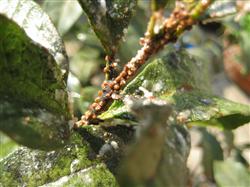
What are the control methods for scale insects on osmanthus?
Adults and nymphs often settle on osmanthus branches, suck sap, causing branches and leaves to wither, and in severe cases the whole plant dies. They often secrete large amounts of honeydew, which leads to sooty mold. Leaves and stems become covered with a black, sticky substance, hindering photosynthesis and affecting ornamental value. The main species are the cottony cushion scale and the white peach scale. Control methods: strictly prohibit the use of seedlings carrying the pest...
-
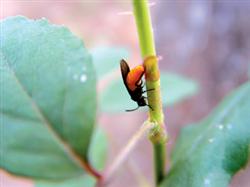
What common insect pests need to be controlled when growing roses?
What pests need to be prevented when growing roses? Please give an introduction. When growing roses, the following pests need to be prevented: 1. Cnidocampa flavescens (Walker), of the order Lepidoptera, family Limacodidae, also known as the slug moth, octagonal worm, octagonal jar, itching chili, poisonous hairy caterpillar. It is distributed in almost every province nationwide. Besides damaging roses, it also damages crabapple, jujube, redbud, mulberry, ...
条件筛选