-
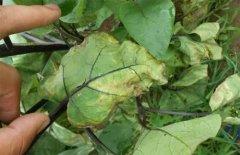
Eggplant Verticillium Wilt: Symptom Identification and Control Methods
Verticillium wilt is one of the major diseases in the growth of eggplant, and this disease is becoming more and more serious, and the worsening of this disease has also seriously affected the yield and quality of eggplant. Therefore, chemical control should be carried out according to the characteristics of the occurrence of this disease. How exactly should it be done
-
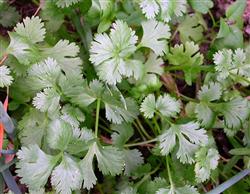
What is coriander early blight? Symptoms and identification methods
What is coriander early blight? What harm does coriander early blight cause? Please provide an introduction and control methods. The harm of coriander early blight: coriander early blight is a fungal disease that can occur at the seedling stage and the adult plant stage. When it occurs at the seedling stage, dark brown lesions appear on the base of the stem of the seedlings, slightly sunken, with concentric rings. When it occurs at the adult plant stage, it generally develops from the lower leaves upward...
-
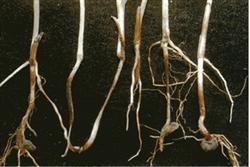
Symptom Identification and Control Methods of Sorghum Charcoal Rot
What is sorghum charcoal rot? How is it controlled? An introduction is given below. Symptoms of sorghum charcoal rot: The disease can occur throughout the entire growth period of sorghum. Infection with this disease can cause seedling blight or charcoal rot of the roots and stalks. Roots infected initially show water-soaked lesions, which later turn black, the internal tissues collapse, and the cortex rots and spreads to the lateral roots. Infected stalks cause plants to mature early, with small heads and shriveled grain...
-

Symptom Identification and Control Methods of Lotus Root Black Spot Disease
What is lotus root black spot disease? How to control it? Please explain: in the early stage of lotus root black spot disease, needle-tip-sized yellowish-brown small spots appear; in the later stage, the entire leaf is covered with lesions that have concentric rings, causing half or the whole leaf to dry up. Control: increase the application of phosphorus and potassium fertilizers, and avoid over-applying nitrogen fertilizer. In winter, thoroughly remove diseased and residual leaves from the field and burn them in a centralized manner; in the early stage of the disease, remove...
-
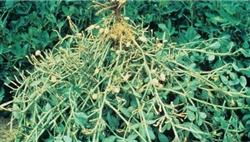
What Causes Potassium Deficiency in Peanuts? Detailed Guide to Symptom Identification and Remedies
What is potassium deficiency in peanuts? How should it be prevented and treated? Please advise: when peanuts are deficient in potassium, the edges of the lower leaves turn yellow, the mesophyll between the veins becomes chlorotic, and eventually the leaves become necrotic. The necrotic leaf spots first appear at the leaf margins and gradually spread inward until the leaves drop, with the top leaves affected last. Before symptoms appear, the plant's growth slows down....
-

Symptom Identification and Control Methods for Rice Phytotoxicity
Symptoms and Control of Rice Phytotoxicity
-
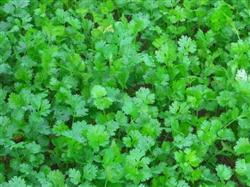
What is cilantro black rot? Symptom identification and control methods
How to grow cilantro in summer? Please guide me. To grow cilantro well in summer, you can refer to the following methods: 1. Land preparation and fertilization. For cilantro plots, choose fertile, loose sandy loam with good water retention and drainage and close to a water source. Before sowing, while turning the soil, apply 3000-3500 kg of high-quality decomposed manure per mu as a base fertilizer, then build beds 2 m wide...
-
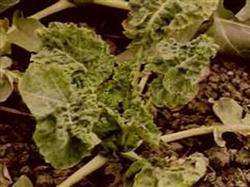
Symptom Identification and Control Methods of Rapeseed Viral Diseases
[Distribution and Damage] It occurs to varying degrees in all rapeseed-producing areas across the country, and generally the winter rapeseed areas suffer more severe disease than the spring rapeseed areas. This disease is caused by single or mixed infection of viruses such as Turnip mosaic virus (TuMV), Cucumber mosaic virus (CMV), Tobacco mosaic virus (TMV) and Rapeseed mosaic virus (YMV). Generally, yield is reduced by 20%-3...
-

Identification and Control Methods for Common Lotus Root Diseases
What are the common lotus root diseases and how to control them? Asking for advice. Common lotus root diseases are: 1. Lotus root brown spot disease: a common leaf disease of lotus root, producing light brown lesions on the leaves, causing localized drying of the diseased leaves. Control methods: rational close planting to ensure ventilation and light penetration in the lotus field; appropriately increase the application of phosphorus and potassium fertilizers to enhance...
-
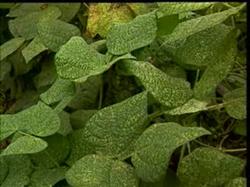
Identification and Control Methods for the Mung Bean Pest, the Legume Pod Borer
(1) Damage conditions. Also known as the cowpea pod borer, the legume pod borer, and the cowpea borer. It is fairly widespread in China, with severe outbreaks south of the Yangtze River. The larvae bore into and feed on the host's flower organs, causing flowers to drop; they bore into pods, causing pod drop in the early stage and pod and seed rot in the later stage. In addition, they can spin silk to tie several leaves together and roll them up, ...
条件筛选