Symptom Identification and Control Methods of Sorghum Charcoal Rot
What is sorghum charcoal rot? How is it controlled? An introduction is given below. Symptoms of sorghum charcoal rot: The disease can occur throughout the entire growth period of sorghum. Infection with this disease can cause seedling blight or charcoal rot of the roots and stalks. Roots infected initially show water-soaked lesions, which later turn black, the internal tissues collapse, and the cortex rots and spreads to the lateral roots. Infected stalks cause plants to mature early, with small heads and shriveled grain...
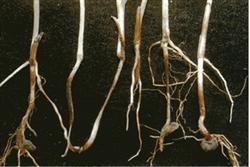
What is sorghum charcoal rot? How is it controlled? An introduction is given below
Symptoms of sorghum charcoal rot: The disease can occur throughout the entire growth period of sorghum. Infection with this disease can cause seedling blight or charcoal rot of the roots and stalks. Roots infected initially show water-soaked lesions, which later turn black, the internal tissues collapse, and the cortex rots and spreads to the lateral roots. Infected stalks cause plants to mature early, with small heads and shriveled grain, and they are prone to lodging in wind. After the internal tissues of the stalk disintegrate, the vascular bundles remain, containing large numbers of black sclerotia. The disease occurs in all sorghum-producing regions of China.
The pathogen of sorghum charcoal rot is called Macrophomina phaseolina (causal agent of bean charcoal rot): a fungus belonging to the Deuteromycotina. The pycnidia are dark brown, spherical, initially immersed, scattered, 89-275 um in diameter; the conidiogenous cells are gourd-shaped, colorless, 5-13 x 4-6 (um) in size; the conidia are single-celled, colorless, cylindrical or spindle-shaped, 16-32 x 5-10 (um) in size. The sclerotia are black, hard, 5-100 um in diameter.
Transmission routes and conditions for disease development of sorghum charcoal rot: The pathogen overwinters in the soil as mycelium or sclerotia with diseased plant residues. In the following spring, when conditions are suitable, it produces conidia, which are spread by rain splash. The spores germinate and cause primary infection, leading to disease in seedlings or mature plants. The conidia produced on diseased parts are spread by wind and rain for multiple secondary
infections. High temperature and high humidity in the field, low-lying terrain, and high soil moisture favor the occurrence of this disease.
Control methods for sorghum charcoal rot: (1) After harvest, promptly remove diseased plant residues and bury them deep in a centralized manner or burn them to reduce the source of inoculum. (2) Where conditions permit, rotate with rice and wheat. (3) Apply compost fermented with enzyme bacteria, and pay attention to increasing potassium fertilizer to enhance the host's disease resistance. (4) Trichoderma lignorum has a strong inhibitory effect on this fungus and can be mixed with cake fertilizer to make antibiotic bacterial fertilizer for application. (5) When necessary, spray 50% copper bis(dodecylbenzenesulfonate) (DT fungicide) wettable powder at 500 times dilution or 80% Xinwansheng wettable powder at 600 times dilution, once every 10 days, for 2-3 consecutive applications.
Click to get more sorghum cultivation techniques
Click to get more grain cultivation techniques