-

What are the growth characteristics of walnut branches?
Walnut has strong apical dominance, strong branching ability, weak sprouting ability, and a wide branching angle. Except that the shoots of young trees grow relatively upright, the branches of mature trees generally grow horizontally, with wide branching angles and an open crown. Once the tree enters the full fruiting stage, the branches gradually droop. Walnut branches grow
-
How to grow pachysandra? A detailed guide to the latest cultivation methods
Pachysandra has strong branching ability, with verdant stems and leaves and high ornamental value. Pachysandra has strong vitality and is relatively easy to grow. Its large green leaf area allows it to absorb toxic substances from the air, and its air-purifying ability is quite strong, making it very suitable for indoor cultivation. Reading this, many friends are
-
What are the causes of corn branching? Latest analysis
Corn often shows branching at emergence, and in fact corn branching is simply the growth of tillers. For crops in general, tillering is a good thing, and tillers also bear fruit, but corn is different: corn tillers do not form ears. So today we will explain to everyone
-
How to cultivate and propagate zinnias properly? A detailed guide to the methods
The side branches of the zinnia fork in a branching pattern. It blooms in summer and autumn, with a solitary flower head at the top of each branch, a flower diameter of about 10 cm, petals in a variety of colors, a long flowering period, and highly varied flower forms, essentially all of them being double-flowered types. It is robust, tolerant of drought, fond of sunlight, and prefers fertile, deep soil. It dislikes
-
A Detailed Guide to Growing and Caring for the Branching Mesemb (Drosanthemum) Succulent
Growing succulents not only improves a person's cultivation, but also changes a person's temperament and elevates a person's taste, because although succulents appear to grow quickly, each growth stage actually requires a great deal of time and effort, and succulent growing takes
-
What causes secondary branching and deformed scapes in garlic? Here's how to prevent it
Every year during the scape-elongation stage of garlic, a certain proportion of garlic plants develop secondary branching and deformed scapes, seriously affecting the yield and quality of garlic scapes. In recent years, we have carried out investigations and research, and have explored effective agricultural measures to control the occurrence of secondary branching and deformed scapes in garlic, which have played a very significant role in improving the economic benefits of garlic growers. 1 The harm caused by secondary branching and deformed scapes in garlic. Secondary branching in garlic is also called secondary growth or branching, and growers call it "horsetail garlic". There are generally two phenomena: first, branches differentiate from the outer leaf sheath,
-
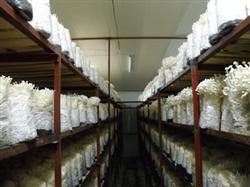
What is enoki mushroom branching disease? A detailed guide to its cultivation techniques
What is enoki mushroom branching disease? An introduction and control methods. Enoki mushrooms that only grow stipes without growing caps, commonly known as enoki mushroom branching disease, or needle-tip mushrooms, is a non-infectious physiological disorder. When cultivation bags or mushroom bottles shift from the mycelium growth stage to the fruiting body formation stage, mushroom buds appear in clusters, growing only stipes without forming...
-
What is the red-flowered Dendrobium? Let us introduce you to this herbaceous plant
The red-flowered Dendrobium is a perennial herbaceous plant. The stems are erect or hanging, cylindrical, sometimes thickened in the middle and slightly fusiform, narrowed at the base, unbranched, with multiple nodes. The leaves are thinly leathery, lanceolate or ovate-lanceolate. The raceme emerges from the leafless old stems in clusters, and the flowers are bright red.
-
The Gongdeng Kalanchoe belongs to the Crassulaceae family.
The Gongdeng Kalanchoe is a perennial succulent herb with woody stems and many branches; the new branches are soft and often drooping, the leaves are opposite, long ovate and slightly succulent, and the flowers are pale red and tubular. Below, the editor will introduce you to the Gongdeng Kalanchoe!
-
Moon Rabbit Ears is a succulent in the Crassulaceae family - a complete guide to its care
Moon Rabbit Ears is native to the dry regions of central China and Madagascar. The leaves are covered in fuzz, like rabbit ears, grayish-white with brown spots interspersed, and it branches easily. It belongs to the summer-growing type among succulents, growing vigorously from late autumn to early spring. It likes a sunny environment, and when sunlight is ample, brown markings appear on the leaf tips. In summer, give it appropriate
条件筛选