-
Can raw gypsum be used in mushroom cultivation substrate formulas?
Is it okay to use raw gypsum in mushroom cultivation substrate formulas?
-

Mushroom Cultivation Raw Material Formulas and Disease Control Methods
Mushroom Cultivation Raw Materials and Formulas
-
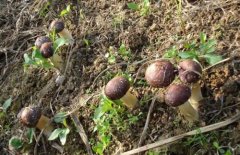
The Latest Cultivation Techniques, Formulas and Planting Times for Wine Cap Stropharia (Stropharia rugosoannulata): A Detailed Guide
Do you know how to grow wine cap stropharia? Would you like to grow it yourself? Below we introduce a simple yet high-yielding cultivation method. Let's take a look. 1. Substrate preparation: rice straw 100%, plus wheat bran or rice bran 10%, cornmeal 5%, gypsum powder 2%,
-
What are the common cultivation formulas for edible mushrooms?
Edible mushroom name: Oyster mushroom (feeding amount calculated per square meter) 1. Cottonseed hulls 20 kg, superphosphate 0.4 kg, gypsum powder 0.6 kg, urea 0.1 kg...
-
How to mix topdressing for oyster mushrooms? 6 practical formulas to share with everyone
1. Chicken manure water: Use 5 kg of chicken manure, add 20 kg of water, boil and filter, then add water to dilute to 100 kg, spray 0.5-1 kg per sq m, which can promote thick and strong mushroom growth. 2. Plant ash liquid: Use 5 kg of plant ash, add 20 kg of water and soak, take the filtrate and add water to dilute 5-10 times, spray 0.5-1 kg per sq m, which can effectively promote mycelial growth. 3. Rice washing water: Use 5 kg of rice washing water, after settling take the upper clear liquid, then add 100 g of glucose to make a mixed liquid, after picking
-
The latest high-yield and mold-resistant formula for oyster mushrooms is here
After years of practice and summary by researchers at the Edible Fungi Research Institute of Binhai County, Jiangsu, combined with the raw-material practical experience of mushroom farmers in the Binhai and Sheyang mushroom-growing areas, the formulas are summarized as follows: 1. 1000 kg cottonseed hulls plus 20 kg lime, 20 kg gypsum, 7 kg diammonium phosphate, 5-6 bags of Gudazhuang, and 1 kg Kemeiling. 2. 1000 kg cottonseed hulls plus 20 kg lime, 20 kg gypsum, two bags of special fertilizer for oyster mushrooms (bag/1500 g), and 1 kg Kemeiling. 3. 1000 kg corncobs,
-
High-nutrition formula cultivation of oyster mushrooms can achieve exceptionally high yields
The high-nutrition, exceptionally high-yield cultivation technique for oyster mushrooms uses raw materials such as wheat straw and rice straw, and adopts measures including high-nutrition formulas, removing the plastic casing from the mushroom logs, and covering with nutrient soil, so that the input-to-output ratio reaches more than 1:10, with very significant economic benefits. 1. Strain selection: choose wide-temperature varieties such as Changbai No. 1. The suitable cultivation time is from September of the current year to April of the following year. 2. Formula and treatment: there are 4 formulas: ① 50% soybean straw (crushed), 40% corncob or wheat straw, 8% cornmeal or wheat bran, 2% lime. ② 70% wheat straw, 27% wheat bran, 1% compound fertilizer
-
How to reasonably choose a scientific formula for oyster mushroom cultivation?
Oyster mushrooms have low requirements for raw materials, and many industrial and agricultural by-products can be used as raw materials. However, whether the carbon-to-nitrogen ratio in the growing medium is scientific and whether the amounts of other supplementary materials added are reasonable are issues that cannot be ignored in oyster mushroom production. At present, bag-cultivated oyster mushrooms mainly use cottonseed hulls as the raw material, so the quality of the cottonseed hulls directly affects the level of oyster mushroom yield and even whether cultivation can succeed. Fresh, high-quality cottonseed hulls should be selected; if moldy and deteriorated cottonseed hulls are used, it will cause contamination by weed molds and may even lead to cultivation failure. Pesticides or other
-
Formulation trial for cultivating Agrocybe aegerita (tea tree mushroom) with mulberry sawdust
At present, Fujian, Jiangxi and other places mostly use hardwood sawdust and cottonseed hulls to cultivate Agrocybe aegerita, but the yield is relatively low. This trial aims to explore suitable formulations for cultivating Agrocybe aegerita with mulberry sawdust and silkworm excrement, in order to make full use of local resources, save costs and improve economic returns. 1 Materials and methods 1.1 Test strain Agrocybe aegerita No. 1, provided by the Kexing Edible Fungi Research Institute of Gutian, Fujian. 1.2 Test formulations (1) cottonseed hull 82%, wheat bran 18%; (2) cottonseed hull 36%, mulberry sawdust 36%, rice straw powder 10%, silkworm excrement
-
New Formula for Fast-Growing, High-Yield Cultivation of Tea Tree Mushroom
Tea tree mushroom, also known as Agrocybe aegerita, is a rare and delicious health food that sells well in the market, with the current fresh mushroom price reaching 20 yuan/kg. At present, the yield of artificially cultivated tea tree mushroom is low, mainly constrained by the spawn and cultivation substrate formula. Several relatively ideal new cultivation substrate formulas are introduced as follows: 1. Tea seed shell powder 70%, rice bran 20%, tea seed cake meal 5%, sucrose 2%, lime 1%, gypsum 1%, potassium dihydrogen phosphate 1%. Take the dry materials according to the formula proportions, with a material-to-water ratio of 1:1.25, mix thoroughly
条件筛选