-

Key Technical Points of Soil Testing and Formula Fertilization for Rice
Based on the technical principles of soil testing and formula fertilization, and combined with the actual work of soil testing and formula fertilization in Pulandian City, 10 technical steps in the experimental process of soil testing and formula fertilization for rice were summarized. 1. Site selection: Select locally representative plots, and arrange experimental plots according to the areas of high-, medium-, and low-fertility farmland. The fertility status of the experimental site should be uniform and consistent, and the fertilization status of the previous crop should be as similar as possible. 2. Soil sampling and testing: Collect soil samples before plowing, using a "plum blossom shape" or "snake shape" to take 15-20 points, with a vertical depth of
-
Detailed Explanation of Key Technical Points for Soil Testing and Formulated Fertilization in Rice
I. Fertilization Principles 1. Soil testing and formulated fertilization for rice should follow the principles of determining yield target based on soil, determining fertilizer rate based on yield target, supplementing deficient nutrients, combining organic and inorganic fertilizers, and balanced application of nitrogen, phosphorus and potassium. First, soil testing is required. Soil testing is the prerequisite for soil testing and formulated fertilization; through analysis and determination of soil nutrients, the soil nutrient status and fertilizer supply capacity can be accurately grasped, providing a scientific basis for formulated fertilization. Second, a good formula must be prepared. The formula is the key to fertilization. On the basis of soil testing, according to soil characteristics, cultivation practices, crop nutrient requirements, production level and climate conditions,
-
Product Introduction of Lvbang 98 Rice-Specific Formula
Main effects: (1) It promptly supplies all the nutrients needed for rice growth, helps cultivate strong seedlings, increases the number of effective panicles and grain weight per panicle, and raises yield by 10%-20%; (2) It has a good effect when used in the early stages of rice blast, sheath blight, bacterial leaf blight, rice false smut, and other diseases; (3) It effectively reduces stomatal aperture, promotes root development, and improves the rice plant's ability to resist transpiration. Usage: (1) Seed soaking: dilute 50 g in 15-20 kg of water, soak the amount of seed used for one mu of seedling field, pile for 12-24 hours, then
-
Application Methods of Fertilizer Long in Formula Fertilization for Rice
1. Advantages of Fertilizer Long: (1) Long-acting and synergistic effect, extending the fertilizer efficiency period of nitrogen fertilizer by 1 time, with no fertilizer deficiency phenomenon throughout the entire growth period of rice. (2) Improved nitrogen fertilizer utilization rate; deep fertilization overcomes fertilizer loss due to running, overflowing and seepage of field water, reducing fertilizer loss. (3) Enhanced resistance of rice to low temperature, drought and disease erosion. (4) Changes traditional multiple surface fertilization to deep one-time fertilization, saving fertilization labor and costs. (5) Reduced nitrogen fertilizer dosage; according to plots with different fertility, the pure nutrient amount of nitrogen fertilizer can be reduced by 15%-25%. 2. Fertilizer Long
-
How to apply formula fertilizer to garlic to save fertilizer and increase income
In 2005, 8 demonstration sites were set up in the three towns of Wangmiao, Yucheng and Lige and in Luotun Township, with 100-130kg of formula fertilizer applied per mu, averaging 121.9kg per mu (equivalent to N 17.1kg, P2O5 21.9kg, K2O 12.2kg), while a conventional fertilization control was also arranged, with an average of 129.4kg of compound fertilizer applied per mu (equivalent to N 20.7kg, P2O5 20.7kg, K2O 20.7kg,). At harvest, 5 sites were actually harvested and 3 sites were yield-measured, and the average yield per mu in the formula fertilizer demonstration area was 1485.
-
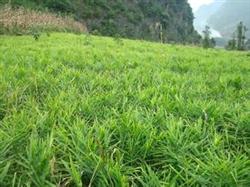
Detailed Explanation of High-Yield Formula Fertilization Techniques for Ginger
Ginger has a long growth period and a high fertilizer requirement. Under medium fertility conditions, to produce 2500 kg of ginger per mu, 25-40 kg of nitrogen, 10-22 kg of phosphorus (P2O5), and 30-50 kg of potassium (K2O) are needed. The absorption ratio of nitrogen, phosphorus, and potassium is 11:1:16 or 1:0.5:2. In addition, calcium, magnesium, boron, zinc, iron, and other medium and trace...
-
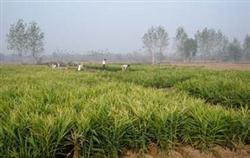
How to fertilize ginger for high yield? Detailed explanation of the key points of formula fertilization technology
Ginger has a long growing period and a high fertilizer requirement. Under medium fertility conditions, to produce general 2500 kg of ginger per mu, 25-40 kg of nitrogen, 10-22 kg of phosphorus (P2O5), and 30-50 kg of potassium (K2O) need to be applied. The absorption ratio of nitrogen, phosphorus, and potassium is 11:1:16 or 1:0.5:2. In addition, calcium, magnesium, boron, zinc, iron, and other medium and trace...
-

Detailed Explanation of Key Points of Formula Fertilization Technology for Yardlong Beans
1. Symptoms mainly affect leaves, stems and vines, and pods. In the early stage of the disease, purple-brown spots appear on both sides of the leaves, and after expanding they become nearly circular dark brown lesions, 1-2 cm in diameter, with indistinct edges; when humid, the lesion surface is densely covered with sooty mold (especially prominent on the underside of the leaves). In severe cases, it causes early defoliation, leaving only the young leaves at the top, ...
-

A Complete Analysis of the Key Technical Points for Soil Testing and Formula Fertilization in Spring Corn
1. Choose suitable varieties. Select suitable and superior varieties according to local conditions; based on heat resources and actual production conditions, choose medium-to-late maturing varieties with a growth period of 120-130 days. Among spring corn varieties with relatively outstanding comprehensive traits, the main one is Nongda 108, etc. 2. Fine land preparation. Spring corn requires deep plowing, and the earlier the autumn plowing...
-
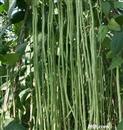
What is formula fertilization for yardlong beans? Read this one article to understand
What is formula fertilization for yardlong beans? Please introduce the formula fertilization method for yardlong beans: 1 Nutrient requirements: producing 1000 kg of yardlong beans requires 10.2 kg of pure nitrogen, 4.4 kg of phosphorus pentoxide, and 9.7 kg of potassium oxide. 2 Key fertilization points for a yield of 2000 kg per mu: 2.1 Base fertilizer. Before planting, apply 3000 kg of organic fertilizer per mu, 4...
条件筛选