How to prevent diseases in yam during the hot and rainy period?
I. Planting and growth period: generally planted in February-March, and harvesting begins in September-December. II. Main cultivation techniques 1. Soil selection: sandy loam soil that is loose and deep, with a water source for irrigation, should be selected. 2. Preparation and treatment of seedlings (1) Planting with yam cuttings: at present, ...
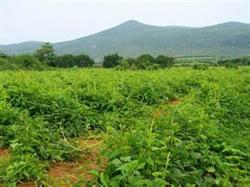 At present, there are three main diseases affecting yam, namely fusarium wilt, anthracnose and brown rot. These three diseases are mainly spread through rain and irrigation water, and the current hot and rainy period has also created conditions for the occurrence of these three diseases.
In the early stage of fusarium wilt, the main symptom is spindle-shaped brown patches on the base of the stem. The lesions gradually expand outward, causing the epidermis at the base of the stem to rot, the upper leaves to turn yellow and fall off, and the vines to wither and die. The interior of the diseased stem turns brown, and infection of the tuberous roots causes round to irregular brown lesions around the lenticels. Growers can use 50% chlorobromoisocyanuric acid 1000-fold solution, or 40% thiophanate-methyl sulfur suspension concentrate 600-fold solution, or 70% mancozeb 500-fold solution for root drenching.
Anthracnose of yam mainly damages leaves and stems. The lesions on the leaves are round to oval, grayish white to dark gray in the center with dark brown edges, and small black dots appear on the diseased parts in the later stage; the lesions on the stems are irregular spots with grayish white centers and black surroundings, and in severe cases the lesions merge into patches until the whole plant turns black and dies. Growers can use 25% prochloraz 1500-fold solution mixed with 10% difenoconazole 1500-fold solution for control.
Brown rot mainly damages the tubers of yam. After the tubers are infected, the diseased parts show irregular brown spots in a rotten state. Growers can use 70% thiophanate-methyl 1000-fold solution or 80% ethylicin 3000-fold solution for root drenching control.