-
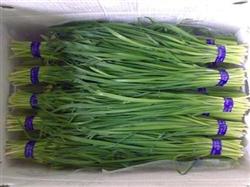
How to grow Chinese chives to increase yield
After detailed questioning, it was learned that this grower had not applied manure for the past two years. The roots of Chinese chives grow upward toward the soil surface as the number of years of growing Chinese chives increases. If manure is not applied, the yield will show a declining trend. Experts suggest that potassium dihydrogen phosphate can be used for foliar spraying, and in addition, it is best to apply manure when growing Chinese chives again next year.
-
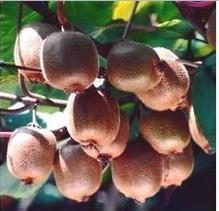
Kiwifruit sunscald disease must be prevented in advance during the high-temperature season
Kiwifruit is particularly sensitive to wind. In summer, the shoots grow very vigorously and are easily broken off by wind from the base, which not only affects the growth and fruiting of the current year but also affects the yield of the following year. At the same time, wind also easily bruises leaves and fruit, making the trees more susceptible to disease and reducing the marketability of the fruit. Strong winds can also cause leaf drop, affecting flowers...
-
Key Cultivation and Control Techniques for Major Watermelon Pests and Diseases
Yu Yongjun, a villager from Group 3 of Yuwanggang Village, Qifang Town, Zaoyang City, Hubei Province, once hailed as the "Watermelon King," has through years of practice worked out a good method for making watermelons sweeter, now offered to fellow growers for reference. 1. About 1 week after fruit set, dig a hole 10 cm from the main root, apply 50 g of cake fertilizer per plant, cover with soil and water. This method can make...
-
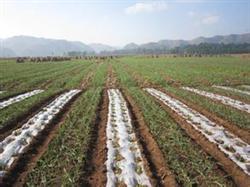
Key Technical Points for Green Prevention and Control of Garlic Pests and Diseases
Green prevention and control of crops means using agricultural control, physical control, biological control, precision pesticide application and other techniques during agricultural production to control pests and diseases, with the aim of reducing pesticide use, lowering pesticide residues in agricultural products, and comprehensively improving the quality and safety level of agricultural products. This year, the garlic planting area in our town...
-
How to prevent and control watermelon seedling diseases? A detailed guide to integrated control techniques
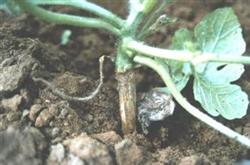
I. Symptoms of the main diseases 1. Damping-off. In the early stage, the root collar of the seedling (the junction of root and stem) develops lesions that look as if scalded by boiling water and become rotten, after which the diseased part turns yellowish-brown, dries out and shrinks; the cotyledons have not yet wilted, but the seedling topples over. Damping-off mostly occurs from the emergence of the cotyledons to the stage when 2 true leaves have flattened out. The disease spreads very quickly; a few days after the appearance of the first diseased plants, seedlings topple over in patches. Under conditions of high temperature and high humidity, the diseased parts of the seedlings and the ground nearby,
-
Key Integrated Pest and Disease Control Techniques for Onion Seedlings
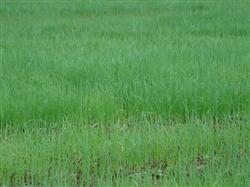
I. Selecting Superior Varieties In production, purple-skinned varieties such as Ziyu No. 1, Ziyu No. 2, Zixing, and Shuanghuanhong can be selected. These varieties have the characteristics of strong pungency, high yield, excellent quality, and suitability for export. These varieties generally yield about 5000 kg per mu, and high-yielding plots can reach 7500 kg per mu. II...
-
What are the simple techniques for watermelon disease control?
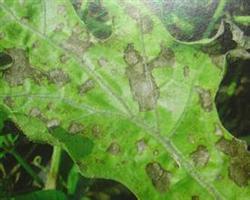
Before sowing, choose a greenhouse that has not grown cucurbit crops, or one that has been subjected to high-temperature sealed treatment during the summer fallow period, to prevent soil-borne diseases such as Fusarium wilt, damping-off, Rhizoctonia rot, and anthracnose from invading during the seedling stage. For seed treatment, soak the seeds in warm water at 55°C for 10 minutes, stirring constantly, then after cooling soak for another 6 hours, then...
-
Clever Use of Welsh Onions in Greenhouses to Sterilize and Prevent Vegetable Diseases
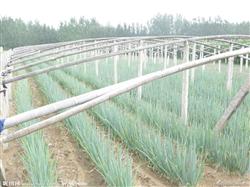
Welsh onion (Allium fistulosum) is a biennial vegetable of the Liliaceae family, cold-tolerant and highly adaptable. Its leaves release propyl sulfide with a pungent odor, and its root system secretes bactericidal substances; together they can effectively suppress the spread of various pathogens in the air and soil, prevent infection, or kill pathogens, significantly reducing the disease rate of vegetable plants...
-
What pesticides are commonly used for cherry pest and disease control?
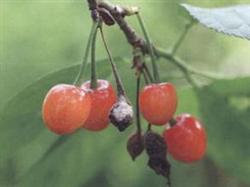
Cherry trees are often attacked by pests and diseases during cultivation, and correct prevention and control of pests and diseases is very important for planting returns. Below we introduce the pesticides corresponding to cherry pest and disease control, for farmers' reference. 1. Pesticides corresponding to the main cherry diseases: 1.1 Pesticides for bacterial canker...
-
What are the main diseases of Welsh onion? A complete guide to identifying common types
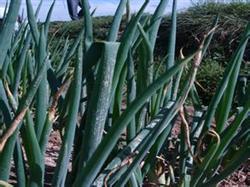
Once the white pseudostem enters its vigorous growth period, the threat of pests and diseases also enters a high-incidence stage. The main pests and diseases are: purple blotch, downy mildew, soft rot, onion maggot, onion thrips, onion leaf miner, and beet armyworm. 1. Purple blotch: in the early stage of the disease, spray 75% chlorothalonil wettable powder at 500-600 times dilution, 58% metalaxyl-mancozeb...
条件筛选