-

Two-crop Double-season Garlic Cultivation Techniques
I. What is two-crop (double-season) garlic. So-called two-crop (double-season) garlic means planting one season of early green garlic and one season of plastic-film garlic (also called harvest garlic, harvested for scapes and bulbs) within the year. II. Benefits of two-crop garlic 1. It can effectively raise land utilization and realize a "three plantings, three harvests" or "four plantings, four harvests" cropping system in one year, namely "corn → green garlic → harvest garlic" or "corn → watermelon or winter melon → green garlic → harvest garlic". Every year 4-5 days before the "Qingming" solar term, plant 2 rows of corn along the edge rows of the garlic (planting waxy fresh corn is best), and leave the corn stalks to cover the garlic; interplant early watermelon or winter melon in the wide rows of the garlic (harvest garlic) (watermelon or winter melon is grown by the seedling transplanting method), and harvest garlic bulbs in batches while the watermelon or winter melon grows; plant green garlic around mid-July, and lift and market the garlic from late September to early October; plant plastic-film harvest garlic in mid-to-late October.
-
Detailed Explanation of Key Techniques for Super-High-Yield Cultivation of Double-Season Rice in South China
(1) Sow at the right time and cultivate strong seedlings. For early rice, use dry-raised seedlings, with a seeding rate generally of 90 g/m2 and a sowing period in mid-to-late March; for late rice, use sparse sowing for strong seedlings or two-stage seedling raising, with a seed rate of about 1.0 kg per mu. (2) Ridge and bed cultivation. Bed width 3-4 m, ditch width 0.2-0.25 m, and open surrounding ditches well to facilitate water management and field operation management. (3) Wide-row close planting. The planting density is 30-40 hills/sq m, with a row spacing of about 25 cm. Generally, early rice has 3-4 seedlings per hill, and late rice is transplanted as single seedlings or double seedlings, ensuring
-
High-yield cultivation techniques for no-till direct seeding in rapeseed-rice double cropping
Zhejiang Province is relatively economically developed, with high labor costs. At the same time, as diesel prices rise, the cost of mechanical plowing of farmland increases, and the production cost of grain and oil crops increases year by year. For this reason, Zhejiang Province carried out trials, demonstrations and extension of high-yield cultivation techniques for no-till direct seeding in rapeseed-rice double cropping, which reduced the production cost of grain and oil crops and improved planting efficiency. According to surveys, each mu of no-till direct-seeded rapeseed saves 62.5 yuan in costs and increases efficiency compared with transplanted rapeseed, and each mu of no-till direct-seeded late rice saves 70.24 yuan in costs and increases efficiency compared with plowed and transplanted late rice. The annual cumulative cost saving and efficiency increase of no-till direct seeding cultivation in rapeseed-rice double cropping is 132.74 yuan.
-
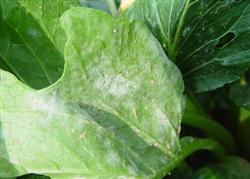
Detailed explanation of the double-low rapeseed minimal and no-tillage relay direct seeding cultivation technique
Controlling rapeseed powdery mildew well is a prerequisite for obtaining high yield and high quality in rapeseed, while autumn-sown rapeseed at the final flowering stage and the middle-to-late pod stage is precisely in the March-April period of high temperatures and shading between plants, when powdery mildew occurs rather commonly, greatly reducing the 1000-grain weight of rapeseed and thereby affecting yield; therefore, the control of rapeseed powdery mildew is very important. 1. Harm...
-
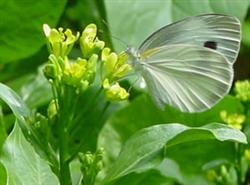
Effect of phosphorus nutrition on double-low rapeseed and the timing of application
Rapeseed white butterfly, scientific name Artogeia (Pieris) rapae (Linnaeus), order Lepidoptera, family Pieridae. Synonym Artogeia rapae (L.). Also known as the cabbage white butterfly, white powder butterfly. The larva is called the cabbage caterpillar. Distributed throughout the country. Hosts include rapeseed, cabbage, cauliflower, Chinese cabbage, radish and other cruciferous vegetables...
-
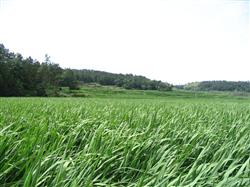
How to grow double-cropping water bamboo? A detailed explanation of planting techniques and management points
Its main cultivation techniques are as follows: 1. Select good varieties. The double-cropping wheat variety we chose is Suozi Kuan. Based on many years of introduction, comparison and observation, the Suozi Mei variety is a late-maturing variety among spring Mei and an early-maturing variety among autumn Meng. This variety has thick fleshy stems, is white and smooth, and the single weight of shelled water bamboo is 110-180g, while the single weight of peeled water bamboo...
条件筛选