-

Double mushroom showcase: two mushroom varieties each display their strengths
The Horticulture Research Institute of the Provincial Academy of Agricultural Sciences used single-spore hybridization, single-spore systematic selection and molecular marker-assisted selection techniques to breed the low-temperature-tolerant, high-quality, high-yield new brown button mushroom (Agaricus bisporus) variety "Zongxiu No. 1" and the new white button mushroom variety "Yingxiu No. 1", which have passed the first national batch of edible fungi variety certification. The new brown button mushroom variety "Zongxiu No. 1" has a cap surface of natural brown, with white stipe and flesh. The mushroom quality is excellent, the fruiting bodies are round and neat, the caps are thick and firm, and not sunken at the top; the flavor is delicious and the texture is tender. Because its cap is naturally brown, it requires no
-
Detailed Explanation of the Double-Sided Fruiting Method for Oyster Mushroom Beds
Using the double-sided fruiting method for oyster mushroom beds (Pleurotus ostreatus) makes effective use of the mushroom house space and increases the yield per unit area of the beds. The key technical points are as follows: 1. Bed equipment. Build a frame inside the mushroom house with moso bamboo or standing timber, generally 2 m high, with 3 tiers of beds, each tier spaced 60-65 cm apart, and the length depending on the actual conditions of the mushroom house. There are two widths: 55 cm for single-side management and 110 cm for double-side management. The bottom board of each bed tier is made by nailing thin wooden slats, with each slat spaced (gap) 1.5-2 cm apart. 2. Spreading substrate and inoculation
-
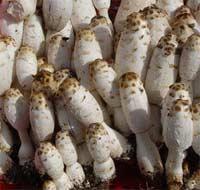
Hanging Bag Cultivation of Black Fungus (Wood Ear) and Stropharia rugosoannulata in a Multi-Layered Three-Dimensional Setup Doubles Returns
Distiller's grains are an excellent substrate for cultivating edible fungi. Their nutrient composition suits the growth of Stropharia rugosoannulata mycelium, and using them can both lower the production cost of Stropharia rugosoannulata and prevent environmental pollution. Distiller's grains contain a small amount of ethanol and active yeast that are harmful to mycelial growth, and they are highly acidic, with a pH of 3-5. Therefore, fresh distiller's grains should be selected...
条件筛选