Detailed explanation of the double-low rapeseed minimal and no-tillage relay direct seeding cultivation technique
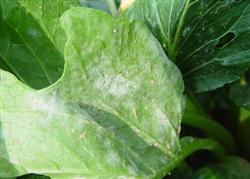
Controlling rapeseed powdery mildew well is a prerequisite for obtaining high yield and high quality in rapeseed, while autumn-sown rapeseed at the final flowering stage and the middle-to-late pod stage is precisely in the March-April period of high temperatures and shading between plants, when powdery mildew occurs rather commonly, greatly reducing the 1000-grain weight of rapeseed and thereby affecting yield; therefore, the control of rapeseed powdery mildew is very important. 1. Harm...
 1. Variety selection. Select double-low rapeseed varieties that tolerate late sowing, emerge quickly, have a compact plant type, tolerate dense planting, have strong disease resistance and lodging resistance, and have high yield potential. 2. Soil moisture preparation before sowing. The key technique for direct-seeded rapeseed lies in achieving full emergence, uniform emergence, and even seedlings in one sowing. 3. Apply sufficient base fertilizer. Base fertilizer and seed fertilizer are required to be applied in advance, with base fertilizer accounting for about 30%-40% of the total fertilizer application. 4. Sow early at the appropriate time. Generally sow 7-10 days later than for transplanted rapeseed raised in seedbeds. 5. Open furrows and cover with soil. Before sowing, level the bed surface and open the three furrows well to ensure smooth irrigation and drainage. 6. Thin and set seedlings. Thin seedlings early at the 2-3 leaf stage, and around the 4-5 leaf stage set the seedlings according to the field seedling condition, growth vigor, and fertilization level, generally leaving 18,000-25,000 plants per mu. 7. Chemical regulation.
For rapeseed with vigorous growth, from the end of November to the beginning of December, use 40-50 grams of 15% paclobutrazol per mu, diluted in 50 kg of water for spraying. 8. Scientific fertilization. In fertilizer management, apply seedling fertilizer early, supplement winter fertilizer, and apply stem fertilizer early and heavily, with a total pure nitrogen application of about 15 kg per mu, and balanced application of nitrogen, phosphorus, potassium, and boron fertilizers. 9. Disease and insect control. For rapeseed sclerotinia stem rot, prevention should be the main approach with integrated control; in addition to measures such as rational crop rotation, seed treatment, clearing furrows and draining water, and reducing humidity, generally at the initial flowering stage and full flowering stage, 80-100 grams of 50% carbendazim·dimethachlon wettable powder per mu can be diluted with water and evenly sprayed 1-2 times.
This technique is suitable for promotion and application in the Yangtze River Basin region.