-
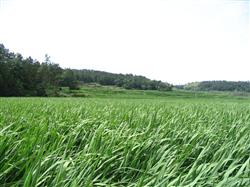
How to grow double-cropping water bamboo? A detailed explanation of planting techniques and management points
Its main cultivation techniques are as follows: 1. Select good varieties. The double-cropping wheat variety we chose is Suozi Kuan. Based on many years of introduction, comparison and observation, the Suozi Mei variety is a late-maturing variety among spring Mei and an early-maturing variety among autumn Meng. This variety has thick fleshy stems, is white and smooth, and the single weight of shelled water bamboo is 110-180g, while the single weight of peeled water bamboo...
-
Effect of phosphorus nutrition on double-low rapeseed and the timing of application
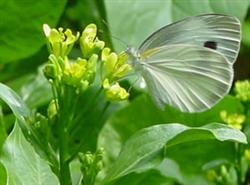
Rapeseed white butterfly, scientific name Artogeia (Pieris) rapae (Linnaeus), order Lepidoptera, family Pieridae. Synonym Artogeia rapae (L.). Also known as the cabbage white butterfly, white powder butterfly. The larva is called the cabbage caterpillar. Distributed throughout the country. Hosts include rapeseed, cabbage, cauliflower, Chinese cabbage, radish and other cruciferous vegetables...
-
Detailed explanation of the double-low rapeseed minimal and no-tillage relay direct seeding cultivation technique
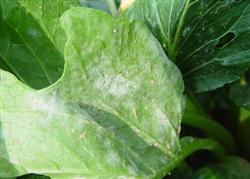
Controlling rapeseed powdery mildew well is a prerequisite for obtaining high yield and high quality in rapeseed, while autumn-sown rapeseed at the final flowering stage and the middle-to-late pod stage is precisely in the March-April period of high temperatures and shading between plants, when powdery mildew occurs rather commonly, greatly reducing the 1000-grain weight of rapeseed and thereby affecting yield; therefore, the control of rapeseed powdery mildew is very important. 1. Harm...
-

High-yield cultivation techniques for no-till direct seeding in rapeseed-rice double cropping
Zhejiang Province is relatively economically developed, with high labor costs. At the same time, as diesel prices rise, the cost of mechanical plowing of farmland increases, and the production cost of grain and oil crops increases year by year. For this reason, Zhejiang Province carried out trials, demonstrations and extension of high-yield cultivation techniques for no-till direct seeding in rapeseed-rice double cropping, which reduced the production cost of grain and oil crops and improved planting efficiency. According to surveys, each mu of no-till direct-seeded rapeseed saves 62.5 yuan in costs and increases efficiency compared with transplanted rapeseed, and each mu of no-till direct-seeded late rice saves 70.24 yuan in costs and increases efficiency compared with plowed and transplanted late rice. The annual cumulative cost saving and efficiency increase of no-till direct seeding cultivation in rapeseed-rice double cropping is 132.74 yuan.
-
Detailed Explanation of Key Techniques for Super-High-Yield Cultivation of Double-Season Rice in South China
(1) Sow at the right time and cultivate strong seedlings. For early rice, use dry-raised seedlings, with a seeding rate generally of 90 g/m2 and a sowing period in mid-to-late March; for late rice, use sparse sowing for strong seedlings or two-stage seedling raising, with a seed rate of about 1.0 kg per mu. (2) Ridge and bed cultivation. Bed width 3-4 m, ditch width 0.2-0.25 m, and open surrounding ditches well to facilitate water management and field operation management. (3) Wide-row close planting. The planting density is 30-40 hills/sq m, with a row spacing of about 25 cm. Generally, early rice has 3-4 seedlings per hill, and late rice is transplanted as single seedlings or double seedlings, ensuring
-
Two-crop Double-season Garlic Cultivation Techniques
I. What is two-crop (double-season) garlic. So-called two-crop (double-season) garlic means planting one season of early green garlic and one season of plastic-film garlic (also called harvest garlic, harvested for scapes and bulbs) within the year. II. Benefits of two-crop garlic 1. It can effectively raise land utilization and realize a "three plantings, three harvests" or "four plantings, four harvests" cropping system in one year, namely "corn → green garlic → harvest garlic" or "corn → watermelon or winter melon → green garlic → harvest garlic". Every year 4-5 days before the "Qingming" solar term, plant 2 rows of corn along the edge rows of the garlic (planting waxy fresh corn is best), and leave the corn stalks to cover the garlic; interplant early watermelon or winter melon in the wide rows of the garlic (harvest garlic) (watermelon or winter melon is grown by the seedling transplanting method), and harvest garlic bulbs in batches while the watermelon or winter melon grows; plant green garlic around mid-July, and lift and market the garlic from late September to early October; plant plastic-film harvest garlic in mid-to-late October.
-
Detailed Explanation of High-Efficiency Double-Layer Mulch Cultivation Technology for Garlic
Qi Xinqiang, a garlic farmer in Qijiazhuang Village, Dingzhou City, Baoding, has grown mulched garlic for many years and, in the course of production, worked out a cultivation technique using double-layer plastic film mulch for garlic, achieving an earlier market launch for the garlic and relatively high yields, with a per-mu yield increase of more than 10%. It is worth the study and reference of vegetable growers in the major garlic-producing areas. The cultivation technique is introduced below: 1. Selection of excellent varieties. Select Shandong Guanxian garlic, an excellent garlic variety from Shandong Province and also an important export variety. Each garlic bulb has 7-8 cloves, the outer skin is slightly purplish-red, the skin is thin, the cloves are plump, the pungency is strong
-
To raise the per-unit yield of double-season rice in Jiangxi, the key lies in changing the "six mores and six lesses" phenomenon
Rice is the most important food crop in Jiangxi, and increasing the per-unit yield of double-season rice is an important way to ensure Jiangxi's position as a major grain-producing region and to ensure that Jiangxi makes a greater contribution to the country's food security. In recent years, although the per-unit yield of double-season rice in Jiangxi has risen steadily, the phenomenon of a relatively low per-unit yield level has still not improved much. Compared with neighbouring Hunan, it is 50-60 kg lower per 667 sq m. Analysis shows that the "six mores and six lesses" phenomenon is the main reason for Jiangxi's low rice per-unit yield. 1. More seeding rate, less seed used. Cultivating
-
Key Points of High-Ridge Double-Row Potato Cultivation Technology
High-ridge double-row potato cultivation refers to a planting method using wide and narrow rows, where soil from the wide rows is hilled onto the narrow rows, forming raised beds that stand more than 25cm above the ground. Trials have confirmed that potatoes grown on ridges and beds have the advantages of earlier emergence, a higher proportion of large and medium tubers, and higher yields; ridge-bed cultivation increases yield by 19.1% compared with flat-bed cultivation. The specific cultivation techniques are as follows: 1. Fine seedbed preparation. Potato is a shallow-rooted crop. After the tubers are planted and before emergence, the better the root system develops in the soil, the stronger the plant growth after the seedlings emerge.
-
Full-film double-ridge furrow sowing cultivation technique for potato, suitable for arid regions
The full-film double-ridge furrow sowing cultivation technique for potato is a drought-resistant planting technique suitable for the arid and semi-arid regions of northern China, achieved by forming large and small ridges according to belt width and implementing full-ground coverage, integrating moisture conservation, rainwater harvesting, warming and yield increase. Its main advantages are: (1) By fully covering the large and small ridges with plastic film, all rainfall during the potato growing period is fully collected; in particular, the tiny rainfall of about 5 mm in spring is gathered through the film surface into the rainwater harvesting furrows, effectively solving the problem of sowing being seriously affected by spring drought in dryland farming areas, thereby ensuring normal emergence of potatoes;
条件筛选