-
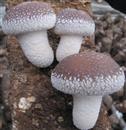
What harm does Aspergillus cause in shiitake mushroom cultivation?
What harm does Aspergillus cause to shiitake mushrooms? Please give an introduction. Aspergillus is widely distributed in soil, air, various grains and their by-products such as wheat bran, rice bran and other organic matter. The suitable temperature for Aspergillus growth is 20 to 35°C, the relative humidity is 65% to 85%, and the pH is neutral or slightly alkaline. Aspergillus is commonly found in shiitake mushroom spawn...
-
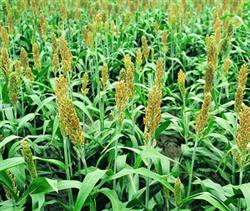
What kind of moisture conditions does sorghum need for its growth and development?
What are the moisture conditions suitable for sorghum growth and development? Here is an introduction. Sowing can be done when the soil moisture content is 15%-20%. The water requirement at the seedling stage accounts for 8%-15% of the total water requirement throughout the entire growth period. The most suitable soil moisture content is 50%-65% of the field maximum water-holding capacity. During the seedling stage, properly controlling soil moisture...
-
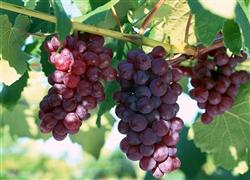
How many times a year does a grapevine fruit? Cultivation and management methods
How can you make a grapevine fruit several times a year? What techniques can achieve this? The technique for getting grapes to fruit multiple times a year falls into two methods: using secondary fruiting from winter buds and using secondary fruiting from summer-bud lateral shoots. Method one: the technique of using winter-bud lateral shoots to achieve two fruiting cycles a year uses forced growth of winter buds on the current year's shoots for a second fruiting...
-
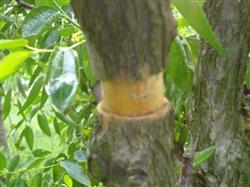
Why Doesn't the Jujube Tree Bear Fruit? An Analysis of Causes and Management Methods
Why doesn't the jujube tree bear fruit? Please explain the causes. The main reasons a jujube tree fails to bear fruit are the following three: Reason one why a jujube tree fails to bear fruit: excessive tree vigor. Solution: During the full flowering period of the jujube tree, perform ring barking (girdling) at the base of the main branches, cutting deep to the xylem, with a width of about 0.5 cm - roughly, however thick the bark is, that is how wide to cut....
-
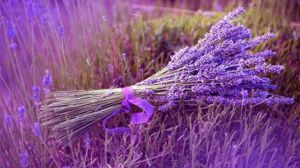
When does lavender bloom? An introduction to its flowering period
The lavender flowering period is generally from May to October, with the most abundant blooms in June-July. If you want to photograph or view them, this is the best time. During the flowering period, it should be given a cool environment so the flowering period will last longer. In addition, too much watering or long-term exposure to blazing sun will cause the flowers to wilt and shorten the flowering period. After flowering, diseased branches, dead branches, spent flowers, etc. need to be pruned off.
-
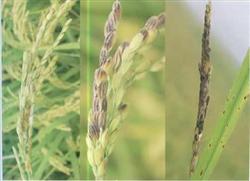
Why does rice produce empty and blighted grains, and how should it be prevented and controlled?
Why does rice produce empty and blighted grains, and how should it be prevented and controlled? Please give a detailed introduction. Under normal conditions, the rate of empty and blighted rice grains is generally 10%-20%, and in severe cases can reach 40%, which greatly affects rice yield. 1. Causes of formation. The rate of empty and blighted rice grains is mainly affected by 3 factors. 1. Climatic...
-
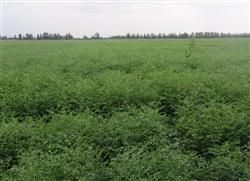
What Does Licorice Look Like? A Detailed Guide to Its Morphological Characteristics and Suitable Growing Environment
[Morphological Characteristics]Licorice (Glycyrrhiza) is a perennial herb, 30-100 cm tall. The entire plant is covered with short white pubescence and glandular hairs. The above-ground stem is upright, woody at the lower part, and the branchlets are angular and green. The leaves are alternate and odd-pinnately compound. There are 3-8 pairs of leaflets, ovate or ovate-elliptic, with entire margins, and the terminal leaflet is larger. The raceme...
-
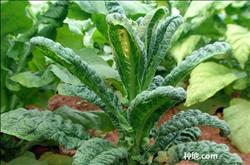
What symptoms does tobacco show when it is deficient in nutrients?
How is tobacco curly leaf virus disease prevented and controlled? Tobacco curly leaf disease is also called leaf curl disease. Curly leaf disease is widely distributed in many tropical regions, and it occurs in the tobacco-growing areas of Yunnan, Guangdong, Fujian and Taiwan, China. In 2006, the incidence rate in some tobacco-growing areas of Yunnan was 7-11%. Curly leaf disease has a wide host range, including plants from 14 families and 45 genera...
-
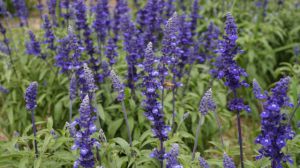
When Does Lavender Bloom? A Detailed Guide to Its Flowering Period
Every year starting in June, lavender begins to bloom. However, its flowering period is relatively long, lasting about two months, so its blooming season is from June to August. In addition, because lavender has just started blooming in June, it may not produce many flowers, so if you want to go out and admire it, it is best to wait until the peak blooming period in July to August.
-
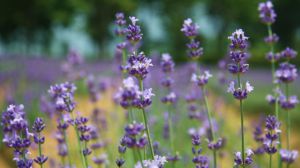
What Does Lavender Symbolize? A Detailed Explanation of Its Floral Meanings
Lavender can express many meanings, mainly "waiting for love," "purity," "gratitude," "peace," and "waiting devotedly even in the face of hopeless love." In its native region, it is a symbol of love and romance, and a token of love between sweethearts.
条件筛选