How many times a year does a grapevine fruit? Cultivation and management methods
How can you make a grapevine fruit several times a year? What techniques can achieve this? The technique for getting grapes to fruit multiple times a year falls into two methods: using secondary fruiting from winter buds and using secondary fruiting from summer-bud lateral shoots. Method one: the technique of using winter-bud lateral shoots to achieve two fruiting cycles a year uses forced growth of winter buds on the current year's shoots for a second fruiting...
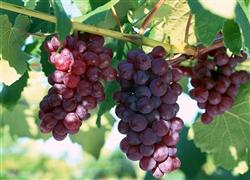 How can you make a grapevine fruit several times a year? What techniques can achieve this?
The technique for getting grapes to fruit multiple times a year falls into two methods: using secondary fruiting from winter buds and using secondary fruiting from summer-bud lateral shoots:
Method one:The technique of using winter-bud lateral shoots to achieve two fruiting cycles a year uses forced growth of winter buds on the current year's shoots for a second fruiting. Because flower-bud differentiation in winter buds is relatively good, both the yield and quality of the second fruiting can be guaranteed, so winter-bud lateral shoots are commonly used in production to form two fruiting cycles a year. When using winter-bud lateral shoots for secondary fruiting, the key technical points are, first, to force and accelerate the differentiation and formation of flower buds in the winter buds on the current year's shoots;
Second, to make the winter-bud lateral shoots sprout on schedule and uniformly, so as to ensure the fruit can fully ripen in the same year. The main methods are:
(1) Pinching the main shoot. Because inflorescence differentiation in the winter buds on the current year's shoots has already begun from before flowering to the early flowering stage, when using winter buds for secondary fruiting, the main shoot is generally pinched when there are 4-6 fully expanded leaves above the inflorescence. The main purpose of this pinching is to promote the concentration of the plant's nutrients in the winter buds, so as to promote more complete flower-bud differentiation.
(2) Removing lateral shoots. After pinching the main shoot, remove all lateral shoots so that nutrients are fully concentrated and transported into the top 1-2 winter buds, promoting early sprouting of the winter buds. If the first sprouted winter-bud shoot has no inflorescence, the winter-bud lateral shoot can be cut off together with the tip of the main shoot, to stimulate the sprouting of winter buds with inflorescences lower down the shoot. Because winter buds develop over a longer period, the inflorescence differentiation on winter-bud lateral shoots is relatively good, and their fruiting ability is also relatively strong.
In production, to make the inflorescences on winter-bud lateral shoots of better quality, lateral shoots are generally removed in two rounds. In the first round, remove the middle and lower lateral shoots while temporarily retaining the upper 1-2 lateral shoots, and pinch these 1-2 lateral shoots leaving 2-3 leaves. About 10-15 days after the first removal of lateral shoots, remove these 1-2 lateral shoots as well, to force the winter buds to sprout. In this way, the newly grown winter-bud lateral shoots are not only uniform and consistent, but the inflorescences in the winter buds are also large and robust, and the fruit-setting rate is high.
By controlling the timing of cutting off the terminal lateral shoots, you can regulate the sprouting time of the winter buds. Although delaying the sprouting time of winter buds can increase the fruiting ability of the inflorescences, if the winter-bud secondary shoots emerge too late, it will directly affect the growth and ripening period of the fruit. Therefore, be sure that the winter buds do not sprout too late. In North China, the suitable time to cut off the terminal lateral shoots to force winter buds to sprout is from the end of May to the beginning of June. Other regions can decide flexibly according to their local climate conditions.
Method two:The technique of using summer-bud lateral shoots for secondary fruiting. Because summer buds have no dormancy period, they form and sprout immediately, and after one summer shoot sprouts it readily produces a second summer shoot, which easily causes nutrients to be dispersed, making flower buds difficult to form or resulting in flower buds of low quality.
Therefore, when using summer-bud lateral shoots for secondary fruiting, the first priority is to ensure good formation of inflorescences in the summer buds. This is the key technique for using summer-bud lateral shoots for secondary fruiting. For this reason, when using summer-bud lateral shoots for secondary fruiting, the timing of pinching and removing lateral shoots is extremely strict.
(1) Pinching the main shoot: When using lateral shoots for secondary fruiting, you must pinch in time before the summer buds sprout, to promote flower-bud formation, so the pinching time must not be too late. Because in general Vitis vinifera varieties the summer buds in the axillary nodes of the 1-3 leaves above the main-shoot inflorescence readily form flower buds, the main-shoot pinching aimed at promoting secondary fruiting is about 1 week earlier than ordinary pinching time. At the same time, it must also be determined in combination with the specific environment of a region and the state of flower-bud formation of the variety. The key point is that it must be done when there are 1-2 summer buds below the pinching site that have not yet sprouted; this point must be noted.
(2) Remove all summer-bud lateral shoots: While pinching the main shoot, remove all summer-bud lateral shoots that have already sprouted on the main shoot, so that all the plant's nutrients are concentrated in the top 1-2 unsprouted summer buds, promoting their flower-bud differentiation and formation. Generally, after pinching the main shoot, the top summer buds sprout in about 5 days, and with strengthened management they can form good summer-bud lateral shoot inflorescences.
(3) For lateral shoots that have already grown and bear inflorescences, pinch them 2-3 leaves above the lateral-shoot inflorescence, to promote normal growth of the inflorescences that have already grown.
(4) If the induced summer-bud lateral shoots do not form inflorescences, pinch again when they have unfolded 4-5 leaves, to promote a second round of lateral shoots for fruiting. But note that when pinching, there must be 1-2 buds below the pinching site that have not yet sprouted.
Click to get more grape cultivation techniques
Click to get more fruit cultivation techniques