-

Technical method for three-dimensional cultivation of edible fungi using pure crop straw
For a long time, the culture medium for edible fungus production in China has been mainly wood chips and cottonseed hulls. Excessive logging of timber has caused a shortage of forest resources; and cottonseed hulls, because of their wide range of uses and large consumption, have remained high in price. As a result, the prices of raw materials used for cultivating edible fungi have risen substantially, increasing costs. In this way, those who manage poorly often end up with poor returns, or even losses. In response to this situation, the vast number of edible fungus workers in China, after years of exploration, finally chose to use crop straw for edible fungus cultivation. At that time, the methods used were
-
Detailed Explanation of Indoor Three-Dimensional Cultivation Methods for Oyster Mushrooms in Winter
Place the plastic tubes filled with oyster mushroom spawn (cylindrical in shape) indoors or in a mushroom cellar. When the room temperature is 24°C-25°C, they can only be arranged in a single row and single layer for mycelial running. When the room temperature is around 20°C, they can be arranged in two or three rows in a single layer. When the room temperature is 10°C-15°C, they can be stacked to a height of 1 m-1.5 m, and every 10-15 days, the upper and lower positions should be swapped to make the temperature uniform in all parts and the mycelial running consistent. During this period, keep the room as dry as possible. When the indoor humidity reaches above 80%, it is best to adopt the two-level cultivation method of mycelial running above ground and fruiting underground. Maintain
-
Semi-underground three-dimensional cultivation of oyster mushrooms yields high output and good returns
Semi-underground three-dimensional bed-frame cultivation of oyster mushrooms is a new approach explored in recent years to achieve high yields and improve economic returns. According to trials, on an area of 20 sq m, with 2000 kg of substrate, the annual output of oyster mushrooms is about 2500 kg, with a biological efficiency of over 120%. The key technical points are as follows: 1. Building the greenhouse: first dig a pit 1.8 m to 2 m deep and 4 m to 5 m wide, with the length determined as needed, and place the three-dimensional bed frames inside. On top, use bamboo poles and plastic film to build an arched shed, pack the surrounding edges firmly with soil, and cover with straw mats. Leave ventilation openings of about 30 square cm on all four sides, east, west, north and south, and build a small door on the west side for workers to enter and exit.
-
Shiitake mushrooms achieve three-dimensional cultivation through shelving
In recent years, my family has always been growing shiitake mushrooms in a greenhouse, but perhaps due to technical and other reasons, the returns have never been ideal. I heard that shelf-layer cultivation of shiitake mushrooms can bring considerable returns. Could you introduce the shelf-layer cultivation method for shiitake mushrooms? Tian Shuzhen, Nong'an. Hello Tian Shuzhen: Shelf-layer cultivation of shiitake mushrooms is currently a new technique for increasing shiitake mushroom yields. Below I will introduce how to choose a good site and variety, and the management points to note, for your reference: 1. Site and setup for the mushroom shed site
-
Key Technical Points for Three-Dimensional Cultivation of Flower Shiitake in Small Sheds with Large Bags
Flower shiitake has excellent quality and is formed when shiitake mushroom spawn grown on bagged substrate develops under special environmental conditions. It has higher nutritional and commercial value than shiitake, so it is called flower shiitake. Flower shiitake is a rare delicacy in the edible fungi series. High in protein and low in fat, it contains more than a dozen amino acids and various nutrients needed by the human body, has good mouthfeel, a delicious taste, and no pollution; it can also prevent and treat many diseases and has strong disease-resistance effects, so it is called a new anticancer recruit. On the international market, demand exceeds supply. Flower shiitake can be sold fresh or dried for storage, and it is very favorable for both export and domestic sales
-
Key Techniques for Large-Bag Bed-Free Three-Dimensional Cultivation of Pholiota microspora (Nameko Mushroom)
Harvesting: When the mushrooms reach 70-80% maturity, that is, when the veil membrane of the cap has not yet stretched, they can be harvested. When harvesting, hold the substrate surface with one hand and gently twist off the mushroom cluster with the other, so as to avoid pulling up large chunks of substrate. After each flush is harvested, tidy the substrate surface and withhold water for 5-7 days before managing the next flush. Advantages of this cultivation model: it saves the wooden poles needed to build racks. No need to thread curtains or build racks, saving resources and reducing labor intensity; high-altitude work is changed to low-altitude work, making it easier to operate. Moisture in the substrate is easy to maintain, and during fruiting
-
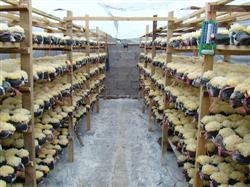
A Detailed Guide to Practical Multi-Tier Three-Dimensional Cultivation Techniques for White Wood Ear (Tremella fuciformis)
White wood ear, also known as white fungus, snow ear, or Sichuan ear, is a "prized fungus" used both as food and medicine, with broad market prospects. Artificial cultivation techniques for white wood ear are constantly being improved. Here we introduce the practical techniques for indoor multi-tier three-dimensional cultivation of white wood ear in Gutian County, Fujian Province, the "home of white wood ear": 1. Mushroom house setup: The specifications of a professional cultivation house or shed...
-
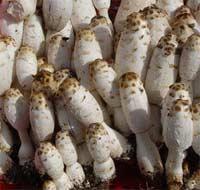
Hanging Bag Cultivation of Black Fungus (Wood Ear) and Stropharia rugosoannulata in a Multi-Layered Three-Dimensional Setup Doubles Returns
Distiller's grains are an excellent substrate for cultivating edible fungi. Their nutrient composition suits the growth of Stropharia rugosoannulata mycelium, and using them can both lower the production cost of Stropharia rugosoannulata and prevent environmental pollution. Distiller's grains contain a small amount of ethanol and active yeast that are harmful to mycelial growth, and they are highly acidic, with a pH of 3-5. Therefore, fresh distiller's grains should be selected...
-
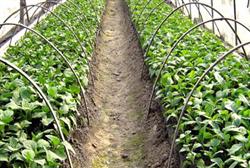
Three-dimensional Cultivation Technique of Interplanting Black Wood Ear Mushroom with Shaggy Mane
Interplanting shaggy mane (Coprinus comatus) in pepper fields is a good method of imitating wild cultivation of shaggy mane. It can save the expense of building mushroom houses, does not occupy extra space, and can greatly increase the economic benefit per unit of land area. Generally, after peppers are planted, furrows are opened in the middle of the pepper rows, material is spread, and spawn is scattered. For management and harvesting of the mushrooms...
-
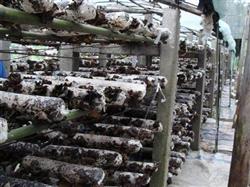
How to grow black fungus (wood ear mushroom) using vertical/three-dimensional cultivation? Detailed growing techniques
How to grow black fungus using vertical/three-dimensional cultivation? Please explain the method. For vertical/three-dimensional cultivation of black fungus, you can refer to the following methods: 1. Spawn preparation: The spawn production technique for wood ear mushroom is the same as for conventional edible fungi. 2. Spawn-running management: For the culture medium for cultivating wood ear mushroom, you can adapt to local conditions and use local materials, using cottonseed hulls or mixed wood sawdust as the culture medium. April-May...
条件筛选