-

Technical Guidance on Chemical Weed Control in Paddy Fields
Chemical weed control in paddy fields is a key step in achieving high and stable rice yields. There are three main types of weeds in the rice fields of our county: grassy weeds such as barnyardgrass, sprangletop, and crabgrass; broadleaf weeds such as monochoria, pondweed, and Rotala indica; and sedge family weeds. In recent years, because rice planting methods in our county have become diverse, the weed spectrum in paddy fields has undergone considerable change: first, some malignant weeds in paddy fields are on the rise. In addition to barnyardgrass, which remains widespread and abundant, sprangletop and Cyperus serotinus have shown a clear upward trend;
-
Technical Guidance for Rice Management in the Early and Middle Stages of This Year
I. Characteristics of Rice Production This Year 1. Large mechanical transplanting area and high transplanting quality. According to reports from all towns, the city's mechanical transplanting area is 173,500 mu, accounting for 81% of the rice area, with high transplanting density, few missing hills or gaps, and suitable basic seedlings. Seedling condition monitoring data: the city's average number of hills per mu is 17,300, an increase of 1,200 hills or 7.5% over last year's 16,100; the average number of basic seedlings is 70,700, an increase of 19,200 or 33.2% over last year's 57,700. 2. Suitable transplanting period and rapid seedling establishment and growth.
-
Current Technical Guidance on Rice Seedbed Management
Currently, some early-sowing areas are affected by sharp temperature changes caused by cold waves, and rice seedlings have suffered frost damage to varying degrees, which has affected seedbed management and will delay the transplanting process to a certain extent. In order to improve seedbed management and reduce low-temperature damage, the following technical guidance on seedbed management is hereby proposed. 1. Small-tunnel seedling cultivation. According to the weather forecast, add more covering material on the tunnel and keep it sealed for insulation. In case of frost, candles can be lit or smoke can be generated inside the tunnel to raise the temperature and prevent freezing. For medium and large tunnel seedling cultivation, ventilation should be reduced or even stopped. Straw curtains should be placed around the tunnel, plastic film should be laid flat inside the tunnel,
-
How should current rice production be managed? Technical guidance is here
At present, China's early rice production has entered the late growth stage. In southern Guangdong and Guangxi, the vast majority of early rice has entered the grain-filling stage, and a small portion has entered the maturity stage; in central Guangdong and Guangxi, heading has begun; in northern Guangdong and Guangxi, it has entered the initial heading stage to heading stage. Early rice in the middle and lower reaches of the Yangtze River has entered the milk-ripe stage and is expected to begin harvesting around July 10. Single-season rice in Northeast China is in the tillering peak stage, young panicle differentiation stage and booting stage from south to north; mid-season rice in the winter paddy field areas of Southwest China is in the booting stage, the river valley and hilly areas have begun young panicle differentiation, and the Chengdu Plain area is in the field-drying stage at the maximum tiller stage
-
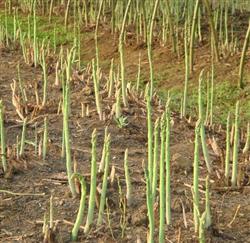
Detailed explanation of key asparagus seedling-raising techniques, full guidance from sowing to emergence
The key cultivation techniques for asparagus are introduced as follows: 1. Variety selection. Unlike other vegetables, asparagus is a perennial plant, and one planting can be harvested continuously for 15 years. Therefore, choose first-generation hybrid varieties with resistance to pests and diseases, strong stress resistance, a short dormancy period, good market quality, and high quality and yield. 2. Seedling raising...
-
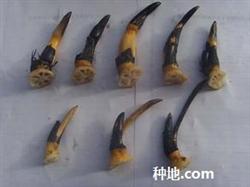
Where can I learn lotus root cultivation techniques? Detailed guidance requested
Can lotus root be propagated using the terminal bud as seed? How should it be done? Traditional lotus root cultivation habitually uses the lotus root body as seed, with the amount of lotus root used reaching as high as 400 kg per 667 sq m. If the terminal bud of the lotus root is cleverly used as seed, it not only saves a large amount of lotus root seed but is also simple and easy to do. 1. Seedling raising and land preparation. Choose fertile, deep dry land, and in early spring every 66...
-
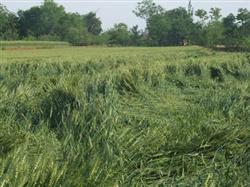
Technical Guidance on Spring Fertilization Management for Wheat
1) Spraying paclobutrazol. At the wheat stem elongation stage, spraying 30 kg of 200 ppm paclobutrazol solution per mu can dwarf the plants, enhance lodging resistance, and also control wheat powdery mildew and improve the plant's nitrogen uptake and utilization rate. (2) Spraying chlormequat chloride. For wheat fields with large populations and vigorous growth, at the early jointing stage, spray per mu 0....
-
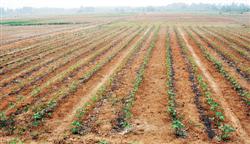
Spring cotton production technical guidance: how to manage the Yellow River basin cotton region
Raising seedlings and transplanting Simplified seedling raising and transplanting. First, choose a good seedling-raising site. It should be high-lying, sheltered from the wind and facing the sun, with convenient access to water and transportation. Second, prepare materials. Use seedling-raising substrate plus clean river sand to make a seedbed or fill plug trays, replacing nutritional pots, and prepare enough materials for 500 seedlings per sq m of seedbed. Third, sow at the right time...
-
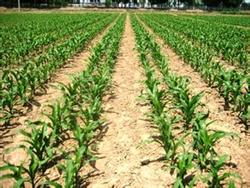
Detailed Guide to Sweet Corn Cultivation Techniques, Full-Course Guidance from Sowing to Management
Autumn corn is best direct-seeded with no-tillage after mid-July. After harvesting the previous corn crop, promptly clean the field, and early sowing at the earliest opportunity is key; deep plowing is generally not required. 1. Sun-dry the seeds for 2-3 days, and soak them for 4-6 hours before sowing to promote uniform and even emergence. Arrange the plant spacing at a density of 3500-4000 plants per 667 sq m...
条件筛选