-
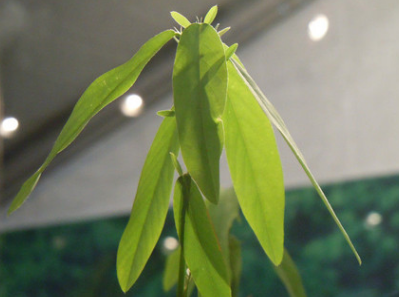
Why the Dancing Grass Dances and How to Care for It as a Bonsai
Dancing grass (Codariocalyx motorius) is an upright small shrub, named dancing grass for its posture that resembles a dancing maiden. It grows and is distributed mostly in China, Bhutan and Sri Lanka. Why does dancing grass dance and how does it dance? On both sides of the dancing grass leaves grow large numbers of linear leaflets, which are extremely sensitive to sound waves.
-

How to grow spring-planted soybeans in Northeast China? A detailed explanation of the technical guidance
In the autumn and winter of last year, precipitation in Northeast China was lower than normal, soil moisture was insufficient, and drought was relatively severe. This spring there has been more rain and snow, temperatures began to rise rapidly in early April, and temperature and precipitation are close to normal. The Soybean Expert Steering Group of the Ministry of Agriculture, together with the National Agricultural Technology Extension Service Center, based on full investigation, proposed the following technical guidance for spring soybean planting: 1. Strictly select excellent varieties. Because of the dry climate last autumn, soybeans may not have matured normally physiologically at harvest, and mechanical threshing increased the possibility of damage to the seed embryo
-
Technical Guidance on Cotton Management During the Flowering and Boll-setting Stage
The flowering and boll-setting stage of cotton is a critical period when vegetative growth and reproductive growth proceed together. During this stage, the plant gradually shifts from being dominated by vegetative growth to being dominated by reproductive growth. The plant grows vigorously with a large daily growth increment. It is the peak period of fertilizer and water demand in the plant's entire life cycle, and also the key period for forming economic yield. Timely and meticulous management is essential, adapted to local conditions and to the condition of the seedlings. Attention must be paid to pest and disease control, chemical regulation, pruning, and intertillage loosening of the soil, while at the same time rationally and scientifically formulating fertilizer and irrigating promptly and in appropriate amounts, so that individual plants grow steadily, the plant architecture and field population structure are reasonable, ventilation and light penetration are good,
-
How to manage cotton during the dog days? Please check this guidance
According to the citywide "715" survey summary, this year our city's cotton growth progress is fast and the cotton is growing well. This is shown by: fast growth progress, uneven growth, and a large area of cotton entering the dog days with bolls. The citywide average cotton plant height is 88.38 cm, an increase of 2.01 cm over last year; the total number of fruiting nodes is 49.80, an increase of 7.77 over last year; the number of abscised squares and bolls is 4.39, a decrease of 0.15 over last year; the abscission rate is 8.8%, a decrease of 1.99 percentage points over last year. The area entering the dog days with bolls accounts for 10 of the cotton field area
-
How to manage cotton in the mid-to-late stage? Hebei strengthens technical guidance
At present, spring-planted cotton in Hebei Province is successively entering the flowering and boll-setting stage from south to north. Due to a good sowing foundation, timely field management, abundant early rainfall, and sufficient sunlight, the cotton in Hebei Province has a neat plant type, steady growth, relatively light pest and disease damage, and field growth is generally better than in previous years. Recently, the provincial cotton expert advisory group conducted a field survey of cotton in 21 counties (cities) across 4 cities: Handan, Xingtai, Hengshui, and Cangzhou. According to the survey, the average plant height is 60-70 cm, the number of main stem leaves is 15-17, and the number of fruiting branches is 8-12. The growth and development process is basically normal, and a foundation for high yield has been established.
-
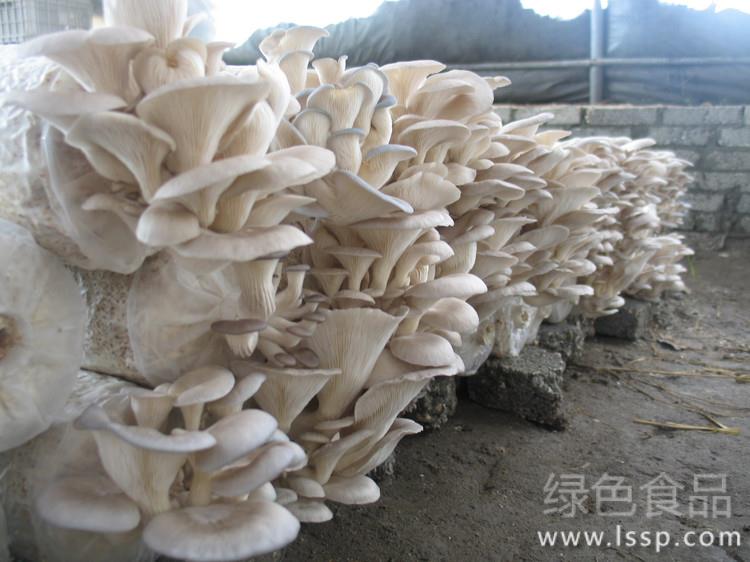
Mushroom water management should be reasonable, pay attention to the nine observations and nine avoidances
Mushroom water management should be reasonable, pay attention to the "nine observations and nine avoidances"
条件筛选