Detailed Guide to Sweet Corn Cultivation Techniques, Full-Course Guidance from Sowing to Management
Autumn corn is best direct-seeded with no-tillage after mid-July. After harvesting the previous corn crop, promptly clean the field, and early sowing at the earliest opportunity is key; deep plowing is generally not required. 1. Sun-dry the seeds for 2-3 days, and soak them for 4-6 hours before sowing to promote uniform and even emergence. Arrange the plant spacing at a density of 3500-4000 plants per 667 sq m...
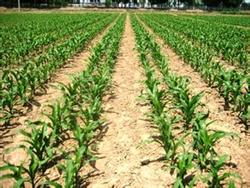 Sweet corn has wide adaptability and high economic benefit. It is characterized by being sweet, tender and not storage-tolerant, and is often constrained by cultivation conditions and market factors. The key to successfully growing sweet corn is mastering seedling raising and preventing cross-pollination of corn, along with a good grasp of its production and cultivation techniques.
1. Variety selection: Choose varieties with broad market demand, high yield and quality, and strong resistance. With good management, fresh ear yield per mu can reach over 2000 jin.
2. Sowing time: In spring, mid to late March; in autumn, before early July.
3. Seedling raising: Choose fertile vegetable garden soil as the seedling bed (if the seedling bed is made directly in the field, mix and spread evenly 10 jin of 15-15-15 compound fertilizer over a 20 sq m seedling bed to improve the fertility of the field seedling bed), and open drainage ditches. Use 40 trays of 100 cells each per mu, laid flat on the prepared seedling bed. In early spring, cover with agricultural film for insulation during seedling raising; in summer and autumn, cover with shade netting for sun protection and moisture retention, and remove the shade netting after the seedlings have 2 leaves.
4. Transplanting to the field
(1) Site selection conditions
Choose paddy-upland fields with high soil fertility and convenient drainage and irrigation.
(2) Fine land preparation
High beds with deep furrows. Plow 20 cm deep. After leveling with a rake, form beds with a bed surface width of 100 cm, furrow width of 30 cm, and furrow depth of 20-30 cm. Break the soil clods on the bed surface into fine, crumbly particles. For the second crop, no-tillage cultivation may be adopted.
(3) Applying sufficient base fertilizer
Per mu, use 3000-4000 jin of decomposed farmyard manure mixed with 100 jin of superphosphate, 20 jin of potassium chloride or 20 jin of imported 15-15-15 compound fertilizer, applied into the planting furrow as base fertilizer when forming the beds, and cover with a thin layer of soil.
(4) Transplanting
1. Spray 150 ml of acetochlor herbicide 3 days before transplanting.
2. Transplanting density: wide row spacing 80 cm, narrow row spacing 50 cm, plant spacing 25-30 cm.
3. Transplanting time and planting method: When the seedlings have 4 leaves, they can be planted with orientation (leaves should be perpendicular to the row direction). After planting, water thoroughly to ensure a full stand.
6. Field management
(1) Fertilization
1. Seedling-promoting fertilizer: 5 days after planting, apply per mu 20 buckets of clear water (diluted biogas slurry) + 5 jin of urea as a drench to promote root growth.
2. Jointing fertilizer: At the 8-9 leaf stage, combined with intertillage weeding, loosening soil and earthing up, apply per mu 25-30 jin each of urea and potassium fertilizer.
3. Ear-filling fertilizer: At the large trumpet stage (about 12 leaves), apply per mu 20-25 jin each of urea and potassium fertilizer,
or 20-25 jin of 15-15-15 compound fertilizer, with weeding, soil loosening, earthing up and hole application.
4. Grain-filling fertilizer: At the pollen-shedding stage, depending on seedling condition, apply per mu 5-10 jin of urea to extend the functional period of green leaves.
5. Judicious foliar fertilizer application: At the 6-9 leaf stage, spray per mu 1 tube of Guoguang corn dwarfing and yield-increasing foliar fertilizer; before flowering, spray once with 1000-fold imported boron fertilizer + 0.4% monopotassium phosphate.
(2) Water management
Irrigate during drought to maintain soil water-holding capacity at 70%. During the flowering stage, irrigate once with running water.
7. Pest and disease control
(1) Seedling stage: Mainly control cutworms, mole crickets, green worms and other pests. (2) Jointing and ear-forming stage: To control corn borer, choose 1000-1500-fold fipronil or 2‰ emamectin benzoate 800-fold, 2-3 times. To control sheath blight, choose jinggangmycin; for corn leaf blight and brown spot, choose 800-fold corn leaf spot enemy or 800-fold chlorothalonil, starting from the jointing stage, combined with pest control, spraying 2-3 times consecutively.
(3) During the ear flowering stage, aphids may cause damage. Choose pirimicarb or imidacloprid-type pesticides (such as Dagongchen, Jindadi, etc.). Pesticide use is prohibited 20 days before harvest.