-
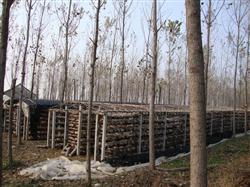
Key Techniques for Summer Cultivation of Black Wood Ear (Auricularia heimuer) in Forest Intercropping
How do you cultivate black wood ear in forest intercropping in summer? Please provide guidance. Under normal conditions, black wood ear grown in forest intercropping should produce 3 flushes. However, at present, after some first-flush wood ears are harvested, the bags become infected with contaminant microorganisms before the second flush even emerges, causing reduced yields or even total crop failure in the second and third flushes, which hurts profits. I. Causes of contaminant microorganism infection during flush transition: (1)...
-
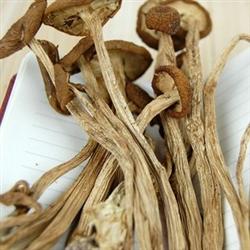
Corn intercropping with tea tree mushroom: planting methods and technical key points
How to intercrop tea tree mushroom with corn? Please refer to the following methods for corn intercropping with tea tree mushroom: 1. Choose a plot with flat land, sheltered from the wind and facing the sun, with convenient water sources, suitable for intercropping in a corn field. 2. Cultivation season. Meet the requirements for tea tree mushroom mycelium growth temperature of 10°C-35°C, optimum temperature 22°C-27°C; fruiting...
-
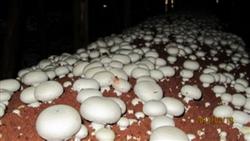
Detailed Guide to the Two-Crop-Per-Year Cultivation Technique for Button Mushrooms
How do you grow button mushrooms with two crops per year? Please provide guidance on the method. For the two-crop-per-year cultivation method of button mushrooms, you can refer to the following approach: 1. Mushroom shed preparation: First, either renovate an existing shed or build a new one directly according to the production plan. The wall thickness should be no less than 0.8 m, and the highest point inside the shed should be no less than 2.5 m. Generally, a length of about 40 m and a width of 6 to...
-
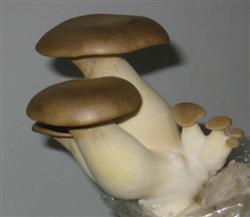
Key Techniques for Two-Crop-a-Year Cultivation of King Oyster Mushroom
How to cultivate king oyster mushroom twice a year? Please advise. King oyster mushroom (Pleurotus eryngii) is mainly grown for its stipe, which is favored by the market for its tender texture and pleasant almond aroma. It is understood that in recent years the market has remained in a state of short supply, and seasonal prices are high, with considerable production and operating benefits...
-
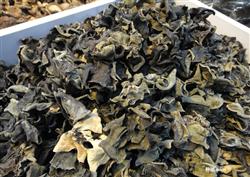
How to grow black fungus (wood ear mushroom) by intercropping? Key technical points explained
How to store wood ear mushrooms properly? Please advise: the optimal storage temperature for wood ear mushrooms is 0°C, relative humidity: above 95%RH. Wood ear mushrooms can be sold fresh or dried. Dried ones store better, but fresh ones have a more delicious flavor, so the choice depends on personal preference. Fresh ones are harder to store; after harvest, store them at low temperature immediately, which can still maintain a...
-
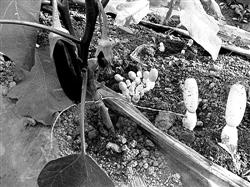
Key Cultivation Techniques for Intercropping Cucumbers with Shaggy Mane Mushrooms
Shaggy mane mushroom, also known as Coprinus comatus, is a typical mesophilic variety. When the soil temperature is below 8°C, it cannot produce mushrooms normally; when the soil temperature is above 30°C, the mycelial vitality declines, the parasitic fungus Psathyrella appears in large numbers, and the shaggy mane crop is nearly wiped out. By cooling in summer and heating in winter, shaggy mane mushrooms can be produced year-round, but in summer...
-

How to Intercrop Bamboo Fungus with Soybeans? Detailed Planting Method
How to intercrop bamboo fungus with soybeans? Here is an introduction. Intercropping bamboo fungus with soybeans solves the problem of building trellises for shade, saves costs, and adds a season of income from soybeans. The following planting method is for reference: 1. Cultivation season: According to local climatic conditions and the growth characteristics of bamboo fungus, the suitable cultivation season is when the temperature is stable at 7-30°C. For spring cultivation, sow between February and May...
-
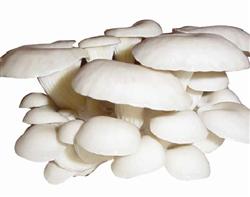
Key Cultivation Techniques for Intercropping Oyster Mushrooms with Cotton
Oyster mushrooms can be cultivated all year round, but those grown in the high-temperature season yield the greatest profit. Reasons: First, summer temperatures are high, making cultivation technically difficult, and pests and diseases occur easily, often leading to cultivation failure. Second, the total area under oyster mushroom cultivation in summer decreases, and total output is low, causing a shortage of fresh oyster mushrooms on the market and driving prices up. Base...
-
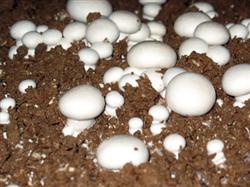
Detailed Explanation of the New Technology for Two Crops of Button Mushrooms in One Year
1. Mushroom shed treatment. In the past, most mushroom sheds used were simple greenhouses with a single-slope design, or simple semi-underground sheds. During low-temperature seasons, it was difficult to use sunlight to raise the temperature, so after cultivation entered November, the shed temperature dropped along with the air temperature. When the lowest shed temperature reached 8°C, mushrooms stopped fruiting, and it was only after the air temperature rose again in March of the following year...
-
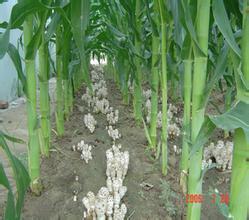
Key Technical Points for Intercropping Shaggy Mane Mushrooms in Pepper Fields
Intercropping shaggy mane mushrooms (Coprinus comatus) in pepper fields is a good way to cultivate them in a semi-wild manner. It can save the expense of building mushroom houses, does not take up extra space, and can greatly increase the economic benefit per unit of land area. Generally, after the peppers are planted, trenches are dug in the middle of the pepper rows, material is laid, and mushroom spawn is scattered. For the convenience of managing and harvesting the mushrooms...
条件筛选