How to Intercrop Bamboo Fungus with Soybeans? Detailed Planting Method
How to intercrop bamboo fungus with soybeans? Here is an introduction. Intercropping bamboo fungus with soybeans solves the problem of building trellises for shade, saves costs, and adds a season of income from soybeans. The following planting method is for reference: 1. Cultivation season: According to local climatic conditions and the growth characteristics of bamboo fungus, the suitable cultivation season is when the temperature is stable at 7-30°C. For spring cultivation, sow between February and May...
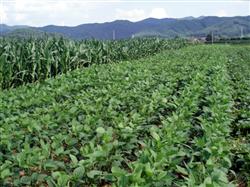
How to intercrop bamboo fungus with soybeans? Here is an introduction.
Intercropping bamboo fungus with soybeans solves the problem of building trellises for shade, saves costs, and adds a season of income from soybeans. The following planting method is for reference:
1. Cultivation season: According to local climatic conditions and the growth characteristics of bamboo fungus, the suitable cultivation season is when the temperature is stable at 7-30°C. For spring cultivation, sow between February and May.
2. Preparation and material stocking before cultivation: After the late rice or autumn crops are harvested in autumn, choose a field with convenient drainage and irrigation, close to a water source, free of pollution, with loose soil rich in humus, good granular structure, not easily compacted, and acidic soil. The cultivation field and several adjacent fields upstream must be fields where bamboo fungus has not been planted in the past 3-4 years. In high-altitude mountainous areas, choose sunny land; in low-altitude areas with high summer temperatures, choose half-shaded and half-sunny fields, and plow and sun-bleach the soil in advance. The cultivation material can be 100% rice husk. Rice husk can be stockpiled year-round. 5-7 days before sowing, choose a sunny day to remove weeds and debris, break up soil clods and rake the field level, broadcast lime over the entire field, and disinfect with 700-fold phoxim solution.
3. Spawn selection and moisture content of the culture material: Choose spawn with white mycelium that is dense, thick, and bundle-shaped, with a spawn age of 60-70 days. Soak the culture material (rice husk) before sowing until thoroughly wet, with a moisture content of 60-70%.
4. Stacking material and sowing: Arrange the soaked rice husk in a north-south direction into beds 70 cm wide and 20 cm high, leaving 30 cm between beds as drainage ditches. When the rice husk pile reaches 15 cm thick, sow block spawn in holes in the center of the culture material (using half of the 700 bottles of spawn per mu), then cover with 5 cm of rice husk, tap lightly and firmly with a wooden board or carrying pole, then spread the remaining half of the spawn on the surface of the material. After that, dig soil from the reserved 30 cm ditch at the edge of the cultivation bed and cover the surface of the material with soil, covering the material surface with 8 cm of soil. The moisture content of the covering soil is best when it forms a ball in the hand and crumbles when released. Finally, cover with rice straw to retain moisture.
5. Soybean intercropping technique: Choose good late-maturing soybean varieties. Because late-maturing soybeans have a long growth period, provide shade for a long time, and have lush branches and leaves, they provide a high degree of shading. Direct sow on both sides of the bed around the Awakening of Insects, with a plant spacing of 50 cm, staggered from each other, not sown symmetrically.
6. Cultivation management:
1. After sowing, keep the soil moist regularly. Generally, the moisture content of the culture material and soil should be maintained at 60-70%. In dry seasons (more than seven consecutive sunny days), water appropriately to retain moisture. During prolonged drought, irrigate with running water and soak for 2-3 hours. Drain promptly in the rainy season so that water stops when the rain stops, to prevent excessive water in the culture material, anaerobic fermentation, and blackening.
2. Soybean management: Generally apply compound fertilizer 1-3 times to promote rapid soybean growth and early shading. If soybean vegetative growth is excessive when bamboo fungus is being harvested, appropriately prune the small basal branches.
3. Remove weeds from the bed surface before bamboo fungus primordia form.
4. Pest and disease control: When mites, white ants, and other pests are found causing damage, spray with 700-fold dichlorvos solution for control.
7. Harvesting and processing: When the bamboo fungus primordium has just opened its cap, harvest promptly. Begin harvesting at around 6 a.m. When harvesting, use a small knife to cut the mycelial cord from the bottom of the volva. Pick the fruiting body, and never pull or tear it forcefully by hand, as this damages the bed and affects the next harvest's yield. To improve product quality, you may harvest the fruiting body before the skirt is released. Immediately after harvesting, use a small knife to cut off 2-3 cm of the cap top, then make a light longitudinal cut on the cap and peel off the dirty green tissue of the cap. Discard the volva. After the skirt has fully unfolded normally, place it on a bamboo sieve lined with gauze for drying. After drying, tie into small bundles by grade, put into plastic bags, then place in cardboard boxes, and store in a cool place until sale.
Click to get more bamboo fungus cultivation techniques
Click to get more edible mushroom cultivation techniques