Key Cultivation Techniques for Intercropping Cucumbers with Shaggy Mane Mushrooms
Shaggy mane mushroom, also known as Coprinus comatus, is a typical mesophilic variety. When the soil temperature is below 8°C, it cannot produce mushrooms normally; when the soil temperature is above 30°C, the mycelial vitality declines, the parasitic fungus Psathyrella appears in large numbers, and the shaggy mane crop is nearly wiped out. By cooling in summer and heating in winter, shaggy mane mushrooms can be produced year-round, but in summer...
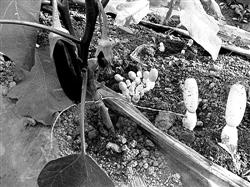
Shaggy mane mushroom, also known as Coprinus comatus, is a typical mesophilic variety. When the soil temperature is below 8°C, it cannot produce mushrooms normally; when the soil temperature is above 30°C, the mycelial vitality declines, the parasitic fungus Psathyrella appears in large numbers, and the shaggy mane crop is nearly wiped out. By cooling in summer and heating in winter, shaggy mane mushrooms can be produced year-round, but summer cooling is costly and yields low returns; intercropping shaggy mane mushrooms in vegetable greenhouses in winter not only saves heating costs but also does not occupy the vegetables' effective space, and can even provide some carbon dioxide gas fertilizer for the vegetables. It is a cultivation model worth promoting.
1. Raw material formulas
(1) Wheat straw 60%, dry cow dung 25%, wheat bran 12%, cornmeal 3%. (2) Rice straw 30%, corn stalks 20%, wheat bran 15%, cornmeal 5%. (3) Corn cobs 40%, soybean stalks 45%, wheat bran 12%, cornmeal 3%. (4) Spent oyster mushroom substrate 40%, soybean stalks 45%, wheat bran 13%, cornmeal 2%.
For each of the above 4 formulas, add to every 50 kg of culture substrate 0.5 kg of special fertilizer for shaggy mane mushroom, 2.5 kg of quicklime, 0.1 kg of 25% carbendazim, 0.02 kg of magnesium sulfate, 0.005 kg of zinc sulfate, and 60-80 kg of water.
2. Raw material processing
Fully sun-dry and crush corn cobs, soybean stalks, rice straw and other straw materials so that the corn cob particles are similar in size to corn kernels, and the wheat straw, rice straw and soybean stalks are similar to bran crumbs. This gives good aeration and strong water-holding capacity, suitable for mycelial growth.
3. Mixing method
Use the "pile fermentation with oxygen supply" method for mixing. (1) Spread the dry materials on ground that has been disinfested. Add the amounts of special fertilizer, water and quicklime required by the formula to the dry materials. Mix well and pile into a rectangular heap. Cover it and poke many air holes. Spray the surface of the pile with insecticide. Cover with plastic film and prop up the edges all around to let in oxygen. When the pile temperature rises to 62°C, keep it for 48 hours, then turn the pile. (2) While turning the pile, add each auxiliary material, mix well, then pile up again, poke holes, spray pesticide, cover with film, and when the pile temperature rises again to 62°C, keep it for 36 hours, then turn the pile. (3) While turning the pile, spray carbendazim, adjust the moisture content to 65%; use quicklime to adjust the pH to 8, mix thoroughly, and bag when the pile temperature drops below 25°C.
4. Bagging and mycelial growth
Use the "multi-hole oxygen-supplying bagging at both ends" technique. Choose low-pressure polyethylene plastic bags with a diameter of 26 cm and a length of 45 cm. Fill with 3 layers of substrate, inoculate 4 layers of spawn, with a spawn amount of about 18%. At both ends of the bag, use a stick 10-12 mm in diameter to poke 4-5 air holes each, with a depth of 1/2 the bag length. In 15-20 days the mycelium grows throughout the bag; then cover with soil.
5. Soil-covering management
For cultivating shaggy mane mushroom, mainly use the idle strip of land 70 cm wide at the very front of the cucumber greenhouse. Along the length of the greenhouse, dig a trench 40 cm deep and 65 cm wide. Cover with 10 cm of fermented rice straw and wheat straw. Remove the plastic film from the spawn bags and arrange them in 3 rows in the bed, filling the gaps tightly with soil, then cover the bags with soil 3-3.5 cm thick. After covering with soil, spray once with beta-cypermethrin and kemeiling. After 2-3 days, water thoroughly once. After 15-20 days, shaggy mane primordia appear in large numbers. Harvest when the cap of the fruiting body separates from the stipe to ensure commercial quality. After harvesting one flush, supplement with nutrient water (100 kg water plus 0.2 kg monopotassium phosphate) and spray once with beta-cypermethrin. Generally 4-6 flushes can be harvested.
6. Main advantages
(1) The isolation strip formed by the buried 60 cm wide shaggy mane mushroom bags can effectively block the low soil temperature outside the greenhouse from conducting into the greenhouse, and the shaggy mane substrate can generate heat, raising the soil temperature and air temperature inside the greenhouse by 1-2°C. In addition, the carbon dioxide released by the shaggy mane mushroom provides gas fertilizer for cucumber growth, while the oxygen released by the cucumbers provides conditions for shaggy mane growth; the two are mutually beneficial. (2) The reason cucumbers intercropped with oyster mushrooms have low yields is that oyster mushrooms release large amounts of spores, seriously affecting cucumber growth, whereas shaggy mane mushrooms are harvested when the cap opens, release no spores, and do not affect cucumber growth.