-
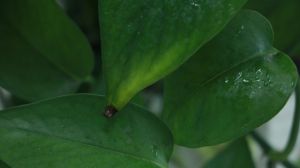
Can pothos be given compound fertilizer? A guide to the correct method of use
When growing pothos, you can apply compound fertilizer to it, because this kind of fertilizer has no unpleasant odor and has good fertilizer efficiency, able to meet the nutrients the plant needs for growth. The time of application is generally in the spring and summer growing season, and the type is best chosen as a nitrogen-potassium compound fertilizer. In addition, note that you must not apply too much fertilizer at one time.
-
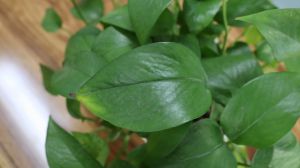
What fertilizer does pothos need? A detailed guide to the correct fertilizing method
The main elements pothos needs for growth are nitrogen and potassium. When fertilizing it, nitrogen fertilizer should be the main choice, with potassium fertilizer as a supplement. Specifically, you can apply fertilizers made specially for pothos available on the market, or you can apply fermented and diluted rice water.
-
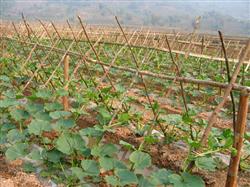
Correct Methods and Techniques for Fertilizing Pumpkins
How should pumpkins be fertilized? Here is a detailed introduction. When growing pumpkins, fertilization can follow the methods below: (1) Grow strong seedlings: Pumpkin cultivation has two methods: seedling transplanting and direct sowing in the open field. Early-maturing cultivation all uses seedling transplanting, while mid- and late-maturing cultivation can use direct sowing. ① Seedling raising: Early-maturing varieties include Niutui Pumpkin, Guizhou Xiaoqinggua, Ye'ersan Pumpkin, Xiaomopan, etc.; mid-maturing varieties include Shizimei Pumpkin, Hanchuan Shibing, etc.; late-maturing varieties include Boshanchang, Pillow, Tiepi, Damopan, etc.
-
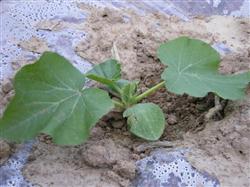
How should base fertilizer be applied correctly when growing pumpkins?
How do you apply base fertilizer when growing pumpkins? Please advise. Base fertilizer for pumpkins is mainly organic fertilizer, combined with a nitrogen, phosphorus and potassium compound fertilizer. Commonly used base fertilizers include barnyard manure, compost or green manure, etc., applied in fairly large amounts, generally accounting for 1/3 to 1/2 of the total fertilizer application, with 3000 to 4000 kg of organic fertilizer applied per 667 sq m. All or...
-
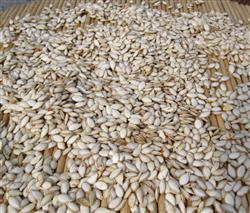
The correct method for harvesting and sun-drying pumpkin seeds
How are pumpkin seeds harvested and sun-dried? Here are the following methods for harvesting and sun-drying pumpkin seeds for reference: 1. Harvesting the pumpkins. Harvest in batches according to the ripeness of the pumpkins, and stack them in batches. 2. After-ripening. The after-ripening of pumpkins is very important for promoting plump seeds and increasing the yield and quality of white pumpkin seeds. Larger pumpkins with better ripeness...
-
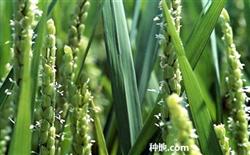
What is the correct application method for rice flower-promoting fertilizer?
How should rice flower-promoting fertilizer be applied? Please guide. Rice flower-promoting fertilizer and flower-preserving fertilizer are collectively called ear fertilizer. Flower-promoting fertilizer is generally applied from the 4th leaf from the top to the 3rd leaf from the top stage of rice. The 4th leaf from the top to the 3rd leaf from the top stage is a reverse leaf age stage. For early-maturing late japonica rice, it is generally applied when the first internode has reached its final length and the second internode is elongating. Flower-promoting fertilizer should be applied according to the seedlings. High-yield fields generally do not apply flower-promoting fertilizer. Only fields with small population growth and obvious yellowing at the early stage of jointing and ear elongation should be topdressed with an appropriate amount. Fields with little base fertilizer, a small population, and obviously faded leaf color should be applied early; fields with sufficient base fertilizer, a large population, and no yellowing of leaf color should be applied less or not at all.
-

How to sprout rice seeds well? Mastering the correct method is key
How to sprout rice seeds well? Introducing a new method for sprouting rice seeds can solve this problem. The main advantages of this method are: first, it can increase the sprouting rate to above 95%, with strong sprouts and short roots, and it is safe and reliable; second, it shortens the seed soaking and sprouting time. From soaking to standard sprouts, it generally takes only about 48 hours,...
-
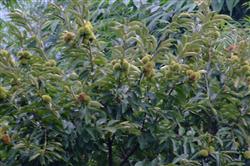
Correct Methods and Technical Key Points for Applying Biogas Fertilizer to Chestnut Trees
How should biogas fertilizer be applied to chestnut trees? Please provide an introduction. Chestnut growth requires nutrient elements such as nitrogen, phosphorus, potassium, calcium, iron and boron, and the soil must be permeable and well aerated, with good water and fertilizer retention. Using biogas fertilizer to grow chestnuts can meet most of the nutrients needed for their growth. Biogas fertilizer is rich in elements such as nitrogen, phosphorus, potassium, calcium, magnesium and iron...
-
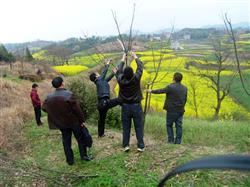
How to prune a chestnut tree? Teach you the correct pruning method
How to prune a chestnut tree? Please give guidance. A chestnut tree can be pruned by referring to the following methods: 1. Pruning of young trees. The tree forms of chestnut are mainly two types: the natural open-center form and the central-leader layered form. 1. Natural open-center form: This form has no central leader, only 3-4 main branches, and the natural trunk grows outward at an angle. The canopy is short and spreading...
-
Correct Methods and Technical Key Points for Rice Field Drying
How to balance fertilization in rice? Please advise. Balanced fertilization technology for rice is a scientific fertilization method that involves understanding soil fertility status through soil testing, and based on information such as the crop's nutrient requirements, implementing rational fertilizer ratios and application to promote high yield, high quality, and high efficiency in crops. It includes combining organic fertilizer with chemical fertilizer, nitrogen fertilizer...
条件筛选