Correct Methods and Techniques for Fertilizing Pumpkins
How should pumpkins be fertilized? Here is a detailed introduction. When growing pumpkins, fertilization can follow the methods below: (1) Grow strong seedlings: Pumpkin cultivation has two methods: seedling transplanting and direct sowing in the open field. Early-maturing cultivation all uses seedling transplanting, while mid- and late-maturing cultivation can use direct sowing. ① Seedling raising: Early-maturing varieties include Niutui Pumpkin, Guizhou Xiaoqinggua, Ye'ersan Pumpkin, Xiaomopan, etc.; mid-maturing varieties include Shizimei Pumpkin, Hanchuan Shibing, etc.; late-maturing varieties include Boshanchang, Pillow, Tiepi, Damopan, etc.
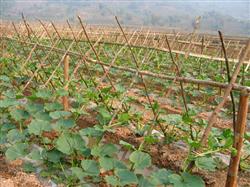
How should pumpkins be fertilized? Here is a detailed introduction.
When growing pumpkins, fertilization can follow the methods below:
(1) Grow strong seedlings: Pumpkin cultivation has two methods: seedling transplanting and direct sowing in the open field. Early-maturing cultivation all uses seedling transplanting, while mid- and late-maturing cultivation can use direct sowing.
① Seedling raising: Early-maturing varieties include Niutui Pumpkin, Guizhou Xiaoqinggua, Ye'ersan Pumpkin, Xiaomopan, etc.; mid-maturing varieties include Shizimei Pumpkin, Hanchuan Shibing, etc.; late-maturing varieties include Boshanchang, Pillow, Tiepi, Damopan, etc.
Raising pumpkin seedlings and transplanting them early can extend their growing period, which helps achieve high yields and increase returns. Before sowing, after seed selection and disinfection treatment, germination can be carried out before sowing. For the seedling facilities and the preparation of nutrient soil, you can refer to the content on cucumbers.
The seedling age for early-maturing varieties is 40-45 days. Standards for strong seedlings: 3 true leaves have grown aboveground, plant height is 10-15 cm, leaves are dark green, stems are thick and strong, the root system is well developed and fills the soil ball, and there are no pests or diseases.
② Direct sowing in the open field: Pumpkins grown for late-maturing cultivation or scattered planting beside houses and along roadsides are all directly sown after the final frost period. Generally, seeds are germinated first and then directly sown. Dry seeds can also be directly sown. Direct sowing is simple and saves labor, the root system develops very well, and drought resistance is strong. Although the maturity period is later, the yield is high and the quality is good.
(2) Apply heavy base fertilizer and transplant at the right time: Pumpkins have well-developed roots and strong fertilizer uptake capacity. Before winter, deep plow 30 cm, and the following spring plow twice. Apply 75,000 kg of fully decomposed high-quality organic fertilizer per hectare, broadcasting it before the second plowing or applying it in a concentrated way in the sowing beds. After plowing and leveling, make sowing beds or transplanting beds, and transplant about 4,500 plants per hectare.
After pumpkin transplanting and seedling recovery, if the seedlings are weak and the leaf color is pale and yellowing, a fertilizer for vegetative growth can be applied along with watering, applying 3,750-4,500 kg of dilute manure water per hectare. When the plants enter the mid-growth stage and 1-2 young fruits have set, a heavy fruit-promoting fertilizer should be applied before the rows close, generally applying 15,000-22,500 kg of fully decomposed dilute manure water or cake fertilizer water per hectare. If it is dry during this period, watering can be combined, and 225-300 kg/hectare of compound fertilizer can be applied with the water. After the fruits begin to be harvested, to prevent premature aging of the plants and increase later yields, a small amount of organic fertilizer can also be applied. If young pumpkins are not harvested and the main goal is to harvest mature pumpkins, there is no need to apply fertilizer later; just pay attention to watering or drainage. In the mid-to-late period, 0.2%-0.3% potassium dihydrogen phosphate can also be sprayed, once every 7-10 days, for 2-3 consecutive sprays.
Pumpkins like organic fertilizer, and the amount of fertilizer and nutrient combination should be determined according to plant growth and soil fertility. If the growing point of the vine is thick and upturned and the leaf color is dark green, fertilizer should not be applied, to prevent excessive vegetative growth and fruit abortion; if the leaf color is light green or yellowing, fertilizer should be applied promptly.
Click to get more pumpkin cultivation techniques
Click to get more vegetable cultivation techniques