-

How long does a newly arrived Phalaenopsis need to acclimatize? Correct care methods during the acclimatization period
In September and October, the temperature in the south is most suitable for growing Phalaenopsis orchids. Especially for beginners, orchids are most likely to adapt to a new environment after being brought home, and afterward, as long as they are cared for normally, they can be helped to bloom smoothly. Generally speaking, after buying a Phalaenopsis and bringing it home at this time, with the ambient temperature within 15 to 28°C, as long as you keep
-

Should you trim the roots of a Phalaenopsis? Trim correctly in these 3 situations for strong roots and abundant blooms
If you see the roots in a Phalaenopsis pot either sticking out in a tangled mess, or some turning black and soft, should you trim them or not? Some people think "roots are the life of the flower" and are afraid of harming it by trimming; others think "if you don't cut bad roots, they'll spread" and go at it too harshly. In fact, Phalaenopsis roots shouldn't be trimmed casually - it depends on the situation. Trim correctly and it will
-

What to Do When Phalaenopsis Leaves Grow Every Which Way? A Guide to the Best Time to Correct Them
Is your Phalaenopsis like this too? When you bought it, the leaves were neat and tidy, but after two months of growing them, they start to "bare their fangs and brandish claws" - some droop outside the pot, some crane their necks toward the light, and others overlap and block each other. The whole plant looks like it has lost all its elegance, leaving only mess, and it does not look energetic at all? Don't worry, this "
-
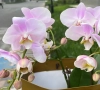
What are the signs of insufficient light in Phalaenopsis orchids? Here's how to handle it correctly
These days, office workers love growing greenery at their desks to relieve stress, and the elegant, easy-to-care-for Phalaenopsis orchid is a favorite for many! But if you don't pick the right spot with proper light at your desk, Phalaenopsis orchids can easily "throw a tantrum," showing poor growth, yellowing leaves, and dropping buds, which is distressing to see and ruins your stress-relieving mood. Don't panic; first understand the specific signs of insufficient light
-
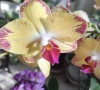
Poor ventilation has serious consequences for Phalaenopsis orchids; if ventilated correctly, can you use a fan?
1. 90% of people overlook this! The 3 major harms of a poorly ventilated environment 1. Harm one: roots suffocate in damp conditions and rot. Consequence: the potting medium stays wet and airless for a long time, the roots are deprived of oxygen and turn black, and their water-absorbing function is lost. Data: in a sealed environment, the rate of root rot in Phalaenopsis orchids is 60% higher than in a ventilated environment 2. Harm two:
-

The correct way to water Phalaenopsis orchids in winter: cold water or warm water?
When watering Phalaenopsis orchids in winter, on a freezing day, do you just fill a basin with tap water and pour it on with a splash, or should you be a bit more particular and use warm water? Will cold water "frostbite" its roots? This question seems like a small matter, but in fact many flower growers have stumbled over it. Let's make the answer clear first: you definitely should use warm water, don't just pour tap water straight on.
-
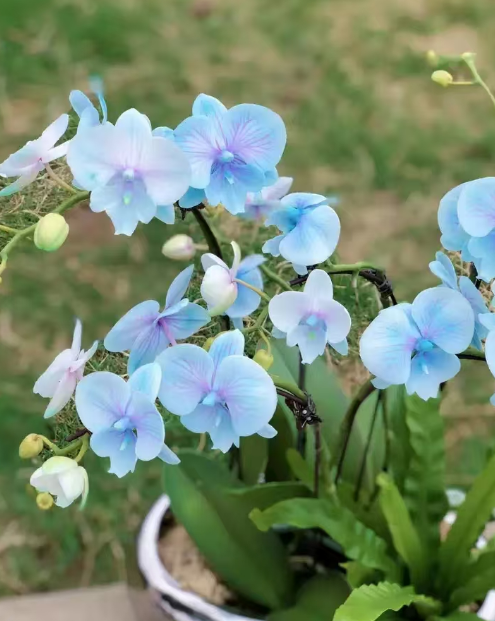
Should rootless side shoots on Phalaenopsis orchids be cut off? Here's the correct way to separate them
Once you've grown Phalaenopsis orchids for a while, you'll notice that old plants and new plants have completely different "temperaments" - they differ greatly just in watering, let alone flowering performance. So how should you care for this old-and-new pair in summer so they both grow smoothly? First, let's talk about the difference in watering. Old plants, well, their root systems are already established, and some old roots on the outside
-
Can a Phalaenopsis survive if its crystal head (root tip) rots? Here's the correct way to save it
When growing Phalaenopsis orchids, nothing is more distressing than seeing the crystal head (root tip) turn black and rot, but as long as you treat it promptly and adjust your care routine, there is a high chance it can be saved! Today I've put together the detailed treatment steps and follow-up care points, so even beginners can follow along. 1. Emergency root rot treatment If the crystal head has rotted, it means the root system is already infected, so you must act decisively to stop
-

Do side shoots on Phalaenopsis affect flowering? Learn how to divide them correctly
Fellow Phalaenopsis growers may notice a small side shoot suddenly sprouting next to an otherwise healthy plant. It looks interesting, but it also makes you uneasy: will this thing affect flowering? And if you want to separate it and grow it on its own, how should you go about it? Will a side shoot affect flowering? Actually, it depends on the situation. If the Phalaenopsis is
-

Can You Use an Unperforated Milk Tea Cup for Phalaenopsis? A Detailed Guide to the Correct Watering Method
Nowadays, people can learn many money-saving methods online, including using cups as pots for growing flowers. Take using cups to grow Phalaenopsis as an example: it is very easy to find tutorials online teaching how to make orchid pots out of milk tea cups. As a result, many questions from beginners have arisen, including what potting medium is suitable? What should be noted when using an unperforated milk tea cup?
条件筛选