-
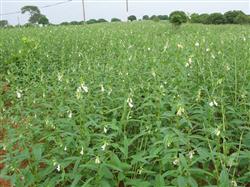
How should summer sesame be fertilized? Master the correct fertilization method
How should summer sesame be fertilized? Please provide guidance. For high-yield cultivation of summer sesame, fertilization should involve heavy and shallow application of base fertilizer, a moderate amount of seed fertilizer, heavy application of flower bud fertilizer, and supplemental spraying of phosphorus and potassium fertilizers; organic fertilizer should be the main type, combined with phosphorus and potassium fertilizers, and the amount of chemical fertilizer should be minimized as much as possible to improve sesame quality. For every 100 kg produced...
-
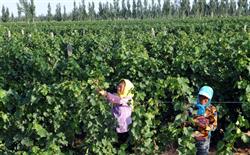
What is the correct method for summer pruning of grapes?
How do you prune grapes in summer? Please explain the pruning method. Summer grape pruning can be done with reference to the following methods: Shoot removal. Shoot removal is generally carried out from grape bud break to the inflorescence emergence stage. The earlier the shoots are removed, the less nutrients are consumed. The method is: on the trunk and old canes, remove all sprouting buds, twin buds, thin and weak buds, diseased and pest-damaged buds, overly dense buds, and buds with few fruit, so that the retained buds are evenly distributed, grow vigorously, and fruiting is promoted.
-
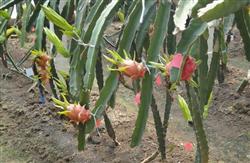
What is the correct way to fertilize dragon fruit?
How do you fertilize dragon fruit properly? Please explain the methods. The following fertilization methods for dragon fruit are for reference: (1) Ring fertilization, also called circular fertilization. It involves digging a ring-shaped trench slightly away from the outer edge of the canopy and applying fertilizer there. This method has the advantages of being simple to carry out and economical with fertilizer. However, digging the trench easily cuts horizontal roots, and the fertilization area is relatively small...
-
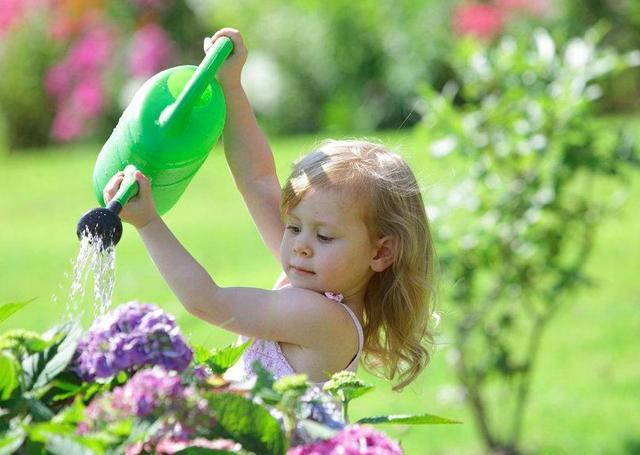
How do beginners water flowers correctly? Do it this way and you absolutely cannot go wrong
Watering is a regular part of the maintenance work of growing flowers. Below are some little tips on how to water cleverly when growing flowers at home. 1. Water herbaceous plants more, woody plants less. Herbaceous flowers have shallow roots and a poor ability to absorb water, their bodies need a lot of water...
-
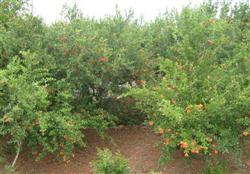
How to prune a pomegranate tree correctly in summer?
How should a pomegranate tree be pruned in summer? An introduction: Summer pruning of pomegranate trees can be based on the growth characteristics of pomegranate branches. For young trees, during shaping, excessively vigorous new shoots growing from the main branches should be promptly bent, pinched, and removed to maintain the absolute dominance of the main branches' growth. For trees in the fruiting stage, excessive buds should be promptly removed, and suckers should be thinned out. In particular, suckers near pruning and saw cuts and at underground root crowns should be repeatedly removed multiple times. When removing underground suckers, be careful not to damage the bark. Vigorously growing new shoots should be promptly pulled down to adjust their angle or heavily pinched to develop fruiting branch groups. Pomegranates often have many secondary, tertiary, and even quaternary branches, so pinching should be repeated to control excessive growth. For young, vigorous trees with low fruit set rates, ringing can be done on vigorous branches during the flowering period, preferably with two ring cuts spaced 10 cm apart.
-
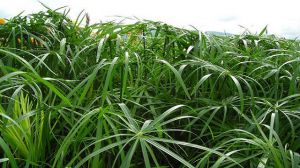
What kind of water is best for growing Cyperus alternifolius (umbrella papyrus)? A detailed guide to the correct method of choosing water
Cyperus alternifolius requires that the water quality must be acidic. There are many types to choose from, such as lake water, river water, well water, and so on. Tap water can also be used, but it needs to be left to stand for a period of time, or used after being exposed to the sun. It is best not to use mineral water. Among all waters, the best is electrolyzed ionized water.
-
What is the correct method and purpose of draining paddy fields for rice?
How do you drain a paddy field for rice? What does it do? Please explain the field-draining method. Draining paddy fields is one of the main technical measures for increasing rice yields and promoting early ripening. 1. Main purposes of field draining. 1) Control ineffective tillering and consolidate effective tillering. When rice tillering has reached a certain number, that is, once there are enough seedlings, in our province, in terms of time, the effective tillering termination period is around the end of June. Early tillers can form panicles, while tillers after the termination period cannot form panicles or only form small panicles. In production, by draining the field, the young tiller buds at higher positions cannot get water and fertilizer and stop growing, reducing nutrient consumption, so that the main stem and large tillers receive more nutrient supply, laying a foundation for strong stems and large panicles.
-
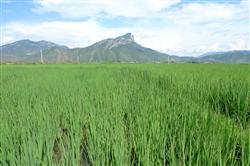
What are the correct methods and precautions for draining and drying rice fields?
How to dry a rice field properly? An introduction. Draining and drying a rice field is an important measure for improving paddy soil structure, promoting rice seedling roots to grow downward, enhancing rice root vigor, increasing rice stalk toughness and lodging resistance, controlling ineffective tillering, raising the percentage of productive tillers, improving the field microclimate, and reducing the occurrence of rice diseases and insect pests. But...
-
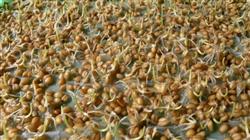
How to save wheat seeds? I'll teach you the correct seed-saving method
It's wheat harvest season again, and here's how to save wheat seeds: The quality of wheat seeds is the foundation and key to a good wheat harvest. In principle, when choosing varieties, farmers should buy wheat varieties that have passed national approval from qualified seed suppliers. Some farmers use their own saved wheat seeds, and they should follow five points....
-
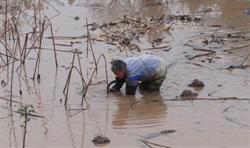
How to harvest lotus root properly? Master the correct harvesting method
How is lotus root best harvested? Please give guidance. Harvesting lotus root too early affects yield, while harvesting too late lowers quality. Therefore, the harvest time should be determined according to how early or late the plants develop and the intended use. ① Huaxiang lotus root. The newly formed lotus root is called huaxiang lotus root, also known as tender lotus root. This kind of lotus root has a very low starch content and features a fresh, tender, sweet and crisp flavor. When the lower-layer leaves of huaxiang lotus root are yellow-green, the middle-layer leaves are dark green, the upper leaves have all taken shape, and no new leaves appear in the whole plant, it can be harvested. Early September is the best time, but harvesting at this time affects yield, so only a small amount should be harvested. ② Mid-Autumn lotus root. Mid-Autumn lotus root can be harvested around the Mid-Autumn Festival, when the lower-layer leaves in the whole field have withered, the middle-layer leaves are yellow, and the upper-layer leaves are yellow-green. Harvesting Mid-Autumn lotus root is mainly to meet people's needs for the Mid-Autumn Festival and National Day. ③ Red-rust lotus root and white-rust lotus root. Red-rust lotus root is generally harvested in mid-October, named because the surface of the lotus root has a rust color at this time. At this stage the lotus root contains more starch and can be used for cooked food or processed into lotus root powder. By the end of October, the redness of the lotus root fades and turns white, and it is called white-rust lotus root. At this time the lotus root is rich in starch, suitable for processing and eating, and can also be stored until after the beginning of spring the following year.
条件筛选