-

Degradable-film controlled-release fertilizer for rice successfully developed in Hunan Province
The Soil and Fertilizer Institute of Hunan Province has developed a degradable-film controlled-release fertilizer for rice that can be widely applied in rice-growing regions of China with no side effects. Using natural and semi-natural polymer materials as the main coating components and adopting a self-developed new fluidized dual-spray-bed coating process, the Soil and Fertilizer Institute of Hunan Province developed a degradable-film controlled-release fertilizer whose nutrient release can be artificially controlled within 30 to 330 days. This controlled-release fertilizer is non-toxic, completely degrades within 2 years after being applied to the soil with no residue, and can reduce fertilizer pollution of the atmosphere, soil, water bodies and other environments.
-
Citrus pests can be controlled with Pinellia ternata juice.
Take 1 kg of freshly dug Pinellia ternata (crow-dipper) tubers, chop them, add 3 kg of water and grind into a slurry; for every 1 kg of slurry, add 30-40 kg of water and spray it on citrus trees; or chop 1 kg of Pinellia ternata, add 5 kg of water and boil for 2 hours, then after filtering dilute the stock solution 20-30 times and spray. The control effect against citrus scale insects, red spider mites and aphids reaches over 98%.
-
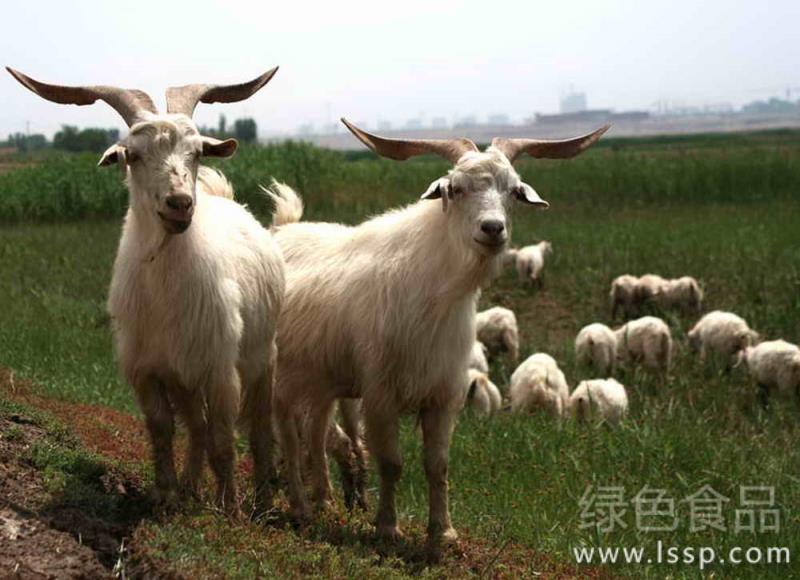
Sheep foot-and-mouth disease has a high mortality rate; how can it be prevented and controlled scientifically?
Sheep foot-and-mouth disease has a high mortality rate; how to prevent and control foot-and-mouth disease in sheep
-
What causes premature senescence in cotton seed production fields? How should it be prevented and controlled?
As cotton seed production fields are planted year after year, premature senescence occurs from time to time, and has become an important factor restricting the increase of per-unit yield and the improvement of quality in seed production fields. 1. Causes of premature senescence 1. Continuous successive cropping of seed cotton fields In cotton-growing areas, cotton has been planted continuously on the same land for many years, resulting in a lack of organic matter in the plow layer, which cannot satisfy the soil's sustained fertilizer supply effect. At the same time, successive cropping causes the accumulation of pathogenic bacteria in the soil and a reduction in the number of insect-resistant bacteria, blocking the normal growth of the cotton root system, thereby affecting the upper growth of cotton and causing premature senescence. 2. Cotton
-
How are cotton seedling diseases diagnosed and controlled?
Diagnosis and Control of Cotton Seedling Diseases Cotton seedling diseases are numerous, but they can be grouped into two main types: root diseases and leaf diseases. Root diseases often cause seed rot and sprout rot before emergence, and root rot and stem-base rot after emergence, and are the main cause of missing plants and broken rows in cotton fields. Common ones include damping-off (Rhizoctonia), anthracnose, red rot, and Pythium damping-off. Leaf diseases damage the cotyledons, true leaves, and stems of cotton seedlings, and in severe cases the stem tips and leaves wither and drop off. Common ones include black spot, brown spot, cotton seedling blight, and stem blight. This film focuses on summarizing and introducing several
-
How can bamboo-leaf grass in cotton fields be controlled effectively?
First choose a suitable herbicide, then decide the dosage according to the weed species, leaf age and humidity level. For example, when using fluazifop-P-butyl to control annual weeds, when soil moisture is suitable, the effective ingredient dosage per mu is 9-17 grams; under drought conditions it is 17-24 grams; to control perennial weeds, the effective ingredient dosage per mu is 27-45 grams. Spray on the stems and leaves when grass weeds are at the 2-5 leaf stage. In summer, apply the herbicide on windless days, in the early morning and evening when temperatures are lower; uniform spraying is required, and keeping
-
Licorice should not be stored for too long; the storage time of medicinal materials must be reasonably controlled
Licorice is generally stored as compressed bales wrapped in burlap, each weighing 50 kg, kept in a dry, ventilated place, with a safe moisture content of 12%-14% for the commodity. There are more than ten kinds of warehouse pests of licorice, including the coffee bean weevil, the brown mulberry borer, and the four-spotted chestnut borer. Fumigation with nitrogen or carbon dioxide for 514 hours can kill all adults and larvae, with no obvious change in the inner quality of licorice. Licorice is prone to mildew. If the air humidity is too high, mold spots or white and green mycelium easily appear on the surface of licorice. The following measures can be taken for prevention and control
-
Rice midge harms rice, how can it be controlled effectively?
Rice midge, commonly known as red worm or red thread worm, damages the young roots and young shoots of rice with its larvae, causing floating seedlings, and feeds on the embryo and endosperm of ungerminated seeds, preventing the seeds from germinating. Rice seedling fields and direct-seeded fields suffer severe damage. The adult is a small moth, with wings shorter than the body; when resting, the front legs are raised and swing up and down. The larvae are red or pale yellow, with a limb-like protrusion on the ventral side of the prothorax. It occurs 2-3 generations per year, and the first generation damages rice. It overwinters as nymphs and adults in weeds. Adults appear in early May of the second year, and lay eggs in late May.
-
How should reishi mushroom bridge worms be prevented and controlled?
The reishi mushroom bridge worm (scientific name to be determined) belongs to the order Lepidoptera, family Geometridae. This pest damages reishi mushroom fruiting bodies. Young larvae feed on the surface and edges of the cap, causing pits and notches. After the 3rd instar, they can bore directly into the interior of the fruiting body and excrete large amounts of frass, which not only contaminates the mushroom bodies but also encourages the proliferation of weeds such as green mold, harming reishi mushroom growth and reducing yield and quality. (1) Morphological characteristics. Adult: body length 12 mm, wingspan 25-28 mm, body grayish black; antennae filiform, outer margin of forewing with 8 small black spots, a larger black spot in the middle of the costal margin,
-
How should Neurospora disease in lingzhi (reishi) be prevented and controlled?
The scientific name of Neurospora is Neurosporasitophila Sh. et Dodge; it is also called red bread mold (Neurospora sitophila) or red bread mold, bread mold, Neurospora, and Monilia. It belongs to the subdivision Ascomycotina, order Sordariales, genus Neurospora. It is a contaminant fungus that poses a very great threat in the production of lingzhi edible mushroom spawn. It spreads relatively quickly. Symptoms: after the mother spawn is infected, flesh-red to red conidial masses form on the outside of the cotton plug, surrounding the entire bottle mouth, and at the slightest touch there is a phenomenon of powder scattering and spreading.
条件筛选