-

What causes fertilizer burn in cotton, and how should it be prevented and controlled?
Causes of fertilizer burn in cotton and prevention and control methods
-

How the International Standard for Controlled-Release Fertilizers Came to Be: Led by China
How the International Standard for Controlled-Release Fertilizers, Led by China, Came to Be
-
Leaf yellowing genes can be controlled, a solution to the yellow leaf problem
Leaf yellowing genes can be controlled
-
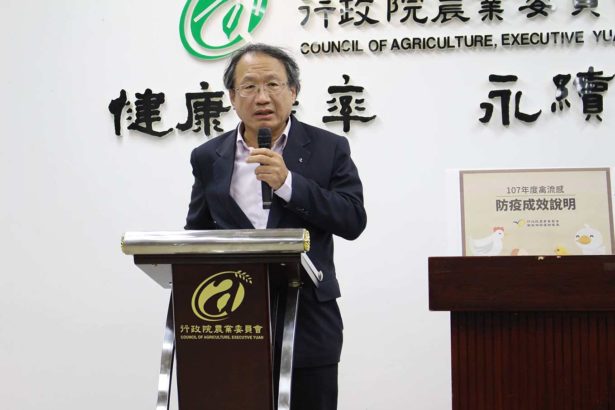
Avian influenza runs rampant in the cold winter, and mixed raising of three generations of laying hens is the toughest; open-air duck farming must be tightened and controlled
Battling the peak of avian influenza in the cold winter! Mixed raising of three generations of laying hens is the toughest; open-air duck farming must be tightened and controlled
-
Weeds in sesame fields can be controlled with the herbicide WhiPSuper
[Trade name]WhiPSuper (WhiPSuper) [Common name]fenoxaprop-p-ethyl (fenoxaprop-p-ethyl) [Formulation]6.9% emulsifiable concentrate, 8.05% emulsifiable oil [Dosage]To control barnyardgrass, foxtail, green foxtail, crabgrass and other annual grass weeds, use 750-900 ml of 6.9% WhiPSuper per hectare or 600-750 ml of 8.05% WhiPSuper. To control wild oat, use 900-1050 ml of 6.9% WhiPSuper per hectare
-
How should cutworms be controlled in Angelica sinensis
Cutworms, also known as "ground silkworms" and "black ground silkworms." They belong to the order Lepidoptera, family Noctuidae. The cutworms affecting Angelica sinensis are mainly the black cutworm and the yellow cutworm, and their damage and control measures are the same. 1. Damage: The larvae damage Angelica sinensis seedlings, hiding by day and emerging at night; at the young instar stage they mostly damage tender leaves and tender growing tips, biting through the root crown and causing missing plants and broken rows. 2. Morphological characteristics: The adult black cutworm has a body length of 16-23 mm and a wingspan of 42-54 mm. The female moth's antennae are filiform, and the male moth's are bipectinate. The forewing is dark brown between the costal margin and the outer transverse line. Between the inner transverse line and the outer transverse line there are distinct kidney-shaped markings, ring-shaped markings and rod-shaped markings. The hindwing is grayish white, with the veins and margins dark brown. The abdomen is gray. The egg is hemispherical, initially milky white, later turning yellow, and grayish purple just before hatching. Mature larva: body length 37-47 mm. The head is yellowish brown, the body is yellowish brown to dark brown, with pale longitudinal bands on the back. The body surface is rough, covered with small round black granules. The anal plate is yellowish brown, with two dark brown longitudinal bands. Pupa: body length 18-24 mm. Reddish brown and glossy.
-
Rice physiological red blight can be controlled with raw gypsum powder
Rice physiological red blight often occurs in cold-waterlogged mountain valley fields and in paddy fields where organic green manure has not fully decomposed. This disease mostly occurs at the tillering stage of rice, showing as very little tillering, leaves turning yellow-brown, and tea-brown irregular spots on the first and second leaves from the base; some mistake it for leaf blast. When the rice hills are pulled up, the root system is yellow-brown, and in severe cases black; the seedlings do not grow, commonly called "fa qiu". There are three main causes of physiological red blight: first, toxic substances such as hydrogen sulfide produced during the decomposition of green manure; second, some cold-waterlogged
-
Detailed Explanation of Controlled Atmosphere Storage and Preservation Technology for Mushrooms
Mushrooms have a tender and delicate texture, a pure white color, and rich, unique nutrition, making them deeply loved by consumers. However, due to their high water content, tender tissues, and lack of a protective surface structure, both respiration and transpiration are relatively intense, and they are also susceptible to pathogen infection and mechanical damage, leading to rot and deterioration. Under normal temperature and normal air conditions, harvested mushrooms will discolor, deteriorate, and open their caps within 2-3d, reducing their edible quality and commercial value. Given the physiological characteristic that mushrooms are highly prone to aging and browning, at present
-
Qing'an's 700,000 mu of rice adopts cold-region dry seedling cultivation and controlled irrigation technology for water saving and high yield
The controlled irrigation, water-saving and high-yield technology for cold-region dry seedling rice has been successfully tested in Qing'an. This year, 700,000 mu of rice in this county are using this technology. According to expert calculations, it saves about 450 cubic meters of water per mu, saves 11.2 yuan in pumping costs, and increases yield by an average of 22 kg per mu. In recent years, through the trinity approach of "engineering water saving, mechanism water saving, and technical water saving," Qing'an has reduced irrigation water per mu from nearly 1,000 cubic meters to 500 cubic meters. Over 10 years, it has expanded the paddy field area from 640,000 mu to 1.17 million mu, accounting for half of the cultivated land area. Last year
-
Detailed Explanation of Key Points of Controlled Atmosphere Preservation Technology for Mushrooms
1. Harvesting: Harvest when the fruiting bodies have fully grown and their volume has increased noticeably. If harvested too early, the mushrooms will be of poor quality and the yield will be reduced; if harvested too late, the fruiting bodies are more likely to age, open their caps, and change color. During harvesting, mechanical damage should be reduced, and harvesting tools and packaging containers should be cleaned and disinfected. 2. Pre-storage treatment: After the mushrooms are harvested, trim off the mushroom stems. If the mushrooms have yellowed or turned brown, rinse them in a 0.5% citric acid solution for 10 minutes, remove them and drain off the water droplets, then quickly pre-cool the mushrooms. Pre-cooling is very important. Because at higher temperatures, it will accelerate
条件筛选