-

How should cutworms be controlled in Angelica sinensis
Cutworms, also known as "ground silkworms" and "black ground silkworms." They belong to the order Lepidoptera, family Noctuidae. The cutworms affecting Angelica sinensis are mainly the black cutworm and the yellow cutworm, and their damage and control measures are the same. 1. Damage: The larvae damage Angelica sinensis seedlings, hiding by day and emerging at night; at the young instar stage they mostly damage tender leaves and tender growing tips, biting through the root crown and causing missing plants and broken rows. 2. Morphological characteristics: The adult black cutworm has a body length of 16-23 mm and a wingspan of 42-54 mm. The female moth's antennae are filiform, and the male moth's are bipectinate. The forewing is dark brown between the costal margin and the outer transverse line. Between the inner transverse line and the outer transverse line there are distinct kidney-shaped markings, ring-shaped markings and rod-shaped markings. The hindwing is grayish white, with the veins and margins dark brown. The abdomen is gray. The egg is hemispherical, initially milky white, later turning yellow, and grayish purple just before hatching. Mature larva: body length 37-47 mm. The head is yellowish brown, the body is yellowish brown to dark brown, with pale longitudinal bands on the back. The body surface is rough, covered with small round black granules. The anal plate is yellowish brown, with two dark brown longitudinal bands. Pupa: body length 18-24 mm. Reddish brown and glossy.
-
Citrus pests can be controlled with Pinellia ternata juice.
Take 1 kg of freshly dug Pinellia ternata (crow-dipper) tubers, chop them, add 3 kg of water and grind into a slurry; for every 1 kg of slurry, add 30-40 kg of water and spray it on citrus trees; or chop 1 kg of Pinellia ternata, add 5 kg of water and boil for 2 hours, then after filtering dilute the stock solution 20-30 times and spray. The control effect against citrus scale insects, red spider mites and aphids reaches over 98%.
-
Licorice should not be stored for too long; the storage time of medicinal materials must be reasonably controlled
Licorice is generally stored as compressed bales wrapped in burlap, each weighing 50 kg, kept in a dry, ventilated place, with a safe moisture content of 12%-14% for the commodity. There are more than ten kinds of warehouse pests of licorice, including the coffee bean weevil, the brown mulberry borer, and the four-spotted chestnut borer. Fumigation with nitrogen or carbon dioxide for 514 hours can kill all adults and larvae, with no obvious change in the inner quality of licorice. Licorice is prone to mildew. If the air humidity is too high, mold spots or white and green mycelium easily appear on the surface of licorice. The following measures can be taken for prevention and control
-
How should reishi mushroom bridge worms be prevented and controlled?
The reishi mushroom bridge worm (scientific name to be determined) belongs to the order Lepidoptera, family Geometridae. This pest damages reishi mushroom fruiting bodies. Young larvae feed on the surface and edges of the cap, causing pits and notches. After the 3rd instar, they can bore directly into the interior of the fruiting body and excrete large amounts of frass, which not only contaminates the mushroom bodies but also encourages the proliferation of weeds such as green mold, harming reishi mushroom growth and reducing yield and quality. (1) Morphological characteristics. Adult: body length 12 mm, wingspan 25-28 mm, body grayish black; antennae filiform, outer margin of forewing with 8 small black spots, a larger black spot in the middle of the costal margin,
-
How should Neurospora disease in lingzhi (reishi) be prevented and controlled?
The scientific name of Neurospora is Neurosporasitophila Sh. et Dodge; it is also called red bread mold (Neurospora sitophila) or red bread mold, bread mold, Neurospora, and Monilia. It belongs to the subdivision Ascomycotina, order Sordariales, genus Neurospora. It is a contaminant fungus that poses a very great threat in the production of lingzhi edible mushroom spawn. It spreads relatively quickly. Symptoms: after the mother spawn is infected, flesh-red to red conidial masses form on the outside of the cotton plug, surrounding the entire bottle mouth, and at the slightest touch there is a phenomenon of powder scattering and spreading.
-
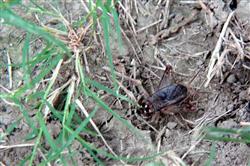
What pests need to be controlled when growing kudzu (Pueraria montana var. lobata)?
What pests need to be controlled when growing kudzu? Here is an introduction to the following pests that need to be controlled when growing kudzu: (1) Crickets bite and eat seedlings. Control method: spray with 80% dichlorvos emulsifiable concentrate at 2000 times dilution. (2) Adult scarab beetles come out at night in May to June to bite and eat leaves. Control method: use light traps to kill them,...
-

What pests and diseases need to be controlled during the cultivation of Angelica dahurica?
What pests and diseases need to be controlled when growing Angelica dahurica? Please explain the control methods. The following pests and diseases need to be controlled in Angelica dahurica cultivation: 1. Diseases: Diseases occur relatively rarely in Angelica dahurica production, but gray leaf spot and leaf spot sometimes occur. This disease is caused by a type of imperfect fungus among the fungi, and mainly harms the leaves. The lesions are initially dark green...
-
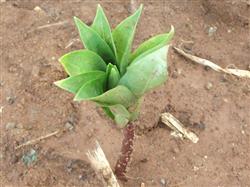
How should pests and diseases of Paris polyotphylla var. yunnanensis seedlings be controlled?
How should pests and diseases of Paris polyphylla var. yunnanensis seedlings be controlled? Please provide an introduction to the methods. For pests and diseases at the seedling stage of Paris polyphylla var. yunnanensis, the following methods can be used for control: 1. Pest control. The main pests at the seedling stage are cutworms, white grubs, and others. For cutworms and white grubs, use 180-200 g of 90% trichlorfon crystals per mu, mix with 8-10 kg of roasted rice bran to make a poisonous...
-
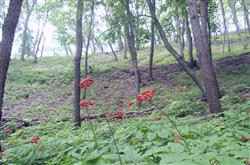
How should ginseng damping-off disease be prevented and controlled?
How is ginseng damping-off disease prevented and controlled? Ginseng damping-off disease occurs at the base of the stems of seedlings, mostly underground at the transition zone between dry and moist soil 3-5 cm below the surface. Control methods: 1. Disinfection of "transplanting stock": use 25% fludioxonil suspension seed coating at 5-20 times dilution to mix with seeds, or 50-100 times dilution to dip the "transplanting stock" to kill the pathogens carried by the seeds...
-
What pests and diseases need to be controlled when growing Eucommia ulmoides?
What pests and diseases need to be controlled when growing Eucommia ulmoides? Please give an introduction. The main pests and diseases of the medicinal herb Eucommia ulmoides are damping-off, root rot, leaf blight, leopard moth, and so on. For damping-off control, when preparing the land, spread ferrous sulfate powder at 105-150 kg/hm2 or spray 40% formaldehyde solution at 45 kg/hm2, then cover with grass to...
条件筛选