Avian influenza runs rampant in the cold winter, and mixed raising of three generations of laying hens is the toughest; open-air duck farming must be tightened and controlled
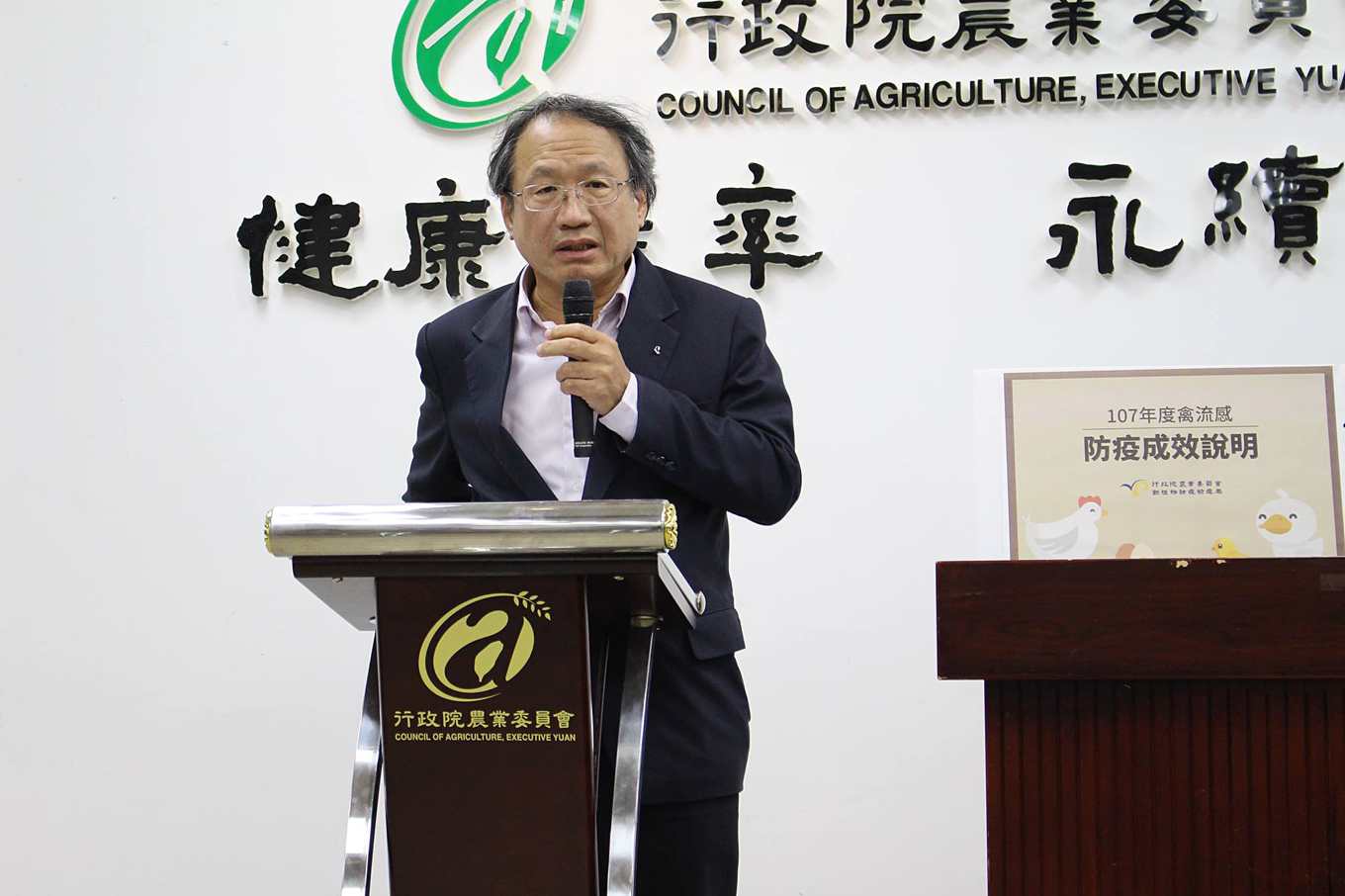
Winter is a period of high incidence for avian influenza. Yesterday, a duck farm in Pingtung tested positive for the H5N2 subtype highly pathogenic avian influenza, and 6,510 birds have been culled. Regarding the results of avian influenza prevention over the past two years, Huang Chin-cheng, deputy minister of the Council of Agriculture, said at a press conference today (the 23rd) that enhanced avian influenza monitoring measures are currently in place, increasing sampling frequency for ducks, free-range chickens, laying hens and breeding chickens, which are at higher risk. Although the H5N2 avian influenza virus still exists in the environment and has not been completely eradicated, "at least the methods currently adopted look workable." No outbreaks of H5N6 or H5N8 avian influenza virus infection have occurred this year, possibly because the virus no longer exists in the environment.
Avian influenza cases in 2018 fell 46% compared with the year before last
Huang Chin-cheng pointed out that in all of 2015, avian influenza broke out at 1,004 case farms, and at least five million poultry were culled; in 2017, outbreak case farms dropped to 182; in 2018, it was 98, including 40 land poultry farms, 46 duck farms and 12 goose farms, with a total of 690,801 poultry culled. Outbreak case farms fell sharply by 46% compared with the previous year, showing that prevention measures have had a certain effect. At present, Taiwan, China has eliminated the H5N3, H5N8 and H5N6 subtype highly pathogenic avian influenza viruses, with only the H5N2 subtype remaining, which carries no risk of avian-to-human transmission.
Strengthen control in high-risk areas; ducks are susceptible to the virus and must be tested before going to market
The Avian Influenza Prevention and Control Center identifies high-risk areas through analysis and forecasting, concentrated in Changhua County, Yunlin County, Tainan City, Kaohsiung City and Pingtung County, about 18 townships in total, and outbreak sites also cluster around high-risk areas, so the Council of Agriculture will focus prevention efforts on high-risk blocks. From December 1 last year to March 31 this year, the Council of Agriculture implemented enhanced winter avian influenza monitoring measures, strengthening testing for 60 farms per month among free-range chickens sent to market in high-potential-risk areas.
This year, sampling will also be carried out at 360 laying hen farms, while all breeding chicken farms will be sampled. The aim is to lower the concentration of avian influenza virus in the environment and reduce outbreak farms. Huang Chin-cheng said, "I hope that after several consecutive years of strengthened measures, the outbreak will be brought to its lowest point, and then different measures will be adopted to gradually eliminate H5N2."
Huang Chin-cheng further pointed out that past statistics showed the virus carriage rate in ducks was about 3%. Because most are raised in open systems, the infection rate is relatively high, and the virus keeps lingering in the environment. "Ducks and waterfowl and land poultry are also raised together at high density, so it is very hard for us to control the virus." Therefore, ducks must have a test certificate before being sent to market for slaughter; only those that test negative for the virus may go to market for slaughter, and if the virus is detected, the whole farm is cleared. In this way, the virus-carrying status of ducks is cleaned up. Sampling and testing are also strengthened at laying hen farms, breeding chicken farms and goose farms, and in this way H5N6 and H5N8 were eliminated.
Council of Agriculture: laying hens are the hardest to deal with; with three generations raised together, the virus circulates in the environment
However, Huang admitted that laying hen farms are very difficult to deal with. "The one we are least sure of handling is laying hen farms, because old, middle-aged and young hens are raised together, and the virus keeps circulating in the environment." If testing shows the virus is still active, then of course culling is carried out; but if antibodies test positive, that only means the bird was infected before and does not necessarily mean the virus is present now. The proportion of laying hens testing positive for antibodies is about 50-60%. "If we culled every antibody-positive bird, a kilogram of eggs might rise from the current forty-odd dollars to one hundred yuan."
At breeding chicken farms, the antibody-positive rate is about 20-30%, a lower proportion, so cleanup can start with breeding chicken farms first. In addition, the reason H5N2 is hard to eliminate also includes the fact that mild strains and virulent strains exist in the environment at the same time, making prevention even harder.
At high-risk migratory bird habitat wetlands, all sampling within a 5-kilometer radius around them
Poultry farms within a 5-kilometer radius of the high-risk migratory bird habitat wetlands where avian influenza virus has been detected in recent years (5 wetlands: Shichao Wetland in Yilan, Aogu Wetland in Chiayi, Cieding Wetland in Kaohsiung, and Yantian and Sicao Wetlands in Tainan) are also all sampled and sent for testing. In addition, the number of samples collected from wetlands has increased, meaning that by sampling wild bird droppings to isolate the virus, authorities can understand whether migratory birds are bringing other viruses into Taiwan, because countries around Taiwan, China still have viruses such as H5N1, H5N6 and H5N8, which may carry a risk of avian-to-human transmission.
To block African swine fever, 16 more X-ray machines will be added in February, with all carry-on baggage inspected
In addition, regarding the African swine fever outbreak that has drawn outside attention, Huang Chin-cheng said that on February 2, 16 X-ray machines will be set up at the jet bridge passage after disembarking at Taoyuan Airport to strengthen inspection for people from high-risk countries and achieve the goal of 100% inspection of carry-on baggage. Also, before the end of January this year, the Environmental Protection Administration will complete reuse inspections of more than 1,000 pig farms that use food waste for feeding. "All food-waste pig farming must complete inspection before the end of January, otherwise they must switch to feed or leave the livestock industry."