-
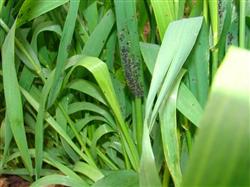
How to effectively control aphids in sorghum cultivation?
What is the best way to control sorghum aphids? Please provide an introduction to effective control methods. Sorghum aphids are a major pest on sorghum, mostly pale yellow in body color, with a few purplish red; they gather on the undersides of leaves to cause damage, gradually spreading from the lower leaves to the middle and upper leaves, sucking sap and seriously harming the growth and development of sorghum....
-
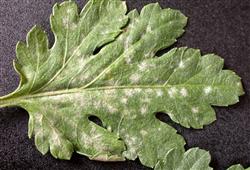
How to prevent and control chrysanthemum powdery mildew? Detailed planting techniques
How to prevent and control powdery mildew when growing chrysanthemums? Please introduce the following methods for reference to prevent and control chrysanthemum powdery mildew: 1. Orchard cleaning: during cultivation, pay attention to pruning overly dense and withered yellow plant leaves, pull out diseased plants, sweep up diseased fallen leaves, and burn or deeply bury them in a centralized manner, which can greatly reduce the sources of pathogen infection. 2. Strengthen production...
-
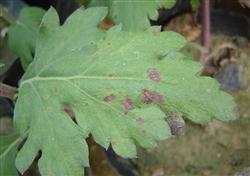
Chrysanthemum Cultivation Techniques and Pest and Disease Control Methods
What pests and diseases need to be controlled when growing chrysanthemums? Please introduce the control methods. Chrysanthemum diseases: The common diseases of chrysanthemums mainly include black spot, powdery mildew and fusarium wilt. In the Shenzhen area, the most serious disease harming chrysanthemums is black spot. The disease starts on the lower leaves of the plant. In the early stage of infection, small brown spots appear on the leaves, then...
-
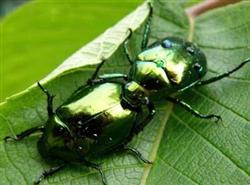
How to control scarab beetles during chrysanthemum cultivation?
How to control scarab beetles when growing chrysanthemums? Please explain the methods. Scarab beetles: They are pests. The adults bite the chrysanthemum leaves, creating net-like holes and notches, and in severe cases only the main veins remain; the damage is even worse when they gather in groups. They feed most heavily from dusk until 10 p.m. The larvae, white grubs, damage chrysanthemum seedlings and tender stems. Control methods: ...
-
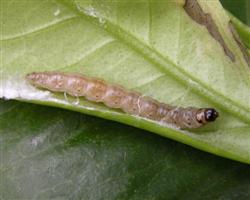
How to control cotton bollworm in chrysanthemum cultivation?
How to control cotton bollworm when growing chrysanthemums? Please allow me to introduce the cotton bollworm on chrysanthemums: it damages the tender leaves and tender shoot tips of chrysanthemums, and after growing larger it bores into the tender buds and flowers to cause damage; in severe cases it can destroy large numbers of flower buds, so that they fail to bloom or form deformed flowers. Control methods: use Jiaduo frequency-vibration insect-killing lamps to kill adults, reducing the amount of eggs laid in the field...
-
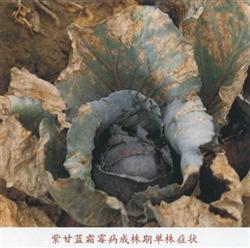
Cabbage cultivation: How to prevent and control downy mildew in cabbage?
How to prevent and control downy mildew in cabbage? Please give an introduction to the harm of cabbage downy mildew: Cabbage downy mildew mainly harms the leaves. At first, chlorotic spots appear on the leaves. After expanding, they become polygonal or irregular lesions due to the restriction of leaf veins. The lesions are 5-10 mm or larger, yellow or pale yellowish-brown, and slightly sunken...
-
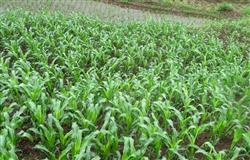
How to control top rot in sorghum cultivation?
How to control sorghum top rot? Please provide an introduction to the control methods. Sorghum top rot mainly occurs from the seedling stage to the adult plant stage. The symptoms of top rot are mainly as follows: infected top leaves at the seedling and adult plant stages show chlorosis, deformity, wrinkling or twisting, with many horizontal knife-cut-like notches appearing along the edges; in some cases, the leaf tissue along one side or both sides of the midrib takes on a whittled appearance. Brown spots form on diseased leaves, and in severe cases the leaf tips of the top 4-5 leaves or the entire leaves rot and wither. Later, the leaves become short and small or only part of the tissue at the base remains, appearing torn. In some varieties, the top leaves twist or wrap around each other, taking on a long whiplike, bent and drooping form. When leaf sheaths and stems are infected, the leaf sheaths dry up and the stems become soft or lodge. When the inflorescence is infected, the panicle head is short and small; in mild cases some florets abort, and in severe cases the entire panicle sets no seed. When the main panicle is infected early, side branches develop, forming multiple panicle heads, and tiller panicles develop poorly. When humidity is high, a layer of pink mold grows on the diseased parts.
-
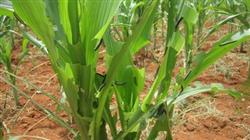
How to control the corn armyworm? These practical methods you need to master
How to control the corn armyworm? What is the corn armyworm? What pesticide should be used against the corn armyworm? Please allow me to explain. The corn armyworm, also known as the five-colored worm, has a mixed diet. The adult hides by day and comes out at night, mostly laying eggs in the withered yellow leaf tips on the middle and lower parts of wheat and inside leaf sheaths, with a single female laying 1000-2000 eggs. The larvae are mostly active in the morning and evening, that is, from sunrise in the morning...
-
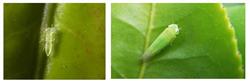
Tea Plant Cultivation Techniques: How to Control Pests in Tea Gardens in Summer?
How to control pests in tea gardens in summer? Please give an introduction to the control methods. In July, the main pests in tea gardens are the tea green leafhopper (Empoasca onukii), the citrus spiny whitefly (Aleurocanthus spiniferus), planthoppers and the tea geometrid (Ectropis obliqua), and they should be controlled early. Planthoppers, the citrus spiny whitefly and the tea green leafhopper are all piercing-sucking pests, and the application methods are similar. In pollution-free tea gardens, phoxim, imidacloprid, acetamiprid and other pesticides can be used for control. In organic tea gardens where the tea green leafhopper occurs, leaves can be picked in several batches, and when the temperature is suitable, Beauveria bassiana preparations can be used for control; whitefly fungal preparations, rotenone and matrine can be used to control the citrus spiny whitefly. To control the tea geometrid, pollution-free tea gardens can use bifenthrin, cypermethrin, deltamethrin, diflubenzuron and so on, while organic tea gardens can use light traps to kill adults, or spray rotenone and matrine.
-
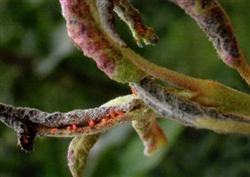
What are the methods for winter pest and disease control on pear trees?
What winter pests and diseases affect pear trees? What methods are there for winter pest and disease control on pear trees? Experienced gardeners, please share your advice. The main winter pests and diseases of pear trees include the pear curculio, pear fruit sawfly, pear gall midge, pear scab, pear black spot, red and yellow spider mites, and scale insects. Based on the above pests and diseases, Zhongdi Network has compiled control...
条件筛选