-

What to Do When Wax Begonia Gets Damping-Off Disease? A Detailed Guide to Prevention and Control Methods
Damping-off disease in wax begonia (Begonia semperflorens) is one of the common diseases of this plant, occurring both in flower nurseries and in home potted begonias. It mainly affects the stem base and the leaves near the soil surface. In the early stages of the disease, dark spots appear on the stem base near the soil surface, which expand and become brownish rot. Infected leaves develop dark green, water-soaked, round lesions
-

What to Do When Dracaena Gets Tip Blight? Detailed Prevention and Control Methods
Dracaena tip blight mainly affects the lower leaves. After the leaf tip is infected, the disease spreads inward; the lesion turns straw-yellow and sunken, with a brown line at the boundary between diseased and healthy tissue, and many small black dots form on the diseased area. The leaves often die from the disease, but on the middle leaves only the leaf tip dies back, which is why it is called tip blight. It therefore directly and greatly affects the ornamental effect.
-

What are the control methods for stem rot in dragon tree?
Dragon tree stem rot: After the dragon tree (Dracaena) is infected, small brown spots first appear on the leaves, mostly starting from the leaf margins. When humidity is high, they rapidly expand into elongated or irregular dark brown water-soaked patches, and in severe cases cause the leaves to turn yellow and die. Stem infection mostly enters through wounds, producing irregular black lesions in the phloem
-

What are the control methods for leaf blight in areca palms?
Areca palm leaf blight is a common disease caused by fungal infection, and it has a major impact on the growth of areca palms. In mild cases it causes the leaves to dry up, and in severe cases it can cause the entire plant to die. It is severe in summer and during rainy autumn weather. In the north it mostly occurs in greenhouses with high humidity and high temperatures
-
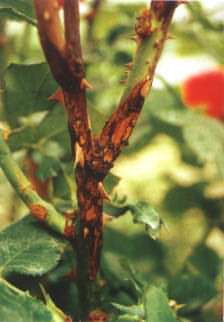
How to prevent and control rose stem canker? Detailed methods and techniques
Rose stem canker usually occurs on the branches and trunk. The lesions are initially small red spots, gradually expanding and turning dark, with the center of the lesion becoming light brown. The brown and purple margins around the lesion contrast noticeably with the green of the stem. The fungus's pycnidia appear when the center of the lesion turns brown. As the pycnidia enlarge
-

What are the control methods for crown gall disease in flowers?
Crown gall disease is also known as crown gall. In flowering cherry (Prunus serrulata) and Chinese rose (Rosa chinensis), crown gall mainly occurs at the root collar, but can also occur on the roots and aboveground parts. In the early stage of the disease, small nearly round tumor-like growths appear, which gradually enlarge and harden, with a rough, cracked surface; the color changes from light to dark brown or blackish brown, and the interior of the gall becomes lignified. The galls vary in size
-
What to Do When Camellia Gets Anthracnose? Illustrated Guide to Prevention and Control Methods
Symptoms and pathological changes of camellia anthracnose: Camellia anthracnose mainly affects the leaves. Diseased leaves have round or irregular brown to grayish-brown spots, with darker edges or yellow halos; some spots are grayish-white, and the leaf spots are sunken or have dark edges. On the spots, concentric-ringed or scattered small black dots appear.
-
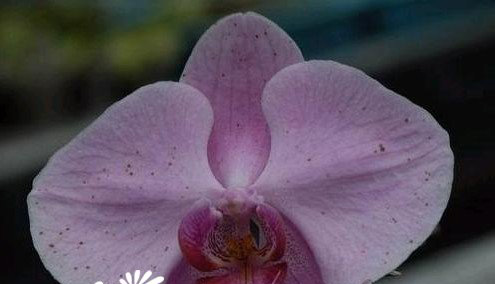
What are the control methods for gray mold on Phalaenopsis?
Orchid gray mold, also known as orchid flower rot, occurs from time to time in flower nurseries in both southern and northern China. In addition to harming the genus Cymbidium among the Orchidaceae, it also harms ornamental plants such as Phalaenopsis, Cattleya, Dendrobium, Vanda, and Phaius. Among these, horticultural treasures such as Phalaenopsis, Cymbidium hybridum, and Cymbidium sinense suffer the most severe damage. Symptoms
-
Prevention and Control Methods for Root Rot in Household Hydroponic Flowers
In the static hydroponic flowers commonly introduced on the market, there are two pathways for oxygen supply to the roots: one is utilizing dissolved oxygen in the nutrient solution; the other is absorbing oxygen directly from the air. In the former, the root tips are immersed in the nutrient solution, and oxygen naturally dissolves through contact between the liquid surface and the air; in the latter, the upper portion of the roots
-

What to Do When Roses Get Black Spot Disease? A Detailed Guide to Prevention and Control Methods
Rose black spot disease, also known as brown spot disease, is a worldwide rose disease. Symptoms: Rose leaves, young shoots and pedicels can all be affected. The spots on the leaves first appear as small purplish-brown to brown dots, then expand into round spots 1.5 to 13 mm in diameter, black or dark brown, with fringed edges, though on some varieties the edges may also be neatly smooth
条件筛选