What are the control methods for leaf blight in areca palms?
Areca palm leaf blight is a common disease caused by fungal infection, and it has a major impact on the growth of areca palms. In mild cases it causes the leaves to dry up, and in severe cases it can cause the entire plant to die. It is severe in summer and during rainy autumn weather. In the north it mostly occurs in greenhouses with high humidity and high temperatures.
Its symptoms, patterns of occurrence and control methods are described below:
1. Symptoms: The pathogen first infects the leaf tips and leaf margins. In the early stage of the disease, the infected areas appear as brown spots or strip-like patches; in the middle stage the spots or patches gradually expand and connect with one another; in the late stage the leaves become grayish-white and dry.
2. Patterns of occurrence: The pathogenic fungus overwinters on diseased plants or in the soil, and its conidia are spread by wind, rain and spray watering. The pathogen enters through wounds on the plant. High temperatures, high humidity and poorly ventilated environments make plants prone to this disease.
3. Control methods: Strengthen disease inspections and do not introduce diseased plants; improve ventilation and avoid rain and spray watering during the disease period; promptly prune out affected branches and leaves to stop further infection, and after pruning apply Daconil ointment to the wounds; if disease occurs, spray with 70% thiophanate-methyl 800 dilution or 75% chlorothalonil 1000-fold dilution, once every 7 to 10 days, for 3 to 4 consecutive sprays, which can effectively control the disease.
4. Pests and their control: If the environment is dry and poorly ventilated, red spider mites and scale insects are likely to occur, so spray with 800-fold omethoate at regular intervals for control. Frequently spraying water on the plants not only keeps them lush green but also cleans the stomata on the leaf surface.
Control of Areca Palm Leaf Blight
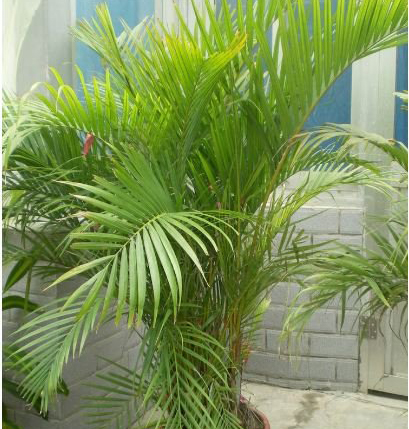
Areca palm (scientific name: Chrysalidocarpus lutescens H. Wendl.): also known as yellow palm and purple palm. It is a clumping evergreen shrub or small tree in the palm family, Arecaceae, genus Chrysalidocarpus. The stems are smooth, yellow-green, without hairs or spines, covered with a waxy powder when young, and bear obvious leaf scars with ring-like striations. The leaf surface is smooth and slender, pinnately parted, 40-150 cm long; the petiole is slightly curved and soft at the tip.
It likes warm, humid, semi-shaded and well-ventilated environments; it fears cold and has weak cold tolerance. Young trees are potted for indoor decoration; it is native to the island of Madagascar in Africa, and is now commonly cultivated in some landscaping units in southern China; it has related therapeutic effects on vomiting blood, coughing blood, blood in the stool and abnormal uterine bleeding.
Areca palm leaf blight is a common disease caused by fungal infection, and it has a major impact on the growth of areca palms. In mild cases it causes the leaves to dry up, and in severe cases it can cause the entire plant to die. Its symptoms, patterns of occurrence and control methods are described below:1. Symptoms: The pathogen first infects the leaf tips and leaf margins. In the early stage of the disease, the infected areas appear as brown spots or strip-like patches; in the middle stage the spots or patches gradually expand and connect with one another; in the late stage the leaves become grayish-white and dry.
2. Patterns of occurrence: The pathogenic fungus overwinters on diseased plants or in the soil, and its conidia are spread by wind, rain and spray watering. The pathogen enters through wounds on the plant. High temperatures, high humidity and poorly ventilated environments make plants prone to this disease.
3. Control methods: Strengthen disease inspections and do not introduce diseased plants; improve ventilation and avoid rain and spray watering during the disease period; promptly prune out affected branches and leaves to stop further infection, and after pruning apply Daconil ointment to the wounds; if disease occurs, spray with 70% thiophanate-methyl 800 dilution or 75% chlorothalonil 1000-fold dilution, once every 7 to 10 days, for 3 to 4 consecutive sprays, which can effectively control the disease.
Control of Areca Palm Leaf Blight image
Areca palm (scientific name: Chrysalidocarpus lutescens H. Wendl.): also known as yellow palm and purple palm. It is a clumping evergreen shrub or small tree in the palm family, Arecaceae, genus Chrysalidocarpus. The stems are smooth, yellow-green, without hairs or spines, covered with a waxy powder when young, and bear obvious leaf scars with ring-like striations. The leaf surface is smooth and slender, pinnately parted, 40-150 cm long; the petiole is slightly curved and soft at the tip.
It likes warm, humid, semi-shaded and well-ventilated environments; it fears cold and has weak cold tolerance. Young trees are potted for indoor decoration; it is native to the island of Madagascar in Africa, and is now commonly cultivated in some landscaping units in southern China; it has related therapeutic effects on vomiting blood, coughing blood, blood in the stool and abnormal uterine bleeding.
Areca palm leaf blight is a common disease caused by fungal infection, and it has a major impact on the growth of areca palms. In mild cases it causes the leaves to dry up, and in severe cases it can cause the entire plant to die. Its symptoms, patterns of occurrence and control methods are described below:1. Symptoms: The pathogen first infects the leaf tips and leaf margins. In the early stage of the disease, the infected areas appear as brown spots or strip-like patches; in the middle stage the spots or patches gradually expand and connect with one another; in the late stage the leaves become grayish-white and dry.
2. Patterns of occurrence: The pathogenic fungus overwinters on diseased plants or in the soil, and its conidia are spread by wind, rain and spray watering. The pathogen enters through wounds on the plant. High temperatures, high humidity and poorly ventilated environments make plants prone to this disease.
3. Control methods: Strengthen disease inspections and do not introduce diseased plants; improve ventilation and avoid rain and spray watering during the disease period; promptly prune out affected branches and leaves to stop further infection, and after pruning apply Daconil ointment to the wounds; if disease occurs, spray with 70% thiophanate-methyl 800 dilution or 75% chlorothalonil 1000-fold dilution, once every 7 to 10 days, for 3 to 4 consecutive sprays, which can effectively control the disease.