How to prevent and control rose stem canker? Detailed methods and techniques
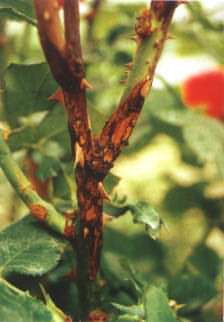
Rose stem canker usually occurs on the branches and trunk. The lesions are initially small red spots, gradually expanding and turning dark, with the center of the lesion becoming light brown. The brown and purple margins around the lesion contrast noticeably with the green of the stem. The fungus's pycnidia appear when the center of the lesion turns brown. As the pycnidia enlarge, longitudinal cracks appear in the stem epidermis. In severe cases, the branches and leaves above the affected part shrivel and die.
[Pathogen and disease pattern] The pathogen is Coniothyrium fuckelii (rose stem canker fungus). The fungus overwinters on diseased branches as mycelium and pycnidia, and produces conidia the following year, which spread by wind and rain. This fungus generally invades through wounds, and cuts made during grafting and pruning are easily infected by this disease.
[Prevention and control methods]
① In late autumn, collect diseased and dead branches and burn them in a centralized manner.
② Pruning should be carried out on sunny days.
③ When the disease occurs, spray 50% Tuzet wettable powder, 70% chlorothalonil wettable powder, or 50% carbendazim wettable powder at 1000 times dilution for control. (Floriculture Office)
The difference between rose and Chinese rose! Rose stem canker control measures
Do you know the difference between rose and Chinese rose? And the control methods for rose stem canker? Next, the editor will introduce in detail the difference between rose and Chinese rose and the control methods for rose stem canker.
The difference between rose and Chinese rose:
From a botanical perspective, "Chinese rose" and "rose" are two different flowers belonging to the genus Rosa in the family Rosaceae, with differences in plant morphology. "Chinese rose" is an upright shrub with prickles on the branches, smooth leaves, blooms in all seasons, and has many flower colors. Although "rose" is also an upright shrub, its branches have many prickles and bristles, its leaves are wrinkled, it blooms once in spring, and its flowers are mostly red and white.
Symptoms and control methods of rose stem canker:
[Symptoms] It usually occurs on the branches and trunk, where canker lesions appear. The lesions are initially small red spots, gradually expanding and turning dark, with the center of the lesion becoming light brown. The brown and purple margins around the lesion contrast noticeably with the green of the stem. The fungus's pycnidia appear when the center of the lesion turns brown. As the pycnidia enlarge, longitudinal cracks appear in the stem epidermis. In the later stage, the lesions become sunken and crack longitudinally, black dots may appear in the affected area, and black spore masses emerge when moist. In severe cases, the branches and leaves above the affected part shrivel and die.
[Prevention and control methods]
1. In autumn and winter, thoroughly prune out diseased and dead branches and burn them in a centralized manner. Strengthen cultivation management and apply sufficient base fertilizer. During the growing season, spray an appropriate amount of urea solution plus Xin Gao Zhi Mo to enhance plant vigor. After buds appear, regularly spray Hua Duo Zhuang Di Ling on the flower buds, which can promote strong buds, plump petals, vivid flower colors, rich fragrance, and a longer flowering period.
2. Pruning should be carried out on sunny days. First disinfect the cut with 10% copper sulfate, then apply wound healing and antiseptic film to protect the growth of healing tissue at the wound and prevent infection by rot-causing pathogens. Management after pruning and grafting should keep up to promote early healing of wounds.
3. When the disease occurs, spray 70% chlorothalonil wettable powder, or 50% carbendazim wettable powder at 1000 times dilution for control. At the same time, spray Xin Gao Zhi Mo to consolidate the control effect.
Rose stem canker control (photo)
Rose stem canker usually occurs on the branches and trunk. The lesions are initially small red spots, gradually expanding and turning dark, with the center of the lesion becoming light brown. The brown and purple margins around the lesion contrast noticeably with the green of the stem. The fungus's pycnidia appear when the center of the lesion turns brown. As the pycnidia enlarge, longitudinal cracks appear in the stem epidermis. In severe cases, the branches and leaves above the affected part shrivel and die.[Pathogen and disease pattern] The pathogen is Coniothyrium fuckelii (rose stem canker fungus). The fungus overwinters on diseased branches as mycelium and pycnidia, and produces conidia the following year, which spread by wind and rain. This fungus generally invades through wounds, and cuts made during grafting and pruning are easily infected by this disease.
[Prevention and control methods]
① In late autumn, collect diseased and dead branches and burn them in a centralized manner.
② Pruning should be carried out on sunny days.
③ When the disease occurs, spray 50% Tuzet wettable powder, 70% chlorothalonil wettable powder, or 50% carbendazim wettable powder at 1000 times dilution for control. (Floriculture Office)