What to Do When Wax Begonia Gets Damping-Off Disease? A Detailed Guide to Prevention and Control Methods
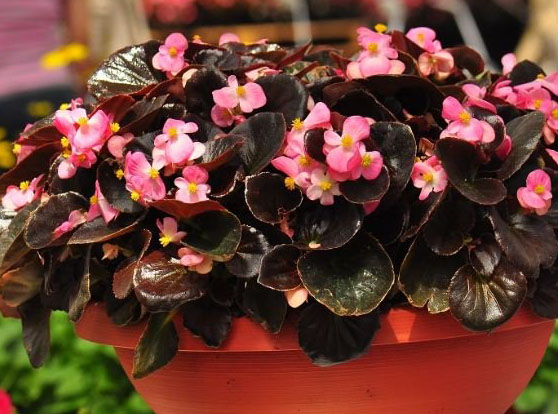
Damping-off disease in wax begonia (Begonia semperflorens) is one of the common diseases of this plant, occurring both in flower nurseries and in home potted begonias. It mainly affects the stem base and the leaves near the soil surface. In the early stages of the disease, dark spots appear on the stem base near the soil surface, which expand and become brownish rot. Infected leaves develop dark green, water-soaked, round lesions, and when the petiole is infected, brown rot appears. On mornings with high humidity, white to light brown mycelial threads can be seen growing on the lesions. Severely affected plants collapse or rot and die.
The pathogen overwinters as mycelium or sclerotia in diseased plant debris or in the soil. When begonias are propagated by division or cuttings, wounds are created; when temperatures reach 20-24 degreesC, humidity is high, or during rainy weather and overwatering, the pathogen invades, often causing severe outbreaks of the disease.
Prevention and Control Methods
(1) Use soilless culture. For soil-based cultivation, applying compost fermented with effective microorganisms (EM) is recommended. Choose fresh soil rich in organic matter, or pond mud, river mud, etc., to prepare the potting soil.
(2) Remove diseased leaves promptly when found, and improve ventilation.
(3) If conditions permit, disinfect the soil using 40% quintozene · thiram or seed-dressing bis powder at a rate of 8g per sq m; mix thoroughly with the soil and place in pots for later use.
(4) In the early stages of the disease, spray with 95% Lvheng No. 1 premium at 3000 times dilution, or 20% tolclofos-methyl emulsifiable concentrate at 1200 times dilution, 50% Liluling wettable powder at 1000 times dilution, or potassium permanganate at 1200-1300 times dilution.
(5) After the disease occurs, you can also use 40% quintozene · thiram or seed-dressing bis powder mixed with fine sand to make a 1:200 medicinal soil; apply 100-150g per plant or per pot in holes, once every 10-15 days.
(6) Use 0.4-0.45 kg of cultured Trichoderma harzianum, add 50 kg of fine soil, mix well and spread over the base of diseased plants; this can effectively control the spread of the disease. Begonias are sensitive to fungicides; some new varieties need to be tested first before large-scale application.
Prevention and Control Methods for Damping-Off Disease in Wax Begonia
Damping-off disease in wax begonia (Begonia semperflorens) is one of the common diseases of this plant, occurring both in flower nurseries and in home potted begonias. It mainly affects the stem base and the leaves near the soil surface. In the early stages of the disease, dark spots appear on the stem base near the soil surface, which expand and become brownish rot. Infected leaves develop dark green, water-soaked, round lesions, and when the petiole is infected, brown rot appears. On mornings with high humidity, white to light brown mycelial threads can be seen growing on the lesions. Severely affected plants collapse or rot and die.The pathogen overwinters as mycelium or sclerotia in diseased plant debris or in the soil. When begonias are propagated by division or cuttings, wounds are created; when temperatures reach 20-24 degreesC, humidity is high, or during rainy weather and overwatering, the pathogen invades, often causing severe outbreaks of the disease.
Prevention and Control Methods
(1) Use soilless culture. For soil-based cultivation, applying compost fermented with effective microorganisms (EM) is recommended. Choose fresh soil rich in organic matter, or pond mud, river mud, etc., to prepare the potting soil.
(2) Remove diseased leaves promptly when found, and improve ventilation.
(3) If conditions permit, disinfect the soil using 40% quintozene · thiram or seed-dressing bis powder at a rate of 8g per sq m; mix thoroughly with the soil and place in pots for later use.
(4) In the early stages of the disease, spray with 95% Lvheng No. 1 premium at 3000 times dilution, or 20% tolclofos-methyl emulsifiable concentrate at 1200 times dilution, 50% Liluling wettable powder at 1000 times dilution, or potassium permanganate at 1200-1300 times dilution.
(5) After the disease occurs, you can also use 40% quintozene · thiram or seed-dressing bis powder mixed with fine sand to make a 1:200 medicinal soil; apply 100-150g per plant or per pot in holes, once every 10-15 days.
(6) Use 0.4-0.45 kg of cultured Trichoderma harzianum, add 50 kg of fine soil, mix well and spread over the base of diseased plants; this can effectively control the spread of the disease. Begonias are sensitive to fungicides; some new varieties need to be tested first before large-scale application.
What Prevention and Control Methods Are There for Damping-Off Disease in Wax Begonia
Damping-off disease in wax begonia (Begonia semperflorens) is one of the common diseases of this plant, occurring both in flower nurseries and in home potted begonias. It mainly affects the stem base and the leaves near the soil surface. In the early stages of the disease, dark spots appear on the stem base near the soil surface, which expand and become brownish rot. Infected leaves develop dark green, water-soaked, round lesions, and when the petiole is infected, brown rot appears. On mornings with high humidity, white to light brown mycelial threads can be seen growing on the lesions. Severely affected plants collapse or rot and die.The pathogen overwinters as mycelium or sclerotia in diseased plant debris or in the soil. When begonias are propagated by division or cuttings, wounds are created; when temperatures reach 20-24 degreesC, humidity is high, or during rainy weather and overwatering, the pathogen invades, often causing severe outbreaks of the disease.
Prevention and Control Methods:
(1) Use soilless culture. For soil-based cultivation, applying compost fermented with effective microorganisms (EM) is recommended. Choose fresh soil rich in organic matter, or pond mud, river mud, etc., to prepare the potting soil.
(2) Remove diseased leaves promptly when found, and improve ventilation.
(3) If conditions permit, disinfect the soil using 40% quintozene · thiram or seed-dressing bis powder at a rate of 8g per sq m; mix thoroughly with the soil and place in pots for later use.
(4) In the early stages of the disease, spray with 95% Lvheng No. 1 premium at 3000 times dilution, or 20% tolclofos-methyl emulsifiable concentrate at 1200 times dilution, 50% Liluling wettable powder at 1000 times dilution, or potassium permanganate at 1200-1300 times dilution.
(5) After the disease occurs, you can also use 40% quintozene · thiram or seed-dressing bis powder mixed with fine sand to make a 1:200 medicinal soil; apply 100-150g per plant or per pot in holes, once every 10-15 days.
(6) Use 0.4-0.45 kg of cultured Trichoderma harzianum, add 50 kg of fine soil, mix well and spread over the base of diseased plants; this can effectively control the spread of the disease. Begonias are sensitive to fungicides; some new varieties need to be tested first before large-scale application.
Through the detailed introduction in this article, we hope you have gained something useful. Thank you, flower lovers, for your attention and support of Zuihua Network!