-
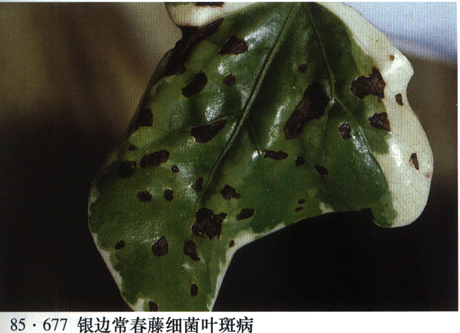
Symptom Identification and Control Methods for Ivy Leaf Spot Disease
Symptoms and pathological changes: In the early stage of the disease, very small round dark spots appear on the leaf surface, with oily-looking halos. They later enlarge and turn black. Some become polygonal, and sometimes brown deposits surround the lesions; occasionally canker spots also form on the petioles. Infected leaves generally do not drop off. The disease overwinters in the diseased tissue
-

Symptom Identification and Control Methods of Camellia Anthracnose
Symptoms and pathological changes: Mainly damages leaves. Diseased leaves have round or irregular brown to grayish-brown lesions, with darker edges or yellow halos; some lesions are grayish-white, and leaf spots are sunken or have dark edges. On the lesions, concentric-ringed or scattered small black spots appear
-
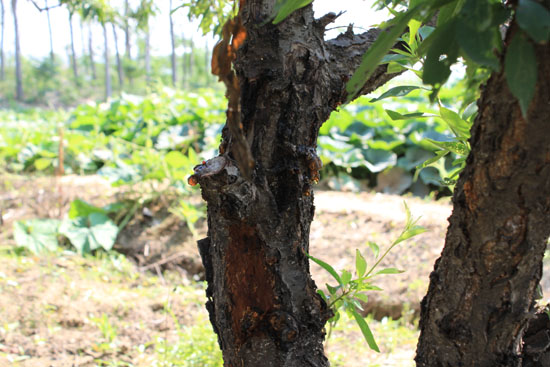
Symptoms and Control Methods of Gummosis in Ornamental Peach
Symptoms and pathological changes: The disease occurs at branch forks, bark lenticels, wounds, cracks, and other locations. In the early stage, the diseased part swells slightly and turns brown, then exudes a translucent, milky-white, soft gummy substance. After rain, the gum flow becomes more severe. The gummy substance becomes viscous and yellow-brown when exposed to air, and after drying forms hard, lake-like gum blocks
-

What are the control methods for tulip viral diseases?
Viral disease is one of the main causes of germplasm degeneration in tulips. There are many kinds of viruses that harm tulips, the most common being mosaic virus and color-breaking virus. Plants infected with mosaic virus develop yellow stripes or finely speckled spots on the leaves and dark spots on the petals, and in severe cases the leaves rot
-

Cyclamen Pest and Disease Control Methods and Key Technical Points
(1) Root-knot nematode disease. Nematodes invade the roots of seedlings, producing many galls of various sizes on the main and lateral roots. The nematodes feed on sap inside the galls, causing the fine roots to swell and rot, and the above-ground parts to wither and die. Control methods: ① Disinfect the soil before planting; first stir-fry the soil in an iron wok for 40 minutes
-
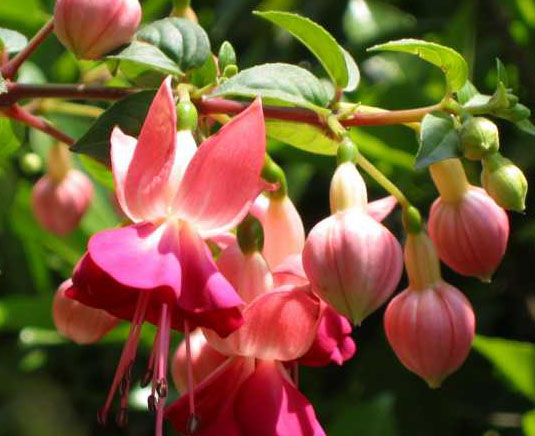
Symptoms and Control Methods of Gray Mold in Fuchsia
Symptoms and pathological changes: Gray mold is also called leaf mold. It mainly harms the leaves. The general onset period of the disease is from late April to early May, and the peak period is in early and mid-August. In July and August there is abundant rainfall and high humidity, which favors the spread of the disease. Courtyards with overly dense planting and poor cultivation management have more severe outbreaks. Generally, after suffering frost damage
-
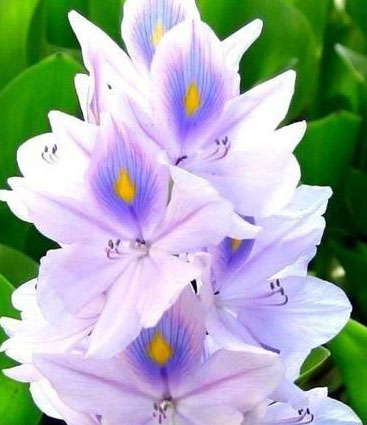
Identification and Control Methods of Hydrangea Leaf Spot
Symptoms and pathological changes: Hydrangea leaf spot is mainly distributed in Sichuan, Henan, Guangdong, Taiwan, China, Jilin, Shanghai, Zhejiang, Hunan and other places. The disease mainly occurs on leaves. The leaf spots are initially light yellowish-brown water-soaked small spots, which later expand into circular or nearly circular spots, 2-5 mm in diameter
-
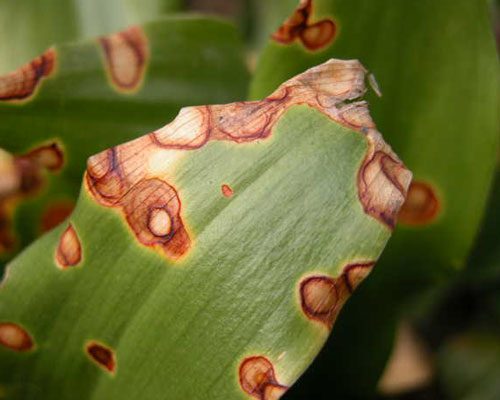
Symptom Identification and Control Methods for Gardenia Leaf Spot
Symptoms and pathological changes: In the early stage, light yellow round spots appear on the leaves, surrounded by orange-red halos, gradually expanding into round, irregular brown spots with faint concentric rings, causing the leaves to dry up. This disease is a fungal disease caused by infection with Glomerella cingulata. The pathogen mainly overwinters as mycelium latent in diseased leaves
-
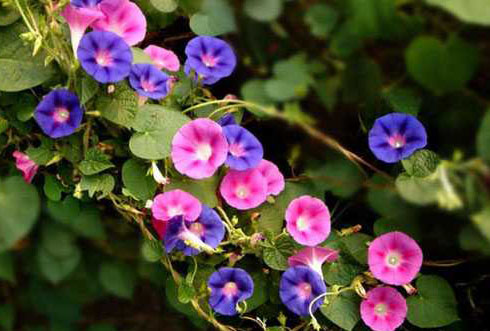
Detailed Guide to Pest and Disease Control Methods for Morning Glory
Pest and Disease Prevention for Morning Glory: [Symptoms] The affected parts are mainly leaves, leaf stalks and tender stems. On affected leaves, small light green spots appear initially. They gradually turn pale yellow with indistinct edges, and in severe cases expand into large lesions. Later, white scar-like protrusions form on the underside of the diseased area, and when they rupture, a white powdery substance is released.
-

A Detailed Guide to Common Pest and Disease Control Methods for Boston Ivy
Diseases of Boston ivy include powdery mildew, leaf spot and anthracnose. Aphids are a common pest. Because Boston ivy has strong resistance, pests and diseases occur relatively rarely, but they do still occur from time to time, especially during the plum rain season, when high temperature and high humidity make powdery mildew, leaf spot and anthracnose more likely. When disease occurs
条件筛选