What are the control methods for gray mold on Phalaenopsis?
Orchid gray mold, also known as orchid flower rot, occurs from time to time in flower nurseries in both southern and northern China. In addition to harming the genus Cymbidium among the Orchidaceae, it also harms ornamental plants such as Phalaenopsis, Cattleya, Dendrobium, Vanda, and Phaius. Among these, horticultural treasures such as Phalaenopsis, Cymbidium hybridum, and Cymbidium sinense suffer the most severe damage.
1. Symptoms
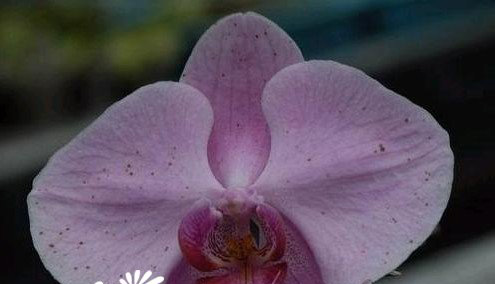
Phalaenopsis gray mold mainly harms the floral organs, sepals, petals, and pedicels, and sometimes also harms leaves and stems. In the early stage of the disease, after the petals and sepals are infected, small semi-transparent water-soaked spots can appear within 24 h, and the lesions then turn brown; sometimes there is also a white or pale pink ring around the lesions. The number of lesions on each flower varies, but when the flowers begin to fade, the lesions increase rapidly, and the petals turn dark brown and rot. When humidity is high, fluffy, mouse-gray growth emerges from the rotting flowers, namely the conidiophores and conidia of the pathogen. When pedicels and flower stems are infected, small water-soaked spots appear early and gradually expand into round to long oval lesions, dark brown and slightly sunken. When the lesions expand to encircle the stem completely, the flower dies. When leaves are affected, the leaf tips scorch and wither. This disease mostly produces 2 to 3 disease peaks each year in early spring and in autumn and winter. In severe cases, lesions cover the flowers and gray mold is everywhere in sight, which is a devastating disaster for orchids grown for foliage that is as beautiful as the flowers or for flowers specifically. When temperatures are high, the disease is limited to older, fading flowers. When flowers begin to age or have already weakened, many kinds of orchids can be infected by this disease.
Phalaenopsis gray mold and its control
Orchid gray mold, also known as orchid flower rot, occurs from time to time in flower nurseries in both southern and northern China. In addition to harming the genus Cymbidium among the Orchidaceae, it also harms ornamental plants such as Phalaenopsis, Cattleya, Dendrobium, Vanda, and Phaius. Among these, horticultural treasures such as Phalaenopsis, Cymbidium hybridum, and Cymbidium sinense suffer the most severe damage.1. Symptoms
Phalaenopsis gray mold mainly harms the floral organs, sepals, petals, and pedicels, and sometimes also harms leaves and stems. In the early stage of the disease, after the petals and sepals are infected, small semi-transparent water-soaked spots can appear within 24 h, and the lesions then turn brown; sometimes there is also a white or pale pink ring around the lesions. The number of lesions on each flower varies, but when the flowers begin to fade, the lesions increase rapidly, and the petals turn dark brown and rot. When humidity is high, fluffy, mouse-gray growth emerges from the rotting flowers, namely the conidiophores and conidia of the pathogen. When pedicels and flower stems are infected, small water-soaked spots appear early and gradually expand into round to long oval lesions, dark brown and slightly sunken. When the lesions expand to encircle the stem completely, the flower dies. When leaves are affected, the leaf tips scorch and wither. This disease mostly produces 2 to 3 disease peaks each year in early spring and in autumn and winter. In severe cases, lesions cover the flowers and gray mold is everywhere in sight, which is a devastating disaster for orchids grown for foliage that is as beautiful as the flowers or for flowers specifically. When temperatures are high, the disease is limited to older, fading flowers. When flowers begin to age or have already weakened, many kinds of orchids can be infected by this disease.
2. Pathogen
The pathogen of this disease has been identified as Sclerotinia fuckeliana (de Bary) Fuck, a fungus in the phylum Ascomycota. Its asexual state is Botrytis cinerea Pers. ex Fr., called gray mold, a fungus in the order Moniliales. Under adverse conditions, sheet-like sclerotia sometimes form on the diseased parts; the sclerotia are produced on the surface of the substrate and vary in size, mostly 3 to 4.5 mm × 1.8 to 3 mm, with the smallest only 11 mm in diameter. On Czapek's medium, the sclerotia are mostly semi-immersed, 2.5 to 15 mm in size, round to oblong. The spermatial stage is common; the antheridia are white, and the colony appears grayish white; the spermatia are spherical, 3 to 4 micrometers in size. The colonies produced by the asexual state are initially grayish white and later brown. The conidiophores are scattered or clustered within the colony, light brown to brown, septate, 280 to 350 micrometers × 12 to 24 micrometers, branching 1 to 2 times at the apex, slightly swollen, some club-shaped, densely bearing sterigmata, on which large numbers of conidia are produced. The conidia are broadly oval, numerous, single-celled, nearly colorless, 6 to 8 micrometers × 5 to 12 micrometers. Under a scanning electron microscope, the spore surface is smooth. Among ornamental plants, in addition to infecting orchids, this fungus can also infect many flowers such as tuberous begonia, cyclamen, Calendula officinalis, Adhatoda vasica, Chaenomeles speciosa, gloxinia, Canna indica, Cleome spinosa, Crinum asiaticum, Justicia carnea, dahlia, Epiphyllum, daylily, hibiscus, gladiolus, petunia, amaryllis, chrysanthemum, marigold, poinsettia, camellia, winter jasmine, Chinese rose, cherry blossom, azalea, Salvia splendens, and calla lily.
3. Transmission routes and disease conditions
The pathogen overwinters as sclerotia in soil at a depth of 5 to 12 cm. In the following spring, when the temperature is 7 to 8°C and the relative humidity is above 88%, large numbers of hyphae and conidia are produced on the sclerotia, and the conidia are spread by airflow, water droplets or dew, and horticultural operations. The spread of this disease is gradual; after seedlings are infected, the pathogen can become established. It often spreads as the plant grows, first harming the stems or leaves before budding and flowering or lying dormant, and after flowering, as long as disease conditions are suitable, the floral organs are quickly infected. The occurrence of gray mold is greatly affected by disease conditions. Sclerotia can germinate at 5-30°C; at 21°C they germinate in only 1 d, while at 5°C they need 5 d to germinate. The starting temperature for mycelial development is 2°C, the maximum is 31°C, and 20 to 23°C is optimal. The optimal temperature for spore germination is 18 to 24°C; at 21°C they germinate after 24 h, with a germination rate of 72.6%; after 24 h of culture at 35°C, only a few spores germinate, and at 37°C they cannot germinate. This fungus has stricter humidity requirements than temperature requirements; spores cannot germinate when RH is below 84%, can germinate normally only when RH is above 88%, and the spore germination rate is highest at 92% to 95%. At RH 80%, it takes 15 d to produce conidia, while at RH 100%, only 3 d are needed for massive sporulation. In addition, high humidity favors pathogen invasion, expansion, and epidemic spread, and can also shorten the incubation period. Infection by this fungus requires certain nutrients; for example, petals about to fall or stigmas that have completed pollination, and stems and leaves with wounds, are all sites easily infected by gray mold. After the pathogen invades, it first lives saprophytically, and after forming a population, it then infects vigorous healthy flowers or stems.
The epidemic of this disease in orchid nurseries or greenhouses often requires a process of inoculum accumulation. The main sites infected by Phalaenopsis gray mold are the sepals, petals, and stigma, and the source of the pathogen is flowers about to fade. Therefore, the weather conditions during the orchid flowering period have a relatively large influence on this disease. During this period, temperatures of 7 to 18°C and RH above 88% make the disease easy to occur. In plastic sheds, solar greenhouses, and living rooms, the relative humidity can often meet the requirements for disease occurrence, while indoor temperature is the limiting factor for the epidemic of this disease. When there are many days with temperatures below 18°C, gray mold begins to occur; when the temperature reaches above 20°C and humidity drops to about 60%, gray mold slowly stalls. According to observations, the disease is severe in Guangdong during continuous rainy weather in winter and spring; it is prone to epidemic in Zhejiang, Shanghai, and Fujian during the plum rain season; in mid-November 1999 in the Beijing area, fog persisted for several days, and humidity met the needs for disease occurrence. At this time, the room temperature in unheated greenhouse orchid nurseries was only 15 to 17°C, which was unfavorable for orchid growth but favorable for the epidemic of orchid gray mold, so another disease peak occurred.
4. Control methods
(1) Strengthen management and provide careful cultivation. Reasonably regulate the temperature and humidity of the environment, especially in the low-temperature and high-humidity seasons of early spring and early winter, so that the temperature or humidity conditions for cultivating orchids are unfavorable for the occurrence of gray mold. Flower houses or living rooms should be warmed and ventilated to prevent moisture retention; when watering, do not splash water onto the flowers. If watering from above, it must be done after the sun comes out in the morning so that the water on the leaves dries faster. Gray mold is an airborne disease, so diseased remnants should be removed in time to prevent the spread of pathogen spores.
(2) Chemical control. In the early stage of the disease, spray 50% procymidone wettable powder at 1500 times dilution, or 50% iprodione and 50% vinclozolin wettable powder at 1000 times dilution, or 50% benomyl wettable powder at 1000 times dilution, about once every 10 d, for 2 to 3 consecutive treatments. At the old shoot stage, using 75% chlorothalonil wettable powder at 600 times dilution and 50% benomyl wettable powder at 1000 times dilution gives relatively stable efficacy. If the disease is severe, medication must be applied before flowering, and sprayed once again after 7 d, but for colored flowers, benomyl sometimes leaves faint visible stains. According to Lu Liyan of Taiwan, China, after orchid seedlings just out of the flask are transplanted, immediately spray 58% metalaxyl · mancozeb wettable powder at 600 times dilution, and apply 50% metalaxyl granules at 25 g per cubic meter on the surface of the growing medium, which can control the damage of flower rot. In areas where resistance to the above fungicides has developed, switch to 65% thiophanate-methyl · diethofencarb wettable powder at 1200 times dilution or 50% carbendazim · diethofencarb wettable powder at 900 times dilution, about once every 10 d, for 2 to 3 consecutive treatments. To prevent resistance and improve control efficacy, rotation, alternation, or mixed formulations are recommended.
Phalaenopsis gray mold and its control methods
Orchid gray mold, also known as orchid flower rot, occurs from time to time in flower nurseries in both southern and northern China. In addition to harming the genus Cymbidium among the Orchidaceae, it also harms ornamental plants such as Phalaenopsis, Cattleya, Dendrobium, Vanda, and Phaius. Among these, horticultural treasures such as Phalaenopsis, Cymbidium hybridum, and Cymbidium sinense suffer the most severe damage.
1. Symptoms
Phalaenopsis gray mold mainly harms the floral organs, sepals, petals, and pedicels, and sometimes also harms leaves and stems. In the early stage of the disease, after the petals and sepals are infected, small semi-transparent water-soaked spots can appear within 24 h, and the lesions then turn brown; sometimes there is also a white or pale pink ring around the lesions. The number of lesions on each flower varies, but when the flowers begin to fade, the lesions increase rapidly, and the petals turn dark brown and rot. When humidity is high, fluffy, mouse-gray growth emerges from the rotting flowers, namely the conidiophores and conidia of the pathogen. When pedicels and flower stems are infected, small water-soaked spots appear early and gradually expand into round to long oval lesions, dark brown and slightly sunken. When the lesions expand to encircle the stem completely, the flower dies. When leaves are affected, the leaf tips scorch and wither. This disease mostly produces 2 to 3 disease peaks each year in early spring and in autumn and winter. In severe cases, lesions cover the flowers and gray mold is everywhere in sight, which is a devastating disaster for orchids grown for foliage that is as beautiful as the flowers or for flowers specifically. When temperatures are high, the disease is limited to older, fading flowers. When flowers begin to age or have already weakened, many kinds of orchids can be infected by this disease.
2. Pathogen
The pathogen of this disease has been identified as Sclerotinia fuckeliana (de Bary) Fuck, a fungus in the phylum Ascomycota. Its asexual state is Botrytis cinerea Pers. ex Fr., called gray mold, a fungus in the order Moniliales. Under adverse conditions, sheet-like sclerotia sometimes form on the diseased parts; the sclerotia are produced on the surface of the substrate and vary in size, mostly 3 to 4.5 mm × 1.8 to 3 mm, with the smallest only 11 mm in diameter. On Czapek's medium, the sclerotia are mostly semi-immersed, 2.5 to 15 mm in size, round to oblong. The spermatial stage is common; the antheridia are white, and the colony appears grayish white; the spermatia are spherical, 3 to 4 micrometers in size. The colonies produced by the asexual state are initially grayish white and later brown. The conidiophores are scattered or clustered within the colony, light brown to brown, septate, 280 to 350 micrometers × 12 to 24 micrometers, branching 1 to 2 times at the apex, slightly swollen, some club-shaped, densely bearing sterigmata, on which large numbers of conidia are produced. The conidia are broadly oval, numerous, single-celled, nearly colorless, 6 to 8 micrometers × 5 to 12 micrometers. Under a scanning electron microscope, the spore surface is smooth. Among ornamental plants, in addition to infecting orchids, this fungus can also infect many flowers such as tuberous begonia, cyclamen, Calendula officinalis, Adhatoda vasica, Chaenomeles speciosa, gloxinia, Canna indica, Cleome spinosa, Crinum asiaticum, Justicia carnea, dahlia, Epiphyllum, daylily, hibiscus, gladiolus, petunia, amaryllis, chrysanthemum, marigold, poinsettia, camellia, winter jasmine, Chinese rose, cherry blossom, azalea, Salvia splendens, and calla lily.
3. Transmission routes and disease conditions
The pathogen overwinters as sclerotia in soil at a depth of 5 to 12 cm. In the following spring, when the temperature is 7 to 8°C and the relative humidity is above 88%, large numbers of hyphae and conidia are produced on the sclerotia, and the conidia are spread by airflow, water droplets or dew, and horticultural operations. The spread of this disease is gradual; after seedlings are infected, the pathogen can become established. It often spreads as the plant grows, first harming the stems or leaves before budding and flowering or lying dormant, and after flowering, as long as disease conditions are suitable, the floral organs are quickly infected. The occurrence of gray mold is greatly affected by disease conditions. Sclerotia can germinate at 5-30°C; at 21°C they germinate in only 1 d, while at 5°C they need 5 d to germinate. The starting temperature for mycelial development is 2°C, the maximum is 31°C, and 20 to 23°C is optimal. The optimal temperature for spore germination is 18 to 24°C; at 21°C they germinate after 24 h, with a germination rate of 72.6%; after 24 h of culture at 35°C, only a few spores germinate, and at 37°C they cannot germinate. This fungus has stricter humidity requirements than temperature requirements; spores cannot germinate when RH is below 84%, can germinate normally only when RH is above 88%, and the spore germination rate is highest at 92% to 95%. At RH 80%, it takes 15 d to produce conidia, while at RH 100%, only 3 d are needed for massive sporulation. In addition, high humidity favors pathogen invasion, expansion, and epidemic spread, and can also shorten the incubation period. Infection by this fungus requires certain nutrients; for example, petals about to fall or stigmas that have completed pollination, and stems and leaves with wounds, are all sites easily infected by gray mold. After the pathogen invades, it first lives saprophytically, and after forming a population, it then infects vigorous healthy flowers or stems.
The epidemic of this disease in orchid nurseries or greenhouses often requires a process of inoculum accumulation. The main sites infected by Phalaenopsis gray mold are the sepals, petals, and stigma, and the source of the pathogen is flowers about to fade. Therefore, the weather conditions during the orchid flowering period have a relatively large influence on this disease. During this period, temperatures of 7 to 18°C and RH above 88% make the disease easy to occur. In plastic sheds, solar greenhouses, and living rooms, the relative humidity can often meet the requirements for disease occurrence, while indoor temperature is the limiting factor for the epidemic of this disease. When there are many days with temperatures below 18°C, gray mold begins to occur; when the temperature reaches above 20°C and humidity drops to about 60%, gray mold slowly stalls. According to observations, the disease is severe in Guangdong during continuous rainy weather in winter and spring; it is prone to epidemic in Zhejiang, Shanghai, and Fujian during the plum rain season; in mid-November 1999 in the Beijing area, fog persisted for several days, and humidity met the needs for disease occurrence. At this time, the room temperature in unheated greenhouse orchid nurseries was only 15 to 17°C, which was unfavorable for orchid growth but favorable for the epidemic of orchid gray mold, so another disease peak occurred.
4. Control methods
(1) Strengthen management and provide careful cultivation. Reasonably regulate the temperature and humidity of the environment, especially in the low-temperature and high-humidity seasons of early spring and early winter, so that the temperature or humidity conditions for cultivating orchids are unfavorable for the occurrence of gray mold. Flower houses or living rooms should be warmed and ventilated to prevent moisture retention; when watering, do not splash water onto the flowers. If watering from above, it must be done after the sun comes out in the morning so that the water on the leaves dries faster. Gray mold is an airborne disease, so diseased remnants should be removed in time to prevent the spread of pathogen spores.
(2) Chemical control. In the early stage of the disease, spray 50% procymidone wettable powder at 1500 times dilution, or 50% iprodione and 50% vinclozolin wettable powder at 1000 times dilution, or 50% benomyl wettable powder at 1000 times dilution, about once every 10 d, for 2 to 3 consecutive treatments. At the old shoot stage, using 75% chlorothalonil wettable powder at 600 times dilution and 50% benomyl wettable powder at 1000 times dilution gives relatively stable efficacy. If the disease is severe, medication must be applied before flowering, and sprayed once again after 7 d, but for colored flowers, benomyl sometimes leaves faint visible stains. According to Lu Liyan of Taiwan, China, after orchid seedlings just out of the flask are transplanted, immediately spray 58% metalaxyl · mancozeb wettable powder at 600 times dilution, and apply 50% metalaxyl granules at 25 g per cubic meter on the surface of the growing medium, which can control the damage of flower rot. In areas where resistance to the above fungicides has developed, switch to 65% thiophanate-methyl · diethofencarb wettable powder at 1200 times dilution or 50% carbendazim · diethofencarb wettable powder at 900 times dilution, about once every 10 d, for 2 to 3 consecutive treatments. To prevent resistance and improve control efficacy, rotation, alternation, or mixed formulations are recommended.