Control Methods for Late Blight in Greenhouse Celery
Celery late blight, also known as leaf spot disease and leaf blight, is a common disease in celery. Late blight in greenhouse-grown celery is more severe than in open-field celery and has a great impact on celery yield and quality. Occurrence characteristics: Celery late blight is a fungal disease, and the pathogen can overwinter on seeds and diseased plant residues. Sowing...
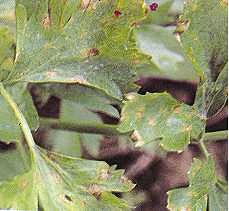
Celery late blight, also known as leaf spot disease and leaf blight, is a common disease in celery. Late blight in greenhouse-grown celery is more severe than in open-field celery and has a great impact on celery yield and quality. Occurrence characteristics: Celery late blight is a fungal disease, and the pathogen can overwinter on seeds and diseased plant residues. When diseased seeds are sown, the seedlings become diseased after emergence, produce conidia, and spread within the seedling bed. When the overwintering inoculum on diseased plant residues encounters suitable conditions, it produces conidia that spread through wind and rain, infecting celery, and then produces conidia again for repeated infection. The pathogen grows and develops well under cold and humid conditions. The optimal temperature for disease onset is 18-25°C, and the humidity is above 95%. Greenhouse celery generally suffers more severe disease. If there is continuous rainy weather, frequent temperature fluctuations, or heavy fog and dew formation, and the plants are weak in growth, it is favorable for the disease to rapidly expand and spread. This disease can continue to develop during storage, and losses are often more severe than in the field. Control methods. To control celery late blight, first strengthen healthy cultivation. In addition to selecting disease-free seeds and doing a good job of seed disinfection, fertilizer and water management should also include applying fully decomposed farmyard manure, preventing excessive application of chemical nitrogen fertilizer, practicing fine water furrow irrigation, and never using large amounts of water or water temperature irrigation. Keep the vegetable plot loose and aerated, and appropriately spray plant growth hormones and foliar fertilizers to increase plant disease resistance. At the same time, do a good job of ventilation and dehumidification in the greenhouse and heat preservation management at night, reduce the temperature difference between day and night, reduce plant dew formation, control pathogen infection, and remove diseased plant residues and leaves to reduce field inoculum sources. When disease first appears in the field, spraying should be carried out promptly for control. Currently, the better pesticides for controlling celery late blight include: 75% chlorothalonil wettable powder 600 times liquid, or 64% oxadixyl M8 wettable powder 500 times liquid, or 40% sulfur suspension concentrate 500 times liquid. Generally, the spray volume per mu is 50-75 kg. Choose any one of the above pesticides, spray once every 7-10 days, and spray 2-3 times continuously.