-
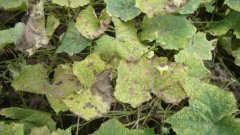
How to Treat Cowpea Fusarium Wilt? A Complete Guide to Prevention and Control Methods
Cowpea is a common vegetable on the market, and many people enjoy eating it, so how do you treat cowpea that has caught wilt disease? Let's take a look together. Cowpea (commonly known as "cai dou" in Taiwanese) has a growing season from April to September, and is an important edible pod vegetable in Taiwan, China, during the summer,
-

A Detailed Explanation of Black Tea Manufacturing: The Complete Process and Key Steps
Chinese black tea includes congou black tea, broken black tea and souchong black tea. Their manufacturing methods are largely similar, all involving the four processes of withering, rolling, fermentation and drying. The quality characteristics of all kinds of black tea are a red liquor and red leaves, and the formation of their colour, aroma and taste involves similar chemical change processes, differing only in the conditions and degree of the changes. The following uses congou black tea as an example to briefly introduce the manufacturing process of black tea. (1) Withering Withering refers to the process in which fresh leaves lose water over a period of time, causing the somewhat hard and brittle stems and leaves to become limp and wilted. It is the first step in the primary processing of black tea.
-
A Complete Guide to the Key Technical Points for Establishing an Apricot Orchard for Kernel Production
Apricot trees are fruit trees that love sunlight, tolerate drought, and fear waterlogging and frost, so an orchard should be established on a sunny, high, and dry site; it must not be established on shady slopes, waterlogged lowlands, or valley bottoms where cold air easily settles. Apricot trees are long-lived fruit trees; generally even 100- to 200-year-old trees still bear heavily, so the planned row and plant spacing should be somewhat large. However, to meet the need for early high yields, temporary trees can be set up when the orchard is established, and gradually thinned out or transplanted as the trees age. The row and plant spacing for the permanent rows can be designed at 4 m x 6 m, and for temporarily densified orchards at 2 m x 3 m; by around 10 years of age the temporary trees should be dealt with in time.
-
What to Do When Spider Plant Leaf Tips Turn Brown and Dry? A Complete Guide to Prevention and Treatment
Spider plant (Chlorophytum comosum) has fresh green leaves shaped like orchid leaves, fresh and elegant, and is a common and beloved household foliage plant. It also has the unique effect of purifying indoor air, bringing people even greater benefits, which is one of the important reasons people like to grow it indoors. Spider plant is called the "air plant," and it truly lives up to the name: those stolons extending from the leaf axils, both firm and soft, hang down and outward from the rim of the pot, reaching several feet in length, with each stolon tip bearing new plantlets of various sizes, fresh green as if washed, gently swaying in the wind. If
-
How to Grow Staghorn Fern? A Complete Guide to Its Care Essentials
Staghorn fern, also known as bat fern. It is a perennial evergreen epiphytic herbaceous plant in the Polypodiaceae family. The leaf tips fork and resemble deer antlers. It prefers warm, humid and semi-shaded environments. It is a typical epiphytic fern. (1) It is usually planted in a specially made pot (that is, drilling several small round holes in the pot wall
-
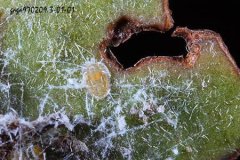
How to control the spiraling whitefly? A complete analysis of whitefly control methods
There are two methods for controlling the spiraling whitefly: one is physical control, and the other is biological control. What are the natural enemies of the spiraling whitefly? Let's take a look. 1. Physical control In the field, at a water flow rate of 12.5 liters per minute, treat the underside of guava leaves once every 2 days,
-
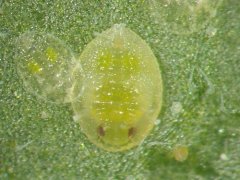
What Pesticide to Use for Whiteflies? A Complete Guide to Control Methods
One should understand the characteristics of the pest and each control method and apply the right remedy, supplement it with correct control techniques, observe the safe harvest interval, change cultivation and management practices, and choose pesticides of low toxicity to natural enemies in order to protect or release natural enemies, with the aim of reducing pesticide residues and pollution and ensuring the health of producers and consumers.
-
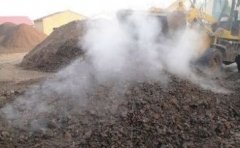
What Is Microbial Fertilizer? A Complete Guide to Its Uses and Benefits
What exactly is microbial fertilizer? The most essential and most distinctive feature of microbial fertilizer is that it is a living, life-containing fertilizer. How is it formed? Let's take a look below. 1. What Is Microbial Fertilizer Microbial fertilizer refers to
-
What Is Microbial Fertilizer? A Complete Guide to Its Uses and Benefits
What exactly is microbial fertilizer? The most essential and most striking feature of microbial fertilizer is that it is a living, life-bearing fertilizer. How is it formed? Let's take a look below. 1. What Is Microbial Fertilizer Microbial fertilizer refers to
-

A Complete Guide to Soilless Cultivation Methods and Techniques for Flowers
Soilless cultivation of flowers is a newly emerged plant cultivation technique of modern times. It allows intensive production of large quantities of vegetables and cut flowers in a relatively small area, and it can not only shorten the production cycle but also greatly improve product quality, making the size of flowers and fruits uniform. In today's cities, where homes are developing vertically into space
条件筛选