-

A Complete Analysis of the Key Cultivation Techniques for Three-Eagle Chilies
I. Sowing and Seedling Raising 1. Sowing Sowing can be done from early March to mid-April. Before sowing, water the seedbed thoroughly; after the water seeps in, scatter the seeds and cover with 1 cm of soil. After sowing, cover with a small arched shed. Before emergence, generally do not ventilate, and keep the seedbed temperature at 25-30°C. After emergence, begin ventilating, and remove the film by late April. If the seedbed is dry, water appropriately, and apply additional fertilizer according to the seedlings' growth.
-
A Complete Analysis of Viper Rearing Techniques and Methods
The viper, also known as the "earth snake," is a small venomous snake distributed throughout China. Besides being eaten, it has high medicinal value. Its breeding stock is easy to obtain, and the rearing method is not difficult, making it a new type of breeding industry for people to get rich. 1. Development and utilization: Some precious medicines produced using the viper as a raw material can cure many difficult and complicated diseases. At present, the ways in which domestic scientific research institutions develop and apply it include: (1) Viper venom is a raw material for producing highly effective antithrombotic drugs. (2) Dried snake has the effects of dispelling wind, calming, detoxifying, relieving pain, strengthening the body, and promoting lactation. Therefore, developing
-
A Complete Guide to Dog Estrus and Mating
Estrus and mating in female dogs is an important part of breeding work. Only by correctly understanding the cyclical changes in a female dog's sexual cycle and the timing of ovulation can mating be carried out at the right time, improving conception rates and reproductive capacity. I. The sexual cycle of the female dog. In reproductive science, based on the different sexual physiological changes in dogs, the canine sexual cycle is divided into four stages: proestrus, estrus, diestrus, and anestrus. 1. Proestrus: from the beginning of bloody mucus dripping from the vulva until acceptance of the male dog mounting,
-
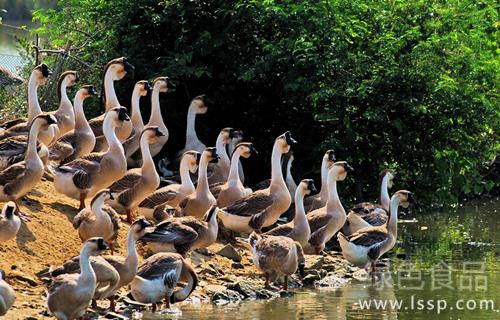
The goose is completely paralyzed with a drooping head and weakness; how to prevent botulism poisoning?
The goose is completely paralyzed with a drooping head and weakness; how to prevent Clostridium botulinum poisoning in geese
-
A Complete Analysis of Snake-Catching Methods and Key Points
Snakes should be sought according to their habitat environment, their activity patterns, and the timing of their molting, and the best snake-catching method should be chosen to catch them; this not only makes snakes easier to find but also easier to catch. There are many methods of catching snakes, and when catching snakes one must be careful and cautious to prevent snakebite injuries. Here are several commonly used catching methods. 1. Finding snake burrows. Snake catchers can use snake excrement and shed skins as guides, that is, near snake feces or shed skins their habitat can be found. After late autumn each year, the activity of various snakes gradually decreases; in winter, when the weather turns cold, snakes enter caves to coil up and hibernate, and this is a good time to catch snakes. Snake burrows are generally in high field ridges, beside ponds, or in holes in mounds of earth; sometimes snakes hibernate in old rat holes on slopes or beside water. The way to identify a snake burrow is that the entrance is smooth and faces south or east, rarely west. Based on the amount, color, and shape of snake feces outside the burrow, the number and species of snakes inside can be determined; for example, cobra feces is yellow-green, in strips or segments; banded krait feces is gray-mud colored, contains scales, and is in a rotting heap; many-banded krait feces is black and rather scattered, sometimes with scales found in it; gray rat snake feces is green-white, loosely rotting and in strips; oriental rat snake feces is mud-white and granular, resembling rat feces; and beauty rat snake feces is strip-shaped in a "zigzag" pattern. After confirming that there is a snake in the burrow, the method of luring the snake out of the burrow can be used to catch it. The following methods are usually used to lure snakes out of their burrows.
-
A Complete Guide to Eggplant and Fruit Plastic Bag Preservation Methods
Place the selected eggplant fruits in a warehouse below room temperature of 20-25°C, stack them into piles, and seal them with a polyethylene film tent. The oxygen content inside the tent is 2%-5%, and the carbon dioxide content is 5%. Under these low-oxygen and high-carbon dioxide conditions, because respiration intensity is reduced and ethylene synthesis in the body is limited, and the action of ethylene is blocked, the detachment of eggplant stems is prevented and eggplant fruit rot is reduced. This method can store eggplant fruits for about 30 days, maintaining their original commercial value. Some people also use 10-micron-thick high-density polyethylene bags to store selected
-
A Complete Analysis of the Key Points of High-Yield Cultivation Techniques for Two-Line Rice
Two-line rice has characteristics such as early and rapid growth in the early stage, smooth color transition in the middle stage, a long late-maturing period, tolerance to fertilizer and disease resistance, large panicles with many grains, relatively good grain quality, stable and high yield, and a more obvious yield-increasing advantage over three-line rice. Therefore, in recent years it has been promoted and applied over relatively large areas in various places. In practice, we earnestly implemented the "six improvements" measures for high-yield cultivation, gave play to the high-yield advantages of two-line rice, and achieved gratifying results. 1. Improve seedling-raising techniques and cultivate strong seedlings. According to the characteristic that two-line rice has little flexibility in seedling age, carry out classified seedling raising. For
-
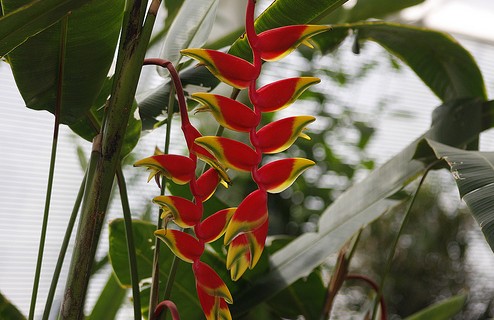
How to Grow Heliconia rostrata? A Complete Guide to Cultivation Methods and Tips
Heliconia rostrata, also known as hanging lobster claw. The plant is tall with an elegant form, and the inflorescence comes in two colors, red and yellow. The leaves resemble banana leaves and are leathery. The spike inflorescence hangs downward in a zigzag shape, the inflorescence axis is red, and the bracts are also red with golden yellow tips, l5~20 of them, arranged in two rows, closely resembling pairs of beautiful little birds
-
A Complete Guide to Schisandra Cultivation Techniques in the Courtyard
Growing Schisandra in courtyards and on vacant land in front of and behind houses can not only increase economic income and solve the problem of insufficient land, but also relieve summer heat, provide shade and coolness, green the courtyard, and beautify the environment. Whether in urban or rural homes, factories, schools, offices, and other institutions, Schisandra can be grown in courtyards. This is a very promising and creative project. 1 Cultivation Characteristics 1.1 Rational Use of Space, Convenient Management Schisandra is a vine fruit tree that can extend its fruiting with the help of trellises, making full use of space. In courtyards, it is very suitable for planting.
-
A Complete Analysis of New Techniques for Clearing Ponds and Removing Wild Fish
Currently, the commonly used pond-clearing drugs in production include quicklime, tea seed cake, bleaching powder, bleaching essence, trichloroisocyanuric acid, etc. 1. Quicklime pond clearing. Quicklime (CaO) reacts with water to form strongly alkaline calcium hydroxide, causing the pond water pH (acidity and alkalinity) to rise sharply to 11-12, thereby killing wild miscellaneous fish, harmful organisms and various pathogens. 2. Tea seed cake pond clearing. Tea seed cake is a round cake pressed from the residue left after oil extraction from the seeds of the oil tea plant. Method of use: break the tea seed cake into small pieces, soak in
条件筛选