What Pesticide to Use for Whiteflies? A Complete Guide to Control Methods
One should understand the characteristics of the pest and each control method and apply the right remedy, supplement it with correct control techniques, observe the safe harvest interval, change cultivation and management practices, and choose pesticides of low toxicity to natural enemies in order to protect or release natural enemies, with the aim of reducing pesticide residues and pollution and ensuring the health of producers and consumers.
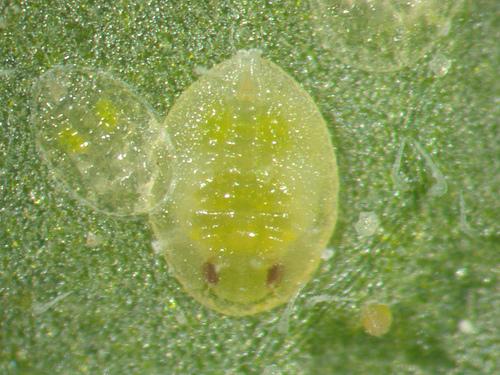
The population of silverleaf whitefly often skyrockets as soon as an outbreak occurs. Plants severely damaged and afflicted with viral disease are commonly seen left in the field, accelerating the spread of both disease and pest. Crops of the Solanaceae, Fabaceae or Cucurbitaceae families that are susceptible to viral disease in particular require special attention to the occurrence and control of this pest, with control carried out at the seedling stage. At present, farmers can make use of protected cultivation, field sanitation or sticky traps for trapping and killing.
Control Methods
1. Greenhouse and screenhouse facilities
Silverleaf whitefly density varies with cultivation method. A well-equipped greenhouse or screenhouse can prevent the invasion of this pest. If it does invade and proper control is then lacking, better equipment may actually lead to higher density. According to survey results, inside the structure, density is higher the closer to the door, being highest at 0.3 m from the entrance and gradually decreasing beyond 5 m. However, once the whitefly population has become established in the screenhouse, it is difficult to eliminate. Therefore, before transplanting seedlings, the leaf undersides must first be thoroughly sprayed with pesticide, and double-door blocking and thorough early control are very important. Spraying inside the facility should be done from bottom to top; high humidity can reduce the population and slow its activity.
2. Green manure crops
Silverleaf whitefly has a very broad range of host plants. In high-density areas, the green manure of the preceding crop must be chosen carefully. Rapeseed and soybean are better host plants for it, sunn hemp is next, and sesbania is a crop that whiteflies relatively dislike inhabiting.
3. Flooding treatment
Before planting: plow → flood with water for 1 day → prepare the land → plant. Plowing the discarded plants and weeds of the previous crop into the soil to remove host plants can reduce the source of the pest.
4. Cultivation and fertilizer management
Silverleaf whitefly prefers to inhabit the leaf undersides of crops that receive insufficient sunlight or are densely planted or lush and poorly ventilated, where it feeds or lays eggs. For Solanaceae and Cucurbitaceae crops, nitrogen fertilizer should not be applied excessively, and pinching and pruning should be done thoroughly. If the base of the plant is dense with branches and leaves, it often becomes a hotbed for the reproduction of this pest. Sufficient sunlight, good ventilation and appropriate fertilizer management can effectively control its occurrence. This pest is a vector of viral disease. If diseased plants are found in the field, they should be pulled up immediately. For plants whose roots have already become intertwined, they should be cut off at the base, placed in plastic bags and left to sun-dry or moved off-site. People and tools can both transmit it mechanically, so tools should be disinfected with alcohol.
5. Removal of old leaves
Silverleaf whitefly likes to lay eggs in places with insufficient sunlight and still air. For example, on muskmelon and tomato, old leaves near the bed surface should be removed, placed in plastic bags and left in the sun to kill the insects on the leaves, or moved off the field to interrupt population reproduction.
6. Field sanitation
Both adults and nymphs are polyphagous, so weeds, residual plants after harvest, abandoned vegetable or melon fields, and other scattered cultivated crops should also be controlled or cleared at the same time, so as to prevent them from becoming a hotbed for pest reproduction and a blind spot in control. After harvest, plow as soon as possible to protect the growth of the next crop.
7. Use of sticky paper or water pans
Adults prefer yellow-green, so green or yellow sticky paper or water pans can be used to attract them. When placing sticky paper, it can be rolled into a tube shape and hung or stood upright about 0.50 cm above the crop growing point; it should not exceed 50 cm, as the higher it is, the less effective it becomes. The spacing between sticky papers should be about 5 m. Commercially sold sticky paper is waterproof but not dustproof, and must be replaced after 2 weeks, or once it is covered with insects or has lost its stickiness. When using water pans for trapping, the water should be kept clear and transparent, and a small amount of soapy water or cleanser should be added to it to prevent the attracted insects from flying away again; replace with clean water immediately once it becomes turbid. Besides suppressing pest population density, this method can also serve as detection of pest occurrence density or epidemic conditions in the field, and the data obtained can provide a basis for control. The trapping effect in screenhouses is more pronounced than in the open air.
8. Bagging
Pests of the order Homoptera all secrete honeydew that induces sooty mold, and among them the secretion of the silverleaf whitefly is thicker and more abundant, causing the plant to look as if a layer of black glue has been poured over it, hindering photosynthesis and respiration in the crop, contaminating the fruit and lowering its commercial value. For cucurbit crops such as melons, bagging is the best policy, as it prevents pests and disease, contamination and pesticide residues. However, before bagging, a pesticide capable of killing eggs must first be sprayed thoroughly over the whole plant once, and bagging should be done once the spray deposits have dried.
9. Release or protection of natural enemies
In the field, parasitic wasps of the family Aphelinidae more commonly parasitize the nymphs. Most insecticides for controlling whiteflies are broad-spectrum and highly toxic to natural enemies. To protect natural enemies, insect growth regulator pesticides such as buprofezin, hexaflumuron and pyriproxyfen, which are less toxic to natural enemies, should be chosen. In organic cultivation in facilities, since no pesticides are sprayed, predatory or parasitic natural enemies can be released. Among predatory natural enemies, ladybugs, green lacewings, big-eyed bugs and spiders can all prey on nymphs and adults. Parasitic natural enemies include Eretmocerus orientalis, Encarsia transvena and Encarsia sophia.
10. Chemical control
This article introduces several chemical control methods. The following is excerpted from biological control methods and can be used in organic agriculture:
1. Although adults have two pairs of wings and can fly, they are not good at long-distance flight; the body is small and they mainly rely on wind to assist migration. Because their host plants are broad, adjacent fields should carry out joint control to prevent mutual transmission, which can achieve twice the result with half the effort.
2. Actinomycete fermentation product - it has the broadest insecticidal range; on pests such as whiteflies and leafhoppers of Homoptera, leafminers of Diptera, yellow-striped flea beetles of Coleoptera and mites of the class Arachnida, it has significant effects. It was promoted early on for controlling the diamondback moth of Lepidoptera, and recently cases of resistance have appeared. For leafy vegetables, fruit vegetables, root and stem vegetables and cucurbit crops, which have many pest species and long growing periods, it is nonetheless an economical and affordable pesticide. However, counterfeit products flood the market. For the safety of farmers themselves and consumers, do not be greedy for small bargains and use counterfeit products, ruining your health and also violating pesticide regulations and being penalized, which is not worth the loss.
3. Neem tree seed extract - azadirachtin (neem oil). (Indian species; varieties cultivated in Taiwan, China do not have this efficacy.) It is non-toxic to humans and can be used on organically cultivated vegetables to control pests such as silverleaf whitefly, diamondback moth and aphids, but it is relatively slow-acting and expensive.