What Is Microbial Fertilizer? A Complete Guide to Its Uses and Benefits
What exactly is microbial fertilizer? The most essential and most distinctive feature of microbial fertilizer is that it is a living, life-containing fertilizer. How is it formed? Let's take a look below. 1. What Is Microbial Fertilizer Microbial fertilizer refers to
What exactly is microbial fertilizer? The most essential and most distinctive feature of microbial fertilizer is that it is a living, life-containing fertilizer. How is it formed? Let's take a look below.
1. What Is Microbial Fertilizer
Microbial fertilizer refers to solid or liquid preparations containing certain living microorganisms or enzymes; when applied to seeds, seedlings or soil, they can enhance the availability of nutrients or increase the nutrient content in the soil, supplement the number of beneficial microorganisms in the soil, and keep the soil functioning under a good ecological environment. According to their functions, microbial fertilizers can basically be divided into nitrogen-fixing bacteria (including symbiotic, associative and non-symbiotic nitrogen-fixing bacteria), phosphate-solubilizing bacteria (including fungi, actinomycetes and bacteria), silicate-solubilizing bacteria, mycorrhizal fungi, rhizosphere microorganisms that promote crop growth, decomposing bacteria, iron-producing bacteria, organic polymer-producing bacteria, compound microbial fertilizers, microbial fertilizers for composting, and so on.
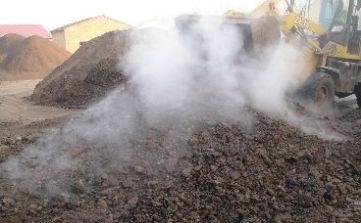
2. Functions of Microbial Fertilizer
The main functions of microbial fertilizer are:
(1) Nitrogen fixation: Nitrogen-fixing rhizobia include symbiotic, associative and non-symbiotic nitrogen-fixing rhizobia. They can fix nitrogen from the air into ammonia, turning it into nitrogen compounds that peanut plants can use. This effect directly increases the nitrogen source in the soil and can replace or reduce the application of chemical nitrogen fertilizers.
(2) Dissolution: The soil contains many bound nutrients that peanut plants cannot use, such as phosphorus, calcium and iron, which must be dissolved by dissolving bacteria in the rhizosphere before they can be used. Therefore, bacteria that dissolve bound nutrients can serve to provide nutrients for reuse by peanut plants and can replace or reduce the application of chemical fertilizers, for example mycorrhizal fungi.
(3) Enhancing root nutrient uptake and growth: Microbial fertilizers include bacteria that enhance root nutrient uptake and growth, increasing the root system's absorptive capacity and surface area, which can reduce the application of chemical fertilizers and improve the efficiency of nutrient supply in the soil, such as mycorrhizal fungi.
3. How to Use Microbial Fertilizer
According to the form of the seed dressing agent, the methods of using microbial fertilizer can be divided into two types: liquid nitrogen-fixing rhizobia and solid mycorrhizal fungi. They are explained separately below:
(1) Method for dressing seeds with liquid nitrogen-fixing rhizobia: Soak or spray peanut seeds with a 5~10 times diluted solution so that the seeds come into contact with the liquid, then sow mechanically after air-drying.
(2) Method for dressing seeds with solid mycorrhizal fungi: Add peanut seeds directly to an adhesive and a small amount of water, then add the solid preparation to coat the seeds, and sow mechanically.
4. Discussion of Microbial Fertilizer
Does "microbial fertilizer" really have the miraculous effects claimed in advertising? Wu Sanhe, a professor in the Department of Agricultural Chemistry at National Taiwan University, said that whether in accelerating the decomposition of compost or in promoting plant growth, he believes that this type of microbial fertilizer or preparation does not have much use, and that the public should still use qualified organic compost to add nutrients for plants.
Wu Sanhe said that this type of microbial product is most numerous in Japan, but even Japan itself is still investigating whether it truly has special effects. The good growth of ordinary plants after using this kind of microbial fertilizer may be attributed to good care; moreover, compost production must take more than six months, and fertilizers made by rapid decomposition may, because of insufficient time, cause the soil to be incompletely decomposed and still acidic, which instead easily causes plants to die.
Professor Zhao Zhenqing of the Department of Soil and Environmental Sciences at National Chung Hsing University pointed out that this type of artificially cultured microbial preparation is usually kept in a culture environment most suitable for the organism's growth conditions, but when it is inoculated into soil, it will face an environment full of lethal crises, just like abandoning a greenhouse flower in a wasteland; moreover, these bacteria will gradually die at room temperature, falling below the concentration needed to have an effect. He is doubtful about the functions of these commercially sold microbial fertilizers or preparations.
Zhao Zhenqing said that products on the market often have unclear labeling, usually writing only that they contain certain amounts of nitrogen-fixing bacteria, phosphate-solubilizing bacteria and compost-decomposing bacteria, and some even write only how many billions of microorganisms per gram the preparation contains. In fact, if you casually grab a handful of soil, each gram of soil contains more than ten billion bacteria, and although there are indeed many microorganisms beneficial to crop growth, there may also be harmful bacterial species. If this cannot be clearly explained, it may cause quite a few aftereffects, so everyone should be especially careful when using them.
A researcher from Taiwan Sugar Corporation said that although some farms once held a positive view of this type of microbial fertilizer, Taiwan Sugar Corporation had conducted research and found that it had no obvious effect in promoting rapid decomposition of compost. Moreover, soil environments differ from place to place, and microorganisms that can act on foreign crops and land may not necessarily act in Taiwan; even the land environments within Taiwan differ from one another. The application of this type of microorganism must be adapted to local conditions in order to work.