-

A Complete Analysis of Traditional Chinese and Western Medicine Prevention and Treatment Methods for Pig Eczema
1. Dual flowers (honeysuckle and chrysanthemum) and Isatis root 200 g each, grind into powder and feed to pigs; externally take an appropriate amount of loofah leaves, crush and squeeze juice to rub the affected area, 2 times a day. 2. Fresh Eclipta prostrata 500 g, borneol 10 g. Crush fresh Eclipta prostrata and add borneol, use gauze to press out the juice, then apply the juice to the cracked skin or the affected area of impetigo, 3 times a day, for 2-3 consecutive days. 3. Yinchen (Artemisia capillaris) and honeysuckle 60 g each, decoct in water for oral administration; wash the affected area with 2%-3% alum, 2 times a day. 4. An appropriate amount of Chinese tallow tree leaves
-
Complete Guide to Chicken Lice Control: Learn to Easily Get Rid of Chicken Lice
Chicken lice are common external parasites of chickens, mainly living on the feathers and skin, about the size of a sesame seed. Chicken lice spread mainly through direct contact, and can also spread indirectly through shared equipment. Clinical symptoms: because the chickens are irritated by the biting and gnawing of the lice, their skin itches, they peck at themselves restlessly, feathers break off, the skin is damaged, and over time they cannot rest well and lose their appetite, resulting in anemia and weight loss. In severe cases, young chickens may die, growing chickens have their development stunted, and laying hens show a drop in egg production. The chickens' resistance to disease
-
What are the precautions for formulating complete chicken feed?
1. Make full use of local feed resources. Because the crop varieties grown in different regions are different, the types of feed are also different. In the spirit of adapting to local conditions and using local materials, local feed resources should be fully utilized, especially those low-priced feeds, which should be used more rationally. This can reduce intermediate links, which can not only reduce the freight costs required for large-scale grain transportation, but also ensure the source of feed. According to surveys, this measure alone can reduce feed costs by 3%-5%. It is one of the effective measures to improve the economic benefits of chicken farming. 2. Raw material varie
-
How Is Asparagus Tea Made? A Complete Guide to the Production Process
1. Process flow: raw material picking - spreading to air-dry - drum fixation - air cooling - second hot-air fixation - rolling - spreading the batch and cooling - hot-air drying - finished product - packaging. 2. Key operating points: 1. Raw material picking: length 3-3.5 cm, and the cut lengths must be highly uniform. 2. Spreading to air-dry: gather the picked raw material and spread it out flat in a room with good ventilation and air convection; generally use bamboo mats or plastic film as a ground liner, and let the surface moisture dry off under natural conditions. 3. Drum fixation: place the spread
-
A Complete Guide to New High-Quality Cultivation Techniques for the Oyster Mushroom
The oyster mushroom, also known as the small oyster mushroom, has a crisp, tender texture, a delicious flavor and rich nutrition. It is a type of oyster mushroom harvested when the cap diameter of the fruiting body is less than 3 cm; because the mushroom body is small, fresh and tender, and tasty, it sells extremely well on the market. Over the 2 years since our center introduced it, we have refined and summarized its biological characteristics and cultivation techniques. The new high-quality cultivation techniques for the oyster mushroom are summarized below. 1 Cultivation season The oyster mushroom is a low-temperature type of fungus; its fruiting temperature range is 5-22°C, with the optimum fruiting temperature range being 13-18°C. In this region it is suitable to fruit in September-
-
A Complete Guide to the Key Cultivation Techniques for National Day Chrysanthemums
I. Potting. The cuttings can be potted once they have 3 to 4 roots. When potting, spread the roots out, firm the potting soil, water thoroughly, and shade the plants; afterwards, spray water once each morning and evening. After they have established, gradually move them into sunlight. The pots should be placed on level ground with good drainage, with the pots kept more than 5 cm apart. During growth, generally do not move the pots, so the roots can penetrate the soil as much as possible to absorb nutrients. II. Pinching. Two weeks after potting, carry out the first pinching so the seedling height is level with or slightly above the rim of the pot. Afterwards, each time 4 to 5 leaves appear, keep 2 to 3 and pinch off the terminal bud. Finally
-
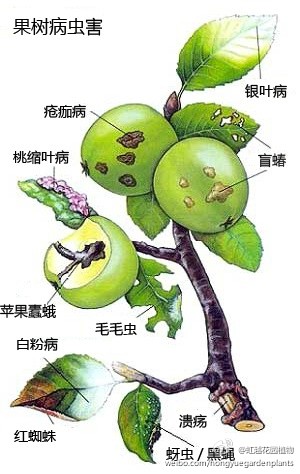
Complete Illustrated Guide to Flower Pests and Diseases: Quickly Identify Disease and Pest Symptoms
Pest and disease illustrations are always somewhat scattered. The few images below bring together illustrations of several dozen common flower pests and diseases, plus illustrations of fruit tree pests and diseases, rose pests and diseases, and tree pests and diseases.
-
A Complete Analysis of Yellow Tea Evaluation Methods and Techniques
Due to differences in variety and processing techniques, yellow tea varies noticeably in shape. For Junshan Yinzhen, the best is needle-shaped with plump, sturdy buds covered in down; thin, flat buds with little down are inferior. For Mengding Huangya, flat, straight strips with sturdy, downy buds are superior, while curved strips with thin buds and little down are inferior. For Luyuan Tea, tightly rolled strips curled into ring shapes with visible down are good, while loose, straight strips without visible down are inferior. For Huangda Tea, thick, plump leaves forming strips, with long sturdy stems and stems still attached to leaves, are good; leafy pieces, thin short stems, stems separated from leaves, or broken stems and torn leaves are inferior. When evaluating color, compare the dryness versus moisture and dullness versus brightness of the yellow; golden yellow, fresh and moist, is excellent, while dull, dark color is
-
Complete Analysis of Key Points in Royal Jelly Production Technology
I. Basic Requirements for Producing Pollution-Free Royal Jelly 1. Apiary Environment Requirements The breeding and production sites for royal jelly production colonies must be far away from heavily polluted urban areas, heavy industrial zones, chemical plants, pesticide factories, garbage treatment and landfill sites, sewage treatment plants, orchards and farmland where pesticides are frequently sprayed, to prevent indirect environmental contamination of royal jelly. There must also be abundant nectar and pollen sources as well as auxiliary nectar and pollen sources. 2. Royal Jelly Production Site Requirements As a food that can be consumed directly, royal jelly must be produced in accordance with basic food production
-
What is the Nomura Barred Chicken? A complete guide
The Nomura Barred Chicken is a Japanese local breed, large in size and robust in build. Adult roosters weigh 7 kg, and hens weigh 5 kg, with black-and-white barred plumage. Roosters are tall, upright, full-breasted, muscular, with long and sturdy legs; the comb may be single or triple, and the comb, wattles, and earlobes are all red. The feathers are thick, vivid, and glossy. The head is held high, the tail feathers are upright, and the posture is graceful yet imposing and mighty. Hens have slightly shorter shanks and a stocky build. The Nomura Barred Chicken is an omnivorous chicken breed.
条件筛选