-

Control Methods for Spruce-Bird Cherry Cone Rust
Spruce-bird cherry cone rust occurs in Inner Mongolia, Jilin, Heilongjiang, Sichuan, Yunnan, Tibet, Shaanxi, Gansu, Qinghai, ** and other places in China. The disease damages Picea asperata (dragon spruce), Picea purpurea (purple cone spruce), Picea likiangensis (Likiang spruce), Picea brachytyla var. complanata (oil wheat hanging spruce), Picea jezoensis (Yeddo spruce), Picea schrenkiana (Schrenk spruce), ** spruce and others. Symptoms: The disease damages the upper surface of female cone scales. Infected scales are twisted, rolled back and disorganized. On the upper surface, many purplish-brown small spheres are produced, arranged in a single layer; these are the aeciospore pustules of the pathogen. Sometimes aeciospore pustules also form on the underside of the scales.
-

What conditions are needed for cherry cultivation? A full analysis of growing requirements
Cherry cultivation conditions
-
Common problems and solutions in wheat-intercropped Three-Cherry pepper cultivation
With the adjustment of the agricultural structure, Three-Cherry pepper began to be planted in Neihuang County in 1993, and by 2004 it had grown to 4300 hectares, with the most concentrated area being Lucun Township, where the planting area is about 2900 hectares, and a trading market covering 6.5 hectares, with an annual trading volume of 87 million t and an annual trading value of 29.58 million yuan, was established, achieving good economic and social benefits, but many problems still exist, restricting farmers' economic returns. 1 Problems existing in production
-

-

What environmental conditions are needed for the growth of cherry radishes?
Environmental requirements for the growth of cherry radishes
-
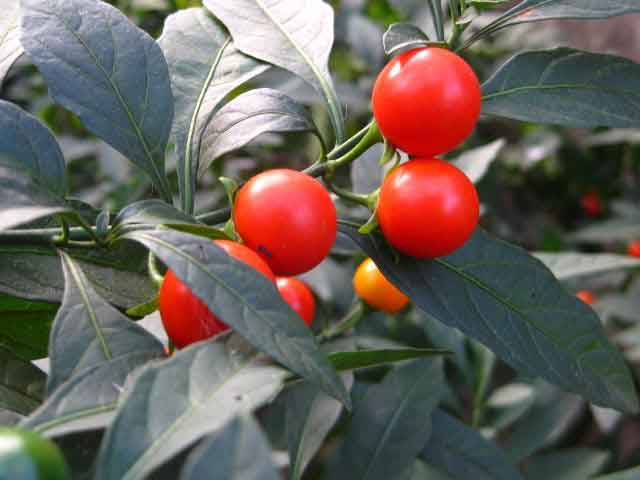
How to grow Jerusalem cherry in pots? Detailed guide to pot cultivation methods
When Jerusalem cherry is planted in the ground, conditions such as water, fertilizer and light are all favorable for the plant's normal growth, flowering and fruiting, so it can grow lush branches and leaves and bear abundant red berries even without careful management. In pots, however, due to the limitations of the growing container and the constraints of climatic factors, too much water can easily cause root rot, leaf drop or flower drop
-
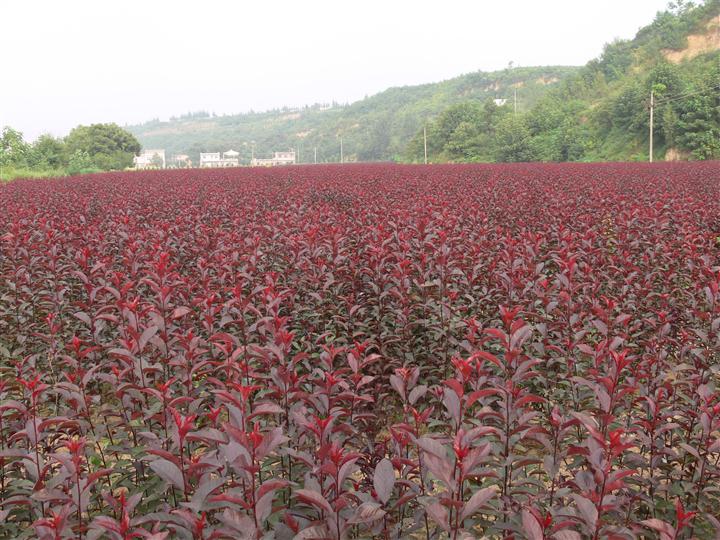
How to grow the purple-leaf sand cherry? A detailed guide to cultivation methods and precautions
Propagation methods. For cuttings propagation, in a solar greenhouse, make a seedbed 120 cm wide running east-west or north-south, and spread 8~10 cm of cuttings substrate inside. When spreading, first lay the peat soil on the bottom layer, then thoroughly mix the vermiculite powder and perlite and spread it on top, and rake it level.
-
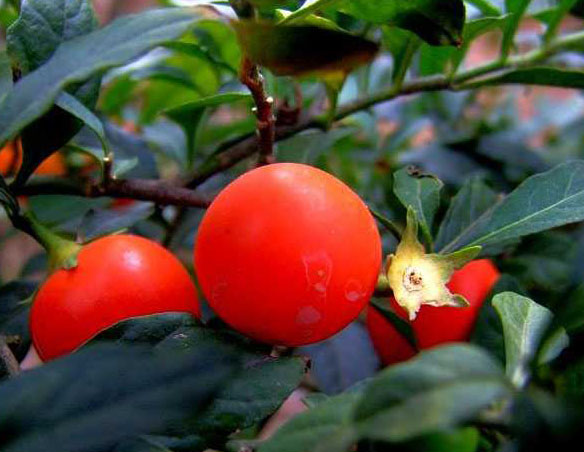
What conditions are needed for the Jerusalem cherry to have bright, colorful fruit?
The Jerusalem cherry, also known as coral cherry, lucky fruit, coral seed, coral bean, jade coral, red coral, wild chili, wild sea pepper, false winter cherry, and four-season fruit. It is an upright small shrub in the Solanaceae family. Its leaves are oblong or oblanceolate. The flowers are solitary or clustered in the leaf axils, with a white corolla. The fruit is spherical, turning red or yellow when ripe.
-

How to Propagate Cherry Tomatoes? A Detailed Guide to Cherry Tomato Propagation Techniques
Propagation Techniques for Cherry Tomatoes
-
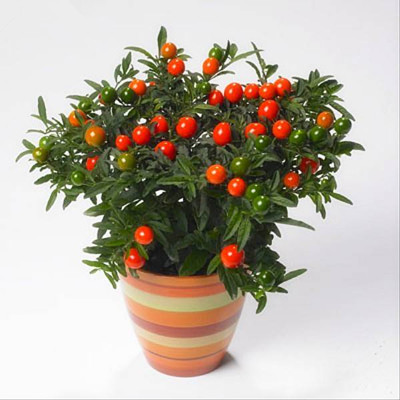
What are the propagation methods for Jerusalem cherry?
Jerusalem cherry (Solanum pseudocapsicum) is a perennial woody plant in the Solanaceae family, genus Solanum. Common names: coral cherry, lucky fruit, coral seed, coral bean, jade coral, red coral, wild chili, wild sea pepper, ornamental cherry. Jerusalem cherry likes sunlight and prefers a warm, sunny environment; the optimal growing temperature is 18-25 degrees Celsius; it is not drought-tolerant, dislikes waterlogging, and fears flooding.
条件筛选