-

-
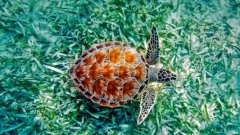
Why is the green sea turtle called a living fossil of the animal kingdom, and what are its main characteristics?
The green sea turtle belongs to the family Cheloniidae, genus Chelonia. It is distributed around the poles, with traces found in sea areas from 35 degrees north latitude to 35 degrees south latitude, but it is mainly distributed in tropical to subtropical sea areas. What is its body shape like? What kind of characteristics does it have? Let's take a look together.
-
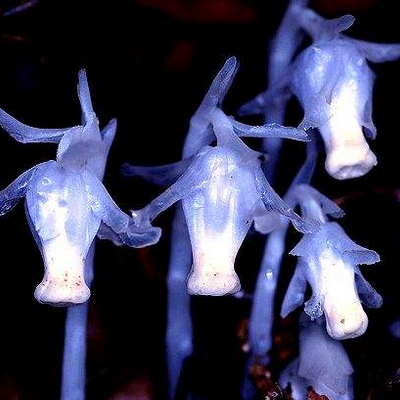
Why is Monotropa uniflora called the flower of death, and is it poisonous?
The flower of death sounds quite chilling, but in fact it is a rare flower called Monotropa uniflora, so let us go and learn about it
-
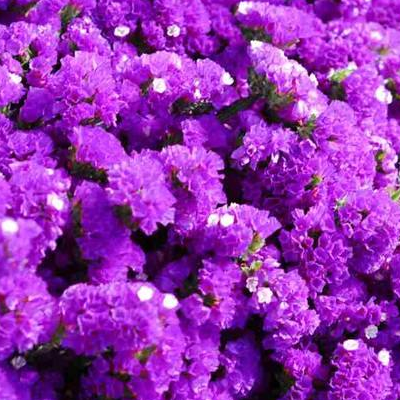
How to grow sea lavender, and is it also called forget-me-not?
Sea lavender is a plant that many people absolutely love to grow. What are the growing methods for sea lavender? Is sea lavender also called forget-me-not? Growing methods for sea lavender: soil and fertilizer selection, sea lavender needs soft soil
-
-

Why is the Crisp Honey Peach called the world's number one peach?
The Crisp Honey Peach is a new peach variety selected from a bud sport of the Yingqing peach. In 1997, it won the gold award at the First Hunan Province Forestry Famous, Special and Excellent New Products Expo, and was hailed as the "world's number one peach". At present, this variety has been adopted as the main promoted late-ripening peach variety in the south. This variety generally weighs about 200 grams per fruit, with a maximum single fruit weight of 550 grams. The fruit is round and well-formed, symmetrical on both sides, with a slightly pointed tip. The fruit color is green-yellow with a red blush, bright and attractive. The flesh is greenish-white, densely sweet and crisp, with a pure aroma. The fruit
-
Why the mudskipper is called the jumping champion
In the high-tide zone along China's coast or in the brackish mudflats of estuaries, there lives a small fish only a few dozen millimeters long, with a large, squarish head; protruding eyes that can rotate; a muscular stalk at the base of the pectoral fins that can serve as an organ for supporting and crawling on land; and left and right pelvic fins fused into a suction cup. The mudskipper has a habit of leaving the water to feed. Whenever the tide goes out, it often relies on the muscular stalks of its pectoral fins to crawl and hop over the mudflats in search of food, or climbs onto rocks and mangrove thickets to prey on insects, or climbs onto stones to bask in the sun. When it comes out of the water, its well-developed
-
Why is the fresh straw mushroom called the Chinese mushroom?
Right now, a small amount of fresh straw mushrooms has appeared on the market in some vegetable markets and supermarkets in Jiangcheng, priced at about 24 yuan per kilogram. Yesterday, a reporter bought 500 grams at the Jiangda Road vegetable market in Hankou and stir-fried them plain to try them fresh, finding them delicately fragrant and delicious, smooth, tender and tasty. The straw mushroom, also called the delicious straw mushroom, orchid mushroom, hemp mushroom, etc. It is only as big as a candied jujube, with a pointed round top that is black; the lower part is thick and white. It is understood that at the beginning of this year it was introduced from the Jiangsu-Zhejiang area to Xinzhou, Dongxihu and other places in our city, and the current output is relatively small. The straw mushroom is delicately fragrant and has long had the
-
12% Rice Power is worthy of being called the nemesis of rice diseases
12% Rice Power emulsifiable concentrate (i.e. 12% Green Copper Emulsifiable Concentrate, rice-specific type) is a fungicide specially for rice. According to large-scale demonstration and promotion in major rice-producing areas such as Hunan, Hubei, Guangxi and Zhejiang, it has good control effects on many fungal and bacterial diseases of rice such as bacterial leaf streak, bacterial blight, rice false smut and rice blast, and its effect on bacterial leaf streak is especially remarkable. Rice Power is a low-toxicity pesticide; under natural conditions it degrades quickly, with no residue and no pollution, and is safe to humans, livestock and the environment; among its components
-
Why is the mudskipper called a dish of wealth, longevity, and good fortune?
The mudskipper's scientific name is the mudskipper (Periophthalmus), also known as the spotted mudskipper, flower fish, and jumping fish. It is a small economic fish distributed along the coastal mudflats of China, Korea, Japan, and the Malay Peninsula, and is produced in large quantities in coastal areas of our country, especially along the southeast coast. Common varieties include the large mudskipper, the mudskipper, and the blue-spotted mudskipper, among which the large mudskipper is the largest. This fish has an elongated, round body, 10-20 cm long and weighing 20-50 g, with large ones reaching about 100 g. It has a large head, a wide mouth, and protruding eyes; its body is grayish-black or grayish-brown and covered
条件筛选