How to grow sea lavender, and is it also called forget-me-not?
Sea lavender is a plant that many people absolutely love to grow. What are the growing methods for sea lavender? Is sea lavender also called forget-me-not?
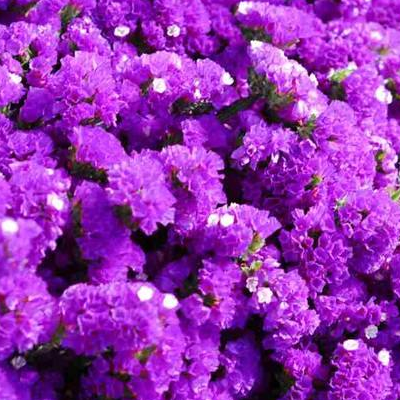
Growing methods for sea lavender:
1. Soil and fertilizer selection
Sea lavender needs soft soil. You can choose sterilized leaf mold, or mix peat and perlite evenly in a 1:1 ratio. Sea lavender has a relatively high demand for boron, so adding borax to the base fertilizer can effectively regulate soil fertility while also adjusting soil pH. For topdressing, you can choose diluted soybean cake water and quick-acting nitrogen, phosphorus, and potassium applied indirectly.
2. Temperature control
After sowing, sea lavender needs low-temperature vernalization to help it flower. When the autumn temperature is 18-21°C, sow the seeds, and they usually sprout in about 5 days. After sprouting, the seedlings can be placed under low-temperature treatment below 16°C, then after 3 days placed under normal temperature for care.
When the first true leaf appears, the seedlings can be pricked out. When the leaves reach 5-6, they can be planted out. Planting out is generally done in October-November, and the flowering period is June-August. The suitable temperature is 18-20°C during the day and 10-15°C at night, and the minimum should not be lower than 0°C.
3. Light control
Sea lavender needs a ventilated and well-lit environment, which can effectively reduce the occurrence of diseases. For cultivation methods, you can choose double-row cross planting, or three-row planting. Plum-blossom-shaped planting is also very common in open-field cultivation. Sea lavender likes light, so attention should be paid to light during the growing process. Of course, exposure to strong sun is not acceptable either, and shading treatment is needed at midday in summer.
4. Later care
During the vigorous period of inflorescence emergence and growth of sea lavender, the supply of water and fertilizer must be sufficient, otherwise it is easy to cause short and small flower branches and non-lush flowers. During the growth and emergence of sea lavender, netting or stakes are needed to prevent lodging. After harvesting the first flush of flowers, promptly remove old branches and dead leaves to help promote new bud germination and avoid consuming more nutrients. It should be noted that sea lavender is a taproot plant, so it must be transplanted with soil during the seedling stage to prevent root damage and improve the survival rate.
Is sea lavender also called forget-me-not?
Sea lavender in the Plumbaginaceae family is also called forget-me-not when used as a cut flower
That is all for the introduction to sea lavender growing methods. Whether this sea lavender can be called forget-me-not depends on the variety.
Forget-me-not's other name sea lavender, forget-me-not flower language
Floral Bonsai Network introduction, belowwhat Floral Bonsai Network editors share with you is about forget-me-not's other namesea lavender,forget-me-not flower language article,let's take a look together.
Forget-me-not(scientific name: Myosotis sylvatica), also known asforget-me-not, is a plant in the Boraginaceae family, genus Myosotis.
It is distributed in Europe, Iran, Russia, Pakistan, Kashmir, India, and in China's Jiangsu, Northwest China, North China, Sichuan, Yunnan, Northeast China and other places. It grows in areas from 200 m to 4,200 m above sea level, mostly in mountain forest edges, slopes, under forests, and valley grasslands. It has not yet been introduced and cultivated artificially.
Forget-me-not is a small light blue flower with five petals and no fragrance. Although ordinary, couples are willing to tie them into a bouquet and give them to their lovers to express deep love.
Althoughforget-me-not's other name is also calledsea lavender, there is actually another plant also called sea lavender. Sea lavender(scientific name:Limonium sinense), is a plant species under the genus Limonium in the Plumbaginaceae family.
Forget-me-not's other names
Forget-me-not, also known as liuli cao, wuwang cao, winged-stem sea lavender, star flower, sea lavender, ever-lasting flower, spoon-leaf flower, Statice, jisong, is a plant in the Boraginaceae family, genus Myosotis.
Morphological characteristics of forget-me-not
Forget-me-not is an annual or biennial herbaceous plant, 30-60 cm tall. Leaves are simple and alternate, leaf blades oblanceolate, lower leaves petiolate, upper leaves sessile, raceme terminal, 10-15 cm long; calyx small, 5-lobed; corolla salverform, lobes 5, blue, pink, or white, throat yellow. Flowering period April-May, nutlets brown-green, fruiting period May-June.
Growth habits of forget-me-not
Forget-me-not has strong adaptability, likes a dry and cool climate, avoids damp heat, likes light, is drought-tolerant, and the suitable growth temperature is 20°C-25°C. It is suitable for growing in loose, fertile, well-drained slightly alkaline soil.
Forget-me-not flower language
Forget-me-not's flower language is eternal love, deep affection and friendship, and an unchanging heart. Forget-me-not is the romantic soul among flowers. According to legend, in ancient Europe, a knight was touring the seaside with his beloved lover. His lover saw a bouquet of flowers standing in the water and wanted to pick them to wear. To win her favor, the knight waded into the water to pick them, but unexpectedly was swept away by the surging tide. Before he was swept away, he still did not forget to throw the flowers onto the shore and shout to his beloved: "Do not forget me!" After that, this flower was named forget-me-not and became a token of mutual love, deeply cherished by couples.
Forget-me-not varieties and uses
Complete list of forget-me-not varieties
Algerian type, flowers orange-yellow, plant height more than 1 m, plant form loose and slender, flower color brilliant, early flowering period, flower color retention time the longest.
Deeply waved-leaf type, flowers purple, plant height nearly 1 m, plant form compact, stems hard and sturdy. In addition, there are other flower color varieties, such as blue, white, orange-red, yellow, peach red, light red, purple red, blue-green, etc.
Forget-me-not varieties can also be divided into early-maturing and late-maturing types. Early-maturing varieties include Early Blue, Gold Coast, Blue Pearl, etc. Medium-late maturing varieties include Iceberg, Night Blue, Blue Velvet, etc. Growers should fully understand variety characteristics and market demand in order to choose suitable varieties.
Forget-me-not uses and effects
Ornamental use: forget-me-not flowers are small and delicate, with many flower colors. Although ordinary, couples are willing to tie them into a bouquet and give them to their lovers to express deep love. Forget-me-not is often used as a cut flower. At present, what is sold in flower shops is not the real forget-me-not, but sea lavender. Selling sea lavender as forget-me-not is only to take its beautiful meaning.
Forget-me-not flower tea: forget-me-not can be made into flower tea for drinking. It has the effects of nourishing yin and tonifying the kidney, beautifying the face, tonifying blood and nourishing blood, and can promote body metabolism, delay cell aging, delay cell aging, improve immunity, resist viruses, and resist cancer and prevent cancer. It can be used to treat diseases such as blood deficiency and irregular menstruation, beauty and face care, clearing fire and brightening the eyes, freckles and acne, low immunity, viral infection, and insufficient blood supply to the heart and brain vessels.
Forget-me-not growing methods: how to grow forget-me-not?
The forget-me-not sold on the market is actually a kind of sea lavender. As the name suggests, forget-me-not has the effect of nourishing blood. Forget-me-not also has the effects and functions of nourishing yin and tonifying the kidney, beautifying the face, and clearing fire and brightening the eyes. Since forget-me-not's effects are so good, then how should forget-me-not be grown? Below, the editor will share with everyone the growing methods for forget-me-not.
Forget-me-not has strong adaptability, likes light, and is drought-tolerant. Under conditions of sufficient sunlight, the flower color is bright, but it avoids high temperature and high humidity in summer. The suitable growth temperature for forget-me-not is 22-28°C, and above 30°C it enters a semi-dormant state. Forget-me-not likes fertile, well-drained sandy loam soil.
Forget-me-not varieties include early-maturing and late-maturing types. Early-maturing varieties include Early Blue, Gold Coast, Blue Pearl, etc. Late-maturing varieties include Iceberg, Night Blue, Blue Velvet, etc. For annual cultivation of forget-me-not, you can choose early-maturing varieties, plant from April to June, and they will bloom in autumn, with the flowering period continuing until the next spring.
When growing annual forget-me-not, do a good job of shading and cooling in summer, and take insulation measures in winter. Biennial cultivation of forget-me-not can be planted from October to December without insulation measures, allowing the forget-me-not seedlings to undergo low-temperature induction in winter, and they will bloom the following spring, with the flowering period continuing until winter.
Planting:Forget-me-not likes dry, fertile, well-aerated, slightly alkaline sandy loam soil. For forget-me-not's growing medium, thoroughly decomposed organic fertilizer and slow-release compound fertilizer can be evenly stirred into the soil. Forget-me-not's planting spacing is 30 cm x 40 cm, and the planting depth should be such that the substrate is slightly higher than the root crown.
After planting forget-me-not, there should be 2 months of maintaining a temperature below 15°C to help the plant pass through the vernalization stage, which is beneficial to the normal growth and flowering of forget-me-not.
Light:Forget-me-not likes sufficient sunlight, but avoids high temperature and high humidity, so usually give forget-me-not sufficient light. Insufficient light will cause forget-me-not's leaf clumps to become lush, affecting flowering, or even preventing flowering, but shade measures should be taken in summer.
Temperature:The suitable growth temperature for forget-me-not is 22-28°C. When the temperature is higher than 30°C or lower than 5°C, it is not conducive to the growth of forget-me-not. Therefore, for forget-me-not planted in spring and summer, when the seedlings have not undergone low-temperature treatment, the time to enter the greenhouse needs to be delayed so that they fully receive low temperature and complete vernalization.
Watering:Planting forget-me-not must be equipped with drainage facilities to prevent waterlogging. Forget-me-not likes slightly moist soil, but avoids water accumulation at the roots. Usually, try to keep the soil in a slightly moist but leaning dry state.
Fertilizing:Before planting forget-me-not, sufficient base fertilizer should be applied to the soil, preferably 50 kg/mu, and deeply turned into the soil. When forget-me-not grows 6-8 leaves, apply once a 0.1% urea solution. When forget-me-not bolts, apply a 0.1% potassium dihydrogen phosphate solution 2-3 times.
Pests and diseases:Forget-me-not diseases include gray mold, powdery mildew, viral disease, etc. Gray mold can be controlled by continuously spraying 800-**** chlorothalonil and thiophanate-methyl 3-4 times. Powdery mildew can be controlled by spraying fenarimol, etc. For viral disease, mainly adopt measures such as promptly pulling out and burning diseased plants, and spraying insecticides to prevent insect transmission.
Forget-me-not propagation methods
Forget-me-not propagation methods include seed propagation and tissue culture seedling raising. Forget-me-not seed propagation is generally from September to January of the following year. At a temperature of 20°C, forget-me-not seeds will germinate in 5-10 days.
When sowing forget-me-not, be careful that the temperature does not exceed 25°C. After sprouting and emerging, attention should be paid to ventilation. When the seedlings reach more than 5 leaves, they can be transplanted and planted. For tissue-cultured seedlings of forget-me-not propagated by tissue culture technology, they can be planted out when the seedlings have 4-6 leaves.
That is all for the introduction to forget-me-not growing methods. I hope it can be helpful to you. Welcome to continue following Succulent Garden to learn more about the care knowledge of herbaceous flowers.