-

Kraft chicken nuggets recalled due to contamination with bacteria
Because test results found contamination with Listeria monocytogenes, yesterday the world-renowned Kraft Foods company announced the recall of all chicken tenders and chicken nuggets produced by Carolina Culinary Foods. This bacterium may cause illnesses such as septicemia, meningitis and mononucleosis. The city's food safety department said that previously it had not received reports of Kraft chicken tenders and chicken nuggets being sold in the city, and will keep monitoring the matter. It is understood that Listeria monocytogenes
-
Why Is the Twice-Blooming Fragrant Sophora Called a Magical Greening Tree?
Tree origin: native to Israel, introduced to Northeast Asia from what is now South Korea during World War II, and brought into China in recent years by overseas Chinese from Shandong for planting, where it has performed quite well and is worth promoting and applying. Tree characteristics: legume family, a tree, hard wood, with green bark that is pleasing to the eye, and its age can reach more than a hundred years. The root system is well developed, the bark is yellow and bitter in taste, with many fine roots and a large absorption area. The trunk is tall and straight, resistant to wind and lodging. The leaves are oval, growing in opposite pairs, bright green and eye-catching. Its flowering nature is magical: it blooms twice a year, once in early spring and again in mid-summer, with a bright purple color, a fragrance that drifts into the nose and refreshes the heart, and it
-
Why is the yew called a precious plant?
Yews are distributed across the Northern Hemisphere. The entire family has only 5 genera and 23 species, and China alone has 4 categories and 13 species. These plants grow naturally in coniferous or broad-leaved forests at altitudes above 1200 m. Over the past twenty to thirty years, research has mostly focused on several species in this genus, such as the Chinese yew (Taxus chinensis), Yunnan yew (Taxus wallichiana var. yunnanensis), Northeast yew (Taxus cuspidata) and southern yew (Taxus wallichiana var. mairei). The yew is one of the precious tree species, with fine wood grain that resists moisture and decay; its form is graceful, with dense dark green foliage, and it likes moisture and tolerates shade, so it was introduced early by garden workers as a multi-layered garden or shade-planting site
-
Why is the yew called "plant gold"?
The yew is a species left over after the Quaternary glaciation, known as a "living fossil" of the plant kingdom, and is a rare and endangered plant in the world. China has listed it as a first-class protected plant. When the yew fruit ripens, red berries cover the branches, gorgeous and varied; it gets its name because it closely resembles the "love bean" of the south. It is not only an important timber tree species and ornamental tree species, but also a precious medicinal plant. In 1989, the United States was the first to detect paclitaxel from substances contained in the yew. Experiments proved that paclitaxel has a unique anti-tumor mechanism and a significant tumor-inhibiting effect, and it is considered the most
-
Wallflower is also called scented stock and hua'erhua
Scientific name: Cheiranthus cheiri Category: Flowering ornamental Aliases: scented stock, hua'erhua Morphological features: Brassicaceae, annual or biennial herb. Plant height 30-60cm, stems erect, much branched, base semi-lignified. Leaves alternate, lanceolate, apex acute, margin entire. Raceme terminal, flower diameter 2.0-2.5cm, petals nearly round, with long claws, flower color orange-yellow or yellow-brown, fragrant. Flowering period April-June. Fruit is a silique. Growth habit: cold-tolerant.
-
Lycoris radiata, also called cockroach flower and crow garlic, what kind of plant is it?
Aliases: cockroach flower, crow garlic Family and genus: Amaryllidaceae, Lycoris Morphology: perennial herbaceous plant, underground bulb thick, broadly elliptical, covered with a purplish-red membrane. Leaves linear, emerging from the base after the flowering period, 5-6 leaves, leaves emerge in winter and wither in summer. Flower scape emerges from August to September, 30-60 cm tall, bearing 4-12 flowers, in an umbel at the top; flowers bright red, tube very short, about 5-6 mm long, segments narrow oblanceolate, curling outward. Ovary inferior, does not set seed after flowering.
-
Why is the nipplefruit also called "five generations under one roof" and "golden fruit"
Aliases: five generations under one roof, golden fruit, five sons paying birthday respects. Family and genus: an evergreen small shrub of the genus Solanum in the family Solanaceae. Morphological characteristics: the fruit of the nipplefruit is golden yellow with a peculiar shape; its flowering and fruiting period is summer and autumn, and the fruiting period is long, especially after leaf fall in early winter, because its fruit does not change color or shrink, making it unique and attractive. It is an upright branching small shrub, usually grown as an annual, with a plant height of 0.5--1.5 m, relatively sparse leaves, and the whole plant covered with waxy yellow flat spines. Its flowering and fruiting period is summer and autumn; before flowering, the flower buds often droop, and when fully open they are slightly upright, with 5 purple flowers
-
Why peach blossoms are called a good spring medicine
In the third month of spring, peach blossoms are in full bloom. Besides being ornamental, peach blossoms also have fairly high medicinal value. They contain kaempferic acid, coumarin, trifolioside, naringenin, and vitamins A, B, and C, among other components. They are bitter in taste and neutral in nature, non-toxic, and suitable for treating illness both internally and externally. Traditional Chinese medicine holds that the peach is sweet and warming in nature, with a pungent and sour taste, and has the effects of improving complexion and relieving consumptive fever. Fresh peaches tonify the middle and boost qi, and promote fluid production to quench thirst. For patients with high blood pressure, eating one peeled fresh peach morning and evening each day is beneficial for keeping blood pressure stable; for patients with iron-deficiency anemia and iron deficiency, regularly eating fresh peaches has a certain
-
Wax apple is also called Jinshan wax apple, lianwu and tianwu.
Wax apple (Jinshan wax apple, lianwu, tianwu), an evergreen tree of the Myrtaceae family, 6-15 m tall. Bark brown, clear trunk height 2-4 m; crown oval. Leaves opposite, leathery. Oblong-elliptic, 12-25 cm long, 6-9 cm wide, entire, apex obtuse, base slightly concave or rounded, dark green above, with tiny glandular dots, midrib and lateral veins conspicuous on both surfaces, with marginal veins; petiole about 3 mm long. Cymes terminal or axillary; flowers white or pale yellow, stamens numerous. Berry top-shaped or shallowly cup-shaped, top flat and broad, concave in the middle.
-
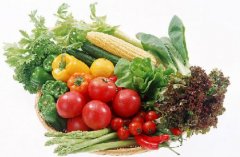
What are the general principles for choosing food?
So-called seasonal produce refers to ingredients that are best suited for planting and ripening in the current season. Ingredients that follow natural patterns are not only fresh, good in taste and high in nutritional value, but also have a strong ability to resist seasonal pests. Therefore, without heavy fertilizing and spraying
条件筛选