Why is Monotropa uniflora called the flower of death, and is it poisonous?
The flower of death sounds quite chilling, but in fact it is a rare flower called Monotropa uniflora, so let us go and learn about it. Why is Monotropa uniflora called the flower of death? Is Monotropa uniflora poisonous?
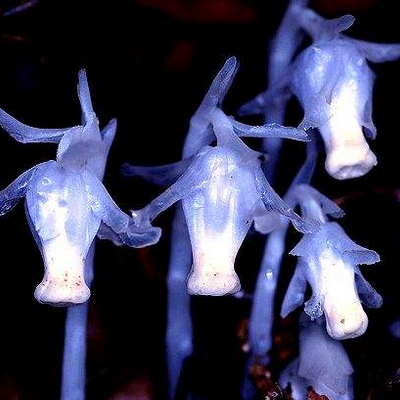
Why Monotropa uniflora is called the flower of death:
Monotropa uniflora (scientific name: Monotropa uniflora Linn.): It is not an orchid, nor a fungus; it belongs to the family Pyrolaceae. Perennial, herbaceous, saprophytic; stem erect, single, unbranched, 10-30 cm tall, the whole plant lacks chlorophyll, white, fleshy, turning dark brown after drying. It never carries out photosynthesis and obtains nutrients from decaying plants. It is called the flower of death.
Lu Yuan, a staff member of the Plant Diversity Research Laboratory at Xi'an Botanical Garden: "This plant is called Monotropa uniflora, a saprophytic plant. It has no chlorophyll at all and cannot carry out photosynthesis, so it must absorb nutrients from the outside to survive. Monotropa uniflora belongs to the family Pyrolaceae and is a non-toxic plant. It is fairly widely distributed in the Qinling region, but is still relatively rare. Each time we find a population, the number of individuals is especially small, so it is a relatively rare plant."
Lu Yuan said that because Monotropa uniflora is pure white all over, it is popularly called the "flower of death" by many people. He reminds us that if Monotropa uniflora is found in the wild, it is best not to pick it, because it has very high requirements for its growing environment, and when moved from mountain areas back to the plains, it is generally very difficult for it to survive.
Is Monotropa uniflora poisonous:
Monotropa uniflora, family Pyrolaceae, non-toxic. Monotropa uniflora has no chlorophyll, cannot carry out photosynthesis, and survives by absorbing nutrients from decaying leaves. They mostly grow in inaccessible dense forests and are very rare.
All right, that is all for the introduction to Monotropa uniflora for now. Friends, now you know why it is called the flower of death, right?
Flowering plant gallery, complete collection of flowering plant pictures
After the winter jasmine fades, the summer jasmine bloomsEveryone knows that when spring comes, winter jasmine will bloom, but did you know there is also a flower that welcomes the arrival of summer? That is the summer jasmine, little unnoticed wildflowers one after another. Perhaps you have never noticed its beauty, but it does exist!4401 Save to phoneThe ghost flower - Monotropa uniflora picturesThe ghost flower Monotropa uniflora: family Pyrolaceae, neither an orchid nor a fungus, a saprophytic plant, with no chlorophyll and no photosynthesis, and leaves reduced to scales.
4176 Save to phoneIce-clear and jade-pureIce-clear and jade-pure is one of the varieties of narcissus, and its feature is white combined with creamy yellow, looking strange yet beautiful.
665 Save to phoneDutch Captain - narcissusWhen hearing the name Dutch Captain, is everyone's first reaction that it is a person? But Dutch Captain is actually a kind of narcissus~
530 Save to phoneDream flower, paperbushPaperbush is called China's tree of love, representing the beautiful meaning of a happy union. When it blooms, all its leaves fall, and clusters of yellow flowers crowd the long branches, truly beautiful.
517 Save to phoneShell ginger with interwoven flowers and leavesShell ginger, also called variegated ginger, shellflower... Although its name contains the word ginger, its appearance is not the least bit like ginger. Come and take a look with me!
672 Save to phoneShe is among the bushes, Michelia maudiaeSeeing this name, Michelia maudiae, gives people both a wuxia feeling of heroic tenderness and the surprise of a wondrous romance in the deep forest.
716 Save to phoneThe modest gentleman, warm and gentle as jade - Rangoon creeperIt has a distinctive name, "Rangoon creeper." Most people know its medicinal uses and value its fruit, but in fact this modest gentleman also has a warm and gentle appearance.
1600 Save to phoneDeeply devoted trailing phloxTrailing phlox, what a mysterious and charming name. Just like its appearance, hazy and lovely, as if placed in soft thin mist. And it also has an equally beautiful and wonderful legend.
1210 Save to phoneLily magnolia - peerlessly independent and gracefully beautifulLily magnolia is a traditional flower of China, yet it has always grown deep in the mountains without being known. While the surroundings are still chilly, the precious lily magnolia has already put away its smiling face, placing its stunning beauty and fragrance quietly within its bleak body.
324 Save to phoneA flower that stays red for a hundred days - zinniaZinnia is native to Mexico and is a famous ornamental plant. It is widely cultivated throughout China and sometimes becomes wild. Zinnia flowers bloom for a hundred days, with large, gorgeous, and very beautiful blooms.
505 Save to phonePine-leaf peony - Leptospermum scopariumLeptospermum scoparium is named because its leaves resemble pine needles and its flowers resemble red plum blossoms, and because its double flowers look like peonies, it is also called "pine-leaf peony." It is an ornamental flowering plant introduced in recent years.
238 Save to phoneBeautiful village dwellings satisfy everyone's wishes, small pink peach blossoms follow people's pointing - flowering almondFlowering almond is named because its leaves resemble elm leaves and its flowers closely resemble plum blossoms. It blooms in April, with branches full of flower clusters, bringing people a red feast.
210 Save to phoneGolden yellow dogwood across the mountainsEnjoy dogwood flowers in spring, view its shadowy grace in summer, admire red fruit in autumn, and savor white snow scenery in winter. Cornus officinalis is always so full of charm, letting us feel a different landscape in all four seasons.
185 Save to phoneFlowers reflecting the moon - evening primroseEvening primrose is a species under the genus Oenothera in the family Onagraceae. It is a flower that blooms from summer to autumn and grows wild throughout the country. It blooms after dusk, hence the name 'evening primrose.'
282 Save to phoneSweet dream - sweet alyssumSweet alyssum, as its name suggests, gives off a faint delicate fragrance when in bloom. Individual flowers are very small, but they grow clustered into balls, pure white as snow.
226 Save to phoneThe light purple corolla that beautifies the world - water hyacinthIts appearance is peculiar: the uppermost petal has a yellow spot in the middle, and the surrounding deep purple forms a shape like a phoenix eye. It is called the "light purple corolla," and it is the water hyacinth.
424 Save to phoneA riot of gorgeous colors - Caragana sinicaGolden little flowers bloom one after another on the branches. Such luxuriant flowers have an interesting name - Caragana sinica. Of course, it is also called yellow sparrow flower, which sounds more fitting, indeed like yellow sparrows about to fly.
269 Save to phoneGolden little fish - snapdragonThe name snapdragon makes people think of goldfish, so does yellow snapdragon feel even more like a goldfish?
245 Save to phoneDragon spitting pearlsClerodendrum thomsoniae is a perennial plant of the family Verbenaceae. In fact, it is a semi-climbing vine, and its branches can reach over one zhang. Because this flower is relatively easy to grow and has many blooms, it is a very beautiful potted plant.
290 Save to phoneAppreciation of beautiful pictures of spiderwortSpiderwort is a perennial herbaceous plant of the genus Tradescantia in the family Commelinaceae. Its flowers are bright and small, very beautiful. It is an ornamental flower and can be planted together with other plants to form a different kind of scenery.
374 Save to phonePink peony, famous throughout the worldAny relatively precious and relatively common flower will have multiple colors, and each color will show a different kind of beauty. The pink peony flower reveals a clear elegance and gentleness, which is why it stands out among the many peonies.
327 Save to phoneWearing gold and silver - honeysuckleSince ancient times, honeysuckle has been praised as a good medicine for clearing heat and detoxifying. It is sweet in nature, cold, and aromatic; sweet and cold to clear heat without harming the stomach, and its fragrance penetrates to dispel pathogenic factors. Honeysuckle has a long history of medicinal use and is a rare medicinal material. Moreover, honeysuckle gives off a pleasant fragrance and is a plant with many uses.
248 Save to phoneThat touch of purple - alfalfaAlfalfa is also called purple alfalfa or lucerne. It originated in Asia Minor, Iran, the South Caucasus, and the Turkmen highlands. China has a cultivation history of more than 2,000 years. It is widely distributed in the northwest, north, and northeast regions, and is also grown in the Yangtze-Huai River basin. It is the forage grass with the largest cultivated area in China.
311 Save to phoneFlower of heaven - white mandala flowerWhite mandala flower is a flower very similar to manjusaka, that is, the equinox flower, except that the obvious difference between the two is that the white mandala flower is still pure white, symbolizing heaven, so it is the flower of heaven.
1072 Save to phoneThe wonderful hound's tongueHound's tongue is a perennial herbaceous plant of the genus Cynoglossum in the family Boraginaceae and is a famous medicinal plant. As an ornamental plant, it is mainly grown for its gray-green leaves and sky-blue flowers.
225 Save to phoneSummer narcissus - summer narcissusSummer narcissus is a perennial herbaceous flower, usually blooming 4 to 8 flowers, pink in color, with a pale violet or watery red tinge, and slightly fragrant.
318 Save to phoneWater poppy - water goldflowerWater goldflower is a plant that often lives in ponds, lakes, and streams. It always blooms small pale yellow flowers, accompanied by clumps of green leaves, floating in the water and becoming a beautiful scene within it.
217 Save to phoneFour-season begonia, tender yellow and brightYellow is truly a wonderful color. The yellow sun is full of radiance, the yellow moon is full of tenderness, and the yellow stars are forever brilliant. The yellow four-season begonia is simply breathtakingly beautiful!
809 Save to phoneA stick of hellebore - helleboreHellebore is a perennial evergreen or deciduous herbaceous plant of the genus Helleborus in the family Ranunculaceae. There are very many horticultural varieties, with rich variation in flowers. Flower colors include white, green, pink, purple, and black, and they also have spots and stripes, very elegant.
168 Save to phoneRed primrosePrimrose has several relatively common colors, including yellow, red, and purplish red, and each has its own style. Below, let us take a look at the red primrose.
264 Save to phoneThe cotton rose that grows more luxuriant after frostAn ancient poem once said: "By the south bank of the small pond, the cotton rose, after rain and before frost, deliberately turns red. It is still better than the silent old peach and plum, which bloom and fall all their lives at the will of the east wind." Let everyone learn about the cotton rose together with the editor.
415 Save to phoneWhite bells - Japanese pierisStrings of snow-white flower buds are crystal clear. Perhaps because there are too many of them, the entire inflorescence is heavy, and the baby Japanese pieris flowers all lower their "heads."
252 Save to phoneSpring comes and skillfully dyes glass color - scarlet pimpernelScarlet pimpernel blooms in spring. Its petal shape is very similar to that of primrose, and its color is slightly blue-purple. Its plant is somewhat delicate, so its flower language is "delicate."
189 Save to phoneFlowers and leaves that can never meet - equinox flowerThe equinox flower is manjusaka. Its beauty is the ominous beauty of the strange, disaster, death, and separation, a shocking crimson, like fire and like blood. The equinox flower is also called the flower that guides souls, a flower in legend that voluntarily threw itself into hell. It is full of the tenderness of demons.
371 Save to phoneVeronica bloomsVeronica is an annual to biennial herbaceous plant with short soft hairs. It grows wild commonly throughout China and is distributed in temperate and subtropical regions of Europe and Asia. It has three colors: blue, white, and pink.
230 Save to phoneFlower of the sun - Scutellaria barbataPortulaca grandiflora, also known as sun plant, moss rose, and large-flowered purslane, is an annual flower of the genus Portulaca in the family Portulacaceae. It prefers warm, sunny, and dry environments. Its flowers open when they see sunlight and close in the morning, evening, and on cloudy days, hence the names "sun plant" and "noon flower."
1737 Save to phoneLittle red lanterns - FuchsiaThe entire flower of the fuchsia is like a shy maiden tightly wrapped in a red robe, and its petals cannot fully open like those of other flowers, so it is also called the "flower that never opens."
376 Save to phoneWhite sasanqua - the fairy among flowersSeeing a sasanqua in bloom, with white flowers, extremely beautiful. Having grown tired of the red sasanquas seen everywhere, this white sasanqua is truly fairy-like and ethereal; just looking at it makes one's heart stir.
225 Save to phoneA different scenery - white weigelaThe white weigela differs from the red weigela only in having an extra ring of red edging along the edges of the flowers, making it look both elegant and beautiful.
170 Save to phonePure white roseThe white rose looks incomparably pure white, and its flower meaning is pure love.
482 Save to phoneRed frangipaniRed frangipani, a plant of the genus Plumeria in the family Apocynaceae, is native to South America and is now widely planted in tropical and subtropical regions of Asia. It is cultivated in southern China and is commonly seen in parks and botanical gardens for ornamental cultivation.
267 Save to phonePurple magnolia - Magnolia liliifloraThe flowers of Magnolia liliiflora are gorgeous and delightful, with a light and elegant fragrance. Whether planted alone or in groups, it is very beautiful. The tree form is graceful, with luxuriant branches and flowers, making it an excellent landscaping plant for gardens and streets.
144 Save to phoneHibiscus - the legendary sacred treeFusang is the legendary "sun tree," a sacred tree. The sun goddess Xihe drove her son Jinwu up from this place, and Fusang represents one of the sacred places in Han mythology.
190 Save to phoneStrange and varied, yellow roseThe flower meaning of the yellow rose is apology, but to the French it represents jealousy or disloyalty, while in the United States it symbolizes festivity and happiness. Such a simple plant yet with such distinctly different symbolism, truly strange and varied.
136 Save to phonePurple crape myrtle - LagerstroemiaCommon crape myrtles include red, purple, and pink ones, and sometimes one can even see pink that is nearly white. But since it is called purple crape myrtle, purple flowers are still the most fitting.
135 Save to phoneLingering butterflies dance all the time - Echinacea"Flowers fill the path by Huang Si's home, thousands of blossoms bending the branches low." I wonder whether among the flowers filling Huang Si's garden there were coneflowers, a flower that faces the morning sun and strives to bloom.
194 Save to phoneStripes and lines, petuniaIn the large family of petunias, there is one type that is rather special, and that is this petunia filled with fine stripes. After blooming, it not only has beautiful colors but also stripes as embellishment.
169 Save to phoneA hundred lotus flowers like a mother's heart - AgapanthusAgapanthus is a perennial plant, with 10 to 50 flowers, funnel-shaped, dark blue or white; the anthers are initially yellow and later turn black; the flowering period is from July to August.
165 Save to phoneThe crescent moon curved like a dog's tooth - Tabernaemontana divaricataThe crescent moon is curved like a dog's tooth, but the legendary Tabernaemontana divaricata is pure white as snow, without the slightest resemblance to a dog's tooth. The whiteness of Tabernaemontana divaricata can rival that of snowflakes, pure and flawless.
129 Save to phonePhoenix fairy - ImpatiensImpatiens, commonly known as henna. It is an annual herbaceous flower of the family Balsaminaceae, native to China and India, and widely cultivated among the people. The sap of Impatiens can be used to dye fingernails.
193 Save to phoneA touch of fragrance from the moon palace, golden osmanthus fills the eyesDim and light yellow, with a gentle nature; its affection is distant and its traces far, leaving only fragrance. Why need pale green or deep red? It is naturally first-rate among flowers. This tree of golden osmanthus alone can rival countless brilliant colors.
190 Save to phonePure and elegantly simple white osmanthusStanding under the osmanthus tree, looking at the little osmanthus blossoms one by one, quietly smelling its rich fragrance. These white, quietly elegant little flowers, dotted here and there, are lovely and charming.
210 Save to phoneRed Dendrobium, a beautiful medicinal herbRed Dendrobium is called "immortal grass" among the people. It is a medicinal herb with good effects in treating many diseases, but its appearance is very beautiful, so flower lovers also keep it as a potted plant.
137 Save to phoneOleander: the beginning of revengeOleander blooms gorgeously, but hidden within is toxicity. It is not some precious flower, still less does it have the appearance of the king of flowers, yet some people remain unable to forget it.
211 Save to phoneMagnolia goes to battleMagnolia, also known as purple magnolia, Xinyi, and Wangchun. It blooms before the leaves in spring, with large flowers, and is known as the king of flowers. In early spring, white flowers cover the tree, gorgeous and fragrant, and it is a world-famous ornamental garden tree species.
199 Save to phoneOsmanthus blooms everywhere in AugustOsmanthus is one of China's ten traditional famous flowers. It is so pure it can banish dust, and when rich its fragrance can travel far, truly incomparable. Especially in mid-autumn, when clusters of osmanthus bloom profusely, on a quiet night with a full moon, drinking wine and admiring osmanthus, with aged fragrance filling the nose, makes one feel refreshed and clear-headed.
185 Save to phoneThe flying blue finch flowerThe blue finch flower is decorated with blue-purple blooms, like a finch about to take flight. Blue flowers always give a different feeling, as if tinged with melancholy and sorrow.
209 Save to phoneThe flower opens without opening its mouth, shy and bowing its head - Michelia figoMichelia figo blooms gently, with small flowers dotted all over the branches, some in bud, some half-open, some fully open, each in its own posture. In the colorful spring, the quietly elegant color of Michelia figo does not attract attention, but it still blooms gloriously with a smile.
148 Save to phoneHope of resurrection - FrangipaniFrangipani, also known as Burmese gardenia, egg-yolk flower, Indian jasmine, and dajihua, has several flowers clustered at the top of branches, milky white outside and bright yellow in the center, extremely fragrant.
864 Save to phoneThe rare Tiger's ClawTiger's Claw is a perennial evergreen herb native to southwestern Guangdong, China, and is very rare. Tiger's Claw is used for ornament, has high ornamental value, and is a rare and unusual flower protected by people around the world.
173 Save to phoneThe flower god of May - pomegranate flowerThe wind of March and the rain of April bring about the flowers of May. In May, pomegranate flowers bloom especially vividly against the fiery red sun, forming a charming scene.
186 Save to phoneWhen lungwort blooms, beauty comes naturallyLungwort is a perennial herbaceous plant of the family Boraginaceae. When it blooms, the pink corolla later turns blue. The little flowers open slightly, like tiny trumpets.
180 Save to phoneJune snow fallsJune snow has many, many beautiful names: one is Ximing, another is Su Xin, rich in poetry and full of moist feeling. Perhaps in days of tea tasting and playing the plain qin, besides the clear plum in the vase, the peach blossoms beyond the bamboo, the pomegranate beyond the curtain, and the pear blossoms under the hedge, what should most of all be there is June snow.
173 Save to phonePraise of the yellow Rosa xanthinaBy the paths of an idle courtyard, yellow clouds stir, competing to stir flower souls and startle bird souls. I do not resent the east wind for favoring my thinness; I am willing to let my fragrance assault others. Yet those who meet fickle pleasure-seekers are all upright needles guarding beauty. Delicate beauty in the end returns to a gaunt shadow; once half of the dusty world is gone, it becomes gold.
213 Save to phoneThe great giant onionGiant onion, also known as Allium giganteum, is a flower of the genus Allium in the family Liliaceae. It is native to the Himalayan region. Its blooms are shapely, and each stem is composed of 2000~3000 small flowers.
201 Save to phoneThe domineering monarch - ProteaProtea, a shrub, also known as bodhi flower, commonly called "wood lily flower" or "longan flower," is native to South Africa and is the national flower of the Republic of South Africa.
181 Save to phoneFrost-defying cotton rose, incomparably gorgeous, rivaling peoniesThe reason cotton rose is loved by everyone is, first, that it is incomparably gorgeous and changes three times a day, and its delicate beauty often makes people linger; second, because of its unique "frost-defying" character. This flower blooms from the ninth to the eleventh lunar month, when the hundred flowers have withered, yet it blooms proudly in the frost.
161 Save to phoneThe "fickle" two-colored jasmineTwo-colored jasmine is also called yuyang jasmine, because the flowers on the same plant bloom in succession, so flowers of different colors can be seen at the same time, hence the name. Although it has jasmine in its name, it has no relationship at all with jasmine.
126 Save to phoneJasmine among the grass bloomsFour o'clock flower, whose blooms are mostly purple, is therefore also called purple jasmine. Although four o'clock flower is not as famous as jasmine and does not have that rich fragrance, it has its own style.
169 Save to phoneThe unmatched Qiong flowerQiong flower, also called qiong flower viburnum, is a deciduous or semi-evergreen shrub of the family Caprifoliaceae. It is an ancient famous flower of our country, called a rare and extraordinary flower and "China's unique immortal flower."
150 Save to phoneA cluster of cherries amid ten thousand greens, pale red and delicate, intoxicating - cherry blossomCherry blossoms are, in many people's minds, the symbol of what is most beautiful, pretty, and romantic. Do you still remember Aaron Kwok's song "Para Para Sakura"? Cherry blossoms fall, a romantic dance.
119 Save to phoneGolden lotus on the BashangLegend says that Empress Dowager Xiao, the most famous woman of the Liao and Jin era, often brewed golden lotus for drinking, and therefore had fair skin and remained youthful and beautiful even after middle age. Golden lotus actually has such magical effects; come and admire it.
142 Save to phoneSophora flowers bloom on the high mountainIn the distant sky, there is a girl standing under the tree, waiting for the sophora flowers to bloom... On the high mountain, there is a sophora tree, and a beautiful girl stands under the sophora tree, longing day and night for her sweetheart...
156 Save to phoneThe sky of blue star flowerThe blue star flower, blooming in the early morning and withering in the evening, has flowers that live only one day, so the flowers we see each day are different from yesterday's. The flowers of the blue star flower come and go in haste, yet bloom wildly and freely.
143 Save to phoneWillingly becoming your captive - Orange jasmineOrange jasmine, a flower with a romantic name. Perhaps Jay Chou and Vincent Fang were also captivated by this flower, expressing in song "my love overflows like rain," like that floral fragrance; whether love or fragrance, neither can be trapped. Orange jasmine actually has such magic.
168 Save to phoneThe flower of evil - Opium poppyThe poppy is a beautiful plant, with emerald-green leaves, blossoms in a riot of colors, a slender upright stem, and seed pods held high above, yet the sap extracted from those pods can be processed into opium, morphine, and heroin. For this reason, the opium poppy has become a major source of drugs in the world, and this beautiful plant, the poppy, can well be called the flower of evil.
153 Save to phonePure Love - Japanese AndromedaJapanese andromeda is an evergreen shrub whose flowers and foliage have extremely high ornamental value. It can be used as cut flowers, bonsai, hedges, and for open-ground garden cultivation. The inflorescence is a raceme, with small urn-shaped flowers hanging down.
136 Save to phoneFuchsia with dots of red, dewy and pearl-like, so full of charmFuchsia, also known as lantern flower, is not some rare exotic bloom, nor a plant of royal lineage, yet seen from afar it has a distinctive elegance all its own. Not a flower basket, not a lantern, but blossom after blossom hanging down, auspicious colors dancing lightly.
141 Save to phoneA Traditional Chinese Famous Flower - Daphne odora 'Aureomarginata'Daphne odora 'Aureomarginata' is renowned worldwide for its four exquisite beauties of "color, fragrance, form, and charm," leaving behind the verse: "Among peonies, the nation's beauty and heavenly fragrance; among daphnes, the gold-edged is the finest."
160 Save to phoneFresh Green Solomon's SealSolomon's seal is a perennial herbaceous plant of the Liliaceae family. Its rhizome can be used as medicine, making it a plant with a wide range of uses. Solomon's seal blooms with tiny flowers, like little light bulbs, glowing softly.
141 Save to phoneFive-Colored Hydrangea - LantanaLantana has a long flowering period and rich, ever-changing flower colors, including red, orange, yellow, pink, and white. Some flowers are yellow or pink when they first open, gradually turning orange-yellow or orange-red, and finally becoming red, which is why it is called five-colored lantana and seven-change flower.
167 Save to phoneThe Crown of Begonias - Tuberous BegoniaBegonia is a very famous flower, and among them, the tuberous begonia has become the crown of begonias for its flower color, fragrance, and form. Let us admire such a beautiful tuberous begonia together.
212 Save to phoneThe Windbell-Shaped Chinese Lantern HibiscusChinese lantern hibiscus is an evergreen small shrub, slightly resembling Chinese hibiscus in appearance. Its flowers are shaped like wind chimes, beautiful and lovely, and the downward-hanging blooms are its greatest feature.
174 Save to phoneBlooming to the Last RoseOnce the last rose has faded, spring's affairs are done. Few petals remain, clinging to the branch tips. The shadows of the courtyard's pagoda tree are shattered and kneaded by the wind; though the oriole has grown old, its song still carries a shy charm. Alone I lean against the dressing tower. A river of misty grass ripples, framing the clouds. Better to go home and lower the curtain hook; the heart is small and cannot hold so much sorrow.
197 Save to phoneNoble KerriaKerria's branches and leaves are emerald green, delicate and supple, and the whole tree is covered in golden flowers, possessing a unique grace. Planted among sparse woods and grassland or on hillside forest floors, it is especially elegant and full of wild charm; it can also be grown as a potted ornamental.
119 Save to phoneGolden Thread Plum That Hates SorrowGolden thread plum has large blooms, with stamens in thread-like strands, a beautiful flower shape, and striking golden-yellow color. Its ornamental period lasts as long as 10 months, making it a very precious wild ornamental shrub.
134 Save to phoneWeigela, A Bright FutureWeigela begins blooming in spring and continues into summer, with clusters of supple branches covered in blossoms like rosy clouds, just like a brocade sash, which is why it is called weigela.
145 Save to phoneA thousand steps of forsythia, unstained by dust; lazy to paint the moth eyebrows in springForsythia flowers, you are far from the dusty world, yet very close to heaven. Passing through a charming peach grove, I meet you amid a fragrant sea of flowers. A different forsythia, a different spring.
157 Save to phoneThe Elegant and Modest Camellia SasanquaCamellia sasanqua is an evergreen shrub of the Theaceae family, Camellia genus. Because its flower form combines the characteristics of both camellia and plum blossom, it is called camellia sasanqua. With elegant leaf shapes, brilliant flower colors, and a long flowering period, it is a famous flower excellent for both flower and foliage appreciation.
224 Save to phoneThe Bright and Gorgeous Yellow AllamandaYellow allamanda is a plant with dense growth, emerald-green leaves, and brilliant flowers. It is suitable for medium to large potted cultivation, used to decorate living rooms, balconies, and other places. Let us get to know it together below.
168 Save to phoneEvergreen PrivetPrivet is not at all demanding about climate, with good cold tolerance and tolerance of water and moisture. It likes warm, humid climates, and enjoys sunlight while tolerating shade. Privet can also absorb highly toxic hydrogen fluoride, sulfur dioxide, and chlorine gas!
282 Save to phoneLovely PeriwinkleAmid the tender green, lush leaves, the tiny flowers of periwinkle peek out. The pale purple and pale blue petals spread out like skirts, setting off the stamens in the center.
227 Save to phoneBlue Beauty - PlumbagoPlumbago has another very beautiful name, blue snowflake, and is also called jade green lotus, blue jasmine, blue plumbago, blue leadwort, and so on. Blue is a refreshing color, and plumbago lives up to its name, looking fresh and beautiful!
341 Save to phoneHanging Lantern Hibiscus, When You Come to See This FlowerHanging lantern hibiscus, also known as split-petal hibiscus, coral hibiscus, and windbell hibiscus, belongs to the Malvaceae family and Hibiscus genus, and blooms year-round. Looking at the way it blooms with all its might, doesn't it look like a little lantern?
399 Save to phonePassionate Red - AnthuriumAnthurium is captivating with its dripping emerald leaves, brilliant spathes, and spadix adorned like gold and jade. Unlike the sense of purity that peace lily brings, anthurium is full of fiery passion, catching the eye at once.
302 Save to phoneAppreciation of Beautiful Photos of Iris lacteaIris lactea, also called Chinese iris, is a plant with economic, medicinal, and landscaping value. It has a wide range of uses and has been cultivated in China for a long time since ancient times.
299 Save to phoneThe Fairy in the Water - NarcissusNarcissus is one of China's top ten traditional famous flowers and has over a thousand years of cultivation history in China. Narcissus always blooms in the cold winter, adding a touch of beautiful color to a winter when the hundred flowers have withered and all things have faded.
200 Save to phoneThe Cheerful Sound of Hooves - Calla LilyCalla lily has emerald-green leaves and large, pure white spathes shaped like horse hooves, with a peculiar and pure, beautiful form. Calla lily symbolizes pure and flawless love, elegance, nobility, honor, hope, and purity, and is a flower much loved by people.
177 Save to phoneButterfly Flowers Gently FlyingButterfly flower, when in bloom, looks just like fluttering butterflies, with a beautiful figure. Butterfly flowers are always brilliantly colorful, like a beautiful scroll of spring, letting people feel the wonders of nature.
214 Save to phoneWhite Crane Dancing - Peace LilyPeace lily closely resembles a crane holding its head high, graceful and spotlessly white, giving people a sense of "purity, calm, peace, and well-being," and is called the "flower of innocence." Both flowers and leaves are beautiful, light and graceful, and deeply favored by people.
453 Save to phoneWax Begonia Blooms in All Four SeasonsWax begonia is the most common and most widely cultivated species among begonia plants. With graceful posture, tender and glossy leaves, clustered flowers, blooming in all four seasons, and carrying a slight fresh fragrance, it is a beautiful ornamental flower.
280 Save to phoneEndless LavenderLavender was a commonly used herb as early as Roman times and is called the "queen of herbs." A field of romantic lavender always stirs people's longing. This tiny plant has captured the hearts of many.
174 Save to phoneThe Poisonous DaturaDatura flower has always been a noble, elegant, and mysterious flower. Every time people hear this name, they think of the deadly datura poison in martial arts novels. In fact, this flower really is poisonous, though it can also be used as medicine.
139 Save to phoneLittle Purses - CalceolariaCalceolaria looks like little slippers, with a unique shape and colorful flowers, winning the affection of many flower lovers. Come enjoy some beautiful photos of calceolaria and see this different kind of beauty.
398 Save to phonePrimrose: Pretty but Not Competing for Spring, Only Announcing Spring's ArrivalPrimrose is a kind of flower and grass that people often see, and one of the ornamental plants, often used to beautify the home environment. When primrose blooms, it comes in clusters, very lovely.
799 Save to phoneAppreciation of Beautiful Photos of HollyhockHollyhock, also known as one-zhang red. When in bloom, it has rich colors, with simple large flowers, plain and quietly elegant, possessing its own unique charm.
508 Save to phoneNever-Forgotten Forget-Me-NotForget-me-not is also called star flower, everlasting flower, and spoon-leaf flower. Its flower language is eternal love, deep affection, and an unchanging heart. Whenever people hear this name, its meaning is easy to understand.
727 Save to phoneLittle Flower Fairy - Chinese PeonyChinese peony is an important flower in Dream of the Red Chamber; "Shi Xiangyun drunk and sleeping on a peony cushion" is one of the most beautiful scenes in the novel. The Chinese peony is beautiful and enjoys the reputation of "flower fairy" and "flower minister."
386 Save to phoneMorning Glory in BloomThere is a small flower that, whenever it blooms, looks like little trumpets sounding the call, and that is the morning glory. Morning glory is a herbaceous plant with a long life, and its blooms can often be seen.
295 Save to phoneThe Famous Flower StockStock, a beautiful name. It always spreads fragrance in spring, showing its beautiful figure. Its flower language is "falling in love with you in a beautiful dream." This mysterious and dreamy purple represents the romance of love.
443 Save to phoneRed CarnationCarnation, also known as lion's head pink, musk pink, large-flowered pink, and Dutch pink, is a plant of the Caryophyllaceae family, Dianthus genus. It is a symbol of Mother's Day and is often given as a flower to mothers.
381 Save to phoneWintersweet Blooms to Announce SpringCompared with other flowers, wintersweet really cannot be counted as a beauty: the blooms are rather small, the form is quite delicate, and as for color, it does not have the dazzling reds and purples that please people, but only a faint, tranquil touch of yellow. Yet it is precisely this touch of yellow that leaves a deep impression.
175 Save to phoneBeauty with Thorns - Crown of ThornsAt first glance, you might not classify crown of thorns as a flower. Its branches are covered with needles, as if constantly warning people, "Don't touch me!" But after quietly gazing at it for a while, the thorny branches bear small red flowers, offering a flavor all their own.
188 Save to phoneWhat a Beautiful Jasmine FlowerA jasmine flower lasts only 3 to 4 days from blooming to falling. The breeze blows the blossoms down, the petals remain white and a subtle fragrance lingers. People around the world still hate to see flowers fade and fall.
405 Save to phoneGeraniums in Full Bloom, Like a Spring Breeze Just BreakingGeranium has a flamboyant name, "sun-scorched red," meaning that in a sunny environment, the color of geraniums can turn red beyond all reason. What matters is its big face, which cannot even fit in the frame, yet it remains utterly dashing.
180 Save to phoneDesert Rose, Blooming ResoundinglyDesert rose, unlike its name suggests, does not grow in the desert, and it has nothing whatsoever to do with roses. It got its name simply because its place of origin is near the desert and it is as red as a rose. You have to admit, botanists really are a whimsical bunch!
158 Save to phoneThe beautiful yellow flag irisThe yellow flag iris is a plant of the Iris genus, and it blooms yellow, hence the name yellow flag iris.
148 Save to phoneA pure white bloom, the bleeding heartThe white bleeding heart is a cultivated variety, pure white and flawless in color, with flowers of noble and elegant appearance.
188 Save to phoneBleeding heart, a vision of crimsonThe bleeding heart blooms with beautiful flowers of peculiar shape, most intriguing. The red bleeding heart is brilliantly eye-catching, a feast of beauty.
175 Save to phoneA complete collection of California poppy picturesWhen the California poppy blooms, its flowers are bright yellow, dazzling and eye-catching, grand and beautiful, a rare ornamental gem.
152 Save to phoneThe graceful and charming cannaThere are many kinds of canna, for example: golden yellow ones, light pink ones, and light yellow ones... and those cannas blooming in fiery red. Seen from afar, they are like a ball of flame, blazing brightly.
151 Save to phoneSlender cypress vine, dotted with starry flowersThe cypress vine is a common flower, though people often call it the five-pointed star flower. Who knew the cypress vine actually had such a poetic name!
149 Save to phoneMay, when the lily of the valley bloomsThe lily of the valley hangs downward, like a hunched old man or old woman. But its exquisite, tiny, delicate and dainty form makes you, once you see it, unable to resist the "temptation" and fall in love with the lily of the valley before you know it.
158 Save to phoneThe beauty of the ixoraThe ixora blooms in dense clusters, small flowers gathered together, releasing a beauty shared by all.
138 Save to phoneThe gentleman among flowers - the cliviaThe clivia is an ornamental flower, with an elegant and handsome plant form, bearing the bearing of a gentleman, and flowers like the orchid, hence its name.
171 Save to phoneColorful ginger lily, beauty beyond compareThe ginger lily is the national flower of Cuba and Nicaragua, blooming beautifully with a fresh fragrance. It blooms from May to October, with a long flowering period.
117 Save to phoneNasturtium picture appreciationThe nasturtium's trailing stems twine about, and its leaf shape is just like that of the bowl lotus. When the flowers bloom, they are like a swarm of butterflies dancing. It is an important ornamental flower. When the nasturtium blooms, the whole plant can open dozens of flowers at once, with a rich fragrance and brilliant colors, winning people's affection.
158 Save to phoneThe tiny flower with no small ambition - the violetDo you know the name of the little purple flower growing by the roadside? Do you know what those patches of purple sea are? They are violets. The violet's flowers are small, but they are very useful, with medicinal value.
175 Save to phoneBells in the wind - the campanulaThe campanula, also known as the bellflower, is native to southern Europe. Its flowers are bell-shaped like wind chimes, and its colors are bright yet quietly elegant. It is often used to express healthy, tender love. It is a common herbaceous flower in small courtyard gardens in late spring and early summer.
133 Save to phoneLobelia, soaring highThe flowers of the lobelia are shaped like butterflies spreading their wings, so the lobelia is also called the jade butterfly flower. The lobelia's flower colors include red, peach red, purple, violet-blue, white and more. It is a beautiful ornamental flower.
124 Save to phoneThe flower of little beauties - the verbenaThe verbena is a flower very well suited to ornament. Not only does it bloom beautifully, but its flower colors are rich, and it can also be used as medicine. It has many varieties too!
298 Save to phoneMadagascar periwinkle, you are always thereThe Madagascar periwinkle, as its name suggests, means it is ever-flowering through all four seasons. It can bloom all year round. For people who love flowers, the Madagascar periwinkle is a great companion for flower viewing. With it, your home can be fragrant through all four seasons.
162 Save to phoneThe wallflower's fragrance drifts to thousands of homesThe wallflower has large flowers, with orange-yellow and red blooms, and a strong fragrance. It is a rather common herbaceous flower cultivated in spring gardens.
125 Save to phoneWhen the balloon flower blooms, happiness descendsThe balloon flower is a medicinal flower, drawing much attention for its beautiful flower shape and brilliant colors. The balloon flower blooms mainly in purple, but also in white, pale blue-green, and pale pink.
125 Save to phoneAfter a hundred flowers bloom, it defies the west wind, bringing up the rear among all the flowers - the poinsettiaPoinsettia, a name that sounds so lofty. The red leaves at the top set off the green leaves, making it appear especially unique. Who says you can only admire flowers? The poinsettia's leaves are the best part!
142 Save to phoneThe crazy little hibiscusThe little hibiscus differs from the hibiscus by only one character, but its form is completely different. Before blooming, it looks like fennel, lush and verdant. After blooming, one flower, two flowers, three flowers, many little blooms pop out, absolutely beautiful.
134 Save to phoneThe elfin larkspurThe larkspur is so named because its flower shape is distinctive, closely resembling little swallows. Its flowers are fresh in color and elegant in form, endearing to all. The larkspur symbolizes clarity, justice and freedom. Behind it lies a romantic and sorrowful legend.
138 Save to phoneThe sound of the kapok bloomingIn the third month of spring, it is once again the season when the kapok blooms. A tall kapok tree, with not a single leaf on its whole branch, bare and stark. You would never imagine that in the warm, spring-like south it could also be so exquisite.
120 Save to phoneThe hibiscus blooms, inflaming midsummerThe hibiscus has three colors. The red is rather pale, like paint not properly mixed; the white is ordinary; but what I most wish to see is the purple. Let purple fantasies fill the little garden, let the wind blow away sorrow, let the dream remain.
147 Save to phoneAzaleas blooming at just the right timeThe petals of the azalea come in pink, carmine, orange-yellow, and light purple, with colors ever-changing and full of wonders. Some azaleas are fully open, some are in bud ready to burst, as if about to explode any moment. Smell them carefully and there is a faint fresh fragrance, intoxicating.
170 Save to phoneThe February orchid in the spring lightThe February orchid is lush green through the cold winter. When the second month of the lunar calendar arrives, it begins to show its own beauty. The February orchid is a fairly common flower that people rather like, and it is often cultivated. If you like it, you can try growing one yourself!
122 Save to phoneThe sparkling lupineWhen it comes to maternal love, one cannot help but mention the carnation, but do not forget our lupine either. The lupine is also a flower that represents maternal love. In fact, the lupine is truly beautiful, but it also carries other symbolic meanings.
239 Save to phoneThe crest on a rooster's head - the cockscombThe cockscomb, also known by names such as cockscomb, cockscomb head flower, cockscomb amaranth chicken flower, cockscomb head, and red cockscomb, is mainly so named because it looks like the comb on a rooster's head.
331 Save to phoneBergamot mint picture appreciationBergamot mint can be used for brewing tea, decoction, roasting, eating raw, pickling, and sauces. It can also be used for sterilization, bathing, and incense. Made into an ointment, it treats skin rashes; inhaling its steam can relieve cold symptoms; and it is often added to hair care products. So it has all these uses - truly a rare plant!
317 Save to phoneThe colorful penstemonThe penstemon blooms with small bell-shaped flowers in rich and varied colors. The red is brilliant and eye-catching, the white is plain and simple, each with its own charm. There is always one flower to touch your heart.
193 Save to phoneWhat exactly is the Persian buttercupThe Persian buttercup, also called the Persian ranunculus, grows like a wasp nest, in a riot of colors - red, white, pink, bicolored, you name it. Its ornamental period is 30~40 days. It has a unique style and a distinctive charm.
179 Save to phoneBeautiful girl flower knight: phloxWhen you are weary of the mortal world and want to find a pure land far from strife, then plant phlox in your yard at home! It has dense flowers and a long flowering period. When it blooms, it covers the hills and fields, making one's heart open up at the sight, and instantly bringing calm to the mind.
222 Save to phoneInviting you to see the flowers of this moment - the star flowerThe star flower blooms with five petals in a five-pointed star shape, so it is also called the five-star flower. Dozens of these little five-star flowers gather together, extremely colorful and pleasing to the eye. Its flowering period is long-lasting, with many colors - pink, crimson, peach red, white and more, dazzling your eyes!
183 Save to phoneWhen the hydrangea blooms, endless summer arrivesThe hydrangea has large flowers and beautiful colors. Its flower color can be red or blue, and blue and red intermingled is the most beautiful of all wonders, deeply loved by people. Although the hydrangea's flower has only four petals, twenty or thirty small flowers gather together, blooming in clusters and clumps.
527 Save to phoneTorenia beautiful picture appreciationThe torenia is also called the blue pig's ear, because its blue flowers look very much like a blue pig's ear - quite an apt name. Still, torenia sounds more elegant.
185 Save to phoneAn afternoon of dianthus bloomingThough the dianthus is small, it has a distinctive charm. Waves of dianthus use their riot of colors to brighten the earth, stretching into a gorgeous landscape. Pink, tender white, pale pink - the luxuriant blooms look even more beautiful set off by the green leaves.
234 Save to phoneThe pearl spiraea blooms prettilyThe pearl spiraea - what kind of "flower" is that! The whole plant looks like a lump, fat and thick. The flower buds are rather delicate, like lusterless pearls, densely and finely hanging all over the plump body. Not beautiful, yet still flaunting and clamoring, attracting bees and butterflies!
187 Save to phoneThe guardian flower exclusively for Cancer - the lisianthusThe lisianthus has a light and graceful form, a unique and lovely flower shape, and elegant yet lively colors - red, white, purple, blue, pink - all kinds of colors for you to choose from.
208 Save to phoneBougainvillea, blooming with a distinctive beautyThe roadside is covered with a stretch of bougainvillea with luxuriant branches and leaves, like clusters of flames burning, like vivid red butterflies dancing gracefully. The sunlight of the construction site paints a layer of gold on the petals, radiating the vitality of life.
508 Save to phoneIn the morning I saw plum blossoms and felt sorrow; now I see plum blossoms and smileThe color of the plum blossom is gorgeous yet not bewitching. The fragrance of the plum blossom is fresh, quiet and subtly elegant. The posture of the plum blossom is ancient and refined. Is this not exactly what we are searching for? Regardless of bitter cold or scorching heat, regardless of wind or rain, it waits, trading a touch of lingering red for spring filling heaven and earth.
360 Save to phoneWhen flowers bloom, the globe amaranthThe Globe Amaranth blooms red, and after drying it never fades for a long time, so it is called "thousand-day red." Its flower meaning is undying love!
131 Save to phoneOn the clove branch, at the cardamom tipIn the third month of spring, the clove extends from the branches; from afar it looks like stars dotted across the deep blue night sky; up close it is like tiny pieces of crystal inlaid on golden strips, truly golden branches and jade leaves.
105 Save to phoneA traditional Chinese famous flower - the camelliaThe camellia has a graceful form, deep green glossy leaves, and flowers in a full range of colors - red, white, yellow, purple - a riot of color, and it is a traditional ornamental flower of our country. The camellia's flowering period is long-lasting, able to bloom from October to May, and it has the proud plum-like character of "only the camellia endures so long, alone able to occupy the spring breeze in the deep months."
133 Save to phoneSpider flower bloomsThe spider flower is a fairly common flower. It is very beautiful when it blooms, but it gives off a strong, peculiar odor, so it does not actually make people intoxicated.
129 Save to phoneFree snapdragonsSnapdragon is a beautiful flower with many brilliant colors. It always blooms to welcome the summer, releasing its beauty and passion.
188 Save to phoneGardenia bloomsThe gardenia waits shyly to bloom, then opens its snow-white flowers, giving off a delicate fragrance, until even the air seems snow-white, sweet and fragrant.
507 Save to phoneThe most beautiful Chinese roseThe Chinese rose comes in every color, bright and dazzling. White as snow, yellow as gold, pink as rosy clouds, red as fire. The petals, whether spread open or in bud, are like shy little girls, giving off waves of delicate fragrance that intoxicate the heart.
246 Save to phoneMessenger of love - purple irisIn May, when irises bloom in competition, one beautiful purple butterfly after another flutters among the green leaves, lingering and reluctant to leave, as if conveying the message of spring. Sometimes all you need is a chair, sitting deep among the flowers, and simple happiness arrives without being invited.
168 Save to phoneMessenger of spring - winter jasmineThe winter jasmine's leaves are green, and the green leaves set off the yellow flowers. There is no bright red or purple, and no rich floral scent; it is more like an inconspicuous little grass. Yet they line up neatly, patch after patch, waiting for the arrival of spring!
161 Save to phoneScarlet sage, flowers like fiery red lipsScarlet sage is a herbaceous plant of the mint family, blooming continuously from late summer to late autumn, and even less prone to withering. Cluster after cluster of flowers, fiery red, spread over the ground, like firecrackers that crackled and exploded all over the ground during the New Year.
1519 Save to phoneRose blooms in early summer, intoxicatingI love the multicolored rose flowers; whether with a delicate and gorgeous posture, a charming fragrance, or a noble and pure nature, they attract you to stroll through the four seasons of life, finding a bit of leisure among the roses to feel the beauty of life.
244 Save to phoneWhere peonies bloom, wealth comes naturallyDuring the Grain Rain season, white, red, pink and other peonies bloom in competition. The flowers are large and beautiful, rich and elegant. When the peony first opens it reveals its jade-like features, and each bud is like a charming maiden.
260 Save to phoneBeautiful pictures of dwarf cherryWhen it blooms, the flowers are pure white and give off a faint delicate fragrance. And when the flowers fade, the petals fall with the wind, looking every bit like cherry blossoms. But it is not a cherry blossom; its name is dwarf cherry.
158 Save to phoneColorful petunias, blooming adds colorPetunias bloom in April, their soft petals brushing across the heart, seemingly beautiful, seemingly dreamlike. Sometimes forgetting your worries is this simple: just stop beside the flowers, feel a different fragrance, and let your mood be as beautiful as the blossoms.
168 Save to phoneCrape myrtle blooms again, meeting but not recognizing each otherCrape myrtle flowers come in many colors - light purple, red, purplish red, and white. In the sunlight the buds quietly bloom, smiling in dappled patches. When a breeze passes, two crape myrtle plants sway, supporting each other.
1056 Save to phoneThe fragrance still lingers, intoxicated in the land of white magnoliaThe white magnolia not only has beautiful flowers, it also gives off an intoxicating fragrance, making people involuntarily fall for it.
163 Save to phoneFairy among flowers - hostaAmong the many flowers, when it comes to dignity and elegance, with flowers like jade, none surpasses the hosta. The hosta is a fairy among flowers, beautiful and with a distant, subtle fragrance. Many people who know the hosta come because they have smelled its scent.
120 Save to phoneComplete picture collection of Japanese araliaJapanese aralia has emerald green leaves, like green palms. Its flowering is very interesting and worth seeing.
113 Save to phoneComplete picture collection of daylilyDaylily grows in the summer mountains and fields, with flowers of six petals, and the flower heads can be eaten. It was the wildflower we looked down on most as children. But unfortunately, each flower has only one day of life, opening at dawn and gone by dusk, quietly fading away.
185 Save to phoneA different kind of scenery - hydrangea bloomsHydrangea is named after the Eight Immortals, so it implies "the Eight Immortals cross the sea, each showing their own powers." Hydrangea is also called "xiuqiu," and it is a beautiful ornamental flower.
135 Save to phoneA hundred miles of fragrance - thymeThyme has the character for "fragrance" in its name, because when it blooms its scent is rich and spreads for a hundred miles. It can be used as a spice.
187 Save to phoneRedbud blooms and the whole branch turns redIn autumn, when the redbud tree blooms, little flowers bloom boldly on the branches, pink enough to dazzle the eyes, pure enough to stir the heart, with not a trace of impurity. Shining in the sunlight, they are dazzling. Perhaps it is just a small tree by the roadside, yet it is enough to become a beautiful scene.
180 Save to phoneMillion bellsMillion bells is a herbaceous plant that bears small trumpet-shaped flowers. The flowers cover the whole plant, like a waterfall, very lovely.
128 Save to phoneThe passionate, unrestrained hibiscusHibiscus is a beautiful ornamental flower, also what we often call "big red flower" or "top scholar red." The flowers are large and brilliantly colored; besides red, there are also pink, orange-yellow, white and other varieties. How much of the hibiscus's beauty have you seen?
974 Save to phoneAppreciation of powderpuff flower picturesThe powderpuff flower, that is, the American mimosa, and China's mimosa are a pair of sister flowers, but the American mimosa's flowers are brilliantly colored and passionate as fire; every stamen displays its fiery intensity, bursting forth at the moment the sunlight appears.
168 Save to phoneWhite magnolia, white as jadeThe white magnolia is noble and elegant, rejecting gaudy colors. When it blooms it is especially splendid, representing a kind of indomitable solitary coldness and resolute, solitary courage and elegance, like a heavenly maiden.
321 Save to phone
Complete collection of flower planting manuals
Flower planting manual
Key points for spring flower planting
Flower planting manual (February chapter)
Weather characteristics of February: This month is the last month of winter, and also the cold period second only to January in the year. By the end of February, the weather begins to gradually warm and transition toward spring, and a considerable number of flowers also begin to shift from winter dormancy into the revival stage. The main flower tasks this month are as follows: first, continue the work of cold protection and heat preservation for potted flowers in protected facilities; second, do a good job of pruning and repotting some woody flowers after blooming; third, do the preliminary preparation work for cuttings, grafting propagation, and sowing propagation for some flower species.
1. Sowing. In February, flower species that can be sown in greenhouses or plastic tunnels include: pot marigold, cyclamen, dwarf sunflower, asparagus fern, gloxinia, tuberous begonia, safflower, cornflower, blanket flower, strawflower, scarlet sage, marigold, peacock chrysanthemum, petunia, California poppy, phlox, calceolaria, schizanthus, snapdragon, nasturtium, pansy, etc. By the end of February, those that can be sown outdoors in open ground include: seeds of magnolia, michelia, photinia, maple, and crabapple (Rosaceae) that have been sand-stored and have already split and shown white, as well as camphor, tulip tree, privet, coral ardisia, firethorn, palm, goldenrain tree, soapberry, horse chestnut, clove, etc.; seeds of wintersweet, summer wintersweet, wisteria, etc. should be soaked for 24 to 48 hours, and sown after the seeds have absorbed enough water. Tuberose bulbs and amaryllis bulbs can also be potted in greenhouses or plastic tunnels in February.
2. Cuttings. Woody ornamental plant species that can be propagated by open-ground cuttings or by cuttings covered with plastic film to retain moisture in February include: plum blossom (after flowering, cut one-year-old branches of varieties such as Gongfen and Lü'e), nandina, cotton rose (southern regions), crape myrtle, daphne (southern regions), edgeworthia, pomegranate, forsythia, winter jasmine, jasmine orange, serissa, hibiscus, hypericum (plum), spiraea, mahonia, boxwood, and oil hemp stalk, etc. Sand-stored branches of clove and Chinese trumpet creeper can also be used for cuttings at this time. In early February, branches of weigela, deutzia, hydrangea, tamarisk, plane tree, grape, fig, etc. can continue to be cut and stored for treatment, so as to be used for cuttings at the end of March.
Ornamental plant species that can be propagated by indoor cuttings in February include: hibiscus, bougainvillea, African violet (leaf cuttings), begonia, red-backed chrysanthemum, scarlet sage, geranium, jasmine, pearl orchid, bergamot, jade plant, jade leaf, echeveria, gem plant, epiphyllum, orchid cactus, pilea, kalanchoe, Rieger begonia, clerodendrum, schefflera, Guangdong evergreen, cordyline, etc.
3. Grafting. Indoors, use one-year-old robust black pine seedlings as rootstock to graft Japanese white pine, Japanese black pine, lacebark pine, etc., then plant in the ground and cover with film to retain heat and moisture. Use one-year-old seedlings of apricot, wild peach, etc. as rootstock, and use cut grafting to propagate red-leaf plum, plum blossom, ornamental peach, longevity peach, purple-leaf peach, etc. In areas south of the Yangtze River, when the leaf buds on wintersweet branches grow to the size of wheat grains, use wintersweet seedlings with a diameter of about 0.8 to 1.2 cm as rootstock, and use cut grafting to propagate excellent varieties of wintersweet such as "Suxin," "Xinkou," and "Huti," adopting bagging and air inflation measures to retain moisture, resulting in a relatively high survival rate. Use robust branches of the "Elizabeth" variety of Chinese rose as rootstock and scion material, and use cut grafting or cleft grafting for the scions of excellent Chinese rose varieties, adopting the measures of grafting first, then cuttings, and then covering with plastic film to retain moisture and protect against cold, which can greatly increase the grafting survival rate.
4. Layering. Ornamental plant species that can be propagated by layering in February include: plum blossom, wintersweet, Chaenomeles speciosa, osmanthus, purple magnolia, gardenia, weigela, podocarpus, cypress, snowball, viburnum, winter jasmine, forsythia, hypericum, hydrangea, snowflake, red maple, michelia, etc.
5. Division. Herbaceous flower species that can be propagated by division in February include: iris, blackberry lily, zephyr lily, dwarf lilyturf, large-leaf dwarf lilyturf, silver-edge dwarf lilyturf, reineckea, evergreen, bleeding heart, hosta, purple hosta, small tulip, bromeliads, purple-backed evergreen, Jian orchid, spring orchid, cymbidium, sword fern, spider plant, kalanchoe, canna, arrowroot, monstera, syngonium, bird of paradise, clivia, aloe, etc. Woody flower species that can be propagated by division in February include: nandina, cotton rose, hypericum, mahonia, hydrangea, Chaenomeles speciosa, edgeworthia, winter jasmine, forsythia, Caragana, snowflake, red-flowered spiraea, jasmine, pearl orchid, tiger thorn, purple magnolia, four-season osmanthus, bamboo, and dwarf bamboo, etc.
1. Collecting seeds. In February, seeds of nandina, holly, coral ardisia, winter cherry, etc. can be picked; after treatment, carry out sand storage to promote germination, and only sow after the seeds have split and shown white. For clivia plants blooming in the greenhouse, artificial supplementary pollination can be given in order to obtain clivia seeds with relatively good genetic quality.
In February, pay attention to checking various sand-stored flower and tree seeds to see whether any seeds have become moldy; if mold occurs, clean them promptly; if the seeds are found to be dry, appropriately supplement with water spraying to maintain a certain moisture level in the sand and seeds; if a small number of seeds are found to have already split and shown white, sow them in a relatively short time. Once the radicle has extended too long before sowing, it is very easy to break the radicle, affecting the seedling emergence rate of the seeds. Large sand-stored seeds can be sown in holes, while small seeds can be sown in strips or rows; after sowing, pay attention to covering with grass or adding plastic film to retain moisture and protect against cold.
2. Transplanting and setting out. In February, in southern regions the soil does not freeze and the temperature is relatively high. Herbaceous flower species that can be transplanted and set out include: dianthus, snapdragon, hollyhock, silver-edge holly, daisy, pot marigold, etc.
In February, the vast majority of deciduous flowering shrubs and some evergreen tree species can be planted out. Among deciduous types, such as hibiscus, pomegranate, redbud, crabapple, ginkgo, sweetgum, maple, wisteria, crape myrtle, wintersweet, plum blossom (carried out before budding and leafing), magnolia, soapberry, mimosa, horse chestnut, red-leaf plum, cherry blossom, papaya, Chinese trumpet creeper, linden, tulip tree, ornamental peach, Chinese tallow, spiraea, three-pronged, deutzia, pagoda tree, dragon-claw pagoda tree, dwarf plum, elm-leaved spirea, hypericum (plum), weeping willow, golden weeping willow, cotton rose, smoke tree, persimmon, apricot, etc.; evergreen tree species such as michelia, camphor, elaeocarpus, French holly, machilus, purple machilus, etc. can be delayed until late February to early March for planting; osmanthus, privet, Sabina chinensis, dragon juniper, oriental arborvitae, black pine, etc., when planted, should be given moderate pruning.
1. Cold protection. In February the weather is still cold. After two consecutive months of indoor (tunnel) maintenance, potted ornamental plants have consumed a relatively large amount of internal nutrients, and the resistance of the flower plants has greatly declined, so the work of moisture retention and cold protection should continue to be done carefully. Greenhouses or plastic tunnels with heating facilities should continue to be heated, and harmful gases or smoke should be prevented from entering the tunnel or greenhouse; those with straw curtains hanging on the top or around the tunnel can continue to hang straw curtains; when encountering sudden temperature drops after snow, one must not take it lightly.
For overwintering potted flowers placed in protected facilities, ventilation and air exchange should continue to be done well; especially by the end of February, the ventilation and air exchange time can be extended during the time period with the highest temperature of the day. It is worth noting that when indoor potted flowers are placed in the sun, it is best to place them on the inner side of a south-facing window without opening the window.
For cold-sensitive flowers kept in small quantities in the home, such as Milan, Phalaenopsis, peacock arrowroot, syngonium, iron cross begonia, croton, and pink tassel, in particularly cold weather one can add a plastic bag at night, or place them in the bathroom and turn on a heating appliance such as a "bath heater" to raise the temperature, ensuring they can safely overwinter.
2. Watering. In February, because the temperature is relatively low, for the vast majority of potted flowers it is enough to keep the potting soil moist so they can safely overwinter, because at this time root growth has stopped and metabolism is at a relatively low level, so the demand for water is low; once water accumulates in the potting soil, it is very easy to cause root rot and plant death. For relatively dry indoor spaces, frequently spray water on the leaves and mist the plants, so as to increase the air humidity of the local environment. If the indoor air is excessively dry, in mild cases the leaves will lose green color, and flower buds will stop growing; in severe cases the leaves will dry, shrink and wrinkle, and flower buds will wither and fall off. For example, camellia, sasanqua, rhododendron, plum blossom, bitter orange, kumquat, winter cherry, etc. may all drop buds and fruits, or even die. In addition, the water temperature for watering or spraying should be basically consistent with the indoor and tunnel air temperature and soil temperature.
[page] For those potted plant species placed indoors that will bloom around the Spring Festival, such as cineraria, primrose, kalanchoe, camellia, sasanqua, Belgian rhododendron, pot marigold, etc., and fruit-viewing plants such as firethorn, nandina, bitter orange, bergamot, lemon, coral ardisia, four-season tangerine, winter cherry, etc., not only must the potting soil be kept moist, but water must also be sprayed on the leaves, flower buds, and fruits; only then can the leaves be emerald green, the flower buds rapidly expand, and the fruits be brightly colored. Especially for peonies, plum blossoms, Chaenomeles speciosa, and Malus halliana placed in plastic tunnels for forcing, water must also be sprayed on the branches 1 to 2 times per day, so as to accelerate the expansion of their flower buds and enable them to bloom on schedule. For large-flowered cymbidium purchased back after being cultivated in greenhouses or plastic tunnels, because the temperature and humidity in the original greenhouse or plastic tunnel differ greatly from those in the home, if water is not frequently sprayed on the leaves, the leaves often become wrinkled and dry. For potted plants and bonsai placed in air-conditioned rooms, especially Japanese white pine bonsai, the potting soil must be kept moist, and water should be sprayed on the plants 1 to 2 times per day; otherwise the plants may very likely die.
In February, although the vast majority of potted flowers need little water, inspection should be strengthened; especially during several consecutive days of sustained temperature rise, supplementary watering and spraying should be strengthened in a timely manner.
In February, for greening trees and flowering shrubs transplanted in autumn and winter, water should be supplemented in a timely manner; especially for evergreen trees and flowering shrubs, water should also be appropriately sprayed on the leaves around noon on clear days, to prevent the leaves from drying, shrinking, and falling off afterward, which would affect the recovery growth in spring.
3. Fertilizing. In February, base fertilizer can continue to be buried and applied to most ground-planted greening trees and flowering shrubs. Fertilizer types include: cake fertilizer, barnyard manure, chicken droppings and pigeon manure, pond mud, septic tank cleanings, etc. These can be applied by digging ring-shaped trenches around the outer perimeter of the plant root system and then covering with soil, to meet the needs of plant growth and flowering and fruiting in spring and summer.
In February, for potted flowers placed in 10°C to 15°C greenhouses (plastic tunnels), such as camellia, sasanqua, cineraria, primrose, cyclamen, Belgian rhododendron, shrimp plant, gold cup flower, daphne, plum blossom, European daffodil, hyacinth, tulip, Christmas cactus, orchid cactus, colorful bromeliad, tillandsia, guzmania, clivia, etc., low-concentration potassium dihydrogen phosphate can continue to be applied as a top dressing, to benefit plant growth and bud formation and flowering. For most potted flowers and trees, foliage plants, and tree-stump bonsai placed in plastic tunnels, including small and miniature bonsai, because they are still in a dormant state, fertilizing should be stopped; otherwise it is very easy to cause root rot and plant death.
4. Pruning. In February, for ground-planted or potted plum blossoms, wintersweet, forsythia, winter jasmine, etc. after blooming, heavy rejuvenation pruning can be carried out; for branches that have bloomed, retain only 2 to 3 buds at the base and cut off all the rest, to encourage the plant to produce more new shoots that year and even denser branches and buds the following year. In addition, water sprouts, dead branches, and misshapen branches should also be pruned at the same time. For tree-stump bonsai types that are mainly shaped by pruning, such as Chinese elm, plum yew, banyan, trident maple, Fujian tea, oak, winged euonymus, water poplar, Elaeagnus, holly, wintergreen, serissa, juniper, and savin, continue pruning; for stumps that have not been repotted for 1 to 2 years, repotting can be given at the same time as pruning.
5. Repotting. Late February to early March is a favorable time for repotting the vast majority of potted ornamental plants. Generally, repotting is best done when the plant's winter dormancy is about to end, the root system is recovering growth, and the leaf buds have not yet sprouted. Flower species that can be repotted by the end of February include: hibiscus, geranium, Milan, white magnolia, jasmine, pearl orchid, two-color jasmine, red-backed chrysanthemum, sword fern, monstera, rubber tree, fuchsia, begonia, four-season begonia, colorful-leaf begonia, spring orchid, cymbidium, Jian orchid, sago palm, clivia, Haworthia, aloe, Christmas cactus, orchid cactus, sedum, jade plant, jade leaf, kalanchoe, amaryllis, asparagus fern, spider plant, Norfolk Island pine, schefflera, evergreen, bird of paradise, shrimp plant, gold cup flower, coral flower, clerodendrum, camellia, sasanqua, Chaenomeles speciosa, hydrangea, nandina, croton, syngonium, arrowroot, coral ardisia, firethorn, bitter orange, kumquat, bergamot, etc.
6. Pest and disease control. For powdery mildew appearing on the leaves of potted cineraria in greenhouses, and gray mold appearing on the leaves of primrose, etc., at the early stage of disease, choose 50% thiophanate-methyl wettable powder at 1500 times dilution for spraying, once every 10 days, and 2 to 3 consecutive sprays are enough.
For gray mold appearing on the leaves and flower crowns of potted cyclamen in plastic tunnels, 50% iprodione (main component is iprodione) wettable powder at 1000 to 1500 times dilution can be sprayed.
For potted Belgian rhododendron in plastic tunnels, foliar fertilizers such as "Duoxiaohao" should be stopped, because at this time the temperature is low and the humidity in the tunnel is high, so foliar fertilizer sprayed on the plants is difficult to absorb and instead easily breeds mold on the leaf surface, and in severe cases forms unsightly disease spots.
For aphids, scale insects, ants, and sooty mold appearing on potted flowers in greenhouses (such as bitter orange and kumquat), when there are few insects they can be brushed off with a brush; when there are many insects, 40% omethoate emulsifiable concentrate at 2000 times dilution can be sprayed to kill them. After the aphids, scale insects, and ants are killed, the sooty mold will also disappear accordingly.
For insect bodies such as fern scale, white peach scale, oystershell scale, and black-brown circular scale appearing on potted flower plants in plastic tunnels, they can be brushed off with a hard brush, or killed by dipping a cotton swab in alcohol, or sprayed with 2.5% cyhalothrin emulsifiable concentrate at 2500 times dilution, or controlled by burying 3% carbofuran or 20% fenamiphos granules in the flowerpot.
Continue to clear away dead branches and fallen leaves under flowers and trees, and insect-infested branches and diseased leaves on potted flower plants, and burn them in a concentrated manner, which can significantly reduce the occurrence of pests and diseases in the coming year.
7. Composting fertilizer. Pour tea seed cake, rapeseed cake, soybean cake, etc. into a water tank or water vat, add clean water, and carry out sealed fermentation, so that in the growing season it can be diluted and used to water potted flowers. Or pile and ferment cake fertilizer, etc., and after about 2 months spread it out to dry in the sun; after fully drying, pack it well in plastic bags. The fully composted and sun-dried cake fertilizer, in granular powder form, can be scattered in flowerpots as a top dressing. For spring orchid, Jian orchid, ink orchid, large-flowered cymbidium, Phalaenopsis, Cattleya, and other potted flower types, it is more convenient than applying liquid cake fertilizer; especially when growing flowers on a balcony, it is both convenient and hygienic, and can also reduce the occurrence of leaf diseases. In addition, it can also be used for mixing potting soil.
8. Turning and freezing soil. In early February, continue turning and cultivating garden plots that have not yet been fully plowed. After overwintering and freezing, when spring returns and the weather warms, then dig trenches and make beds for raising seedlings or transplanting flowers and trees.
Plant species that can be trained and shaped by wiring in February include cypress, podocarpus, Chinese juniper, juniper, oriental arborvitae, true cypress, ginkgo, serissa, creeping juniper, five-needle pine, Huangshan pine, black pine, thousand-head red pine, water poplar, Caragana, small golden coin plum, wintersweet, Chaenomeles speciosa, crape myrtle, banyan, Chinese elm, trident maple, etc.
Continue to re-wire and adjust plants that were shaped 1 to 2 years ago. If the plant is found to have sunken binding constriction marks, first remove the metal wire or non-metal wire, and replace it with new binding material for wiring and fixation.
For shallow-pot tree-stump bonsai, landscape bonsai, small and miniature bonsai, stone-attached bonsai, etc., continue to do a good job of heat preservation and cold protection, keeping them always in an environment not lower than 0°C, to prevent the plants from freezing to death or the artificially cemented rocks from freezing and cracking apart, causing losses that should not occur.
Flower planting manual (March chapter)
(1) Flower species suitable for courtyard planting
1. Ground-planted flower species
If the front of your courtyard is open and spacious, with good light and ventilation conditions, or the distance from the row of buildings in front is greater than 30 m, and the soil has been improved to a certain degree, then you can plant some flower species that are relatively light-loving and have higher requirements for the growing environment. Ground-planted flowers and trees such as: white magnolia, ginkgo, osmanthus, purple magnolia, michelia, Yulan magnolia, papaya, Chaenomeles speciosa, Malus halliana, Malus micromalus, viburnum, snowball, persimmon, cotton rose, tulip tree, plum blossom, Chinese rose, fig, camellia, crape myrtle, peony, pomegranate, wisteria, cherry blossom, grape, ornamental peach, nandina, red maple, redbud, hibiscus, Canary Island date palm, etc. If your courtyard is relatively shady and damp, then you should choose some flower and tree species suited to shady and damp conditions, such as palm, photinia, aucuba, French holly, privet, broadleaf mahonia, southern magnolia, camphor, dragon juniper, elaeocarpus, podocarpus, Japanese aralia, Sabina chinensis, cedar, wintersweet, banana, clustered bamboo, etc. No matter how the light is in your courtyard, whether dry or wet, when choosing ground-planted flowers and trees you should pay attention to the following points: first, the minimum temperature that the flowers and trees can tolerate should not be lower than the local minimum temperature, to avoid freezing damage; second, they should be suited to the local soil and moisture conditions, to avoid being unsuited to the environment; third, they should have fewer pests and diseases, a relatively long flowering and fruiting period, fragrance, and auspicious flower names; fourth, the number of flowers and trees should not be too many - a small courtyard can have 1 to 2 plants, while a large courtyard can plant several more; fifth, the height of adult large trees should not exceed the windows and balconies of the second floor, so as not to obstruct the lighting of upstairs residents and affect neighborly relations; sixth, avoid planting flower and tree species that cause human allergies or contain toxic substances; seventh, choose relatively slow-growing but basically formed large-specification plants, which can achieve greening and beautification effects earlier, such as ginkgo, Japanese fir, osmanthus, plum blossom, podocarpus, etc., whose height should not be less than 2 m; eighth, leave some vacant ground for planting herbaceous flowers and placing potted ornamental plants.
There are many herbaceous flower and groundcover plant species suitable for ground planting. Sun-loving and light-loving ones include dianthus, snapdragon, ornamental kale, pansy, scarlet sage, cockscomb, globe amaranth, cockscomb amaranth, marigold, hollyhock, impatiens, lupine, daisy, pot marigold, corn poppy, zephyr lily, dahlia, etc. Relatively shade-tolerant herbaceous flower and groundcover plant species include: dwarf lilyturf, large-leaf dwarf lilyturf, reineckea, hosta, purple hosta, lycoris, evergreen, purple-backed evergreen, aspidistra, iris, acorus, saxifrage, etc.
2. Potted flower species
There are many kinds of flowers suitable for pot cultivation in home courtyards. When conditions are relatively good, you can choose to plant some flower species that require fairly meticulous management, such as Japanese apricot (Prunus mume), Aglaia odorata, camellia, poinsettia, wintersweet, Belgian azalea, Norfolk Island pine, Brazilian ironwood, money tree, queen palm, white orchid, pearl orchid, jasmine, Ardisia crenata, bromeliads, Zamioculcas zamiifolia (dragon-phoenix tree), Fagraea ceilanica (commonly known as African jasmine), Cinnamomum species (commonly known as peace tree), calla lily, primrose, Cymbidium hybridum, anthurium, Jianlan orchid, Phalaenopsis, Baosui orchid, cyclamen, Oncidium, Vanda, Rieger begonia, tuberous begonia, bird of paradise, hibiscus, Clivia, pothos, Fittonia, croton, Syngonium podophyllum, Syngonium, Buddha's hand, bitter orange, lemon, tulip, hyacinth, calceolaria, fishtail palm, areca palm, bottle palm, and so on. For courtyards with relatively poorer conditions, you can plant and grow some species that require relatively extensive management, such as nandina, sago palm, rhapis palm, chrysanthemum, spring orchid, Huilan orchid, amaryllis, winter jasmine, Forsythia, Caragana, Serissa, Chaenomeles speciosa, four-season osmanthus, cacti, asparagus fern, rubber tree, Epiphyllum, Schlumbergera, Monstera deliciosa, Philodendron, Schefflera, Pilea, Excoecaria cochinchinensis, bougainvillea, Euphorbia, camellia, sasanqua, Rhododendron mucronatum, ficus, and so on.
(2) Propagation of courtyard flowers
1. Sowing. Courtyard flower species that can be sown in March include: crape myrtle, redbud, wintersweet, summer wintersweet, red maple, and tulip tree. For the latter five species, the seeds must be soaked in cold water for 24 to 36 hours before sowing, and sown after they have absorbed water thoroughly. Flowering trees and shrubs that can be sown and raised after sand storage to promote germination include: cycad, ginkgo, bamboo-leaf podocarp, Buddhist pine, fan palm, purple magnolia, Michelia species, osmanthus, horse chestnut, nandina, holly species, pomegranate, and Viburnum macrocephalum. Herbaceous flowers that can be sown include: impatiens, marigold, globe amaranth, zinnia, salvia, cockscomb, ornamental pepper, winter coral, four-season primrose, mallow species, four-o'clock flower, bird of paradise, Clivia, asparagus fern, and so on. Some cold-intolerant species should preferably be sown inside a plastic-covered frame.
2. Cuttings. Flowering trees and shrubs that can be propagated by cuttings in March include: hibiscus, geranium, Epiphyllum, Schlumbergera, Portulacaria afra, Haworthia, Echeveria, hydrangea, nandina, Chaenomeles speciosa, silver bud willow, Hypericum, Buddhist pine, pomegranate, fig, Fatsia japonica, gardenia, Forsythia, winter jasmine, false cypress, Daphne, and Pyracantha. Cuttings of cold-sensitive flowers should preferably be taken inside a frame or indoors.
3. Grafting. Flowering trees and shrubs that can be propagated by grafting in March include: using 1- to 2-year-old black pine seedlings as rootstock for side grafting to propagate five-needle pine, Osaka pine, and Nishiki pine; using 1- to 2-year-old white magnolia and purple magnolia seedlings as rootstock for cut grafting to propagate Michelia and Erqiao magnolia; using 1-year-old peach and apricot seedlings as rootstock for cut grafting to propagate Japanese apricot, longevity peach, ornamental peach, and red-leaf peach; using finger-thick seedling wintersweet as rootstock, and when its leaf buds grow to the size of a wheat grain, selecting scions from superior wintersweet cultivars for cut grafting and covering with bags to retain moisture, which gives a relatively high survival rate; using thorny arrow cactus as rootstock for grafting to propagate Schlumbergera and various cactus ball types, preferably carried out in a greenhouse. In addition, camellia, cherry blossom, osmanthus, red maple, and so on can also be propagated by grafting in March.
4. Layering. Flowering trees and shrubs that can be propagated by layering in March include: camellia, sasanqua, Japanese apricot, wintersweet, red maple, Buddhist pine, false cypress, upright cypress, Michelia, Chaenomeles speciosa, snowball viburnum, gardenia, osmanthus, purple magnolia, and so on.
5. Division. Flower species that can be propagated by division in March include: orchid species, bleeding heart, Aspidistra, asparagus fern, sago palm, nandina, Mahonia, Chaenomeles speciosa, snake plant, purple triangular oxalis, Canna generalis, Alpinia zerumbet, dahlia, bird of paradise, and so on.
(3) Management of courtyard flowers
1. Management of ground-planted courtyard flowers and trees
(1) Transplanting. March is the best time for transplanting and establishing ground-planted flowers and trees. Among them, transplanting Japanese apricot, white magnolia, purple magnolia, Erqiao magnolia, tulip tree, red maple, and so on should be arranged as much as possible before the plants sprout and unfold leaves; when transplanting evergreen flowers and trees, some branches and leaves should be pruned to reduce transpiration and improve the survival rate; transplanting wintersweet, crape myrtle, redbud, hibiscus, horse chestnut, ornamental peach, red-leaf plum, cherry blossom, and so on is acceptable even after sprouting, but appropriate pruning should still be done. Whether deciduous or evergreen trees, when transplanting, a sufficient soil ball must be kept; generally the diameter of the soil ball should be greater than 6 times the diameter of the trunk.
(2) Fertilizing. For ground-planted flowers and trees that were not given buried fertilizer in winter, before they sprout, dig a ring-shaped trench around the outer part of the root system, about 15 to 20 cm deep, and apply thoroughly decomposed cake fertilizer, barnyard manure, chicken droppings, pigeon manure, and so on, or a multi-element compound fertilizer, to lay a material foundation for their growth throughout the year.
[page] (3) Pruning. For plants that have not yet been pruned, especially Japanese apricot, wintersweet, Forsythia, winter jasmine, and so on after blooming, besides necessarily pruning away dead branches, diseased and pest-damaged branches, and overgrown flowering branches, for one-year-old branches, cut them off 2 to 3 cm from the base, retaining only 2 to 3 buds. Through severe renewal pruning, they will sprout more new branches in spring and form more flower buds in summer and autumn, which is beneficial for flowering the following year. For camellia, sasanqua, and so on, after flowering, prune away branches that spoil the plant shape, and at the same time prune away some weak and crossing branches in the inner canopy. For pomegranate, hibiscus, osmanthus, and so on that form flower buds and bloom on new branches produced in the current year, pruning can be done in March to adjust the plant shape and improve ventilation and light conditions.
(4) Disease and pest control. Branches and leaves on plants that have already been infected by diseases or pests should be promptly cut off and destroyed, which can reduce the occurrence of diseases and pests in the current year; for some flowers and trees susceptible to diseases and pests, such as Chinese rose, papaya, Chaenomeles speciosa, grape, and Malus halliana, spraying Bordeaux mixture and so on promptly after leaf unfolding can prevent the occurrence of powdery mildew, rust, and so on.
2. Management of ground-planted courtyard herbaceous flowers
Herbaceous flowers that can continue to be transplanted and established in March include: dianthus, snapdragon, Calendula, daisy, hollyhock, mallow, variegated lilyturf, autumn zephyr lily, pink zephyr lily, iris, Reineckea carnea, Ophiopogon japonicus, lilyturf, red-flowered oxalis, and so on. For herbaceous flowers transplanted before February, or transplanted before the New Year, if the plants have already resumed growth, such as ornamental kale, pansy, and so on, first hoe weeds and loosen the soil, then apply a low-concentration liquid fertilizer, such as thoroughly decomposed odorless cake fertilizer water, 0.5% urea solution, or other quick-acting compound fertilizer solution.
3. Management of courtyard potted flowers and trees
(1) Repotting. For potted wintersweet, Japanese apricot, Malus halliana, Chaenomeles speciosa, firethorn, five-needle pine, nandina, Chinese elm, trident maple, oak, and Chinese ash placed outdoors, repotting can be done before they sprout and unfold leaves, replacing the soil with fresh, loose, fertile culture soil rich in organic matter, to lay a good foundation for spring and summer growth. For white orchid, Aglaia odorata, pearl orchid, Chinese rose, jasmine, hibiscus, bird of paradise, sago palm, poinsettia, sasanqua, camellia, Belgian azalea, Ardisia crenata, bitter orange, Buddha's hand, lemon, Monstera deliciosa, Philodendron, Clivia, Syngonium podophyllum, Syngonium, and Maranta placed indoors, repotting should be done before they are moved out.
(2) Hardening. In areas north of the Yangtze River basin, most potted flowers are still being maintained indoors in March, and both cold protection and ventilation must be emphasized. Because the weather this month is unstable and cold spells occasionally move south, in early and mid-March it is still necessary to continue good insulation and cold protection work. In late March, doors and windows of the room can be opened during the day for ventilation and closed at night, so that white orchid, Aglaia odorata, pearl orchid, jasmine, hibiscus, poinsettia, Monstera deliciosa, Syngonium podophyllum, rubber tree, Norfolk Island pine, and so on can gradually receive hardening and adapt to the outdoor environment, avoiding premature sprouting that would affect growth and normal flowering in the current year. For potted flowers north of the Yellow River, cold protection work still needs to continue this month, and must not be taken lightly.
(3) Pruning. For indoor hibiscus, fuchsia, clerodendrum, jasmine, pearl orchid, white orchid, sago palm, rubber tree, fishtail palm, areca palm, croton, asparagus fern, and begonia species, combine repotting with necessary pruning, including cutting off diseased and pest-damaged branches, dead branches, misshapen branches, weak branches, and some yellowed leaves. For trident maple, Buddhist pine, true cypress, Huangshan pine, black pine, Chinese elm, Chinese ash, oak, and Adinandra millettii, which are mainly appreciated for their tree stumps, wiring and pruning can also be done in March before sprouting to further improve their shapes. For Japanese apricot, wintersweet, Chinese rose, ornamental peach, winter jasmine, Forsythia, and so on, severe renewal pruning can be done after flowering and before sprouting.
(4) Flower species suitable for balcony planting
It is impossible for every urban household to have a small courtyard, nor for all to live on the first floor with a relatively good small environment for growing flowers. More often, people grow some strongly resistant ornamental plants on balconies to decorate the interior, improve the living environment, and create for themselves an atmosphere of returning to nature.
Ornamental plants suitable for balcony planting include one group of relatively drought-tolerant plant species. Their surfaces or cuticles are thickened, or they are covered with wax, or their plant bodies are fleshy and thick with relatively abundant sap, or their leaves are relatively small and transformed into needle-like forms, with very little transpiration consuming water, or they originate from arid desert regions and can withstand wind and heat, and therefore are very drought-tolerant, such as sago palm, cacti (Opuntia microdasys, Cereus peruvianus monstrose, Crassula lycopodioides, golden barrel cactus, large columnar cactus, Astrophytum asterias, Aporocactus flagelliformis, coral tree cactus), Portulacaria afra, jade plant, Haworthia, Echeveria, Lithops, Epiphyllum, Schlumbergera, Pereskia, Kalanchoe blossfeldiana, and so on. There are also wintersweet, winter jasmine, Lycoris radiata, Spathiphyllum, Dieffenbachia, spider plant, and so on. These flowers generally will not die if not watered for 2 to 3 weeks in spring, and are relatively suitable for balcony planting. There is also another group of flower species that are relatively tolerant of direct sunlight and dry hot winds, can accept full sunlight, and can resist short periods of unusually high temperatures, and are also suitable for balcony pot cultivation, especially on high-floor balconies, such as pomegranate, Chinese rose, ficus, Yucca, Ligustrum quihoui, Agave, amaryllis, Sageretia thea, oak, Chinese elm, trident maple, Geum japonicum, black pine, juniper, Chinese juniper, dragon juniper, Ilex cornuta, holly, Vitex negundo, Euonymus alatus, longevity peach, and Portulaca grandiflora. In addition, jasmine, pearl orchid, five-needle pine, Aglaia odorata, Aspidistra, Buddha's hand, bitter orange, lemon, rubber tree, Monstera deliciosa, Philodendron, camellia, Schefflera, Norfolk Island pine, and so on can also be used as potted plants on somewhat lower balcony levels, but water and shading management should be strengthened.
(1) Propagation of balcony potted flowers
Herbaceous flowers suitable for balcony pot cultivation, such as salvia, ornamental pepper, winter coral, marigold, impatiens, petunia, and so on, can be sown and raised in shallow pots at this time.
If a small amount of asparagus fern or Clivia seeds is collected, after washing them clean, they can first be sown indoors, and when the outdoor temperature reaches about 15°C, they can be moved to an outdoor balcony for cultivation.
Succulent plants such as Schlumbergera, Epiphyllum, jade plant, Haworthia, Echeveria, Portulacaria afra, coral tree cactus, Crassula lycopodioides, and so on can be cut at this time indoors using plain sand or clean sandy loam, and moved to the balcony after spring returns and the weather warms.
Use a large flowerpot filled with loose sandy loam, or vermiculite, perlite, and so on as the cutting medium, and cut and propagate gardenia, fuchsia, hibiscus, bougainvillea, Buddhist pine, Chinese rose pomegranate, Chaenomeles speciosa, nandina, Daphne, Ardisia crenata, and so on indoors at a bright spot beside a windowsill, but the pot opening must be well covered with plastic film to retain moisture.
On the balcony, when grafting five-needle pine, Nishiki pine, Japanese apricot, longevity peach, red maple, wintersweet, and so on, bagging to retain moisture must be carried out, otherwise survival is not easy.
(2) Management of balcony potted flowers
1. Cold protection. Most ornamental plant species suitable for balcony pot cultivation are still indoors in March. While taking measures such as insulation, cold protection, ventilation, and light exposure, plants that need repotting should be repotted promptly. For strongly resistant flowers and trees placed on the balcony, the potting soil should be kept from freezing. If the potting soil freezes, it can easily cause frost heaving of potted flowers and trees, which will not only affect the normal growth of the plants in the current year, but in severe cases can cause plant death. Measures such as building a temporary frame on site or moving them indoors or into a frame for cold protection can be taken.
2. Pruning. For tree stumps such as wintersweet, Ilex cornuta, holly, black pine, five-needle pine, Buddhist pine, trident maple, Chinese elm, Sageretia thea, Geum japonicum, Ligustrum quihoui, and so on, pruning and shaping can be carried out. Main trunks and branches that need shaping can be wired and shaped in March. For plants that have not been repotted for 2 to 3 years, the soil can be changed. For bonsai placed on the balcony, keep the potting soil moist as the standard, water once every 3 to 5 days, and give appropriate spraying. For Japanese apricot, winter jasmine, Forsythia, wintersweet, longevity peach, camellia, and so on, necessary shaping and pruning can be done after flowering to promote the maintenance of a good plant shape. Conduct a comprehensive cleanup of the plants, cutting off branches and leaves infected by diseases and pests and destroying them. For dried and withered cut surfaces on tree stumps, lime sulfur mixture and so on can be applied for antiseptic treatment.
3. Preparatory facilities. If conditions permit, a small water pool can also be built on the balcony, with a hard board (precast reinforced concrete) supported above it, using the humidity produced by evaporation from the pool. In summer, place some flowers that relatively prefer humid air on it, such as orchid species, Monstera deliciosa, Philodendron 'Green Giant', Syngonium podophyllum, Ardisia crenata, nandina, and so on. The stored water is relatively ideal for watering flowers.
In March, while potted flowers have not yet been moved out, you can first set up stepped racks on the balcony for placing potted flowers, and choose the support points for hanging shade nets in summer, so that once potted flowers are moved out and encounter overly intense sunlight, shade measures can quickly be put in place.
In March, you should also prepare culture soil for repotting and prepare sufficient various fertilizers and pesticides to meet the needs of balcony flower growing throughout the year.
Flower Planting Manual (April Chapter)
Weather characteristics in April: As the force of cold air moving south from the north weakens, warm and humid air currents from the south become stronger and stronger, and temperatures rise noticeably. After Qingming, although there are occasional effects of cold air moving south, for most potted flowers in areas south of the Huai River it can no longer pose a threat; only in areas north of the Huai River and Yellow River is there still damage from snow and frost. By the time of Guyu, the late frost period has ended in areas south of the Yangtze-Huai region, the minimum temperature is not lower than 5°C, and rainfall increases noticeably. Most potted flowers can be moved outdoors for maintenance; but in areas north of the Huai River, potted flowers can only be moved out after the late frost ends in May. In April, from south to north, flower activities include the following:
1. Flower propagation
1. Sowing
Flowers suitable for sowing in April include spider flower, four-o'clock flower, cockscomb, Amaranthus tricolor, Portulaca grandiflora, small dahlia, globe amaranth, salvia, impatiens, morning glory, Ipomoea quamoclit, round-leaf cypress vine, Nicotiana, petunia, Aster, Coreopsis, Snake's Eye chrysanthemum, marigold, red-yellow chrysanthemum, zinnia, asparagus fern, four-season primrose, nasturtium, Kochia scoparia, maple mallow, Euphorbia heterophylla, basil, asparagus, cosmos, Adenophora, mimosa, and so on. Magnoliaceae flowering trees and shrubs that can be sown in April after sand storage include: white magnolia, Huangshan magnolia, Baohua magnolia, southern magnolia, Tianmu magnolia, Wudang magnolia, Magnolia officinalis, Magnolia officinalis var. biloba, Oyama magnolia, Magnolia delavayi, Michelia, Manglietia, Manglietia insignis, Manglietia ruyuanensis, Manglietia grandis, Michelia champaca, Michelia, Michelia multiflora, Michelia chapensis, Michelia yunshanensis, Michelia foveolata, Michelia emeiensis, tulip tree, hybrid tulip tree, North American tulip tree, and so on; other landscaping flowers and trees that can be sown in April include: Japanese fir, golden larch, Norfolk Island pine, golden larch, crape myrtle, redbud, silk tree, yew, Pittosporum, Chinese tallow, Huangshan pine, soapberry, sweetgum, maple species, Ormosia, wintersweet, summer wintersweet, white Exochorda, goji, nandina, Ardisia crenata, palm, and so on.
Ornamental plants that can be sown as collected in April include: Gerbera, asparagus fern, primrose, winter coral, Fatsia japonica, and naranjilla. Among them, Fatsia japonica can have its fruits, which have turned black, whitish, and soft, picked at the end of April. After rubbing and washing out the seeds, sow them on fertile seedbeds, or first store the seeds in sand until they crack and show white, then sow, covering with grass to retain moisture. Generally after about two weeks, after about 70% of the seeds have emerged, promptly remove the covering grass and at the same time set up a shade frame; for cultivating naranjilla, the golden-yellow fruits can be peeled, the seeds washed out, soaked in warm water for 24 hours, and sown in fertile sandy soil. After 10 days the seeds can germinate and emerge. When the seedlings grow 6 to 8 true leaves and the plant height reaches 15 cm, they can be transplanted. They can be potted for fruit appreciation or planted in the ground and cultivated as special cut flower material.
2. Grafting
Flowering trees and shrubs that can be grafted in April include: wintersweet, Sophora japonica 'Pendula', ornamental peach, longevity peach, red-flowered black locust, as well as cactus ball types and Schlumbergera.
3. Division
Indoor foliage plants that can be propagated by division in April include: Spathiphyllum, snake plant, Aspidistra, ferns, rhapis palm, spider plant, Agave, Dieffenbachia, Rohdea japonica, Dieffenbachia, Maranta species, aloe, Peperomia species, Monstera deliciosa, Philodendron, and so on. Flower species that can be divided in April include: Clivia, five-color plum, Hydrangea, Abelial, zephyr lily, Canna, Cymbidium, Cymbidium, ginger lily, Cymbidium, spring orchid, etc.; herbaceous flowers and shrubs that can be divided include: large-flowered Canna, flower-leaf taro, pineapple, etc., Cymbidium, Cymbidium, spider plant, five-color plum, spider lily, Cymbidium, Cymbidium, etc.
4. Cuttings
For most flowering tree species that root easily, as long as their leaf buds have not yet sprouted, they can be propagated by cuttings in April. The main species include: boxwood species, Mahonia species, nandina, cypress species, Buddhist pine, pomegranate, crape myrtle, redbud, firethorn, Spiraea, tulip tree, snowflake, Edgeworthia, Chaenomeles speciosa, and so on.
2. Repotting and transplanting
1. For potted flowers that were not repotted in time in March, as long as the new shoots are not too long, or if when repotting not too much old soil is removed and the root system is not severely reduced, repotting can be done in April. However, it should be pointed out: for deciduous flowers and trees, if the new shoots are too long, especially for Japanese apricot, they must never be repotted after leaves have unfolded.
2. April is the best period for transplanting outdoor flowers and trees. Whether deciduous or evergreen flowers and trees, as long as their leaf buds have not yet unfolded or the new shoots are not long, they can be transplanted with a soil ball in April; for evergreen flowers and trees, such as camphor, southern magnolia, Michelia species, and white orchid species, a portion of branches and leaves must be pruned away to reduce transpiration from the crown; for deciduous flowers and trees, it is best to transplant before they unfold leaves, such as white magnolia, horse chestnut, linden, crabapple species, wintersweet, red-leaf plum, ornamental peach, Japanese apricot, apricot, and so on; generally the diameter of the soil ball for transplanting flowers and trees should be no less than 6 times the diameter of the trunk of the transplanted flower or tree. In this way, under the condition that the soil ball is not damaged, there will be no worries after transplanting.
3. Bonsai shaping
April is one of the best periods for bonsai shaping. Ornamental plants most suitable for beginners to practice shaping are those with strong adaptability whose branches and trunks can withstand repeated twisting and wiring by beginners without seriously affecting their normal growth, such as Buddhist pine, false cypress, Serissa, Geum japonicum, true cypress, Euonymus alatus, crape myrtle, soft cypress, hinoki cypress, ficus, boxwood, Chinese elm, winter jasmine, Edgeworthia, ginkgo, black pine, Chinese juniper, and so on. Other species suitable for shaping in April include wild hawthorn, five-needle pine, Huangshan pine, ornamental peach, firethorn, Adinandra millettii, Chinese ash, trident maple, oak, fragrant wood, golden bullet tree, Malus halliana, Fujian tea, papaya, Elaeagnus, Ilex cornuta, golden larch, and tiger thorn.
As bonsai plants begin vigorous growth, metal wire or non-metal wire should promptly be used for continuous wiring, guiding, and correction so that they can always maintain a relatively good ornamental state. For the maintenance of five-needle pine bonsai, special attention should be paid this month to the following three aspects: first, timely bud removal. When winter buds move and granular needle leaf primordia appear on them, 1/2 to 2/3 of the bud length can be removed to promote shorter and denser new shoots; second, remove female and male cones. When needle bundle buds and female and male cones can be distinguished on new shoots, promptly remove all female cones borne at the tips of new shoots and male cones located at the base of new shoots, reducing nutrient consumption during reproductive growth; third, control watering. From the beginning of new shoot elongation, watering must be strictly controlled, watering only when dry, replacing watering with spraying, ensuring that newly produced needles are short and clustered and that the branch pads remain flat and good.
4. Fertilization management
1. Fertilizing
For potted camellia, sasanqua, wintersweet, rhododendron, winter jasmine, Forsythia, Daphne, kumquat, bitter orange, winter coral, Schlumbergera, spring orchid, Cymbidium hybridum, Baosui orchid, Phaius, and so on, because flowering or fruiting consumes a large amount of nutrients, when growth resumes after warm spring, topdress with nitrogen-based fertilizer, such as thoroughly decomposed dilute cake fertilizer liquid, to promote growth; for potted flower species about to bloom, such as Chinese rose, redbud, pomegranate, Jianlan orchid, hibiscus, white orchid, and so on, topdressing should likewise be given, and the type can be monopotassium phosphate and so on, with concentration controlled at about 0.2%. For ground-planted white magnolia, purple magnolia, Michelia species, Japanese apricot, wintersweet, crabapple, and so on after flowering, timely topdressing should also be given to meet the needs of vegetative growth.
2. Shaping and maintenance
Money trees can be braided in April. Dig up money tree seedlings that were sown or purchased, spread them in a cool place for 1 to 2 days to let them lose part of their water, then braid the trunks in odd numbers of 3, 5, or 7 into a braid. After braiding, press with a heavy object to fix the shape, then choose a suitable pot for planting; money trees have extremely strong vitality. Even if there is not enough time to process them into braids or plant them, spreading them out for 3 to 5 days will not affect their survival and subsequent normal growth.
3. Adjust plant shape and prevent diseases
For potted flowers moved outdoors, promptly remove dead branches, yellow leaves, and faded stems, adjust the plant shape, and strengthen water and fertilizer management; for flower species prone to diseases, promptly spray lime sulfur mixture or Bordeaux mixture to prevent possible diseases.
4. Management of fruit-appreciation potted plants
For fruit-appreciation potted flowering trees that bloom in April, such as papaya, ginkgo, firethorn, Aucuba, Malus halliana, and so on, especially dioecious or cross-pollinated species, during the flowering period pay attention to creating favorable conditions for pollination and fertilization so that they can set fruit normally, and do not miss the opportunity.
5. Management of cutting beds
For newly cut ornamental plants, before they have formed callus tissue, special attention should be paid to water spraying and misting management. Apart from those with intermittent misting equipment, they must be sprayed with water or mist 2 to 3 times a day, always keeping the cutting medium moist, creating the best environment for callus formation and rooting.
Flower Planting Manual Summer
Flower Planting Manual (May Chapter)
Weather characteristics in May: temperatures continue to rise, and rainfall gradually increases from south to north in our country. After each rainfall, temperatures rise noticeably. There is often rainy spring weather. After the continuous spring rain ends around Xiaoman, the weather turns stuffy and hot, marking the imminent entry into summer. Therefore, May, at the turn of spring and summer, is a key period for growing flowers, and it plays an important role in laying the foundation for the summer and autumn growth of potted flowers. In May, flower growing from south to north mainly includes the following:
1. Flower propagation
1. Sowing
Flower and flowering tree species that can be sown as collected in May mainly include: four-season primrose, Fatsia japonica, Mahonia bealei, loquat, and so on. When sowing and raising seedlings in May, pay attention to the following three points: first, keep the sowing seedbed moist, neither waterlogged nor too dry and dehydrated; second, cover the sowing seedbed with grass to retain moisture, preventing sudden changes between dry and wet that cause seeds to "return to bud"; third, after emergence, remove the covering grass in several stages and promptly set up a shade frame to avoid scorching the seedlings.
For osmanthus, mature blue-black fruits can be picked at the end of May, mixed with sand and rubbed to remove the flesh, rinsed clean, and stored in moist clean fine sand until February of the following year. Only when the seeds crack and the tip of the radicle is exposed can they be sown in the ground. During storage, attention should be paid to preventing mice from stealing them and keeping the sand moist.
When sowing loquat, the covering soil should not be too deep; generally no more than 2 to 3 cm is appropriate.
2. Cuttings
Flower species suitable for cutting propagation in May include: salvia (pink, purple, white), globe amaranth (white), marigold, Tagetes patula, dragon's mouth flower, Impatiens hawkeri, coleus, begonia species, sulfur chrysanthemum, Chinese rose, rhododendron, dahlia, fuchsia, coral flower, poinsettia, geranium, bougainvillea, hibiscus, coral tree, nasturtium, hairy jasmine, jasmine, pearl orchid, red mulberry, Deutzia, hydrangea, Kerria, pomegranate, hibiscus, Buddleja, trumpet creeper, gardenia, Epiphyllum, Epipremnum pinnatum, Schlumbergera, jade plant, Haworthia, Oyama magnolia, Magnolia biondii, Chaenomeles speciosa, Cyperus alternifolius, Lantana, Excoecaria cochinchinensis, shrimp plant, gold bud flower, clerodendrum, Dieffenbachia, Cordyline, pothos, Schefflera, oleander species, firethorn, Mahonia, and Buddha's belly bamboo with aerial roots, and so on.
3. Grafting
In May, use potted 1- to 2-year-old purple magnolia seedlings or cuttings to graft and propagate white orchid and Michelia; use 1- to 2-year-old green maple seedlings for bud grafting to propagate red maple, feather maple, and coir maple; use vigorous 2- to 3-year-old Rhododendron mucronatum cuttings to cleft graft and propagate Western azalea; use wild rose as rootstock and bud graft to propagate superior Chinese rose cultivars; use yellow wormwood as rootstock and graft to propagate superior chrysanthemum cultivars; use 2-year-old seedling wintersweet as rootstock; softwood graft superior wintersweet cultivars, or use potted rootstock for grafting. In addition, cactus and thorny arrow cactus can be used as rootstock for grafting to propagate Schlumbergera.
4. Layering
Flowering trees and shrubs that can be propagated by air layering in May include: white orchid, rubber tree, Aglaia odorata, Western azalea, camellia, croton, Michelia, red maple, and so on; flowering trees and shrubs that can be propagated by ground layering include: Japanese apricot, wintersweet, Chinese rose, gardenia, Buddhist pine, osmanthus, trumpet creeper, and so on.
2. Potting and transplanting
1. Potting
For potted flowers used for street decoration during National Day, the vast majority of species must be potted and established in May. After 3 to 4 months of careful maintenance, they can bloom on time by late September and early October, thereby creating a joyful, enthusiastic, and colorful holiday atmosphere. The main species include: salvia (pink, white, purple), globe amaranth (white), cockscomb, zinnia, sulfur chrysanthemum, Aster, Kochia scoparia, marigold, dragon's mouth flower, asparagus, Impatiens hawkeri, coleus, begonia, and so on.
2. Transplanting
At the end of April and the beginning of May, when white magnolia flowers have faded and just before budding and leaf unfolding, transplanting gives the highest survival rate. Some flowering trees and shrubs that sprout relatively late and are easy to transplant successfully can also be transplanted and established with a soil ball in early May, such as crape myrtle, hibiscus, redbud, pomegranate, silk tree, and so on.
3. Flower management
1. Watering
Because temperatures continue to rise, the water demand of potted ornamental plants will gradually increase. Besides combining root watering and foliar spraying, attention must also be paid to the quality of irrigation and spray water. It is best not to use tap water directly, especially not tap water directly treated with bleaching powder. For this reason, tap water can first be poured into a water pool or small vat, and then an appropriate amount of acidifying substance can be added to increase the acidity of the water, such as ferrous sulfate, with concentration controlled between 0.1% and 0.2%. Potted flower species suitable for acidic water quality mainly include: camellia, sasanqua, Japanese apricot, rhododendron, red azalea, gardenia, Daphne, Clivia, chrysanthemum, crabapple species, red-flowered oil tea, and so on; foliage species include: sago palm, Philodendron, Monstera deliciosa, rhapis palm, rubber tree, ferns, Buddhist pine, croton, red (green) gem, Philodendron 'Green Giant', Philodendron 'Green Emperor', Syngonium, Maranta, bromeliads, Brazilian wood, money tree, Schefflera, and so on; fruit-appreciation species include: bitter orange, firethorn, kumquat, Buddha's hand, lemon, nandina, winter coral, Ardisia crenata, and so on.
2. Pruning and bud removal
(1) Pruning. For white orchid that has just been moved out, when pruning back, special attention should be paid because its branch pith is loose and the cut surface easily loses water, dries up, and extends downward. For this reason, consider making the cut 8 to 10 cm above the bud eye to be retained, and never too close to the bud eye. For potted Chinese rose after flowering, pruning should moderately lower the height by 10 to 20 cm, so that buds located in the middle part of the branch can form flower buds.
(2) Bud removal. When removing buds from potted wintersweet plants, also pay attention to the position of bud removal. Generally it should be 3 to 5 cm above the selected leaf bud position; otherwise, the wound will dry and shrink, affecting the selected leaf bud downward. For Chinese rose potted in the current year, promptly remove the terminal bud to promote the formation of a good plant shape.
3. Shading
After entering May, potted plants that prefer semi-shade or shade should be moved under a shade frame or under tree shade, such as: Monstera deliciosa, rhapis palm, Maranta, Philodendron, Philodendron 'Green Giant', red (green) gem, Philodendron 'Green Emperor', pink taro, fan palm, Syngonium, orchids, rhododendron, bird of paradise, camellia, sasanqua, and so on; for light-loving flowers and trees, sufficient light must be given, such as wintersweet, sago palm, Chinese rose, firethorn, jasmine, white orchid, and so on; bonsai plants, such as Chinese elm, Sageretia thea, trident maple, Geum japonicum, oak, Serissa, black pine, soft pine, and so on require sufficient light; while Buddhist pine, tiger thorn, Adinandra millettii, false cypress, five-needle pine, and so on can be appropriately shaded.
4. Fertilizing
For camellia, rhododendron, sasanqua, Japanese apricot, Aglaia odorata, jasmine, white orchid, gardenia, wintersweet, Chinese rose, Daphne, Clivia, orchids, crabapple, and so on; after flowering, remove faded flowers and stems separately, and topdress with a compound fertilizer mainly of nitrogen and supplemented by phosphorus, once every half month, to restore vegetative growth and at the same time lay a foundation for forming flower buds again; for mainly foliage-appreciation species, such as rubber tree, Monstera deliciosa, Philodendron 'Green Giant', red (green) gem, Philodendron 'Green Emperor', Philodendron, Aspidistra, ferns, and so on, topdress once every half month with thoroughly decomposed dilute cake fertilizer water; for foliage plants with colored spots or patterns, such as golden-edge snake plant, five-color bromeliad, golden-heart Brazilian wood, croton, Caladium, white butterfly Syngonium, pink taro, and so on, a 0.2% monopotassium phosphate solution can be applied as a foliar topdressing, which can make their leaf color appear even more beautiful and vivid.
5. Disease and pest control
For Chinese rose, rose, and rugosa rose, attention should be paid to controlling powdery mildew and brown spot disease, and for leaf-eating pests that appear, pesticides should promptly be sprayed to kill them; for common leaf-eating pests on bitter orange, kumquat, golden bean, Buddha's hand, lemon, rue, and so on, namely the larvae of the citrus swallowtail butterfly, pesticides should be sprayed early to kill them.
4. Bonsai shaping
Ornamental bonsai plant species that can still be shaped in May include: Japanese apricot, small-leaf gardenia, mountain gardenia, Buddhist pine, Serissa, false cypress, Geum japonicum, fragrant wood, ginkgo, and so on. It is worth noting that when shaping, you must be careful and cautious, and try not to injure the bark and structure of the branches and trunks, otherwise it will affect the normal growth of the plant.
Flower Planting Manual (June Chapter)
Weather characteristics in June: By June, temperatures rise further. The Yangtze-Huai River basin enters the plum rain season. This year, plum rain began on June 12, and ended on July 7. At this time, cold and warm air masses of equal strength meet in this region, causing frequent frontal or cyclonic activity. June is the season with the most rainfall in the year, often with long periods of continuous rain. For some flowers that are dormant or semi-dormant in summer and for the vast majority of bonsai, maintenance should be especially careful, so as to avoid root rot caused by excessive rain, or excessive growth caused by insufficient light, which disrupts shaping or affects normal flowering and fruiting of ornamental plants. In June, flower growing from south to north mainly includes the following:
1. Flower propagation
1. Sowing
Flowering tree species that can be sown in June include: primrose, lotus seed, cycad, loquat, wintersweet, and so on. For wintersweet, when the pot-shaped fruit capsule on the fruiting mother tree turns from green to yellow and then from yellow to brown, and the seeds inside are brown, they can be picked; promptly peel open the fruit capsule, release the seeds, first soak them in cold water for 24 to 36 hours, and after the seeds have absorbed enough water and swollen, bury them in clean moist sand to promote germination. After about 2 weeks, the seeds will crack and show white; at this time, open a furrow and sow; the covering soil thickness is generally 2 cm to 3 cm, cover with rice straw to retain moisture, and after most of the seeds' cotyledons have emerged, remove the covering grass in 2 to 3 stages, and promptly set up a shade frame.
2. Cuttings
In summer, temperatures are high and humidity is great, and the cambium in the branches of flowers and trees is highly active, making it the best time for cutting propagation of flowers and trees. There are two major categories of flowers and trees suitable for softwood cuttings in summer. One category consists of species in which hardwood cuttings are not easy to root or root slowly, such as osmanthus, camellia, Michelia, Ilex cornuta, holly, lilac, purple magnolia, Chaenomeles speciosa, snowball viburnum, Viburnum macrocephalum, coral tree, coral tree, Belgian azalea, Buddha's belly bamboo (with aerial roots), rubber tree, dawn redwood, pond cypress, bald cypress, and so on; the other category consists of species that root relatively easily, such as boxwood species, Chinese rose, firethorn, Forsythia, winter jasmine, Jasminum, Serissa, pomegranate, hibiscus, Caragana, jasmine, pearl orchid, dragon-leaf pearl, Lantana, Kerria, bougainvillea, Buddha's hand, lemon, Buddhist pine, nandina, trumpet creeper, Excoecaria cochinchinensis, honeysuckle, hibiscus, Cordyline, Hypericum, Hypericum, golden silk willow, dragon-claw willow, ficus, Brazilian ironwood, Ardisia crenata, Edgeworthia, croton, Deutzia, mock orange, crape myrtle, Weigela, trumpet vine, Hydrangea, peach-leaf coral species, Schefflera species, Mahonia species, Fatsia japonica, snowflake, hydrangea, poinsettia, and so on. It also includes a large number of other herbaceous flowers, such as five-claw golden dragon, ivy species, nasturtium, cuphea, Qianqiu tea, heliotrope, Cyperus alternifolius, geranium, coleus, begonia species, pansy, globe amaranth, zinnia, Tagetes patula, marigold, sulfur chrysanthemum, and so on.
Taking fully enclosed moisture-retaining cuttings of camellia and osmanthus as an example: the cutting time is from early June to mid-July, and it is ideal when the young shoots of osmanthus and camellia are semi-lignified; the medium can be yellow subsoil, sandy loam, or vermiculite; the cuttings are current-year new shoots, 10 cm to 15 cm long, retaining only 2 to 3 leaves at the distal end. The lower cut is dipped for 10 seconds in 500 mg/kg No. 1 ABT rooting powder or naphthaleneacetic acid solution, allowed to dry slightly, and then inserted into the seedbed; the insertion depth is 1/2 to 2/3 of the cutting length, with plant and row spacing of 2 cm x 8 cm. After watering thoroughly, set up bamboo arches on the seedbed, then cover with plastic film, press the edges firmly with mud, build a double-layer shade frame for shading, keep the bed surface moist, control the temperature inside the film at about 30°C, and maintain humidity above 90%. Generally after one month the cuttings can root in large numbers.
3. Grafting
Grafting: use potted seedling wintersweet as rootstock to graft superior wintersweet cultivars; use potted purple magnolia and white magnolia seedlings as rootstock to graft white orchid, Michelia, and so on. Bud grafting: use wild rose seedlings as rootstock to graft and propagate superior Chinese rose cultivars; use 1-year-old seedlings of apricot, peach, plum, and so on as rootstock for bud grafting to raise longevity peach, ornamental peach, purple-leaf plum, red-leaf peach, dwarf cherry, Japanese apricot, elm-leaf plum, and so on; use 1- to 2-year-old green maple seedlings as rootstock to graft and raise red maple, feather maple, red maple, and so on. Branch grafting: use oil tea, red-flowered oil tea, or single-petal seedling camellia as rootstock for branch grafting of camellia and sasanqua; use 'Purple Butterfly' and 'Jade Butterfly' among Rhododendron mucronatum as rootstock for cleft grafting or side grafting of Belgian azalea or Western azalea.
4. Layering
Flowering tree species that can be propagated by layering in June include: rhododendron, honeysuckle, hydrangea, snowball viburnum, Viburnum macrocephalum, Weigela, oleander, osmanthus, camellia, Japanese apricot, wintersweet, lilac, gardenia, red maple, Aglaia odorata, pearl orchid, jasmine, white orchid, and so on.
5. Division
Flower species that can be propagated by division in June include: sword fern, calla lily (after flowering), Buddha's belly bamboo, Cyperus alternifolius, purple-backed Dieffenbachia, bromeliads, Haworthia, Aspidistra, spider plant, Acorus species, golden-edge lilyturf, and so on.
2. Seed collection and transplanting and establishment
1. Seed collection
Herbaceous flower seeds that can be collected in June include: dianthus, cornflower, snapdragon, dwarf catchfly, tall catchfly, hollyhock, mallow, primrose, calceolaria, amaryllis (sow as collected), and so on.
Flowering tree seeds that can be collected in June: after wintersweet seeds are collected, if nursery conditions do not permit, the released seeds can also be stored dry until the following spring before sowing, and this will not affect their germination rate; peach, apricot, and so on should be sown as collected, or their seeds stored in sand until they crack and germinate before sowing in the ground; osmanthus seeds collected in June, after removing the fleshy fruit peel and washing clean, should be stored with moist sand to promote after-ripening of the seed embryo, and when they germinate, choose nursery land for sowing.
2. Transplanting, establishment, and potting
In June, a considerable number of herbaceous flowers need transplanting, establishment, or potting, namely: evening primrose, spider flower, impatiens, Guinea impatiens, primrose, ornamental pepper, winter coral, red tobacco, petunia, marigold, Tagetes patula, zinnia, globe amaranth, salvia, dragon's mouth flower, Kochia scoparia, sulfur chrysanthemum, cockscomb, red-green grass, and so on.
In June, a considerable number of herbaceous flowers need to be transplanted into the ground or potted up. They are: evening primrose, spider flower, garden balsam, New Guinea impatiens, primrose, ornamental pepper, winter cherry, red tobacco, petunia, marigold, French marigold, zinnia, globe amaranth, scarlet sage, dragon's mouth flower, summer cypress, sulfur cosmos, cockscomb, red and green alternanthera, and others.
Entering summer, some large flowering trees and shrubs are no longer transplanted, so as not to affect their survival rate and growth after transplanting. However, for some small flowering shrubs, such as Japanese aralia (Fatsia japonica), leatherleaf mahonia (Mahonia bealei), Chinese mahonia (Mahonia fortunei), St. John's wort (Hypericum), gardenia, golden-edged privet, red-leaf barberry, and boxwood types, under special circumstances, transplanting with a root ball is not out of the question, exactly as the old saying goes: "Transplant at any time, just don't let the tree know," but after transplanting, misting and shading management must be strengthened.
III. Flower Management
1. Watering
When watering potted flowers in June, the following aspects should be noted: First, the watering time, preferably at 10 a.m. or 5 p.m., and generally watering once a day is sufficient; second, the water temperature, which should be kept basically consistent with the pot soil temperature. If the difference between water temperature and soil temperature is too great, it will stimulate the root system and leaves of potted flowers and affect their growth; third, combining watering and misting. When there have been several days without rain, in addition to watering the pots, the leaf surfaces and the area around the potted flowers should also be misted, so as to increase the humidity of the local space. If there is continuous cloudy weather, whether to water and mist should be decided according to the dryness or wetness of the pot soil.
Flower species that enter semi-dormancy or dormancy in summer. Semi-dormant ones such as: red-flowered wood sorrel (Oxalis corymbosa), geranium (Pelargonium), fuchsia, clivia, calla lily, begonia types, etc. When the temperature reaches above 30°C, because their growth activity is very weak and their metabolic level is low, watering should be reduced and the pot soil kept merely moist; deeply dormant species such as: cyclamen, lycoris (types), ranunculus, Dutch peony, etc., under high temperatures show withered aboveground stems and leaves and dead underground feeding fibrous roots, and spend the summer dormant in the soil as underground stems or tuberous roots. For these, watering must be stopped, they should be moved to a cool place, and the pot soil should merely be kept from becoming excessively dry.
[page] If there is continuous rainfall, all potted flowers should be thoroughly checked after the rain stops. If water accumulation is found in the pots, it should be poured out as soon as possible, and after the pot soil dries somewhat, loosening the soil should be carried out, so as to avoid root rot of the plants; alternatively, before heavy rain arrives, lay the potted flowers on their sides, and after the rain stops, set the potted flowers upright again.
2. Fertilizing
For vigorously growing species, such as split-leaf philodendron (Monstera deliciosa), spider plant, arrowhead plant (Syngonium), bamboo taro types, sword fern, Philodendron bipinnatifidum, sago palm, cast-iron plant (Aspidistra), giant green (Aglaonema), red (green) gem, green emperor, green queen, rubber tree, anthurium, red-backed eupatorium, palm grass (Rhapis), Norfolk Island pine, Brazilian iron (Dracaena fragrans), podocarpus, money tree, wintersweet, Chinese rose, white orchid (Michelia alba), milan (Aglaia odorata), jasmine, pearl orchid (Chloranthus), plum blossom, camellia, tea camellia, daphne, azalea, fragrant osmanthus, lantana, clerodendrum, shrimp flower (Justicia brandegeeana), bitter orange (Citrus aurantium), lemon, kumquat, pomegranate, crape myrtle, firethorn, etc., a once-every-half-month supplementary application of thoroughly fermented dilute cake fertilizer water may be given. For species currently in bloom, an appropriate amount of phosphorus and potassium fertilizer should also be applied to meet their needs for growth, flowering and fruiting.
For those flower species in dormant and semi-dormant states, fertilizing must be stopped; especially for those succulent flower species, such as jade plant, Christmas cactus, Haworthia cymbiformis, Senecio articulatus, squirrel's tail (Sedum morganianum), Lampranthus, Stapelia, sedum types, when the temperature reaches above 35°C, fertilizing must be stopped, so as to avoid rot.
3. Pruning and bud pinching
(1) Prune vigorously growing species such as Chinese elm (Ulmus parvifolia), Japanese boxthorn (Sageretia thea), podocarpus, Fujian tea (Carmona retusa), true juniper, Chinese juniper (Sabina chinensis), water willow (Adina rubella), Chinese juniper, holly osmanthus (Ilex cornuta), holly, trident maple, snow willow, tamarisk, firethorn, etc. Branches that affect the shape should be pruned or cut back early, which can keep the plant clearly layered and in good outward form, and can also encourage it to produce more short branches and new buds, forming a perfect shape early.
(2) Pinch buds on flowers such as milan, jasmine, pearl orchid, and Chinese rose. Their spent flowers and withered stems should be removed promptly, and the flowering branches should be appropriately cut back, so as to encourage the lower lateral branches or flower buds to bloom again; for flowering trees and shrubs such as white orchid, bitter orange, azalea, camellia, wintersweet, plum blossom, and crabapple, in order to help them form a good plant shape and produce more flower buds, more flowers and better flowers in the current year or the next, the excessively vigorous branches should be topped and their buds pinched, inhibiting the growth of the main and lateral shoots and encouraging lateral buds to sprout.
4. Shading
In June, for those flowering trees and shrubs that prefer shade or partial shade, they must be moved under a shade shed to prevent damage to the plants from scorching sun. Such as fragrant plantain lily (Hosta plantaginea), purple hosta, asparagus fern, camellia, tea camellia, azalea, pearl orchid, Strelitzia, orchids, palm grass, rubber tree, ferns, Philodendron, Syngonium, satin pellionia (Pellionia pulchra), Philodendron bipinnatifidum, pothos, radiator plant (Peperomia), giant green, red (green) gem, green emperor, red queen, fan palm, daphne, cast-iron plant, spider plant, etc. Light-loving flower species, on the other hand, must be given sufficient light, such as pomegranate, wisteria, firethorn, crape myrtle, jasmine, six-month snow (Serissa), sago palm, Chinese juniper, peach blossom, plum blossom, wintersweet, Chinese elm, Fujian tea, trident maple, Japanese boxthorn, holly osmanthus, holly, water willow, oak (Xylosma), black pine, Japanese white pine (Pinus parviflora), white orchid, milan, Chinese rose, Chinese mahonia, grape, etc.; podocarpus, tiger thorn (Damnacanthus), nandina, Buddha-belly bamboo, Guanyin bamboo, five-needle pine, podocarpus nagi (Podocarpus nagi), etc., may be given appropriate shading.
5. Pest and disease control
(1) Chinese juniper, Chinese juniper (Sabina chinensis), Chinese elm, papaya, firethorn, podocarpus, crabapple types, etc., are susceptible to damage by trunk-boring longhorn beetles, and poison sticks should be used promptly to block and control them.
(2) Chinese rose, rose (Rosa multiflora), and rugosa rose are prone to powdery mildew and brown spot disease during the plum rain season, and Bordeaux mixture should be sprayed early for control.
(3) White orchid, plum blossom, wintersweet, etc., are susceptible to aphid damage, and suitable pesticides should be selected early for spraying and killing.
(4) Orchid leaves are easily infected with anthracnose, and fungicides such as carbendazim should be sprayed early for control.
(5) On bitter orange, lemon, kumquat, finger citron, etc., tender leaves are easily eaten by citrus swallowtail butterfly larvae, and contact poisons, stomach poisons and other pesticides may be sprayed to kill them.
IV. Bonsai Shaping
The plant species that can be shaped in June are mainly some adaptable, wiring-tolerant woody ornamental plants, and they must be plants that were potted and hardened off in early spring or grown in the ground. They are: podocarpus, winter jasmine, Elaeagnus pungens, Huashan pine, Chinese juniper (Sabina chinensis), Chinese juniper, holly osmanthus, holly, Chinese wolfberry, five-needle pine, Hall crabapple, Xifu crabapple, plum blossom, ornamental peach, trident maple, six-month snow (Serissa), black pine, boxleaf euonymus (Buxus sinica var. parvifolia), Chinese elm, tamarisk, water willow, true juniper, ginkgo, snow willow, firethorn, etc. Shaping in June must be careful, with gentle and slow wiring, and one must not be impatient or use excessive force.
Solar terms in June: June 5, Grain in Ear; June 21, Summer Solstice.
Flower Planting Manual (July Chapter)
Weather characteristics of July: On July 7, the plum rain season ends in the Jianghuai region. On July 16, the dog days begin, and on August 15, the dog days end, with most parts of the country entering the hottest period of the year. The average July temperature in most parts of our country is above 24°C, and in areas south of the Jianghuai region it is 28°C; only in northern Northeast China and on the Qinghai-Tibet Plateau is the average July temperature below 20°C. July flower care management mainly includes the following:
I. Flower Propagation
1. Sowing
Herbaceous flowers that can be sown in July include: cineraria, Chinese primrose, ornamental kale, campanula, etc. When sowing, attention should be paid to moisture retention, shading, and increased ventilation and light transmission.
In July, mature fruits of plum, wild peach, mountain peach, and elm-leaved spirea may also be collected. After washing off the fruit flesh, sow them promptly in furrows, or store the washed stone fruits in moist sand until they crack and then sow them; wintersweet seeds may be sown as soon as collected, or the seeds removed from the fruit capsule may be dried and stored until the following spring for sowing, without affecting their germination rate.
2. Cuttage
Herbaceous flower species suitable for cuttage propagation in July include: Scutellaria indica, begonia types, coleus, Pilea, scarlet sage, marigold, French marigold, globe amaranth, geranium, Dutch aster, purple loosestrife, umbrella plant, Boston ivy, coral flower (Justicia), pepperomia, Epipremnum pinnatum, Polygonum chinense, kalanchoe, pothos, etc.
Woody flower species suitable for cuttage propagation in July include: red-backed eupatorium, nandina, poinsettia, crown of thorns, St. John's wort, Hypericum kouytchense, Weigela florida, hydrangea, weigela, Spiraea cantonensis, Spiraea thunbergii, daphne, gardenia, edgeworthia, Oyama magnolia, bougainvillea, milan, jasmine, pearl orchid, Schefflera, Chinese mahonia, pomegranate, crape myrtle, hibiscus, firethorn, Cordyline, hibiscus (Hibiscus rosa-sinensis), six-month snow (Serissa), Michelia figo, coral tree (Viburnum), rubber tree, Viburnum macrocephalum, Viburnum macrocephalum f. keteleeri, boxwood types, fig, purple magnolia, osmanthus, azalea types, camellia, tea camellia, dragon-claw willow, golden silk willow, etc. Amaryllis may also be propagated by scale cuttage.
In addition, in July, some flowering trees and shrubs may also be propagated by water cuttage. They are: gardenia, oleander, Chinese rose, jasmine, pearl orchid, fig, pomegranate, fuchsia, crape myrtle, hibiscus, etc. To propagate flowering trees and shrubs by water cuttage, first, a thick foam plastic board of 1 cm to 2 cm should be prepared, and after punching holes it is used as fixing material for the cuttings; second, the water quality of the cuttage water must be kept clean, and several pieces of charcoal may be added for antisepsis.
3. Grafting
One-year-old seedlings of mountain peach or wild peach may be used as rootstock for bud grafting to propagate ornamental peach, longevity peach, red-leaf peach, plum blossom, elm-leaved spirea, red-leaf plum, beauty plum, etc.; rooted cuttings of wild rose, pink cluster rose (Rosa multiflora var. cathayensis) and "Ten Sisters" may be used as rootstock for bud grafting to propagate variety roses, cut-flower roses and rugosa roses, etc.; potted purple magnolia and white magnolia seedlings may be used as rootstock for cleft grafting to propagate white orchid, Michelia figo, etc.; potted 2-year-old seedling wintersweet may be used as rootstock for cleft grafting to propagate superior varieties of wintersweet; 2-year-old wintersweet seedlings may also be used as rootstock, using the method of green-twig side grafting with bagging for moisture retention, grafting at 3 cm to 4 cm above the ground, and after 7 to 10 days it can be determined whether they have survived; "Purple Butterfly" and "Jade Butterfly" among rose azalea (Rhododendron pulchrum) may be used as rootstock for cleft grafting or side grafting to propagate Belgian azalea or Western azalea; cherry seedlings may be used as rootstock for bud grafting to propagate superior varieties of flowering cherry; current-year seed seedlings of Malus baccata, Malus hupehensis, or Hall crabapple and crabapple may be used as rootstock for "T"-shaped bud grafting to propagate superior varieties of crabapple types; Japanese maple seedlings may be used as rootstock for bagged grafting to propagate red maple, lace-leaf maple and other nursery stock.
4. Layering
Flowering trees and shrubs that can be propagated by layering in July include: milan (air layering), wintersweet, honeysuckle, hydrangea, trumpet creeper, Viburnum macrocephalum, oleander, weigela, broom (Caragana), osmanthus, gardenia, purple magnolia, jasmine, pearl orchid, climbing rose, winter jasmine, etc.
5. Division
Ornamental plant species that can be divided in July include: hosta, purple hosta, Acorus types, umbrella plant, cast-iron plant, purple-backed oyster plant (Tradescantia spathacea), bromeliads, Haworthia, spider plant, liriope types, Reineckea carnea, zephyr lily, sword fern, iris, Tradescantia zebrina, etc. II. Seed Collection and Transplanting and Field Planting
1. Seed collection
Herbaceous flower seeds that can be collected in July include: hollyhock, mallow, morning glory, baby's breath, petunia, phlox, foxglove, creeping zinnia (Sanvitalia procumbens), sweet pea, daisy, delphinium, pansy, Lampranthus, etc.
Flowering tree and shrub seeds that can be collected in July include: wintersweet, plum, wild peach, mountain peach, elm-leaved spirea, etc.
2. Transplanting, field planting and potting
July is the main period for potting herbaceous flowers displayed during National Day. The herbaceous flowers transplanted and potted at this time may be seedlings from sowing or cuttings. After 3 months of careful maintenance, they will bloom right around National Day for holiday decoration. They are mainly: scarlet sage, early chrysanthemum, globe amaranth, dahlia, Guinea impatiens, dragon's mouth flower (Antirrhinum), marigold, French marigold, Kochia scoparia, China aster, sulfur cosmos, cockscomb, etc.
In July, trees are generally not transplanted, but under some special circumstances, transplanting some flowering shrubs with soil balls is also feasible, such as Chinese mahonia, St. John's wort, golden-leaf privet, red-leaf barberry, Aucuba japonica, dragon juniper balls, etc. However, targeted pruning must be done, shade sheds must be built promptly, and the frequency of misting must be increased. After they have basically survived, they can be shifted to normal management, and one must not be careless.
III. Flower Management
1. Watering
Flower species that enter a semi-dormant state at high temperatures, such as red-flowered wood sorrel (Oxalis corymbosa), geranium types, fuchsia, clivia, calla lily, begonia types, sedum, kalanchoe, cactus types, Haworthia cymbiformis, Stapelia grandiflora, string of pearls, Curio radicans, daphne, Christmas cactus, Portulacaria afra, aloe, etc., because the temperature is too high, their growth activity basically stops and their metabolic level is very low. Watering should be reduced, the pot soil kept moist, and attention paid to shading and ventilation, creating a relatively cool environment for them. If watered too much, it easily leads to root rot of the plants and also seriously affects their recovery growth after autumn.
Flower species that enter a deep dormant state at high temperatures, such as cyclamen, lycoris types, ranunculus, bleeding heart, etc., in July show withered aboveground stems and leaves and dead underground feeding fibrous roots, and spend the summer dormant in the soil as underground stems or tuberous roots. For flowers in a deep dormant state, watering should be stopped, they should be moved to a cool place, and the pot soil should merely be kept not too dry.
For vigorously growing flower species, especially foliage plants, such as sago palm, cast-iron plant, split-leaf philodendron, rubber tree, white orchid, jasmine, milan, pearl orchid, Norfolk Island pine, bamboo taro types, Syngonium types, red (green) gem, giant green, green emperor, green queen, satin pellionia (Pellionia pulchra), Brazilian iron, money tree, camellia, tea camellia, Aucuba japonica, firethorn, bitter orange, lemon, podocarpus, pomegranate, redbud, wisteria, Chinese rose, etc., not only should the amount and frequency of watering be increased, but appropriate misting of the leaf surfaces should also be given, combining watering and misting. Especially during continuous cloudy weather, because the temperature is relatively high and the air is dry, watering and misting should likewise be given, and one must not be negligent. Once the pot soil is found to be too dry and the leaves wilted, first mist the leaf surfaces, and after the leaves recover and stand up, then water the roots. One must not pour water heavily at the roots, otherwise it is very easy to cause woody flowers to "drop green leaves," or cause rotting of the plant's feeding fibrous roots, or even cause plant death.
For potted plum bonsai, because July to August is its flower bud differentiation period, appropriate "water withholding" should be given to promote normal flower bud differentiation. The method is: keep the leaves on both sides of the potted plant slightly curled inward, so as to control vegetative growth; if the vegetative growth of the branches cannot be controlled, when the second new shoot produces 2 to 3 leaves, keep only one leaf at the base and pinch off the rest, and flower buds can still differentiate in the axil of this leaf.
In July, when watering potted flowers, the few hours around noon should be avoided. Watering before 10 a.m. and after 4 p.m. is preferable, so as to avoid too great a difference between water temperature and soil temperature, which would affect the growth of potted ornamental plants. If there is continuous rainy weather this month, the flower pots should be checked promptly after the rain, and any accumulated water found in the pots should be poured out promptly. After the pot soil dries slightly, loosen the soil once more, so as to avoid root rot of the potted plants.
2. Fertilizing
In July, there are four major categories of ornamental plants for which fertilizer management should be strengthened. First, species with a particularly long flowering period, blooming from spring and summer into autumn, such as white magnolia, Chinese rose, milan, jasmine, etc.; second, species that bloom profusely in autumn, such as chrysanthemum, osmanthus, cotton rose, etc.; third, species for viewing flowers and fruits in winter, such as bitter orange, nandina, wintersweet, azalea, etc.; fourth, foliage plants, such as palm grass, split-leaf philodendron, Philodendron bipinnatifidum, rubber tree, etc. As for the types of fertilizer, for the first three categories, in addition to the necessary nitrogen fertilizer, an appropriate amount of phosphorus and potassium fertilizer should also be applied, to meet the plant's comprehensive needs for nitrogen, phosphorus and potassium, and provide sufficient nutritional guarantee for bud formation, flowering and fruiting; for foliage plants, dilute cake fertilizer liquid or urea liquid should be the main choice. As for the fertilizing method, dilute liquid fertilizer poured on is preferable.
Herbaceous flowers that should have fertilizer management strengthened in July include: scarlet sage (white, purple, pink), cockscomb, China aster, crape myrtle (crape myrtle), globe amaranth, chrysanthemum, black-eyed Susan, petunia, golden shrimp plant (Pachystachys lutea), shrimp flower, Jian orchid (Cymbidium ensifolium), marigold, four-o'clock, dragon's mouth flower, etc. Woody flowers include: crape myrtle, pomegranate, poinsettia, Michelia figo, osmanthus, camellia, tea camellia, hibiscus, jasmine, white orchid, milan, night-blooming cestrum, Chinese rose, crabapple types, Brunfelsia, bougainvillea, azalea, pearl orchid, wintersweet, hibiscus, cotton rose, etc. There are many foliage plant types, such as bromeliads, Brazilian iron, palm grass, Norfolk Island pine, Syngonium, bamboo taro, giant green, red gem, sago palm, rubber tree, split-leaf philodendron, Cordyline, etc.
In July, for ornamental plants in a dormant or semi-dormant state, fertilizing must be stopped; especially for those succulent ornamental plants, such as sedum types, Senecio articulatus, Lampranthus, Stapelia, etc., fertilizing must be stopped even more, to prevent the plants from rotting.
3. Pruning and bud pinching
Ornamental plants that can be topped and have their buds pinched in summer must be species that grow vigorously, have strong sprouting ability, and tolerate pruning. Pinching means using the fingers to directly pinch off the young tender apical bud. Bonsai plants suitable for pinching mainly include: Chinese elm, Japanese boxthorn, red nanmu (Syzygium buxifolium), Euonymus bungeanus, boxleaf euonymus, wintersweet, firethorn, podocarpus, tamarisk, Elaeagnus pungens, water willow, Vitex negundo, Forsythia, hackberry, Fujian tea, banyan, Fraxinus chinensis, trident maple, crape myrtle, six-month snow (Serissa), orange jasmine, etc. Pruning means using scissors to cut off part of a new shoot, prompting the lower lateral buds to sprout, so that it forms beautiful crown pads or tree shape. Bonsai plant types suitable for pruning are mostly woody ornamental plants that are not convenient for finger pinching, such as Taiwan juniper (Juniperus formosana), oriental arborvitae, Chinese juniper, creeping juniper, oak (Xylosma), Perny holly (Ilex pernyi), true juniper, etc.
For those potted flower species that bloom continuously over a long period, such as milan, Chinese rose, jasmine, pearl orchid, etc., their spent flowers and withered stems should be removed promptly, and the flowering branches should be given necessary cutting back, which can prompt the lower lateral buds to sprout and bloom again; for azalea, camellia, tea camellia, crabapple, wintersweet, plum blossom, etc., excessively long branches protruding from the crown should also be cut back, so as to form a better crown shape.
4. Shading
July is the month with the strongest sunlight and the highest temperature of the year, so special attention should be paid to shading management for potted ornamental plants.
For those ornamental plants that prefer shade or partial shade, they must be moved under a shade shed, to avoid damage to the plants from scorching sun. Such as ferns, hosta, purple hosta, split-leaf philodendron, camellia, tea camellia, azalea, pearl orchid, Strelitzia, orchid types, palm grass, rubber tree, red (green) gem, Philodendron bipinnatifidum, satin pellionia (Pellionia pulchra), pothos, pepperomia types, cast-iron plant, Tradescantia zebrina, Brazilian iron, Epipremnum pinnatum, bromeliads, bamboo taro types, Reineckea carnea, etc.
For light-loving types, sufficient light may be given, such as pomegranate, wisteria, crape myrtle, firethorn, jasmine, six-month snow (Serissa), sago palm, Chinese juniper, oriental arborvitae, peach blossom, plum blossom, wintersweet, Chinese elm, Japanese boxthorn, trident maple, black pine, water willow, oak (Xylosma), Japanese white pine (Pinus parviflora), white orchid, milan, Chinese rose, etc. For podocarpus, podocarpus nagi (Podocarpus nagi), Michelia figo, tiger thorn (Damnacanthus), cloud bamboo, Guanyin bamboo, five-needle pine, etc., it is necessary to give appropriate shading.
For small, miniature, and shallow-pot bonsai, because the temperature this month is too high and the air is relatively dry, in addition to necessary shading, the flower pots must also be buried in moist sand, which can reduce evaporation from the pot soil surface and also help protect the plant's feeding fibrous roots.
5. Flowers in air-conditioned rooms
In air-conditioned rooms, flower species with a relatively high degree of leathery leaves, or with a relatively thick cuticle on the leaf surface, slightly tolerant of dry environments, and with strong resistance should be chosen, such as rubber tree, Japanese aralia, Chinese mahonia, sago palm, Norfolk Island pine, musk mallow (Abelmoschus moschatus), fan palm, palm grass, Canary Island date palm, bromeliads, Philodendron bipinnatifidum, split-leaf philodendron, Schefflera, cast-iron plant, Aucuba japonica, etc., while sword fern, coleus, giant green, Syngonium, etc., are not suitable. In addition, in management, attention should be paid to combining watering and misting, and keeping them away from air-conditioner vents, to prevent the wind from directly blowing on the plants and causing their leaf tips to wither and leaf margins to scorch.
6. Pest and disease control
(1) When orchid new shoots unfold their leaves in July, the leaf tips are relatively susceptible to anthracnose infection, which gradually spreads to the whole plant and, in severe cases, can cause the plant to wither and die. This disease may occur throughout the year, and poor ventilation, high temperature and high humidity, and continuous overcast rain are even more conducive to the reproduction and spread of the pathogen. Ventilation should be strengthened, and during the disease period, 75% chlorothalonil wettable powder at 800 times solution or folpet at 500 times solution should be sprayed for control.
(2) When reddish-brown sawdust-like insect frass accumulates on the stumps or main trunks of plum blossom, peach blossom, crabapple types, red-leaf plum, flowering cherry, elm-leaved spirea, etc., it is mostly caused by the larvae of the peach red-necked longhorn beetle boring and feeding. Methods such as manual removal and killing, injection of systemic pesticides, insertion of poison sticks, and soil burial of carbofuran can be used for control, and can effectively kill the larvae inside the trunk. Note that when injecting pesticides, dimethoate, omethoate, etc., should be avoided, to prevent phytotoxicity.
(3) In July, timely control should be carried out against the boxwood webworm that harms boxleaf euonymus, Bodinier's box (Buxus bodinieri), sharp-leaf box (Buxus sinica var. parvifolia), and pearl box (Buxus sinica var. parvifolia 'Zhenzhu'). When this insect outbreak is severe, it can eat all the leaves bare. Once discovered, pesticides such as trichlorfon, dimethoate, or fenvalerate may be sprayed promptly. If a certain pesticide has been used for a long time and the pest has developed resistance, a new type of pesticide may be used instead.
(4) In July, in some areas, citrus swallowtail butterfly larvae will continue to harm the leaves of new shoots of bitter orange, kumquat, golden bean (Fortunella venosa), finger citron, lemon, Wilson's citrus (Citrus wilsonii), and rue, and stomach-poison pesticides should be sprayed promptly to kill them.
(5) For the white wax scale insect that harms privet, small-leaf privet, water ash, and white ash, late July to late August is its emergence period. The right time should be chosen to spray pesticides such as supracide for control, which can prevent the white wax scale insect from causing damage again the following year.
(6) Japanese wax scale is a major pest harming large-leaf boxwood, London plane, pittosporum, camellia, red-leaf plum, deodar cedar, etc. In severe cases, the insect bodies often cover the branches and leaves. Early July is the peak hatching period of its nymphs, and pesticides such as dimethoate and supracide may be sprayed promptly for control.
IV. Bonsai Shaping
In July, because the temperature is high, the air humidity is low, and the plants are in a period of vigorous growth, damaged branches are easily infected by pathogens and difficult to heal and recover, so most tree stump types are no longer suitable for wiring and shaping. Those that can still be shaped are some adaptable, wiring-tolerant plant species, and they are required to be plants potted and hardened off in spring or grown in the ground. They are: winter jasmine, ginkgo, podocarpus, hiba arborvitae (Thujopsis dolabrata), Chinese juniper (Sabina chinensis), six-month snow (Serissa), black pine, boxleaf euonymus, water willow, etc.
In July, plant shaping must be careful and meticulous, with gentle and slow wiring, using force gradually, and one must not operate hurriedly or use too much force, otherwise it is very easy to cause the plant's branches and trunk to break, endangering its survival.
Solar terms in July: July 7, Minor Heat; July 23, Major Heat.
Flower Planting Manual Autumn
Flower Planting Manual (August Chapter)
Flowers Suitable for Courtyard Display
August has high temperatures, strong light, and low humidity, and is the hot, dry period second only to July in the year. The average monthly temperature in most parts of the country is between 24°C and 28°C. Potted ornamental plants suitable for courtyard display are some light-loving or high-temperature-tolerant types. Among them, woody flowers mainly include: Norfolk Island pine, black pine, Japanese white pine (Pinus parviflora), five-needle pine, golden larch, Japanese golden larch, whitebark pine, Japanese fir, Huashan pine, podocarpus, Chinese juniper, sago palm, Canary Island date palm, Fagraea ceilanica, Lanyu cinnamon (Cinnamomum kotoense), milan, pomegranate, rubber tree, variegated ficus, hibiscus, lantana, coral tree (Erythrina), Dutch iron, croton, Brazilian wood, palm grass, money tree, Schefflera, plumeria, four-season osmanthus, oleander, Washington palm, windmill palm, bottle palm, leatherleaf mahonia, Japanese aralia, Aucuba japonica, ginkgo, crape myrtle, jasmine, Fujian tea, banyan, Chinese rose, etc. Herbaceous flowers include: impatiens, large-flowered canna, shell ginger, scarlet sage, dahlia, China aster, shrimp begonia, dragon's mouth flower, marigold, peacock aster (Aster), phlox, ornamental pepper, California poppy, cockscomb, pot marigold, lycoris, periwinkle, globe amaranth, sulfur cosmos, four-o'clock, crape myrtle (hundred-day red), etc. In addition, there are cast-iron plant, Guangdong evergreen, Philodendron bipinnatifidum, split-leaf philodendron, pothos, silver queen (Aglaonema), etc.
Propagation of Courtyard Flowers
1. Sowing. In August, woody flowers that can be sown include: peony, elm-leaved spirea, red-flowered camellia, summer wintersweet, American summer wintersweet, podocarpus, etc. They may be sown as soon as collected, or the seeds may be stored in moist sand until they crack and show white, and then sown in the ground. Canary Island date palm may be sand-stored to promote germination and then sown in bags. Ornamental pomegranate is harvested after the fruit matures and cracks, the fleshy layer outside the seeds is rubbed off, and the seeds are sand-stored until germination and then sown. Herbaceous flowers that can be sown include: baby's breath, fan-leaf blue-eyed grass (Sisyrinchium), petunia, snapdragon, coneflower, oxalis types, yarrow, nasturtium, pyrethrum, etc. Greenhouse flowers that can be sown include: calceolaria, cyclamen, cineraria, wax begonia, Chinese primrose, coleus, pot marigold, etc.
2. Cuttage. Using a mixed substrate prepared from alkaline-leached rice husk ash and moist fine sand at a 2:1 ratio, for moisture-retaining bed cuttage or pot cuttage, the following flower and tree species can be propagated: firethorn, Chinese mahonia types, wintersweet, Michelia figo, bougainvillea, coral tree (Erythrina), milan, Aucuba japonica, Viburnum macrocephalum, snowball (Viburnum), hibiscus, jasmine, pearl orchid, rubber tree, galo wood, podocarpus, Schefflera types, Cordyline, hydrangea, purple magnolia, etc. Using yellow subsoil, sandy loam, etc., as the substrate, boxwood types, pomegranate, hibiscus, French holly, golden-edged privet, red-leaf barberry, nandina, fig, oleander, crape myrtle, six-month snow (Serissa), spirea, Spiraea thunbergii, gardenia, etc., can be cut. In addition, herbaceous flowers such as scarlet sage, globe amaranth, marigold, and sulfur cosmos can also be cut this month.
3. Grafting. In August, the following flower and tree grafting can be carried out: in northern regions, use Chinese fringe tree (Chionanthus retusus) as rootstock for cleft grafting osmanthus; use purple magnolia and white magnolia as rootstock for bud grafting to propagate Yulan magnolia; use potted purple magnolia as rootstock for cleft grafting white orchid; use current-year seedlings of wild peach as rootstock for bud grafting plum blossom, ornamental peach, longevity peach, purple-leaf peach, double-flowered elm-leaved spirea, elm-leaved spirea, etc.; use cherry seedlings as rootstock for bud grafting Japanese flowering cherry; use wild rose, pink cluster rose (Rosa multiflora var. cathayensis), etc., as rootstock for bud grafting superior variety Chinese rose; use seedlings of Malus baccata, Chinese pearleaf crabapple (Malus asiatica), Malus hupehensis, etc., as rootstock for bud grafting Xifu crabapple and Hall crabapple; use green maple as rootstock for crown replacement grafting red maple and lace-leaf maple; use single-trunk rubber tree as rootstock for stem grafting variegated weeping ficus; use single-petal camellia as rootstock for stem grafting superior variety camellia; use seedling wintersweet as rootstock for stem grafting and cleft grafting superior variety wintersweet. In addition, cleft grafting may also be used to propagate large-flowered wisteria.
4. Layering. In August, ornamental plants that can be propagated by layering include: honeysuckle, trumpet creeper, Lady Banks' rose (Rosa banksiae), climbing rose, weigela, hydrangea, Viburnum macrocephalum, snowball (Viburnum), oleander, gardenia, broom (Caragana), winter jasmine, Forsythia, Chaenomeles speciosa, Hall crabapple, Xifu crabapple, osmanthus types, purple magnolia, jasmine, pearl orchid, Michelia figo, hibiscus, podocarpus, coral tree (Viburnum), rubber tree (air layering), milan (air layering), red maple (air layering), etc.
5. Division. In August, ornamental plant species that can be propagated by division include: Reineckea carnea, hosta, purple hosta, little angel (Philodendron 'Little Angel'), multi-head green emperor, bromeliads, Solomon's seal, cast-iron plant, umbrella plant, buttonbush (Adina pilulifera), red (green) gem, iris, blackberry lily, purple triangular wood sorrel, Guangdong evergreen, Dutch aster, fine-leaf Acorus, sword fern, silver queen (Aglaonema), bamboo taro types, Syngonium, Haworthia, etc. In addition, lycoris, calla lily, freesia, etc., may also have their small bulbs divided and planted this month.
Management of Courtyard Field-Grown Flowers
1. Transplanting. In August, for some flowering shrubs, when transplanted with large soil balls and supplemented by heavy pruning, shading, watering, misting and other management should be strengthened after transplanting, which can achieve a relatively high survival rate, such as golden-leaf privet, red-leaf barberry, golden-edged Oriental arborvitae (Platycladus orientalis), golden-heart (golden-edge) boxwood, St. John's wort, Chinese mahonia, Japanese aralia, Chinese rose, azalea, gardenia, podocarpus, Michelia figo, dragon juniper balls, Chinese juniper balls (Sabina chinensis balls), boxwood balls, pomegranate, hibiscus, Aucuba japonica, French holly, etc. In the courtyard, herbaceous flowers may also be transplanted and field planted, such as scarlet sage, globe amaranth, marigold, cockscomb, French marigold, dragon's mouth flower, etc., which may be expected to bloom between September and October.
2. Pruning. In August, hedges in the courtyard such as boxwood, small-leaf privet, privet, golden-leaf privet, French holly, and Photinia davidsoniae should continue to be pruned. For field-grown ball-shaped plants, such as photinia, dragon juniper, Chinese juniper (Sabina chinensis), bayberry, firethorn, pittosporum, holly osmanthus, holly, etc., pruning must also be done again. For field-grown flowers and trees that bloom continuously over a long period, such as Chinese rose, pomegranate, hibiscus, crape myrtle, hibiscus (Hibiscus rosa-sinensis), bougainvillea, lantana, etc., spent flowers should be removed promptly, and the branch tips should be appropriately cut back. For field-grown herbaceous flowers, such as scarlet sage, globe amaranth, early chrysanthemum, peacock aster (Aster), marigold, etc., topping and pinching should be given.
3. Watering. In August, for flowering shrubs transplanted in spring and field-planted herbaceous flowers, watering and misting management should be strengthened. For plants whose trunks are tied with straw rope, the straw rope should be misted wet, ensuring that the plants do not show wilting of new shoots and tender leaves. Mist more and water cautiously, ensuring there is no water accumulation at the roots.
4. Fertilizing. In August, for field-grown red loropetalum (Loropetalum chinense var. rubrum), golden-edge (golden-heart) boxwood, red-leaf barberry, golden-leaf privet, purple-leaf sand cherry, croton, red mulberry (Acalypha), Aucuba japonica, shell ginger, etc., in order to keep the leaf color bright for a long time, a quick-acting fertilizer with a relatively balanced three elements of nitrogen, phosphorus and potassium should be applied. For species that bloom continuously, such as Chinese rose, fragrant osmanthus, four-season osmanthus, flowering pomegranate, hibiscus, crape myrtle, bougainvillea, dahlia, lantana, etc., as well as species about to bloom, such as osmanthus, chrysanthemum, cotton rose, autumn peony, etc., an appropriate amount of quick-acting phosphorus and potassium fertilizer should be applied promptly. For camellia, tea camellia, plum blossom, wintersweet, etc., which are in the midst of flower bud differentiation, a small amount of potassium dihydrogen phosphate solution may be sprayed through leaf-surface supplementary fertilizing.
5. Pest and disease control. In August, for scale insects occurring on deodar cedar, privet, pittosporum, osmanthus, crape myrtle, photinia, camellia, etc., 40% supracide at 1500 times solution should be sprayed promptly for control. For chrysanthemum tiger beetles, aphids, etc., occurring on field-grown chrysanthemums, 90% trichlorfon crystal at 1000 times solution may be sprayed to kill them. For larvae such as rose sawfly and tobacco cutworm that chew Chinese rose leaves, 10% fenvalerate at 1000 times solution should be sprayed promptly for control.
6. Seed collection. In August, woody flower species whose seeds can be collected include: peony, elm-leaved spirea, red-flowered camellia, podocarpus, summer wintersweet, etc. Herbaceous flowers whose seeds can be collected include: peony (Chinese peony), sunrose, four-o'clock, phlox, California poppy, snow-in-summer, etc.
Management of Courtyard Potted Flowers
1. Watering. In August, watering should be done between 9 and 10 a.m., and after 4 p.m., keeping the water temperature basically consistent with the soil temperature and air temperature. For those acid-loving ornamental plant species, 0.1% ferrous sulfate may be added to the irrigation water. It is worth noting that for ornamental plants with dense hairs on the leaf surface, such as calceolaria, gloxinia, iron cross begonia, and hairy-leaf begonia, water droplets falling on the leaf surface do not evaporate easily and can easily cause leaf rot, so only a small amount of misting may be done; the leaf-rosette flower buds of Gerbera (African daisy) and the center of the clivia leaf rosette also must not be drenched with water, as dirty water flowing into the leaf rosette can cause heart rot; for bromeliads, watering must be reduced and misting increased, and water should be poured into the leaf tank, only then can their needs be met. This month, while watering and misting potted plants, attention must be paid to loosening the soil, once every 10 days, otherwise repeated watering will cause the pot soil to become compacted. For flower species in dormant and semi-dormant states, watering and misting should be controlled, only to the extent of maintaining the pot soil slightly moist, and a relatively cool and moist environment may be created for them by misting the small surrounding environment of the flower pots.
2. Fertilizing. In August, for foliage plants, such as split-leaf philodendron, cast-iron plant, rubber tree, Philodendron bipinnatifidum, palm grass, red (green) gem, Norfolk Island pine, queen palm (Syagrus romanzoffiana), beautiful phoenix palm, areca palm, fishtail palm, fan palm, pothos, Brazilian wood, Dutch iron, money tree, sword fern, pandanus (Pandanus), Fagraea ceilanica (African jasmine), Lanyu cinnamon (Cinnamonum kotoense), money tree (Zamioculcas), Syngonium, green emperor, green queen, poinsettia, satin pellionia (Pellionia pulchra), Schefflera, Aucuba japonica, pocket coconut, croton, Japanese aralia, etc., low-concentration liquid fertilizer may be applied, such as urea solution, special flower fertilizer, or cake fertilizer water. For species with long flowering periods, such as Chinese rose, white orchid, jasmine, pearl orchid, crape myrtle, flowering pomegranate, milan, four-season osmanthus, fragrant osmanthus, bougainvillea, lantana, etc., as well as fruit-viewing bitter orange, finger citron, kumquat, lemon, coral ardisia (Ardisia crenata), firethorn, Chinese persimmon (Diospyros cathayensis), fruit pomegranate, nandina, papaya, etc., in addition to ensuring nitrogen supply, an appropriate amount of quick-acting phosphorus and potassium fertilizer should also be applied, such as potassium dihydrogen phosphate, etc. For potted herbaceous flowers that bloom in autumn, such as scarlet sage, globe amaranth, early chrysanthemum (early chrysanthemum), marigold, French marigold, dragon's mouth flower, China aster, chrysanthemum, pocket sunflower, etc., a dilute liquid fertilizer may be applied once every half month, ensuring lush leaves and abundant flowers after autumn. For flower and tree species in flower bud differentiation, such as camellia, tea camellia, plum blossom, osmanthus, azalea, etc., low-concentration phosphorus and potassium fertilizer should be applied to the leaf surfaces. When applying organic fertilizer to ornamental plants, the fertilizer liquid must not be dripped on the leaves, so as to avoid causing leaf rot. To be safe, after fertilizing, mist the leaf surfaces once promptly, washing off any fertilizer droplets that may adhere to the leaves. For ornamental plant species in dormant and semi-dormant states, such as clivia, wax begonia, calla lily, cyclamen, daphne, aloe, kalanchoe, Portulacaria afra, Christmas cactus, sedum types, purple triangular wood sorrel, cactus types, cactus ball types, etc., all forms of supplementary fertilizing must be stopped, otherwise it is very easy to cause root rot or death of the plants.
3. Shading. In August, the summer heat is still strong, and shading management for courtyard potted flowers is still very important. For those cool-loving ornamental plant species, such as split-leaf philodendron, Philodendron bipinnatifidum, little angel (Philodendron 'Little Angel'), rubber tree, areca palm, giant green, Syngonium, bamboo taro types, red (green) gem, palm grass, pothos, green emperor, green queen, orchid grass types, satin pellionia (Pellionia pulchra), pepperomia, bromeliads, buttonbush (Adina pilulifera), mirror grass, ferns, Buddha-belly bamboo, phoenix-tail bamboo, spider plant, Reineckea carnea, pocket coconut, mosaic plant (Fittonia), purple velvet plant, jewel orchid (Ludisia discolor), silver queen (Aglaonema), black-leaf alocasia, crystal anthurium, anthurium, begonia types, lucky bamboo, cast-iron plant, asparagus fern, purple hosta, etc., shade sheds may continue to be given, pulling on shade nets at 9 a.m. and removing them after 4 p.m. If there are not many potted flowers, they may also be moved indoors for the 6 to 7 hours around noon. If conditions permit, they may also be moved under the dense shade of large trees, and moved out from under the tree shade again in mid-September.
4. Pruning. In August, continue to pinch or prune those vigorously growing, pruning-tolerant, easily sprouting tree stump bonsai, such as Chinese elm, Japanese boxthorn, Fujian tea, banyan, Fraxinus chinensis, water willow, boxleaf euonymus, etc. For Chinese rose, flowering pomegranate, milan, etc., cut back after each flowering. For potted chrysanthemums, do a good job of bud removal and bud thinning?BR>5. Pest and disease control. In August, control should be carried out against pests such as scale insects, citrus swallowtail butterfly, rose sawfly, and peach red-necked longhorn beetle. Attention should be paid to the prevention of orchid leaf diseases, including anthracnose, gray mold, and leaf blight. Attention should be paid to the control of chrysanthemum aphids, leaf miners, and stem borers.
Potted Plants Suitable for Balcony Display
In August, the balcony still has strong light and dry, hot air, and only some potted ornamental plants with very strong resistance or that have long been placed on the balcony can adapt. Such as black pine, Japanese white pine (Pinus parviflora), five-needle pine, Chinese elm, Japanese boxthorn, water willow, holly osmanthus, holly, wintersweet, fruit pomegranate, flowering pomegranate, boxleaf euonymus, oriental arborvitae stump, Chinese juniper, creeping juniper, oak (Xylosma), Fraxinus chinensis, Fujian tea, Chinese rose, bougainvillea, agave, lantana, ginkgo, jasmine, milan, trident maple, podocarpus, etc. In August, part of the flowers and trees on the balcony may be moved indoors with air conditioning, such as large-flowered cymbidium, dendrobium orchid, cattleya, Chinese cymbidium (Cymbidium sinense), vanda orchid, oncidium, South American cycad, black-leaf alocasia, crystal anthurium, anthurium, giant green, red (green) gem, bamboo taro, areca palm, king coconut, Philodendron 'Little Angel', split-leaf philodendron, cast-iron plant, pothos, palm grass, money tree, clivia, fuchsia, Fittonia, Pachystachys lutea, Brazilian wood, Japanese aralia, etc.
Propagation of Balcony Flowers
In August, on the balcony, large-diameter flower pots covered with plastic film may be used for moisture-retaining cuttage of some ornamental plants. The cuttage substrate may be rice husk ash mixed with fine sand at a 2:1 ratio, or vermiculite alone. Ornamental plant species that can be cut include: Schefflera, Aucuba japonica, shrimp begonia, gardenia, Pachystachys lutea, coral flower (Justicia), fragrant osmanthus, pearl orchid, Cordyline, jasmine, Guangdong evergreen, silver queen (Aglaonema), camellia, tea camellia, Michelia figo, etc. During the 5 to 6 hours around noon, they should be moved indoors. Indoors, some ornamental plants may also be water-cuttage propagated, but the water must be changed frequently, such as: Chinese rose, gardenia, jasmine, pearl orchid, Schefflera, Aucuba japonica, fig, Cordyline, plumeria, geranium, Guangdong evergreen, fuchsia, etc.
Management of Balcony Flowers
1. Watering. In August, watering and misting potted flowers on the balcony must be done with care. First, avoid too great a difference between the water temperature and the soil and air temperatures; second, pay attention to the timing of watering and misting, which can be done before 10 a.m. and after 4 p.m.; third, while watering, do not neglect loosening the soil of the potted plants; fourth, it is best to add a small amount of ferrous sulfate to the irrigation water, to meet the needs of most ornamental plants, which prefer a slightly acidic soil environment. If the balcony is fairly spacious, a simple sand bed can be built with bricks, filled with 10 cm of wet sand, and then some potted flowers that prefer moisture can be placed on the wet sand, such as: Swiss cheese plant, cast-iron plant, Spathiphyllum 'Little Angel', camellia, sasanqua, Syngonium, Cymbidium goeringii, Cymbidium ensifolium, bromeliads, red (green) gem, and Chloranthus, usually misting instead of watering, which is very beneficial for their safe passage through summer. For Cymbidium faberi, Cymbidium hookerianum, Oncidium, Cattleya, fuchsia, Dendrobium, Anthurium crystallinum, and Alocasia amazonica, they can be moved indoors with air conditioning, misting instead of watering, to ensure they can get through summer normally. For flower species placed on the balcony that are relatively tolerant of high temperatures, such as Chinese rose, Aglaia, jasmine, pomegranate, Bougainvillea, Chinese elm, Sageretia, boxwood, trident maple, black pine, Japanese white pine, wisteria, Fukien tea, water willow, agave, and sago palm, they can be watered 1 to 2 times a day and misted 1 to 2 times.
2. Fertilizing. In August, stop fertilizing balcony potted plants that are in a dormant or semi-dormant state. For vigorously growing foliage plants, a 0.3% urea solution can be sprayed or watered on, or multi-element compound fertilizer granules can be spread on the pot surface. For flowering and fruiting ornamental trees and shrubs, such as Michelia alba, Aglaia, pomegranate, crape myrtle, jasmine, bitter orange, firethorn, finger citron, and kumquat, continue to apply quick-acting phosphorus and potassium fertilizer. For Chinese elm, Sageretia, holly fern, holly, Podocarpus, Fukien tea, trident maple, water willow, and boxwood, after each pruning, a thin fertilizer can be applied.
3. Shading. In August, for potted plants placed on the balcony receiving full sunlight, especially shallow-pot bonsai, such as five-needle pine, Podocarpus, Chinese juniper, Fukien tea, plum, and trident maple, soft grass, moss, or wet cloth can be placed over the pot surface, which both retains moisture and lowers temperature, and protects the plant's nutrient fibrous roots distributed in the surface soil from damage. If the balcony is fairly spacious, shade netting can be used to block light. If there are not many potted flowers on the balcony and they are relatively precious, it is best to move them indoors for 5 to 6 hours around noon.
4. Pruning. In August, for most tree-stump bonsai placed on the balcony, such as Chinese elm, Sageretia, snow-in-summer, Chinese fringe tree, oak, small bayberry, trident maple, banyan, Fukien tea, Chinese juniper, oriental arborvitae, small-leaf privet, boxwood, and firethorn, pinching or pruning is still needed this month. For other potted ornamental plants, spent flowers, withered stems, dead branches, and yellow leaves should also be pruned promptly.
5. Pest and disease control. In August, red spider mites are most likely to appear on the balcony, and should be promptly sprayed with 25% kelthane wettable powder at 1500 times dilution. For a small number of scale insects appearing on flowers and trees, they can be removed by sticking with transparent tape. For aphids that often appear on chrysanthemums, it is advisable to spray with 90% trichlorfon crystal at 1000 times dilution.
Flower Planting Handbook (September)
Flowers suitable for courtyard display
In September, temperatures in most parts of China gradually decline, with average monthly temperatures between 20°C and 24°C. This month there are many kinds of potted ornamental plants suitable for courtyard display. Among the woody ornamental plants are: Norfolk Island pine, five-needle pine, golden larch, Japanese umbrella pine, lacebark pine, Japanese fir, Podocarpus, Buddhist pine, sago palm, Canary Island date palm, Australian cycad, Chinese hibiscus, cinnamon species, osmanthus, pomegranate, rubber tree, variegated banyan, Chinese hibiscus, cotton rose, Dutch iron plant, croton, Brazil wood, money tree, umbrella tree, bamboo palm, frangipani, bottle palm, leatherleaf mahonia, Japanese aralia, spotted laurel, ginkgo, crape myrtle, jasmine, palm, Chinese rose, fish-tail palm, areca palm, queen palm, Cordyline, beautiful date palm, fiddle-leaf fig, red maple, South American cycad, spruce species, Schefflera, Garcinia (Clusiaceae), Buddha belly bamboo, silver birch, Aglaia, Michelia alba, orange jasmine, pandanus, and heavenly bamboo. Herbaceous flowers include: Canna indica, scarlet sage, early chrysanthemum, begonia, marigold, ornamental pepper, Lycoris, periwinkle, globe amaranth, dahlia, and snapdragon.
Propagation of courtyard flowers
1. Sowing. Woody flower species that can be sown include: tree peony, red camellia, Michelia species, Magnolia species, Manglietia species, horse chestnut species, summer sweetshrub, and Canary Island date palm. Among them, horse chestnut seeds can be sown in furrows, with the hilum facing down when sowing, and the covering soil should not be too deep, preferably 2 to 2.5 cm, covered with plastic film or straw to retain moisture. Summer sweetshrub seeds can be soaked in cold water for 24 to 36 hours before sowing, and seedlings will emerge about 2 weeks after sowing. Except for summer sweetshrub, which can be dried and stored until the following spring for sowing, all the above seeds must be stored in wet sand. September is a great time for autumn sowing of herbaceous flowers. Herbaceous flower species that can be sown include: hollyhock, dianthus, tall catchfly, dwarf catchfly, pansy, snapdragon, petunia, California poppy, daisy, corn poppy, pot marigold, black-eyed Susan, iris, and verbena. In addition, greenhouse flowers such as cyclamen, primrose, nasturtium, cineraria, wax begonia, Gerbera, and calceolaria can also be sown at this time, but must overwinter in a plastic greenhouse.
2. Cuttings. Using half sand and half rice husk ash as the cutting medium, woody flower species that can be propagated by moisture-retaining cuttings in the courtyard include: firethorn, leatherleaf mahonia, Michelia, bougainvillea, Weigela, spotted laurel, fuchsia, Chinese snowball, snowball, weigela, Brunfelsia, jasmine, Chloranthus, golden shrimp plant, coral flower, rubber tree, Schefflera, and Cordyline. Using ordinary sandy soil as the seedbed, woody flowers that can be propagated by cuttings include: boxwood species, purple magnolia, Hypericum, spirea, pomegranate, hibiscus, crape myrtle, bridal wreath, hydrangea, French holly, golden privet, red-leaf barberry, heavenly bamboo, fig, oleander, snow-in-summer, gardenia, Japanese aralia, and flowering quince, tree peony. Some herbaceous flowers can also be propagated by cuttings, such as scarlet sage, globe amaranth, marigold, sulfur cosmos, and winter chrysanthemum.
3. Grafting. The following flower and tree grafting propagation can be carried out: using peony root sections as rootstock, graft excellent varieties of tree peony; using peach, apricot, etc. seedlings as rootstock, bud-graft to propagate flowering almond, ornamental peach, longevity peach, red-leaf peach, plum, etc.; using green maple seedlings as rootstock, bag-moisture-retaining cleft-graft red maple, feather maple, etc.; using white magnolia seedlings as rootstock, bud-graft excellent varieties of white magnolia and Yulan magnolia; using potted purple magnolia as rootstock, graft Michelia alba; using citrus seedlings as rootstock, bud-graft kumquat, etc.; using fringe tree as rootstock, graft osmanthus; using potted seedling wintersweet as rootstock, graft excellent varieties of wintersweet.
4. Layering. Ornamental flower and tree species that can be propagated by layering include: flowering quince, weigela, hydrangea, gardenia, oleander, winter jasmine, Forsythia, osmanthus, purple magnolia, jasmine, Michelia, camellia, Chloranthus, French holly, snowball, Chinese snowball, bridal wreath, and spirea.
5. Division. Ornamental plant species that can be propagated by division include: Cymbidium goeringii, Cymbidium faberi, Cymbidium ensifolium, peony, tree peony, Guangdong evergreen, purple triangular wood sorrel, Rudbeckia, snake plant, Spathiphyllum 'Little Angel', multi-head green aglaonema, silver queen aglaonema, sword fern, heavenly bamboo, flowering quince, purple magnolia, silver-striped lilyturf, cast-iron plant, and big-leaf liriope. In addition, hyacinth, tulip, freesia, calla lily, Lycoris, and Mediterranean bluebell can also have their bulbils divided and planted at this time to cultivate large flowering bulbs.
Management of courtyard ground-planted flowers
1. Transplanting. Because temperatures in September are still relatively high, unless there is a special need, flower and tree transplanting is generally not carried out in the courtyard. If for the arrangement of a newly built courtyard or the renovation of an old courtyard, transplanting can also be carried out provided a soil ball is kept. Species such as: oleander, dragon juniper, Michelia, Sabina chinensis, osmanthus, camellia, red-leaf barberry, golden-leaf privet, boxwood species, Hypericum, French holly, red-flowered loropetalum, and spotted laurel. Transplanting requires heavy pruning, and strengthened watering, misting, and shading management, to ensure the transplanting is foolproof. Some herbaceous flowers can still be planted out or potted, for viewing in golden autumn October. Species include: scarlet sage, globe amaranth, marigold, Tagetes patula, snapdragon, cockscomb, periwinkle, sulfur cosmos, small dahlia, pot marigold, dwarf canna, and early chrysanthemum.
2. Pruning. Continue pruning the vigorously growing, strongly sprouting courtyard hedges and ball-shaped ornamental plants; this is also the last pruning of the year for balls in the growing season in northern regions. Courtyard hedge and color-block tree species suitable for pruning mainly include: boxwood species, French holly, photinia, privet, small-leaf privet, red-leaf barberry, golden-leaf privet, and golden-headed arborvitae. Ball-shaped ornamental plants suitable for pruning include: dragon juniper, Sabina chinensis, boxwood, bayberry, holly fern, holly, photinia, pittosporum, firethorn, and Forsythia. Ground-planted herbaceous flowers that can be pinched and topped include: scarlet sage, globe amaranth, sulfur cosmos, Kochia, marigold, and Tagetes patula. It is advisable to pinch once every 10 days, to promote a full plant shape and to produce more flower spikes on the side shoots, and stop pinching after late September. For ground-planted woody flowers that bloom continuously for a long time, such as variety roses, floribunda roses, miniature roses, climbing roses, crape myrtle, flowering pomegranate, lantana, and bougainvillea, promptly prune away spent flowers and withered stems, and moderately shorten the branches that have flowered, which can effectively promote them to bloom again.
3. Watering. In September, the climate is relatively dry. For trees and flowering shrubs transplanted in the courtyard in spring of the current year, continuing to do a good job of watering and misting management is one of the key measures to consolidate their survival results. First, water the roots to keep the soil moist, but not waterlogged; second, mist the straw ropes wrapped around the trunks, to create a locally moist protective layer for the trunks; third, mist the crowns, to reduce leaf transpiration and increase the humidity of the local space. In addition, for newly planted herbaceous flowers, also do a good job of misting to retain moisture.
4. Fertilizing. For ground-planted colorful foliage plants, such as golden-leaf privet, red-leaf barberry, red maple, red-flowered loropetalum, variegated shell ginger, croton, spotted laurel, red mulberry, red-leaf dwarf cherry, red-leaf plum, and red-leaf peach, in order to keep their leaf color fresh and bright, appropriately apply phosphorus and potassium fertilizer. For ground-planted flowers and trees that bloom continuously or are for autumn flower and fruit viewing, such as crape myrtle, Chinese rose, 'Rixiang' osmanthus, four-season tangerine, flowering pomegranate, bougainvillea, cotton rose, chrysanthemum, canna, dahlia, lantana, heavenly bamboo, firethorn, Ardisia crenata, and kumquat, as well as a large number of ground-planted autumn herbaceous flowers, it is advisable to apply a quick-acting fertilizer balanced in nitrogen, phosphorus, and potassium. For kumquat, silver osmanthus, and orange osmanthus that are blooming, fertilizing can be stopped during the flowering period.
5. Pest and disease control. For the green slug moth that harms crape myrtle, firethorn, crabapple, and other flowers and trees, spray 90% trichlorfon crystal at 800 times dilution for control; for the star longhorn beetle that harms crape myrtle, papaya, and crabapple, insert poison sticks at the insect holes for control; for powdery mildew appearing on Chinese rose and chrysanthemum plants, use 50% carbendazim wettable powder at 1000 times dilution in the early stage of the disease for control.
6. Seed collection. The woody ornamental plants from which seeds can be collected are mainly flower and tree species of the Magnoliaceae. Such as: Oyama magnolia, Michelia, purple magnolia, white magnolia, Magnolia yunshanensis, Michelia chapensis, Michelia multiflora, Michelia maudiae, and southern magnolia. In addition, there are horse chestnut species, crape myrtle, lilac, crabapple species, redbud, white spiraea, yew, and shiny-leaf wintersweet. For Magnoliaceae, as well as yew, horse chestnut, and crabapple species, after the seeds are treated they must be stored in wet sand until early the following spring, and sown after the seeds crack open. Herbaceous flower seeds that can be harvested include: marigold, zinnia, impatiens, four-o'clock, cockscomb, periwinkle, strawflower, and China aster; after harvesting, thresh promptly, and dry-store until the following spring before sowing.
Management of courtyard potted flowers
1. Watering. In September, the light is relatively strong, the temperature is relatively high, and the air is quite dry, so watering management of potted flowers must not be neglected. For watering frequency, for generally moisture-loving foliage plants, in the first half of the month they can be watered or misted once each in the morning and afternoon, and in the second half of the month change to watering once, with appropriate leaf misting. For most potted flowers and bonsai, they can be watered once a day, supplemented by leaf misting. Watering time is before 10 a.m. and after 3 p.m. For ornamental plant species that like an acidic environment, a small amount of 0.1% light green ferrous sulfate powder can be added to the irrigation water. For flower species that resume growth after autumn from summer dormancy or semi-dormancy, gradually increase the amount and frequency of watering (or misting). While watering potted plants, loosen the soil of the plants once every half month.
2. Fertilizing. September is precisely the period when most flowers grow vigorously; some flower species that were dormant or semi-dormant in summer begin to resume growth as the temperature gradually cools, and this month fertilizing management should be highly valued. For foliage plants, such as Swiss cheese plant, rubber tree, money tree, Brazil wood, Philodendron, bamboo palm, Chinese hibiscus, cinnamon species, money tree (dragon-phoenix wood), Norfolk Island pine, fish-tail palm, pothos, red (green) gem, green aglaonema, silver queen, maranta species, Syngonium, and fiddle-leaf fig, still mainly use low-concentration thin fertilizer liquid, such as 0.3% urea solution. For flower and tree species with a very long flowering period or whose peak flowering period is in autumn, such as Chinese rose, three-color lantana, lantana, pomegranate, crape myrtle, Aglaia, Michelia alba, jasmine, four-season osmanthus, 'Rixiang' osmanthus, and osmanthus, fruit-viewing plants such as bitter orange, heavenly bamboo, Ardisia crenata, firethorn, papaya, golden bullet, purple pearl, and fruit pomegranate, and colorful-leaf plants such as croton, spotted laurel, bromeliads, variegated banyan, golden-edge Brazil wood, Cordyline, and coleus, apply a fertilizer balanced in nitrogen, phosphorus, and potassium. For fuchsia, geranium, calla lily, cyclamen, wax begonia, Daphne, Christmas cactus, sedum species, purslane tree (jade leaf), purple triangular wood sorrel, clivia, and epiphyllum, which are resuming growth, low-concentration liquid fertilizer can be resumed; for flowers that have completed flower bud differentiation and entered the flower bud enlargement stage, such as camellia, sasanqua, wintersweet, plum, Michelia, and azalea, a low-concentration nutritionally balanced fertilizer can be applied; for potted herbaceous flowers, such as scarlet sage, marigold, chrysanthemum, China aster, dahlia, and dwarf sunflower, a thin fertilizer can be applied once every 10 days, to meet the needs of bud formation and flowering next month.
3. Shading. In September, the temperature is relatively high and the sunlight is still strong, so shading management of courtyard potted flowers still cannot be relaxed. For those shade-loving foliage plant species, such as Swiss cheese plant, rubber tree, sword fern, Boston fern, bird's-nest fern, Syngonium, maranta species, pothos, bamboo palm, green aglaonema, silver queen, orchid grass, pink lady leaf, Queen palm, cast-iron plant, begonia, Rhaphidophora, Spathiphyllum 'Little Angel', red (green) gem, Anthurium crystallinum, Alocasia amazonica, Fittonia, red-vein shrimp plant, asparagus fern, Schefflera, variegated brake fern, watermelon peperomia, variegated dieffenbachia, green giant, anthurium, staghorn fern, mirror grass, water buttonbush, king palm, and lucky bamboo, through shading give 5 to 6 hours of light per day; for light-loving species, such as trident maple, Chinese elm, Fukien tea, ginkgo, water willow, black pine, oriental arborvitae (stump), Chinese juniper, crape myrtle, Norfolk Island pine, wisteria, Aglaia, jasmine, firethorn, Chinese rose, oak, and Chinese fringe tree, full sunlight can be given; for semi-shade-loving species, such as Podocarpus, five-needle pine, tiger thorn, red nanmu, oak, epiphyllum, heavenly bamboo, jade tree, azalea species, camellia, sasanqua, finger citron, bitter orange, and kumquat, appropriate shading can be given around noon. For newly transplanted and potted autumn herbaceous flowers, appropriate shading should also be given, to prevent the plants from wilting and affecting their recovery growth.
4. Pruning. For potted chrysanthemums, continue to do a good job of bud removal and disbudding; for Chinese rose, flowering pomegranate, Aglaia, jasmine, Chloranthus, bougainvillea, lantana, golden shrimp plant, and coral flower, prune after each flowering; for those tree-stump bonsai species that are tolerant of pruning, easy to sprout, and grow vigorously, such as Chinese elm, Sageretia, trident maple, Fukien tea, banyan, red nanmu, small-leaf privet, water willow, boxwood, oriental arborvitae (stump), true juniper, Chinese fringe tree, and tamarisk, continue to prune or pinch buds. In addition, money tree seedlings can be braided into "braids" and potted.
5. Pest and disease control. For the peach red-necked longhorn beetle appearing on potted plum, crabapple, longevity peach, and ornamental peach plants, poison sticks can be inserted to block and kill them, or they can be controlled by burying furadan granules. For Japanese wax scale, cottony cushion scale, armored scale, and felt scale appearing on potted flowers and trees, use 40% Supracide at 1500 times dilution for control.
Potted plants suitable for balcony display
In September, the balcony still has strong light and dry air; only some potted flowers that have been placed on the balcony for a long time or relatively resistant potted flowers and trees can adapt to the special environment of the balcony. They are: black pine, Japanese white pine, red pine, five-needle pine, Chinese elm, Sageretia, water willow, trident maple, holly fern, holly, wintersweet, fruit-viewing pomegranate, boxwood, oriental arborvitae (stump), Chinese juniper, Fukien tea, Chinese fringe tree, banyan, bougainvillea, Chinese rose, agave, ginkgo, Aglaia, jasmine, Chinese hackberry, Podocarpus, Siberian elm, snow-in-summer, firethorn, and lantana. For some flower species that like a cool environment, they can continue to be placed indoors with air conditioning, such as Cymbidium faberi, Oncidium, Dendrobium, Cattleya, Vanda, spider orchid, Alocasia amazonica, Anthurium crystallinum, anthurium, clivia, fuchsia, and Fittonia; for some common foliage plants, they can be moved indoors for 4 to 5 hours around noon, such as bamboo palm, Swiss cheese plant, Brazil wood, money tree, pothos, cast-iron plant, areca palm, fish-tail palm, queen palm, pandanus, spotted laurel, and Schefflera. Propagation of balcony flowers In September, on the balcony, large-diameter flower pots can continue to be used as containers, filled with a mixed medium of rice husk ash and wet sand at 1/2 each, covered with plastic film to retain moisture, and some ornamental plants can be propagated by cuttings, such as gardenia, Cordyline, spotted laurel, Schefflera, 'Rixiang' osmanthus, four-season osmanthus, camellia, sasanqua, Chloranthus, jasmine, red-back osmanthus, coral flower, golden shrimp plant, Michelia, and silver queen aglaonema. Schefflera, Chinese rose, gardenia, fig, and Guangdong evergreen can also be water-propagated indoors.
Management of balcony flowers
1. Watering. For some ornamental plants that prefer moisture, such as Cymbidium goeringii, Cymbidium ensifolium, bamboo orchid, Swiss cheese plant, cast-iron plant, camellia, sasanqua, Spathiphyllum 'Little Angel', Chloranthus, and bromeliads, they can be placed on wooden slats set over a balcony water pool or water vat, or placed in a self-built simple sand bed, usually misting instead of watering. For potted foliage plants placed indoors, mist more and water less, to keep the pot soil loose and moist; especially in air-conditioned rooms, mist at least 1 to 2 times a day, otherwise even the relatively drought-tolerant five-needle pine bonsai, if not watered or misted for 5 to 7 days, will dehydrate and die. For relatively resistant potted ornamental plants placed on the balcony, continue to water once a day and mist 1 to 2 times, or use the soak-pot method, to prevent the phenomenon of the pot soil being wet on top and dry below. Watering time should still avoid the 2 to 3 hours around noon, taking care that the water temperature does not differ too much from the soil and air temperatures, and add a small amount of light green ferrous sulfate to the irrigation water, to avoid physiological yellowing of the plants.
2. Fertilizing. For potted flower species gradually resuming growth from dormancy or semi-dormancy, also appropriately apply low-concentration liquid fertilizer; for vigorously growing potted stumps, after each pinching and pruning, apply a thin liquid fertilizer; for potted flowers and trees mainly for flower and fruit viewing, such as Michelia alba, Chinese rose, pomegranate, crape myrtle, jasmine, Chloranthus, bitter orange, firethorn, finger citron, and kumquat, continue to apply quick-acting phosphorus and potassium fertilizer; for potted flowers that have completed flower bud differentiation and whose flower buds are growing, such as camellia, sasanqua, wintersweet, plum, osmanthus, and chrysanthemum, according to the different species, apply an appropriate amount of quick-acting phosphorus and potassium fertilizer or a multi-element compound fertilizer balanced in nitrogen, phosphorus, and potassium. The types of fertilizer applied to flowers and trees on the balcony should not carry an off-odor, especially not a foul odor; when applying, be careful not to splash down to the floor below, and operate carefully.
3. Shading. For tree-stump bonsai and potted flowers placed on the balcony receiving full sunlight, in order to reduce watering amount, prevent soil compaction, and protect the nutrient fibrous roots distributed in the surface layer of the pot soil, continue to cover the pot surface with wet grass, moss, wet cloth, etc.; when there are not many potted flowers, move them indoors for 5 to 6 hours around noon; if there are many potted flowers and conditions permit, continue to set up supports and pull up shade netting to block light.
4. Pruning. In September, for tree-stump bonsai placed on the balcony, such as Chinese elm, Sageretia, water willow, boxwood, trident maple, banyan, Fukien tea, oriental arborvitae (stump), Chinese juniper, creeping juniper, small-leaf privet, and Chinese fringe tree, pinching or pruning is still needed. For other potted flowers and trees, dead branches, yellow leaves, spent flowers, and withered stems should also be pruned promptly.
5. Pest and disease control. In September, the balcony has high temperature and dry air, and potted flowers and trees are most prone to red spider mite damage, which can be sprayed with 25% kelthane wettable powder at 1500 times dilution; for the double-striped fir longhorn beetle appearing on dragon juniper, Chinese juniper, and Chinese cypress bonsai, and the peach red-necked longhorn beetle appearing on plum, crabapple, papaya, and longevity peach, etc., continue to insert poison sticks or bury furadan for control; for the various scale insects that harm camellia, firethorn, crape myrtle, and wintersweet, when the number is small they can be wiped off manually, and when the number is large, spray 40% Supracide at 1500 times dilution for control.
Flower Planting Handbook Winter
Flower Planting Handbook (October)
Flowers suitable for courtyard display
In October, temperatures in most parts of the country decline, with average monthly temperatures between 10°C and 19°C. This month there are many kinds of potted ornamental plants suitable for courtyard display. Among the woody ornamental plants are: Norfolk Island pine, five-needle pine, Japanese umbrella pine, lacebark pine, Japanese fir, spruce species, Podocarpus, Buddhist pine, sago palm, Canary Island date palm, Dutch iron plant, Chinese hibiscus, cinnamon, osmanthus, cotton rose, rubber tree, Schefflera, variegated banyan, Chinese hibiscus, golden larch, croton, Brazil wood, money tree, bamboo palm, bottle palm, leatherleaf mahonia, Japanese aralia, spotted laurel, thick-leaf fig, fish-tail palm, areca palm, queen palm, Cordyline, beautiful date palm, fiddle-leaf fig, desert rose, South American cycad, Garcinia, Buddha belly bamboo, red maple, silver birch, Aglaia, Michelia alba, pandanus, orange jasmine, and heavenly bamboo. Herbaceous flowers include: scarlet sage, Canna indica, dahlia, China aster, chrysanthemum, small chrysanthemum, begonia, snapdragon, Tagetes patula, marigold, ornamental pepper, cockscomb, pot marigold, periwinkle, globe amaranth, petunia, and Guinea impatiens. It should be noted: in North China, Northeast China, and other places, when the temperature drops below 10°C, attention should be paid to cold protection for southern flowers planted in the north.
Propagation of courtyard flowers
1. Sowing. Woody flower species that can be sown include: tree peony, red camellia, Michelia species, Magnolia species, Manglietia species, horse chestnut species, summer sweetshrub, fortune's empress tree, soapberry, kuding tea, Podocarpus, Buddhist pine, French holly, Elaeocarpus, beautiful date palm, yew, fan palm, privet, small-leaf privet, camphor, Weigela, palm, and bald cypress. Among them, when sowing horse chestnut, the hilum should face down, and summer sweetshrub seeds should be soaked for 24 to 36 hours before sowing. Except for summer sweetshrub and Weigela seeds, which can be dried and stored until the following spring for sowing, all other species can have their seeds cleaned and stored in wet sand to promote germination until the following spring when the seeds crack and show white, then sown. Note that before storage for germination promotion, the seeds should be rinsed clean; the moisture content of the sand should be such that it forms a ball when held in the hand and disperses when released, and the ratio of seeds to sand is about 1?3. During the storage and germination promotion process, the seeds should be checked frequently, to prevent the seeds from drying out or becoming moldy. Herbaceous flower species that can be sown include: hollyhock, mallow, corn poppy, pot marigold, snapdragon, dianthus species, pansy, Boston ivy, blackberry lily, dwarf catchfly, tall catchfly, California poppy, daisy, black-eyed Susan, iris, and verbena. Greenhouse flowers such as nasturtium, gloxinia, petunia, cineraria, Chinese primrose, African daisy, and calceolaria can also be sown in plastic greenhouses.
2. Cuttings. Woody flower species that can be propagated by cuttings include: red-back osmanthus, Schefflera, night-blooming jasmine, lantana, firethorn, leatherleaf mahonia, finger citron, bleeding heart vine, Cordyline, Michelia, aucuba, Chinese hibiscus, bougainvillea, jasmine, Chloranthus, red-leaf barberry, golden-leaf privet, four-season osmanthus, gardenia, Weigela, snowball, red-flowered spirea, bridal wreath, Hypericum, red-leaf plum, Chinese rose, Chinese snowball, crape myrtle, hibiscus, oleander, fig, and flowering quince. The cutting medium can be ordinary sandy loam or yellow subsoil, or a mixture of half sand and half rice husk ash, using fully closed moisture-retaining cuttings. In addition, for some southern flowers and trees propagated by cuttings, when the Frost's Descent arrives, attention should be paid to cold protection work. Herbaceous flower species that can be propagated by cuttings include: scarlet sage, globe amaranth, marigold, wax begonia, begonia, inch plant, golden pothos, clearweed, coral flower, golden shrimp plant, shrimp plant, golden shrimp plant, and winter chrysanthemum. (This part is missing!!)
3. Grafting. Using 1- to 2-year-old black pine seedlings as rootstock, bag-moisture-retaining graft five-needle pine (including Osaka pine) and Japanese white pine; using peony root as rootstock, graft excellent varieties of tree peony; using one-year-old Japanese maple seedlings as rootstock, bag-moisture-retaining graft red maple, feather maple, etc.; using one-year-old white magnolia seedlings as rootstock, bud-graft excellent varieties of white magnolia, Yulan magnolia, and red-flowered magnolia; using three-edged arrow as rootstock, graft various cactus balls; using one-year-old citrus seedlings as rootstock, bud-graft kumquat.
4. Layering. Flower and tree species that can be propagated by ground layering include: camellia, plum, Weigela, hydrangea, weigela, flowering quince, August osmanthus, snowball, Chinese snowball, purple magnolia, gardenia, Hypericum, French holly, winter jasmine, Forsythia, Michelia, bridal wreath, and red-flowered spirea.
5. Division. Woody flower species that can be propagated by division include: heavenly bamboo, leatherleaf mahonia, mahonia, tree peony, flowering quince, snowball, double-flowered kerria, bridal wreath, spirea, and sago palm. Herbaceous flower species that can be propagated by division include: peony, hosta, Cymbidium goeringii, purple hosta, bird of paradise, Cymbidium faberi, Cymbidium ensifolium, Persian buttercup, Rudbeckia, iris, blackberry lily, lily of the valley, Guangdong evergreen, silver queen aglaonema, purple triangular wood sorrel, multi-head green aglaonema, sword fern, and cast-iron plant. Flower species that can be propagated by dividing bulbs include: calla lily, amaryllis, freesia, Lycoris, tulip, and Mediterranean bluebell.
Management of courtyard ground-planted flowers
1. Transplanting. For some deciduous ornamental plants, according to local climate changes, transplant after the Frost's Descent arrives and the leaves fall, such as hibiscus, redbud, flowering almond, pomegranate, lilac, red-leaf plum, purple magnolia, ornamental peach, longevity peach, floribunda rose, red-leaf barberry, and golden-leaf privet. For some evergreen flowering shrubs, such as leatherleaf mahonia, heavenly bamboo, Sabina chinensis, dragon juniper, golden-headed arborvitae, four-season osmanthus, gardenia, large-leaf boxwood, boxwood, and Chinese boxwood, when transplanting, first, shorten-prune before transplanting; second, keep a good soil ball; third, strengthen watering and misting management after transplanting. Courtyard herbaceous flower species that can be planted out include: dianthus, daisy, hollyhock, ornamental kale, pansy, pot marigold, verbena, phlox, snapdragon, autumn zephyr lily, liriope, and Reineckia. Bulbous flower species that can be ground-planted include: narcissus, pheasant's eye narcissus, tulip, and hyacinth.
2. Pruning. Carry out the last pruning of the year for courtyard hedges and balls, requiring precision and thoroughness, with the standard being flat surfaces, straight lines, and round balls. Courtyard color-block and hedge plant species suitable for pruning include: golden-edge privet, red-leaf barberry, red-flowered loropetalum, golden-headed arborvitae, golden-edge boxwood, large-leaf boxwood, boxwood, French holly, privet, photinia, and small-leaf privet. Balls that need pruning include: dragon juniper, boxwood, bayberry, holly fern, holly, photinia, pittosporum, and firethorn. For continuously flowering ground-planted flowers and trees in the courtyard, such as Chinese rose, crape myrtle, lantana, and bougainvillea, continue to prune away spent flowers and withered stems, and moderately shorten the branches that have flowered. For courtyard ground-planted herbaceous flowers, such as scarlet sage, marigold, and globe amaranth, promptly prune away the open flower spikes, to promote continued flower production and blooming on the side shoots, thereby extending the viewing period.
3. Watering. For newly planted courtyard flowers and trees of the current year, continue to do a good job of watering and misting; first, keep the root soil moist, but there must be no waterlogging; second, continue to mist the leaves. In addition, for newly planted herbaceous flowers, also do a good job of misting to retain moisture.
4. Fertilizing. For courtyard ground-planted autumn herbaceous flowers, it is advisable to apply a quick-acting fertilizer balanced in nitrogen, phosphorus, and potassium; for osmanthus species that have already flowered, open ring-shaped trenches and bury base fertilizer; for Chinese rose, crabapple, crape myrtle, cotton rose, as well as camellia, Michelia, plum, and wintersweet that have been pruned, bury an appropriate amount of compound fertilizer; for heavenly bamboo and firethorn that are in the fruit-viewing state, as well as finger citron, kumquat, bitter orange, and golden bullet in the south, appropriately apply a small amount of quick-acting phosphorus and potassium fertilizer, which can effectively extend the fruit-viewing period.
5. Pest and disease control. For trunk-boring pests appearing on ground-planted plum, red-leaf plum, cherry blossom, and crabapple, continue to use poison sticks for control. For fallen dead branches and leaves in the courtyard, promptly sweep them up and burn them in a centralized manner. In the north, for thick large trunks in the courtyard, whitewash the trunks at the end of the month, or directly apply lime-sulfur mixture to the trunks.
[page] 6. Seed collection. Woody plant species from which seeds can be collected include: Podocarpus, Buddhist pine, soapberry, horse chestnut, purple magnolia, white magnolia, Manglietia, southern magnolia, Magnolia delavayi, Magnolia huangshanensis, Michelia champaca, golden-leaf Michelia, Michelia maudiae, red-flowered Manglietia, Michelia platypetala, bald cypress, bamboo palm, Ardisia crenata, beautiful date palm, fan palm, kuding tea, French holly, camphor, privet, small-leaf privet, Chinese snowball, hall crabapple, papaya, sago palm, ginkgo, yew, and oil tea; these seeds must all be stored in wet sand. Seed species that can be dry-stored include: crape myrtle, tulip tree, red maple, Japanese maple, golden larch, dawn redwood, willow cedar, Chinese tallow, silk tree, goldenrain tree, cotton rose, southern sour jujube, redbud, camptotheca, bishop wood, and five-angle maple. Herbaceous flowers from which seeds can be collected include: scarlet sage, cockscomb, zinnia, globe amaranth, small dahlia, marigold, Tagetes patula, China aster, impatiens, four-o'clock, Kochia, strawflower, cosmos, snow-on-the-mountain, painted euphorbia, sensitive plant, and dancing grass.
In addition, at the end of October, for canna, dahlia, etc., when their aboveground parts are close to withering, dig up the underground rhizomes, store them in sand indoors, keeping the room temperature not lower than 5°C, and cut and divide them for planting in the following spring.
Management of courtyard potted flowers
1. Watering. Although the weather has turned cool, in most areas south of the Huai River the temperature is still above 17°C, and the air is quite dry, so potted flower watering management must be careful and meticulous. For some moisture-loving foliage plants, such as rubber tree, cast-iron plant, Swiss cheese plant, pothos, Syngonium, Chinese hibiscus, cinnamon, green giant, and red gem, it is advisable to water once a day on sunny days, supplemented by leaf misting; for summer-dormant flowers resuming growth after autumn, including semi-dormant species, such as calla lily, cyclamen, clivia, purslane tree, Daphne, geranium, and fuchsia, increase the watering amount. For wintersweet, plum, camellia, etc. that bloom in winter and early spring, control watering and mist more, to facilitate the enlargement of their flower buds. In northern regions, for flower species that are relatively sensitive to cold, reduce watering, which can accelerate the lignification of new shoots, helping them overwinter safely. The best watering time is 10 a.m. or 3 p.m.
2. Fertilizing. For summer-dormant flowers resuming growth after autumn cools, promptly apply low-concentration quick-acting liquid fertilizer; for camellia, plum, wintersweet, cineraria, primrose, clivia, cyclamen, black orchid, Belgian azalea, pheasant's eye narcissus, etc. that bloom in winter or early spring, continue to apply a mixture of 0.2% potassium dihydrogen phosphate and 0.1% urea; for most foliage plants, after mid-October, stop applying nitrogen fertilizer and appropriately apply some low-concentration potassium fertilizer, to increase the cold resistance of the plants; for fruit-viewing potted plants, such as bitter orange, lemon, kumquat, heavenly bamboo, winter coral, rich seed, and golden bullet, a small amount of phosphorus and potassium fertilizer can be applied in early to mid-October.
3. Shading. For some very shade-loving foliage plant species, such as dieffenbachia, Swiss cheese plant, maranta species, Syngonium, green gem, Boston fern, and peperomia species, around noon for 2 to 3 hours, shading is still needed.
4. Pruning. For most bonsai and potted flowers that must be moved indoors in winter, in mid-to-late October, first prune away dead branches, diseased and pest-damaged branches, and weak branches; for leggy branches, carry out heavy shortening; for ties that have been shaping for 1 to 2 years, they can be untied, or retied after untiing, to prevent long-term binding at fixed positions from damaging the cambium of the branches and causing the branches and leaves to die.
5. Cold protection. In northern regions, in mid-to-late October, some ornamental plant species that cannot tolerate low temperatures below 10°C can be promptly moved into greenhouses; for some relatively cold-tolerant woody potted flowers or tree-stump bonsai, at the end of the month they can be buried and planted in wind-sheltered, sunny soil, to prevent the pot soil from freezing. In the Yangtze River basin region, weather change information should be accurately grasped, to avoid the threat of southward cold waves.
6. Pest and disease control. Prune away dead branches and fallen leaves on potted flowers and trees, collect them uniformly, and burn them. For potted chrysanthemums, control aphids, chrysanthemum tiger, leaf-miner larvae, inchworms, and other pests.
Potted plants suitable for balcony display
In early to mid-October on the balcony, there is still strong light and dry air; only those potted flowers and trees that have been placed on the balcony for a long time and have relatively strong resistance can adapt to the open-air environment of the balcony. They are: black pine, Chinese elm, Sageretia, trident maple, water willow, Chinese fringe tree, Fukien tea, Podocarpus, oriental arborvitae, Chinese juniper, dragon juniper, boxwood, pomegranate, bougainvillea, thick-leaf fig, ginkgo, Chinese rose, jasmine, Aglaia, sago palm, firethorn, lantana, tamarisk, and red maple. Some cold-sensitive southern flower and tree species, when the temperature drops to 10°C, can no longer continue to be placed on the balcony. For some flower species that like a cooler environment, they can be placed in ordinary indoor spaces at the beginning of the month, such as Cymbidium faberi, Anthurium crystallinum, Fittonia, Cattleya, Phalaenopsis, and Oncidium. For some common foliage plants, they can be moved indoors for 3 to 4 hours around noon and placed on the balcony at other times, such as bamboo palm, Brazil wood, money tree, pothos, cast-iron plant, areca palm, fish-tail palm, queen palm, pandanus, and Schefflera. In northern regions, when the temperature drops to 10°C, the vast majority of flowers and trees can no longer be placed on the balcony. Propagation of balcony flowers In early October, on the balcony, wide-mouthed large flower pots can continue to be used as cutting containers, filled with a mixed cutting medium of rice husk ash and wet sand at 1/2 each, or vermiculite alone can be used as the cutting medium, covered with plastic film to retain moisture, and a small number of ornamental plants can be propagated by cuttings, such as gardenia, Schefflera, rubber tree, aucuba, Michelia, jasmine, Chloranthus, Guangdong evergreen, coral flower, golden shrimp plant, shrimp plant, Chinese hibiscus, finger citron, silver queen aglaonema, golden pothos, and geranium.
Management of balcony flowers
1. Watering. For woody ornamental plants placed on the balcony, such as sago palm, banyan, rubber tree, Schefflera, Brazil wood, money tree, Aglaia, Michelia alba, and jasmine, they can be watered once a day, supplemented by leaf misting; for species that have already formed flower buds and will bloom in winter and early spring, such as wintersweet, plum, camellia, sasanqua, and Belgian azalea, watering should not be excessive, and at the same time mist the branches and leaves, which can effectively promote the enlargement of their flower buds. For potted foliage plants placed indoors, such as Swiss cheese plant, Philodendron, Spathiphyllum 'Little Angel', cast-iron plant, Cordyline, bird's-nest fern, anthurium, money tree, maranta species, and pothos, all should be mainly misted and supplemented by watering, to keep the pot soil from drying out.
2. Fertilizing. For potted flower species resuming growth from dormancy and semi-dormancy, such as clivia, cyclamen, calla lily, as well as Cymbidium faberi, bromeliads, and Cymbidium sinense, apply a mixture of 0.2% potassium dihydrogen phosphate and 0.1% urea; for bitter orange, kumquat, golden bean, lemon, heavenly bamboo, golden bullet, rich seed, firethorn, and winter coral, which are mainly for fruit viewing, continue to apply a small amount of low-concentration quick-acting phosphorus and potassium fertilizer; for Aglaia, Michelia alba, Chloranthus, and jasmine, apply 1 to 2 times a thin phosphorus and potassium fertilizer in early October, to help them pass through winter smoothly.
3. Shading. In early to mid-October, for tree-stump bonsai and potted flowers placed on the balcony receiving full sunlight, in order to reduce watering amount, protect the nutrient fibrous roots distributed on the surface of the pot soil, and prevent the pot soil from compacting, continue to cover the surface of the pot soil with wet grass, moss, wet cloth, etc., especially for shallow-pot tree-stump bonsai, which should be given even more attention. For some shade-loving foliage plants, on clear days around noon for 3 to 4 hours, they can be moved indoors. The shade netting set up in summer can be removed after mid-October.
4. Pruning. In mid-to-late October, for tree-stump bonsai placed on the balcony, such as Chinese elm, Sageretia, trident maple, banyan, Fukien tea, oriental arborvitae (stump), Podocarpus, Chinese juniper, dragon juniper, privet, and Chinese fringe tree, necessary pruning and shaping must be carried out. For metal wires or non-metal wires that have been tied for more than a year, first untie them; if the shaping requirements have not yet been met, change to a new binding position and do the bending and fixing again, which can avoid deep constriction marks causing serious damage to the plants. For ordinary potted flowers and trees, such as Chinese rose, wintersweet, plum, flowering quince, and hall crabapple, appropriate pruning can also be carried out.
5. Pest and disease control. In late October, the withered branches and fallen leaves of all potted flowers on the balcony can be collected and burned together. For tree-stump bonsai whose trunk xylem is partially exposed, lime-sulfur mixture can be applied to the trunk, which both protects the trunk xylem and reduces the occurrence of pests and diseases in the coming year.
Flower Planting Manual (November Chapter)
Weather characteristics of November: This month marks the transition between autumn and winter. November 7 is Start of Winter (Lidong), the beginning of winter in our country, and the middle and lower reaches of the Yellow River are about to freeze; November 22 is Minor Snow (Xiaoxue), when snow begins to fall in the Yellow River basin and areas to the north, and the Yangtze River basin also begins to enter winter. This month's flower and tree care should focus on two aspects of work: first, pruning and cleaning of field-planted flowers and trees, whitewashing of trunks and pest removal, and turning the soil and applying base fertilizer; second, for bonsai and flowers in greenhouses and plastic tunnels, effectively carrying out cold-proof and freeze-proof work. This month's flower care management mainly includes the following contents.
I. Flower Propagation
1. Sowing. Flower species that can be sown in the greenhouse in November include: nasturtium (Tropaeolum majus), gloxinia (Sinningia speciosa), tuberous begonia, cyclamen, African daisy (Gerbera jamesonii), clivia, asparagus fern, hosta, etc.
Flower and tree species that can be sown immediately after collection in November include: Reeves spiraea (Spiraea cantoniensis), small-leaf privet, glossy privet, camphor tree, pencil cedar, Buddha's pine (Podocarpus nagi), Buddhist pine (Podocarpus macrophyllus), soapberry, coral ardisia (Ardisia crenata), palm, French holly, photinia, and Photinia davidsoniae, etc.
2. Cuttings. In November, open-field cuttings can be taken, but plastic film mulch must be added. Flower and tree species requiring heat preservation and cold protection mainly include: red-leaf plum, Japanese apricot (referring to varieties such as green calyx and palace pink), Chinese rose (referring to easy-to-root varieties such as floribunda rose and Elizabeth), and Chaenomeles speciosa, etc.
Flower and tree species that can be propagated by root cuttings in November include: red-leaf plum, Hall crabapple, Chaenomeles speciosa, Chinese holly (Ilex cornuta), wintergreen, Chinese trumpet creeper, Chinese elm, and snow-in-summer (Serissa japonica), etc. Some of these root-cutting seedlings can be used to make small and miniature bonsai.
Flower and tree species that can be densely planted and propagated by cuttings in greenhouses or plastic tunnels in November include: Japanese boxwood, Korean boxwood, big-leaf boxwood, silver-edge boxwood, clearweed (Pilea cadierei), golden-edge privet, gardenia, golden St. John's wort, Hypericum patulum, mahonia, and golden-edge snow-in-summer, etc. If managed properly, complete root systems can grow by the following spring, and they can be used for field planting to cultivate ball-shaped greening forms. In winter, in the greenhouse, one can also propagate by cuttings such as begonia species (Begonia maculata, Begonia argenteo-guttata, Begonia nelumbiifolia), geranium, Chinese hibiscus, fuchsia, jade plant, portulacaria, red-back eupatorium (Excoecaria cochinchinensis), golden shrimp plant (Pachystachys lutea), and shrimp plant (Justicia brandegeeana), etc., which can be used for potting cultivation after spring begins.
In November, in the Yangtze River basin, one can also cut branches of cotton rose (Hibiscus mutabilis), Chinese trumpet creeper, grape, etc. for storage, to be used for cuttings in the following spring, which can significantly speed up their rooting and increase the cutting survival rate.
3. Grafting. Using green maple seedlings as rootstock, graft red maple and feather maple indoors with bagging; using apricot seedlings and peach seedlings as rootstock, cleft-graft Japanese apricot (with the graft union buried in soil for overwintering); using thick branches of Chinese rose (Elizabeth variety) as rootstock-scion, and using branches of superior rose varieties as scions, carry out cleft grafting or cut grafting followed by cuttings, so that the union heals and the lower cut roots simultaneously, which can accelerate the process of cultivating grafted seedlings of superior rose varieties.
4. Layering. Flower and tree species that can be propagated by ground layering in November mainly include: Chaenomeles speciosa, gardenia, small-leaf gardenia, pomegranate, camellia, Japanese apricot, wintersweet, Buddhist pine, weigela, osmanthus, hydrangea, purple magnolia, Chinese cypress, banana shrub (Michelia figo), Reeves spiraea, snowball viburnum, Chinese snowball (Viburnum macrocephalum), and Spiraea thunbergii, etc.
5. Division. Woody ornamental plant species that can be propagated by division in November include: Chaenomeles speciosa, Reeves spiraea, Spiraea thunbergii, red-flowered spiraea, Triarrhena (Miscanthus), golden St. John's wort, Hypericum patulum, mahonia, butterfly bush, tree peony, broom (Caragana), winter jasmine, Forsythia, jasmine (Jasminum), Arabian jasmine, pearl orchid (Chloranthus spicatus), bamboo (Bambusa multiplex), and Pleioblastus, etc.
South of the Yangtze River basin, the underground rhizomes or tubers of dahlia, canna, and large-flowered canna can be dug up, stored in sand until March of the following spring, and then cut, divided, and planted.
Herbaceous flower species that can be propagated by division include: bletilla, Cymbidium ensifolium, Cymbidium goeringii, Cymbidium faberi, hosta, purple calyx (Hosta ventricosa), blackberry lily, iris, ornamental bromeliads, big-leaf liriope, lily turf (Reineckea carnea), autumn zephyr lily, lucky bamboo (Rohdea japonica), Aspidistra, and mother of thousands (Kalanchoe), etc.
1. Collecting seeds. Herbaceous flower seeds that can be collected in November include: scarlet sage, globe amaranth, crape myrtle (bai ri hong), China aster, French marigold, African marigold, and maple-leaf hibiscus (Abelmoschus), etc.
Flower and tree species whose seeds can be collected in November for dry storage include: black pine, Huangshan pine, five-needle pine, dawn redwood, false cypress, Japanese false cypress, Japanese hinoki cypress, silk tree, sweetgum, camptotheca, eucommia, red-twig dogwood, Chinese tallow tree, wisteria, crape myrtle, Caragana, and Reeves spiraea. Species that can be sown immediately after collection or must be stored in wet sand include: glossy privet, small-leaf privet, palm, camphor tree, pencil cedar, soapberry, Chinese wolfberry, yew, southern magnolia, wintergreen, Chinese holly, firethorn, photinia, Photinia davidsoniae, and Chinese rose (used for cultivating rootstock), etc.
2. Transplanting and field planting. Herbaceous flower species that can continue to be transplanted for flowerbed planting and flower border arrangement in November include: snow-in-summer (Silene), dianthus, hollyhock, mallow, large-flowered pansy, snapdragon, daisy, pot marigold, and ornamental kale, etc.
Tree species that can be transplanted in November include: camphor tree, southern magnolia, silk tree, soapberry, glossy privet, goldenrain tree, Chinese tallow tree, white magnolia, osmanthus, red maple, red-leaf plum, Japanese apricot, wintersweet, horse chestnut, linden, giant redbud, tulip tree, Magnolia soulangeana, papaya, and crabapple, etc. When transplanting evergreen trees, the branches and trunk must be appropriately reduced or shortened, and most leaves removed; the trunk should be bound with straw rope, and a large soil ball must be carried (generally the soil ball diameter is about 6 to 7 times the trunk diameter) to ensure survival. When transplanting deciduous trees, the trunk can be shortened and large branches pruned, with a good soil ball carried and the trunk bound. After transplanting large trees, watering and trunk spraying management must be strengthened to ensure survival. In addition, the cuts on the trunk and large branches should be sealed with wax or wrapped with plastic film to prevent massive evaporation of water from the tree body.
In November, Japanese apricot stumps, wintersweet, camellia, sasanqua, Chaenomeles speciosa, Hall crabapple, etc. can be transplanted and potted, placed in plastic tunnels for flower forcing, to meet the needs of indoor display around the Spring Festival.
In November, potted hyacinths, tulips, pheasant's eye narcissus, etc. should be moved into plastic tunnels to promote flowering around the Spring Festival.
1. Watering. For most ornamental flowers (including bonsai) placed in greenhouses, plastic tunnels, or rooms, the amount of watering in November is based on keeping the potting soil moist as the specific standard; it should not be too wet, because if the temperature is low and watering is excessive, the plants are prone to root rot and death. If the indoor temperature is relatively high, the amount of watering should be appropriately increased, and necessary foliar spraying should be given.
For those potted flower species that bloom around the Spring Festival, such as camellia, sasanqua, azalea, Japanese apricot, wintersweet, and cineraria, as well as fruit-viewing plants such as bitter orange (Citrus aurantium), finger citron, lemon, firethorn, nandina, winter cherry (Solanum pseudocapsicum), and coral ardisia, not only should the potting soil be kept moist, but the plants must also be frequently sprayed with water, which benefits the swelling and growth of flower buds and can also make the fruits appear more brightly colored.
For foliage plants placed in plastic tunnels, greenhouses, and rooms, not only should the potting soil be kept moist, but the leaves should also be frequently sprayed with water so that they always remain lush green and glossy. In greenhouses and rooms with higher temperatures, the amount of watering can be increased. For foliage plants that are not very cold-tolerant, such as arrowhead vine (Syngonium podophyllum), maranta (Calathea), pink lady (Aglaonema), green king (Philodendron), croton (Codiaeum variegatum), and silver queen (Aglaonema commutatum), the amount of watering should be controlled to help them overwinter safely.
[page] The watering time for potted flowers in November is best around 10 to 11 a.m., and the water temperature should be basically consistent with the soil temperature, so as to avoid adverse reactions in plants caused by water temperature being too low, thereby affecting their safe overwintering.
2. Fertilizing. For potted flowers placed indoors where the temperature is above 15°C, such as Western azalea, camellia, sasanqua, Japanese apricot, wintersweet, golden shrimp plant, shrimp plant, winter daphne, cineraria, cyclamen, Chaenomeles speciosa, hyacinth, clivia, tulip, ornamental bromeliads, Christmas cactus, and silver vase bromeliad, etc., low-concentration phosphorus and potassium fertilizer can continue to be applied; using a 0.2% potassium dihydrogen phosphate solution can promote their growth and flowering.
For most potted flowers and trees, foliage plants, bonsai, etc. placed in ordinary plastic tunnels, topdressing should be stopped to facilitate their normal overwintering dormancy. For most field-planted flowers and trees, such as crabapple species, southern magnolia, white magnolia, purple magnolia, Magnolia soulangeana, manglietia, Michelia chapensis, Michelia yunnanensis, banana shrub, Michelia foveolata, gardenia, horse chestnut, camphor tree, spiraea, osmanthus, grape, Chinese rose, wintersweet, Japanese apricot, cherry blossom, soapberry, silk tree, palm, red maple, tree peony, Forsythia, herbaceous peony, and golden St. John's wort, etc., dry cake fertilizer can be buried and applied, with 0.5 kg to 1.5 kg per plant; smaller plants can use less, laying a material foundation for next year's growth and flowering.
3. Pruning. Continue pruning hedges, green walls, and ball-shaped forms that have not yet been pruned; after pruning is completed, base fertilizer can be applied.
For bonsai plant species that are mainly pruned, carry out comprehensive shaping and pruning, such as Chinese elm, Fujian tea (Carmona retusa), Chinese boxthorn (Sageretia thea), trident maple, oak (Quercus), white wax (Fraxinus), firethorn, snow-in-summer, Chinese juniper, Buddhist pine, wintersweet, and crabapple, etc., to build a good framework for next year's growth and shaping.
For field-planted or potted Chinese roses that have not yet been pruned, carry out pruning: for each plant, apart from retaining 3 to 5 strong 1- to 2-year-old stems at 30 cm to 50 cm from the base, the remaining old stems should be cut off from the base, and all thin and weak branches cut off; for unpruned field-planted crape myrtle, strongly reduce the current-year branches, apart from retaining a few thick branches at 20 cm to 30 cm from the base, all other current-year branches should be cut off, to facilitate the production of more sturdy new shoots next year and lay a foundation for more flowering.
For common flowers and trees in flowerbeds, along sidewalks, and in courtyards, such as crape myrtle, rose of Sharon, osmanthus, camphor tree, plane tree, purple magnolia, Forsythia, Japanese apricot, wintersweet, cherry blossom, camellia, silk tree, firethorn, pittosporum, and crabapple, etc., cut off all irregular branches, thin and weak branches, inner-canopy branches, and diseased and pest-infested branches, and appropriately reduce and prune water sprouts protruding from the crown. In addition, in November, coarse palm trees can be stripped of their palm fiber, and the trunk cleaned well, so that they show their proper ornamental effect.
4. Cold protection. For potted flower and tree species that are not very afraid of cold, such as camellia, sasanqua, azalea, Cymbidium goeringii, Cymbidium faberi, nandina, Norfolk Island pine, Arabian jasmine, white orchid (Michelia alba), pearl orchid, bottle orchid (Aglaonema), bitter orange, finger citron, lemon, kumquat, coral ardisia, Schefflera, Monstera deliciosa, Philodendron bipinnatifidum, fish-tail palm, rubber tree, money tree (Pachira aquatica), Canary Island date palm, and bamboo palm (Rhapis), etc., they can be placed in plastic tunnels, as long as the room temperature is maintained at no lower than about 5°C.
For potted flower species that are not cold-tolerant, such as maranta (Calathea), pink lady (Aglaonema), arrowhead vine (Syngonium), deep-lobed philodendron (Philodendron), Milan (Aglaonema), croton, golden shrimp plant (Pachystachys lutea), Brazilian iron (Dracaena fragrans), red (green) gem (Dracaena), green giant (Philodendron), green king (Philodendron), silver queen (Aglaonema), frangipani, lucky bamboo (Dracaena sanderiana), Phalaenopsis, Cattleya, and Dendrobium, etc., they should be placed indoors where the room temperature is no lower than 10°C, or they can be protected through winter using double-layer plastic tunnels.
For those relatively cold-tolerant bonsai or potted flowers and trees, such as wintersweet, Japanese apricot, crabapple species, rhododendron, pomegranate, Chinese elm, crape myrtle, Japanese boxwood, Sageretia thea, Buddhist pine, five-needle pine, Chinese cypress, Chinese juniper, trident maple, and red maple, etc., they can be directly buried together with the flower pots in wind-sheltered, sunny soil; under conditions not lower than -10°C, frost damage generally will not occur. If particularly cold weather is encountered, film and soft grass can be added for cold protection.
For potted flowers or bonsai placed in plastic tunnels, greenhouses, or rooms in November, apart from ensuring certain temperature conditions, ventilation and air exchange should also be done well. Doors and windows can be opened around noon for ventilation and air exchange, to prevent plants from remaining stuffy indoors for a long time, causing flower drop, fruit drop, and leaf drop; in addition, toxic gases such as coal gas should not intrude indoors, otherwise it is also easy to cause leaf drop and fruit drop in plants. When ventilating and exchanging air, also note that plants must absolutely not be directly exposed to cold drafts.
5. Pest and disease control. For flowers and trees prone to leaf diseases, such as grape, crabapple species, rose, Chinese rose, camellia, and chrysanthemum, collect the fallen leaves under the plants and burn them, which can significantly reduce the occurrence of diseases next year.
For street tree trunks, continue whitewashing; for dry-trunk and split-trunk tree-stump bonsai, lime-sulfur mixture can be applied to the dry and split parts for antisepsis, to prevent deep rot in the xylem of the tree stump.
For whiteflies, scale insects, etc. appearing on potted flowers and trees placed in greenhouses or plastic tunnels (they may occur on bitter orange, finger citron, sago palm, orchid, camellia, clivia, and Aspidistra), first wipe them off with a damp cloth, and second spray and kill them with pesticides such as Supracide.
For aphids appearing on potted plants placed indoors (they may occur on white orchid, Milan, bitter orange, and Chinese rose), tobacco water can be sprayed for control.
For Western azaleas placed in plastic tunnels, stop spraying foliar fertilizer preparations, otherwise, due to poor indoor ventilation and high air humidity, sooty mold is extremely likely to occur.
Bonsai plant species suitable for shaping in November mainly include: Buddhist pine, Chinese cypress, Chinese juniper, creeping juniper, Sabina chinensis var. procumbens, Euonymus verrucosoides, snow-in-summer, Japanese apricot, wintersweet (Chimonanthus), oak (Quercus), Chinese holly, wintergreen, Japanese boxwood, pearl boxwood, Chinese elm, and Hall crabapple, etc.
For bonsai stumps that have been tied and suspended with palm rope for 1 to 2 years, when deeper constriction marks are found on the trunk and branches, the old palm rope can be untied in November, and the trunk and branches can be re-tied and adjusted.
For new tree stumps such as Chinese elm, Sageretia thea, bougainvillea, water willow (Geum japonicum), firethorn, and Elaeagnus, after preliminary root trimming, trunk cutting, and branch breaking, plant them in sandy loam fields using the shallow-burial and high-mounding method, and then shape them after they sprout branches next year.
For tree stumps that have basically taken shape after 1 to 2 years of care and shaping, in November, according to the shaping characteristics of the stump's trunk, roots, and branches, select a suitable pot and repot them, and pair them with fist-sized stones, spread moss, and they can be displayed indoors around the Spring Festival.
For well-shaped tall Japanese apricot stumps, Buddhist pine, ornamental peach, crape myrtle, Chinese juniper, and Chaenomeles speciosa, etc., in November, select suitable pots and plant them well, strengthen water management, and they can be used for display in squares, parks, and auditoriums in the following spring.
Flower Planting Manual (December Chapter)
Weather characteristics of December: This month, most parts of our country enter winter, and the weather turns colder. Snowfall increases from north to south in our country, and temperatures in the Jianghuai and Jiangnan regions successively drop below zero, with frequent white frost. This month's flower and tree care should focus on three aspects of work: first, do a good job in heat preservation and freeze protection for cold-sensitive flowers and trees brought into greenhouses, plastic tunnels, and rooms; second, do a good job in pruning and cleaning field-planted flowers and trees and in turning the soil and applying fertilizer; third, do a good job in preparing for composting organic fertilizer and mixing culture soil.
I. Flower Propagation
1. Sowing. Flower species that can be sown in the greenhouse in December include: gloxinia (Sinningia speciosa), asparagus fern, clivia, tuberous begonia, cyclamen, winter cherry (Solanum pseudocapsicum), and African daisy, etc.; flower and tree species that can be sown outdoors immediately after collection or stored in sand for germination include: Chinese rose (such as Elizabeth), nandina, coral ardisia, wintergreen species, firethorn, palm, glossy privet, camphor tree, small-leaf privet, soapberry, photinia, and Photinia davidsoniae, etc.
2. Cuttings. Woody ornamental flower and tree species that can be propagated by open-field cuttings in December include: Japanese apricot (mainly varieties such as palace pink and green calyx); Chinese rose (mainly easy-to-root varieties such as Elizabeth, floribunda rose, and miniature rose); red-leaf plum, wintersweet (heel cuttings), spiraea, and boxwood species, etc. Among these, Japanese apricot and red-leaf plum cuttings should preferably use yellow heart soil; Chinese rose cuttings should preferably use a mixed substrate of rice chaff ash and fine sand at 2:1; other species can use ordinary sandy loam, with plastic film mulch added for heat and moisture preservation.
In the greenhouse, African violets can be propagated by leaf cuttings; combined with pruning, cuttings can be taken of Chinese hibiscus, geranium, night-blooming cereus (Epiphyllum), orchid cactus, gem flower (Graptopetalum), stone lotus (Echeveria), portulacaria, mother of thousands (Kalanchoe), kalanchoe (Kalanchoe blossfeldiana), golden shrimp plant, shrimp plant, wax begonia, Begonia maculata, Rieger begonia, pearl orchid, Arabian jasmine, bleeding heart vine (Clerodendrum thomsoniae), lantana, Schefflera, winter daphne, golden pothos, and cordyline, etc. Using cold frames, one can also propagate by cuttings such as gardenia, golden-heart (golden-edge) boxwood, mahonia, golden St. John's wort, Forsythia, winter jasmine, Buddhist pine, Buddhist cypress, snow-in-summer, firethorn, silver bud willow, and Triarrhena, etc. In addition, branches of Chinese trumpet creeper, lilac, grape, etc. can also be cut and stored in sand, to be used for cuttings in the following spring.
3. Grafting. Superior Japanese apricot varieties, such as bone-red and cinnabar, can be grafted in December using seedlings of apricot, fruiting plum, and peach sown in the same year; after digging up the rootstock, carry out cleft grafting or cut grafting, then plant them on the seedbed at a certain spacing between plants and rows, burying soil up to above the graft union, even covering most of the scion, taking care that water does not seep into the union, covering with plastic film for heat and moisture preservation, and in the following spring after the scion sprouts, remove the covering film. Use dug-up wild rose plants to bud-graft superior Chinese rose varieties; or use healthy branch sections of the Elizabeth rose variety (10 to 12 cm long), cut-graft or cleft-graft superior Chinese rose scions at the upper end, and then insert the grafted Elizabeth branch sections into a loose seedbed. The grafted part can be buried together in sandy soil, taking care that water does not seep into the graft union, covering with plastic film for moisture and heat preservation, and in the following spring after the scion sprouts, remove the covering film; only after it has completely survived may a blade be used to cut open the binding tape at the union. In addition, red maple can also be side-grafted indoors with bagging for moisture preservation.
4. Layering. Flower and tree species that can be propagated by layering in December include: Buddhist pine, Japanese apricot, camellia, osmanthus, banana shrub, Chaenomeles speciosa, purple magnolia, snowball viburnum, weigela, gardenia, winter jasmine, Forsythia, hydrangea, Reeves spiraea, Chinese snowball, Spiraea thunbergii, and pomegranate, etc.
5. Division. Herbaceous flower species that can be propagated by division in December include: autumn zephyr lily, liriope, lily turf (Reineckea carnea), hosta, purple calyx (Hosta ventricosa), red-flowered oxalis, Aspidistra, Cymbidium ensifolium, Cymbidium goeringii, Cymbidium faberi, sword fern (Nephrolepis), blackberry lily, iris, big-leaf liriope, Liriope spicata, Rohdea japonica, mother of thousands (Kalanchoe), and Guangdong evergreen (Aglaonema). When cutting off the offsets at the base of large colorful bromeliad plants for division, it must be done when the offsets have already grown on the mother plant for three or four months; otherwise, the colored bands of the cut offsets are likely to disappear, and special attention should be paid to this.
Woody ornamental plant species that can be propagated by division in December include: nandina, golden St. John's wort, mahonia, Chaenomeles speciosa, bamboo palm (Rhapis), red-flowered spiraea, broom (Caragana), Forsythia, winter jasmine, jasmine (Jasminum), Arabian jasmine, pearl orchid, purple magnolia, gardenia, sisal, Bambusa multiplex, and Pleioblastus, etc.
1. Collecting seeds. Herbaceous flower seeds that can be collected in December are generally those herbaceous flower species moved into greenhouses or cold frames, such as scarlet sage types, globe amaranth types, African marigold, French marigold, cyclamen, and clivia, etc. Clivia seeds should preferably be sown immediately after collection.
Woody ornamental plants whose seeds can be collected in December mainly include: Chinese rose, wisteria, glossy privet, small-leaf privet, firethorn, coral ardisia, wintergreen species, camphor tree, and photinia species. After treatment, these seeds basically all need sand storage for germination; only after the seeds crack open and show white in the following year can they be sown in the ground. Under dry storage conditions, they easily lose viability, leading to failure in sowing and seedling raising the following year.
2. Transplanting and field planting. Herbaceous flower species that can be planted in flowerbeds in December include: dianthus species, ornamental kale, large-flowered pansy, snapdragon, pot marigold, and daisy, etc. Some herbaceous flowers can also be potted and placed in plastic tunnels, such as daisy, pot marigold, snapdragon, ornamental kale, dianthus, and pansy, etc., and can be used for street display in the following spring.
In December, most deciduous greening trees and flowering shrubs can be transplanted and field planted, such as rose of Sharon, pomegranate, redbud, crabapple species, wintersweet, Japanese apricot, white magnolia, purple magnolia, soapberry, goldenrain tree, silk tree, horse chestnut, red-leaf plum, cherry blossom, papaya, Magnolia soulangeana, crape myrtle, wisteria, Chinese trumpet creeper, linden, tulip tree, red maple, ornamental peach, Chinese scholar tree, and weeping pagoda tree, etc. However, transplanting evergreen trees and flowering shrubs should be done more cautiously. Evergreen tree species that can be transplanted in winter include: glossy privet, osmanthus, palm, southern magnolia, camphor tree, azalea, and wintergreen, etc. When transplanting, first strongly reduce and prune the main shoot and large branches, and remove most leaves; at the same time, carry a large soil ball, bind the trunk with straw rope and wrap it with plastic film, seal the cuts on the trunk and large branches with wax or wrap them with film, to reduce water transpiration; after transplanting, frequently spray water on the leaves and trunk to ensure normal survival.
Tree stumps and flowers and trees that can be potted in December include: Japanese apricot, wintersweet stumps, camellia, sasanqua, Chaenomeles speciosa, and Hall crabapple. Place them in plastic tunnels for flower forcing treatment, and they can be expected to bloom during the Spring Festival.
In December, potted hyacinths, tulips, pheasant's eye narcissus, etc. should continue to be kept in tunnels for flower forcing, which can promote them to bloom around the Spring Festival.
1. Cold protection. In simple plastic tunnels with a temperature not lower than 0°C, the following ornamental plants can be placed without frost damage, such as asparagus fern (Asparagus densiflorus), asparagus (Asparagus cochinchinensis), Aspidistra, Japanese aralia, spotted laurel, Chinese fan palm, sword fern (Nephrolepis), bamboo palm (Rhapis), nandina, banana shrub, coral ardisia, firethorn, camellia, Cymbidium goeringii, Cymbidium faberi, Bambusa multiplex, Pleioblastus, and sago palm, etc.
For ornamental plant species requiring an overwintering temperature of no lower than 5°C, such as Norfolk Island pine, Schefflera, rubber tree, Arabian jasmine, white orchid (Michelia alba), pearl orchid, pocket coconut, calla lily, Philodendron bipinnatifidum, Monstera deliciosa, Cymbidium ensifolium, Cymbidium sinense, Belgian azalea, bougainvillea, cyclamen, primrose, lantana, kumquat, bitter orange, lemon, areca palm, geranium, Chinese hibiscus, and Buddha belly bamboo, etc., they can overwinter in double-layer plastic tunnels. For species requiring an overwintering temperature of no lower than 10°C, such as croton, Caladium, pepperomia, maranta (Calathea), lucky bamboo (Dracaena sanderiana), fish-tail palm, Brazilian iron (Dracaena fragrans), money tree (Pachira aquatica), Fittonia, bromeliads, pink lady (Aglaonema), poinsettia, Cymbidium, bleeding heart vine, golden shrimp plant, Milan, Phalaenopsis, Cattleya, Dendrobium, sago palm (Cycas), red (green) gem (Dracaena), Oncidium, and Cymbidium, etc., in double-layer tunnels with good sealing performance, appropriate heating should also be applied; during particularly cold periods, from 4 p.m. to 9 a.m. the next day, straw curtains should be added on top of the tunnels, and removed after the temperature turns warm.
For those relatively cold-tolerant potted and bonsai plant species, such as wintersweet, Japanese apricot, crabapple species, rhododendron, pomegranate, Chinese elm, Sageretia thea, oak (Quercus), crape myrtle, wisteria, boxwood species, Buddhist pine, trident maple, Chinese cypress, Chinese juniper, red cypress, water willow (Geum japonicum), Chinese holly, and white wax (Fraxinus), etc., when the temperature is not lower than -10°C, they generally will not freeze; if particularly cold weather is encountered, add plastic film or soft grass for cold protection.
[page] Whether bonsai, potted flowers, and foliage and fruit-viewing plants are placed in plastic tunnels, greenhouses, or rooms, apart from necessarily maintaining an indoor temperature suited to them, ventilation and air permeability should also be noted. Doors and windows can be opened around noon, the time of the highest temperature in the day, for ventilation and air exchange, to prevent leaf drop, flower drop, and fruit drop. When ventilating and exchanging air, also be sure not to let cold drafts directly hit the plants, so as to avoid adverse reactions.
2. Watering. For most potted flowers and bonsai placed in greenhouses, plastic tunnels, and rooms, the degree is to keep the potting soil moist; if the temperature is low and watering is excessive, it is extremely easy to cause root rot in plants. When the temperature rises, the amount of watering can be increased and appropriate foliar spraying given.
For those potted flower plant species that bloom around the Spring Festival, such as camellia, sasanqua, Belgian azalea, Japanese apricot, wintersweet, cineraria, primrose, kalanchoe, hyacinth, and European narcissus, etc., and fruit-viewing types such as bitter orange, lemon, finger citron, four-season tangerine, kumquat (Citrus), winter cherry (Solanum pseudocapsicum), coral ardisia, and nandina, etc., not only should the potting soil be kept moist, but foliar spraying must also be given, which benefits the swelling of flower buds and can also increase the brightness of flowers and fruits.
For most foliage plants placed indoors, both the potting soil should be kept moist and foliar spraying should be given, always keeping the leaf surfaces clean; for foliage plant species that are not very cold-tolerant, such as pink lady (Aglaonema), arrowhead vine (Syngonium), maranta (Calathea), croton, and silver queen (Aglaonema), when the room temperature has approached the lowest temperature limit they can tolerate, special attention should be paid to controlling the amount of watering to ensure their safe overwintering.
The watering time in December is best during the 3 to 4 hours around noon, and the water temperature should be kept basically consistent with the air temperature and soil temperature, to avoid adverse reactions in potted flowers caused by water temperature being too low.
For newly transplanted flowers and trees outdoors, frequently inspect them and promptly give supplementary watering; for transplanted evergreen trees, appropriately spray water on the leaves around noon to prevent the leaves from shrinking and falling off.
3. Fertilizing. For most potted flowers and trees, foliage plants, bonsai, etc. placed in ordinary plastic tunnels, fertilization should be stopped; otherwise, it is very easy to cause root rot and death of the plants.
For most field-planted greening trees and flowers and trees, such as crabapple species, southern magnolia, white magnolia, purple magnolia, manglietia, banana shrub species, red maple, gardenia, horse chestnut, camphor tree, osmanthus, wintersweet, Japanese apricot, cherry blossom, red-leaf plum, soapberry, silk tree, goldenrain tree, palm, herbaceous peony, tree peony, Forsythia, golden St. John's wort, grape, Chinese rose, spiraea, tulip tree, mock orange, deutzia, pomegranate, crape myrtle, wisteria, firethorn, nandina, lilac, Chinese trumpet creeper, banksia rose, golden St. John's wort, weeping willow, Japanese cedar, deodar cedar, cypress species, Chinese pagoda tree, flowering almond, dwarf flowering cherry, Physocarpus, photinia, redbud, and rose of Sharon, etc., in December, while turning the garden soil, fertilizer can be buried and applied around the outer perimeter of the plant root system, such as cake fertilizer, pig and cattle manure, pond sludge, and septic tank residue, etc., laying a material foundation for next year's growth and flowering.
For potted flower species placed indoors at 10°C to 15°C, such as camellia, sasanqua, azalea, Japanese apricot, wintersweet, golden shrimp plant, shrimp plant, bromeliads, winter daphne, cineraria, primrose, cyclamen, Chaenomeles speciosa, hyacinth, clivia, tulip, and freesia, etc., continue to apply 1.2% potassium dihydrogen phosphate solution to promote bud formation and flowering of the plants.
4. Pruning. Prune hedges, green walls, and ball-shaped forms that have not yet been pruned in November, such as privet, small-leaf privet, French holly, big-leaf boxwood, Sabina chinensis, four-season osmanthus, and Photinia davidsoniae for hedges and green walls; for ball-shaped forms such as Chinese holly, waxberry, photinia, boxwood species, pittosporum, Forsythia, firethorn, dragon juniper, and Chinese juniper, while completing pruning, fertilizer can be applied.
For field-planted flowers and trees that have not yet been pruned in November, such as Chinese rose, crape myrtle, palm, red-leaf plum, photinia, plane tree, Japanese apricot, and wintersweet, etc., carry out shaping and pruning; after pruning is completed, fertilizer can be buried and applied around the root system.
For bonsai plant species that are mainly pruned, such as Chinese elm, Sageretia thea, Chinese holly, Fujian tea (Carmona retusa), trident maple, oak (Quercus), white wax (Fraxinus), firethorn, snow-in-summer, Buddhist pine, Chinese cypress, Chinese juniper, crabapple, and papaya, etc., continue pruning in December to build a good framework for next year's growth; for plants that have not been repotted for many years, repotting can be carried out together with pruning.
5. Pest and disease control. For flowers and trees whose leaves are prone to pests and diseases, such as grape, crabapple species, rose, Chinese rose, camellia, and crape myrtle, collect the withered branches and fallen leaves under the plants and burn them, which can reduce the occurrence of diseases next year. At the same time, spray lime-sulfur mixture for sterilization and disinfection.
For powdery mildew on potted cineraria and gray mold on primrose, the former should be controlled promptly with triadimefon or thiophanate-methyl, and the latter with thiophanate-methyl.
For flower and tree species in greenhouses and plastic tunnels that are prone to scale insects, such as bitter orange, finger citron, sago palm, camellia, and Aspidistra, etc., first wipe them once with a cloth, then control them with pesticides such as Supracide.
For flower and tree species on whose potted plants aphids often appear when ventilation is poor, such as white orchid (Michelia alba), Milan, bitter orange, Chinese rose, and Fujian tea (Carmona retusa), tobacco water can be used for control.
For many kinds of scale insects that often appear on the trunks and large branches of field-cultivated flowers and trees such as pittosporum, osmanthus, plane tree, camellia, small-leaf privet, firethorn, oleander, crabapple, white magnolia, redbud, gardenia, deodar cedar, photinia, crape myrtle, and wintersweet, such as horned wax scale, Japanese wax scale, red wax scale, armored scale, arrowhead scale, mealybug, and felt scale, etc., at this time spray and kill them with relatively high-concentration pesticides such as Supracide, quinalphos, and buprofezin, and pesticide damage is rarely produced.
6. Composting fertilizer. To meet the needs of seedling raising and culture soil preparation next year, the winter leisure time can be used to pour rapeseed cake, soybean cake, tea seed cake, etc. into water vats or water pools, add water, and seal them for soaking, composting, and fermentation.
Stack dry withered grass, fallen leaves, shrubs, and branches in alternating layers with garden soil, set them on fire and burn them to form burned soil, which is an excellent covering soil for sowing and seedling raising next year.
Mix stable manure, pond sludge, chicken manure, and pigeon droppings with garden soil for composting, seal and ferment, and it can be used for topdressing seedlings and preparing culture soil in the coming year.
7. Preparing culture soil. Using the winter leisure time, find an empty area or a spot under tree shade, and pile up as much culture soil as possible to prepare for repotting and potting herbaceous flowers in the coming spring. Generally, use 4 parts garden soil, 2 parts leaf mold (or 2 parts alpine humus soil), 1 part fine sand, and 1 part each of composted sawdust, tobacco powder, or rice chaff ash, plus about 5% composted cake fertilizer and 2% to 3% compound fertilizer. Among these, the garden soil and leaf mold should be sieved to remove stones, tree roots, and other debris, and after fully mixing them evenly, cover with plastic film; they can also be piled indoors. After 3 to 4 months, it can be used for repotting or potting herbaceous flowers.
8. Turning the soil and freezing clods. For garden plots to be used next year for sowing, cuttings, and planting seedlings, plowing can be carried out in December; for garden plots for sowing and planting seedlings, cake fertilizer, stable manure, pond sludge, etc. can be applied before turning the soil; for the time being, do not make beds, and after overwintering and freezing clods, in the early spring of the following year, dig trenches and make beds, which can greatly reduce the cost of seedling management and also reduce the occurrence of pests and diseases.
Ornamental plant species suitable for bonsai shaping in December include: Buddhist pine, Buddhist cypress, Chinese juniper, Chinese cypress, creeping juniper, Oriental arborvitae, creeping juniper (Juniperus horizontalis), true juniper, black pine, five-needle pine, red pine, water willow (Geum japonicum), Chinese holly, wintergreen, Euonymus verrucosoides, ginkgo, snow-in-summer, broom (Caragana), Chinese elm, Sageretia thea, trident maple, wintersweet (Chimonanthus), tamarisk, Chaenomeles speciosa, Hall crabapple, papaya crabapple, Japanese boxwood, pearl boxwood, wisteria, crape myrtle, banyan, Fujian tea (Carmona retusa), white wax (Fraxinus), and oak (Quercus), etc.
For bonsai plants fixed and shaped with palm fiber (rope) or metal wire, if the fixing time has already been one year, or obvious constriction marks are found on the trunk and branches, the original binding material should be untied, and metal wire or palm rope should be used again for tying and pulling.
For field-planted Japanese apricot stumps, Buddhist pine, crabapple, ginkgo, Chinese juniper, and crape myrtle, etc. that have already been shaped, after carrying out some necessary pruning and shaping, select suitable pots and plant them well, strengthen management, so that they can be used for display in public places or rooms in the coming year.
In winter, for some landscape bonsai in shallow pots and tree-stump bonsai, careful management is essential: first, prevent the potting soil from freezing and damaging the plant root system; second, prevent freezing from disintegrating the artificially cemented rocks; third, prevent plants planted on the rockery from freezing to death or drying to death. They can be placed in a location that does not freeze, and regularly watered and sprayed, so that they can overwinter safely.
Flower Planting Manual (January Chapter)
Weather characteristics of January: This month is the month with the lowest temperature and the coldest weather in the year. January 5 is Minor Cold (Xiaohan), around the "sanjiu" period, and most parts of our country enter the severe cold period; January 20 is Great Cold (Dahan), cold air from the north frequently moves south, frost is heavy and snow is thick, and the lowest temperature of the year appears. This month's flower care, most importantly, is to do a good job in heat preservation and cold protection for cold-sensitive flowers, bonsai, etc. in greenhouses and plastic tunnels and indoors; next is tree pruning, clearing withered branches and fallen leaves, and turning and preparing the land, preparing culture soil, and other auxiliary work.
I. Flower Propagation
1. Sowing. Flower species that can be sown in the greenhouse in January include: gloxinia (Sinningia speciosa), asparagus fern, clivia, tuberous begonia, cyclamen, winter cherry (Solanum pseudocapsicum), and African daisy, etc. Ornamental plant species that can be sown outdoors in the open field include: Chinese rose (Elizabeth), nandina, coral ardisia, wintergreen, firethorn, palm, photinia, Photinia davidsoniae, soapberry, glossy privet, wisteria, Chinese tallow tree, and goldenrain tree, etc.
2. Cuttings. Ornamental plant species suitable for open-field or plastic-film-mulched cutting propagation in January include: Japanese apricot (varieties such as green calyx and palace pink), red-leaf plum, Chinese rose (varieties such as Elizabeth, floribunda, and miniature), cherry blossom, wintersweet (heel cuttings), spiraea, boxwood species, pomegranate, silver bud willow, mahonia, Buddhist pine, snow-in-summer, Triarrhena, golden St. John's wort, Forsythia, Spiraea thunbergii, winter jasmine, and jasmine (Jasminum), etc. Species that can be propagated by cuttings in the greenhouse include: Arabian jasmine, pearl orchid, geranium, fuchsia, African violet (leaf cuttings), Belgian azalea, bougainvillea, carnation, umbrella plant (Cyperus), gem flower (Graptopetalum), jade leaf (Portulacaria), jade plant, stone lotus (Echeveria), night-blooming cereus (Epiphyllum), orchid cactus, clearweed (Pilea cadierei), mirror grass (Pilea peperomioides), shrimp plant (Justicia brandegeeana), golden shrimp plant, mother of thousands (Kalanchoe), Rieger begonia, bleeding heart vine, Schefflera, rubber tree, winter daphne, red-back eupatorium (Excoecaria cochinchinensis), Guangdong evergreen (Aglaonema), golden pothos, and cordyline, etc. In addition, branches of lilac, Chinese trumpet creeper, tamarisk, grape, Weigela florida, deutzia, hydrangea, plane tree, and fig, etc. can also be cut and stored in sand, to be used for cuttings in March.
3. Grafting. For superior Japanese apricot varieties, one-year-old seedlings of apricot, fruiting plum, mountain peach, and wild peach can be used as rootstock for rootstock grafting propagation; after grafting, bury and plant them on the seedbed, and add plastic film mulch for moisture and cold protection. In Guangdong, often between Minor Cold and Great Cold, bud-graft to propagate four-season tangerine, kumquat, etc.; use dug-up wild roses to bud-graft superior Chinese rose varieties; use the Elizabeth rose variety as rootstock-scion, cut-graft or cleft-graft superior Chinese rose varieties, with grafting and cuttings carried out simultaneously, and add plastic film mulch for moisture and cold protection.
4. Layering. Ornamental plant species that can be propagated by layering in January include: purple magnolia, camellia, Japanese apricot, weigela, gardenia, Chaenomeles speciosa, Buddhist pine, snowball viburnum, Chinese snowball, winter jasmine, Forsythia, hydrangea, Reeves spiraea, Spiraea thunbergii, pomegranate, and red maple, etc.
5. Division. Herbaceous ornamental plant species that can be propagated by division in January include: liriope, big-leaf liriope, silver-edge liriope, lily turf (Reineckea carnea), autumn zephyr lily, Zephyranthes candida, hosta, purple calyx (Hosta ventricosa), purple-back Rohdea, Cymbidium ensifolium, Cymbidium goeringii, Cymbidium faberi, sword fern (Nephrolepis), blackberry lily, iris, spider plant species, Rohdea japonica, Guangdong evergreen (Aglaonema), mother of thousands (Kalanchoe), bromeliads, small tulip (Tulbaghia), Alpinia zerumbet, Monstera deliciosa, and aloe, etc. Woody ornamental plant species that can be propagated by division in January include: nandina, golden St. John's wort, mahonia, Chaenomeles speciosa, bamboo palm (Rhapis), Spiraea thunbergii, red-flowered spiraea, broom (Caragana), Forsythia, winter jasmine, jasmine (Jasminum), Arabian jasmine, pearl orchid, tiger thorn (Damnacanthus), gardenia, Triarrhena, boxwood, and purple magnolia, etc.
6. Collecting seeds. In January, if there are mature asparagus fern and clivia seeds in the greenhouse, they can be sown immediately after collection; mature winter cherry (Solanum pseudocapsicum) seeds can also be sown indoors at this time. In January, seeds of nandina, firethorn, wintergreen species, and coral ardisia, etc. can be picked; after treatment, carry out sand storage for germination, and only after the seeds crack open and show white can sowing be carried out.
In January, frequently inspect seeds stored in sand, including magnolia species, banana shrub species, photinia species, and wintergreen species, etc., to see whether the seeds have become moldy; if mold appears, the seeds must be poured out, washed again by rubbing, and replaced with clean fine sand for storage; if the seeds are found to be dry, promptly give supplementary spraying; if the seeds are found to have cracked open and shown white or the radicle has already emerged, sowing must be carried out immediately, and plastic film or straw, pine needles, etc. should be added for heat and moisture preservation.
II. Transplanting and Field Planting
In January, in areas that are not too cold, herbaceous flowers that can be transplanted and field planted include: dianthus species, ornamental kale, pot marigold, and daisy, etc.; in relatively colder areas, after potting sown seedlings such as dianthus, ornamental kale, snapdragon, pansy, and primrose, first place them in simple plastic tunnels, and after spring returns and the weather warms, use them for display in street flowerbeds, green spaces, and flower borders.
In January, most deciduous flowering shrubs and landscaping trees can be transplanted and established, such as rose of Sharon, pomegranate, redbud, crabapple species, ginkgo, sweetgum, maple species, wintersweet, plum, white magnolia, purple magnolia, soapberry, goldenrain tree, silk tree, horse chestnut, red-leaf plum, cherry, papaya, two-bloom magnolia, crape myrtle, wisteria, trumpet vine, linden, tulip tree, ornamental peach, Chinese tallow, red-flowered spiraea, three-branch maple, Chinese rose, Chinese scholar tree, and dragon-claw scholar tree. For evergreen species, especially camphor and French green, this month, except in special cases, transplanting should generally be moved forward to December or delayed to February; of course, in wind-sheltered locations, with heavy pruning after transplanting and strengthened cold protection and watering management after transplanting, it is also acceptable.
In January, although the weather is cold, in areas south of the Yangtze River it does not affect the collection of wild tree stumps during the process of forestry afforestation and land preparation, mainly deciduous tree stumps, such as Chinese elm, Japanese bush cherry, trident maple, rhododendron, crape myrtle, Japanese maple, wisteria, wintersweet, wild plum, Elaeagnus, and Euonymus; for evergreen tree stumps, such as nandina, cat-spine, holly, wintergreen, and oak, heavy pruning must be done and most leaves removed. Whether deciduous or evergreen tree stumps, they should be cultivated by the shallow-burial and high-mounding method, and covered with grass curtains to prevent freezing.
III. Cold Protection
This month's cold protection and heat preservation work is the top priority in management; a slight negligence will bring serious losses to potted flowers and bonsai overwintering. According to the lower limit of the lowest temperature that various flower species can tolerate, a special safe overwintering environment should be created for them, either in a greenhouse, in a plastic tunnel, indoors, or buried in open-ground soil. In a simple plastic tunnel not lower than 0°C, ornamental plant species that can tolerate low temperatures of around 0°C can be placed, such as Asparagus densiflorus, asparagus fern, Aspidistra, Japanese aralia, Chinese fan palm, sword fern, palm bamboo, nandina, aucuba, banana shrub, spring orchid, cymbidium, Ardisia, daphne, sago palm, acorus, bamboo fern, and dwarf white-striped bamboo. In a double-layer plastic tunnel not lower than 5°C, ornamental plant species that can tolerate low temperatures of around 5°C can be placed, such as Norfolk Island pine, rubber tree, jasmine, chloranthus, Michelia alba, pocket coconut, bottle orchid, calla lily, Philodendron, Monstera, kumquat, bitter orange, lemon, areca palm, camellia, sasanqua, Jian orchid, Chinese cymbidium, epiphyllum, orchid cactus, Buddha belly bamboo, Belgian azalea, bougainvillea, and lantana. In a double-layer plastic tunnel or greenhouse with auxiliary heating equipment, flower species that can tolerate low temperatures of around 10°C can be placed, such as croton, Caladium, Syngonium, Maranta, bromeliads, Peperomia, coleus, lucky bamboo, fish-tail palm, Dracaena, money tree, Fittonia, red (green) gem, Philodendron 'Green Giant', Philodendron 'Green Emperor', Aglaonema 'Silver Queen', Aglaonema, Cymbidium, Phalaenopsis, Cattleya, Oncidium, Vanda, Zamioculcas, sago palm, desert rose, Calathea, poinsettia, shrimp plant, and coral plant. During particularly cold periods, from 4 p.m. to 9 a.m. the next day, grass curtains should be added on top of the tunnel, and only after the temperature turns warm can the covering of grass curtains stop. On very cold days, inspections of heating facilities and duty personnel should be strengthened, especially at 5 to 6 in the morning; the fire must not be cut off and the electricity must not go out, otherwise it is very easy to cause freezing damage to the plants. For those relatively cold-tolerant potted flowers and bonsai plant species, such as wintersweet, plum, crabapple species, rhododendron, pomegranate, Chinese elm, Japanese bush cherry, oak, crape myrtle, wisteria, boxwood species, Podocarpus, trident maple, Chinese cypress, Chinese juniper, summer cypress, oriental arborvitae, small bayberry, holly, wintergreen, and Chinese fringe tree, they can be buried in the soil together with the flower pots; when the temperature is not lower than -10°C, freezing damage generally will not occur, and in particularly cold weather, plastic film or soft grass can be added for insulation.
It is worth noting that whether potted flowers or bonsai are placed in plastic tunnels, greenhouses, or homes, including fruit-viewing and foliage-viewing plants, in addition to maintaining the corresponding air temperature, ventilation and air exchange work should also be done well. Doors and windows can be opened around noon when the temperature is highest in the day for ventilation and air exchange, to prevent flower drop, leaf drop, and fruit drop. When providing ventilation and air exchange, it is also necessary to try to avoid cold wind blowing directly on the plants.
In January, special attention should be paid to inspections of greenhouses and plastic tunnels during each cold air southward movement. If broken glass, torn film, etc. are found, they should be repaired and plugged in time to prevent potted flowers from freezing. When providing coal, gas, or oil heating to the greenhouse, careful inspection should also be carried out to ensure that no leaked gas or smoke enters the greenhouse or plastic tunnel, so as to prevent flower drop, leaf drop, and fruit drop caused by smoke damage.
In order to force tree peonies to bloom at Spring Festival, potted tree peonies can be placed in a greenhouse, heated to 18°C to 25°C during the day, kept at around 10°C at night, and given 4 to 5 hours of additional lighting each day (incandescent lamps); they can be expected to bloom around Spring Festival. Potted plum, wintersweet, camellia, sasanqua, Chaenomeles, Malus halliana, and winter jasmine can also be placed in a plastic tunnel at around 15°C for flower forcing, with an appropriate increase in lighting time, which can meet the need for indoor display of potted flowering plants during Spring Festival. For potted hyacinth, tulip, red-cupped narcissus, and freesia that were already placed in the greenhouse in December, strengthening water and fertilizer management can also be expected to be used for decorative display during Spring Festival.[page]
IV. Watering
For watering management of potted flowers in January, first and most importantly, attention should be paid to the temperature of the water used for watering and spraying, that is, the water temperature should be kept roughly consistent with the soil temperature. If the difference between the two is too large, it is very easy to cause adverse reactions in potted plants, and even cause leaf drop, root rot, or death of the plants. Watering time is best arranged within 2 to 3 hours around noon. Second, according to different plant species, determine the amount, frequency, and method of watering. For most potted flowers and bonsai placed in greenhouses, plastic tunnels, and homes, it is appropriate to keep the potting soil moist; when the temperature is lower, watering should be correspondingly reduced, and when the temperature rises, the amount of watering can be increased and water can be sprayed on the leaves. For the vast majority of foliage plants, it is necessary both to keep the potting soil moist and to spray water on the leaves, always keeping the plant leaves clean. For relatively less cold-tolerant foliage plant species, such as Calathea, Syngonium, Maranta, and croton, when the temperature approaches the lower limit that the plant can tolerate, watering should be especially controlled. For those potted flowers that will bloom around Spring Festival, such as camellia, sasanqua, Belgian azalea, poinsettia, cineraria, wintersweet, plum, primrose, hyacinth, kalanchoe, and calendula, and for fruit-viewing types such as pyracantha, bitter orange, finger citron, lemon, Ardisia, kumquat, gold bean, and winter coral, not only should the potting soil be kept moist, but the plants must also be sprayed with water, which is beneficial for the expansion of flower buds and can also increase the bright color of the fruit.
In January, although potted flowers need little water, inspections should be strengthened to prevent potted flowers placed in remote corners from lacking water, and water should be replenished in time for plants whose potting soil has dried out, which can reduce the death of overwintering plants.
For newly planted landscaping trees and flowering shrubs, inspections should be made frequently and supplemental watering should be given in time. Especially for evergreen ornamental plants after transplanting, water should also be appropriately sprayed on the leaves around noon to prevent the leaves from shrinking and falling off due to excessively dry air.
V. Fertilization
For most open-ground landscaping trees and flowering shrubs, such as crabapple species, white magnolia, southern magnolia, purple magnolia, two-bloom magnolia, manglietia, banana shrub species, maple species, gardenia, horse chestnut, camphor, linden, crape myrtle, trumpet vine, osmanthus, wintersweet, plum, Podocarpus, cherry, soapberry, silk tree, goldenrain tree, palm, schima, Machilus, purple tree, camptotheca, tree peony, forsythia, boxwood, grape, coral tree, Chinese rose, hydrangea, red-leaf plum, dwarf flowering cherry, elm-leaf plum, tulip tree, deutzia, mock orange, banksia rose, Elaeocarpus, golden willow, weeping elm, cryptomeria, Taiwania, deodar cedar, Chinese scholar tree, dragon-claw scholar tree, white silk tree, rose of Sharon, lilac, crape myrtle, photinia, nandina, purple bamboo, pomegranate, and loquat, if the fertilization task was not completed in December, while turning the soil, cake fertilizer, barnyard manure, pond mud, and septic tank cleanings can be buried and applied around the outer perimeter of the tree root system, laying a material foundation for spring growth and flowering.
For potted flowers placed in a greenhouse at around 10°C to 15°C, such as Belgian azalea, shrimp plant, shrimp flower, daphne, cineraria, primrose, cyclamen, red-cupped narcissus, Chaenomeles, hyacinth, tulip, Vriesea, clivia, bird of paradise, and crab claw orchid, low-concentration potassium dihydrogen phosphate solution can continue to be applied as a top dressing, which is beneficial for plant growth and bud formation and flowering.
For most potted flowering plants, foliage plants, and bonsai placed in plastic tunnels, because the plants are in a dormant state in winter, fertilization should be stopped; otherwise it is very easy to cause root rot and death of the plants.
VI. Pruning
For hedges, green walls, and ball-shaped plants that were not pruned in December, continue pruning; for flowering shrubs that were not pruned in December, such as Chinese rose, crape myrtle, banksia rose, trumpet vine, wisteria, floribunda rose, camphor, plane tree, Chinese tallow, photinia, pomegranate, red-leaf plum, papaya, wintersweet, plum, palm, and grape, continue pruning; after pruning is completed, then bury and apply base fertilizer around the outer perimeter of their root systems to meet the needs of their spring growth.
For bonsai plant species that are mainly pruned and supplemented by wiring, such as Chinese elm, Japanese bush cherry, bougainvillea, Fujian tea, oak, Chinese fringe tree, water myrtle, Elaeagnus, pyracantha, serissa, and juniper, pruning and adjustment can continue according to the original composition requirements, the development and change trends of the plant trunk and branches, and personal aesthetic taste, laying a foundation for spring growth and shaping. While pruning, plants that have not been repotted for many years can be repotted.
VII. Pest and Disease Control
For the main trunks or large branches of crabapple species, plum species, elm-leaf plum species, papaya, loquat, ornamental peach, cherry, red-leaf plum, etc., those hollowed out by peach red-necked longhorn beetles can be sawed off, and the sawed-off trunks and branches should be burned.
Clear away the leaves under Chinese rose, rose, grape, crape myrtle, etc., gather them and burn them in a centralized manner, which can reduce the occurrence of leaf diseases in the coming year.
For horn wax scale, tortoise wax scale, red wax scale, cottony cushion scale, armored scale, arrowhead scale, mealybug, and soft scale appearing on the trunks and branches of Pittosporum, plane tree, privet, pyracantha, persimmon, gardenia, plum, wintersweet, and photinia, spray and kill with high-concentration Supracide, quinalphos, fenitrothion, lime sulfur mixture, etc., which can effectively suppress a major outbreak of scale insects in that year.
For powdery mildew appearing on cineraria in the greenhouse and gray mold easily appearing on primrose leaves, thiophanate-methyl can be used for control to prevent them from spreading to other plants.
For scale insects and sooty mold appearing simultaneously on plants such as bitter orange, finger citron, and kumquat in the greenhouse, carry out integrated control. First use a wet cloth to wipe off the sooty mold patches on the leaves and the insects attached to the dry branches, then spray pesticides such as dimethoate for control.
For gray mold appearing on cyclamen plants in the greenhouse, spray 50% iprodione (main ingredient iprodione) wettable powder at 1000 to 1500 times dilution for control.
VIII. Composting Fertilizer
Pour rapeseed cake, soybean cake, tea seed cake, etc. into a water pool or water vat for soaking and fermentation, so as to be used for watering potted flowers during the growing season; stack dead grass, branches, fallen leaves, etc. with garden soil in layers, set fire and burn them, and make self-made burned soil, which can be used as covering soil for sowing and raising seedlings in spring; mix barnyard manure, pond manure, tobacco dust, chicken droppings, and pigeon droppings, etc. with garden soil for composting and fermentation, which can be used as fertilizer for preparing culture soil.
IX. Plowing and Freezing Clods
For nursery land not yet turned over in December, time should be seized in early January to carry out plowing. While plowing the garden land, cake fertilizer, compound fertilizer, soil and miscellaneous fertilizers, etc. should be applied in. After overwintering and freezing of clods, in early spring trenches can then be drawn and beds made, for use in sowing and planting seedlings.
Because January is particularly cold, plant species suitable for shaping must be those with soft branches, good flexibility, and easy shaping operations, such as Podocarpus, Chinese cypress, ginkgo, boxwood, velvet cypress, Chinese juniper, serissa, creeping juniper, true cypress, five-needle pine, Huangshan pine, black pine, water myrtle, broom, winter hazel, Euonymus, banyan, and wisteria. After shaping, the plants are best placed indoors or in a simple plastic tunnel, and moved outdoors only after spring returns and the weather warms, which is beneficial for the healing of parts that may have been damaged during shaping.
For plants that were shaped 1 to 2 years ago with palm rope or metal wire, etc., if obvious sunken constriction marks are found at the binding sites, the original binding material should be removed and training and direction should be carried out again.
In January, for some shallow-pot tree stump bonsai, shallow-pot landscape bonsai, and small and miniature bonsai, management should be strictly strengthened. Small and miniature bonsai should be buried on indoor sand beds; for tree stump bonsai, prevent the potting soil from freezing, which can damage the plant's fibrous roots and can cause artificially cemented rocks to disintegrate. Also prevent plants planted on small stones from dying after freezing; they should be placed in a place that does not freeze, and watered and sprayed regularly, so as to ensure they can overwinter safely.