-
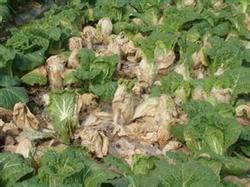
How to manage Chinese cabbage during the rosette stage? These measures need to be mastered
Symptoms: It occurs in all regions and can cause damage both in the field and during storage. The disease usually starts at the base of the leaf stalk and spreads to the entire leaf and then the whole cabbage plant. The diseased part rots, and white cottony mycelium and black sclerotia grow on the surface. On seed-producing plants, the stems are mostly affected; the stalk area is initially light brown and sunken, then turns white, and the cortex decays...
-
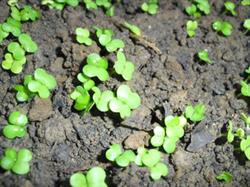
How to manage napa cabbage? Remember these three key points
Indoor seedling raising. The whole growth period requires 90 to 100 days, of which the seedling period is 30 days. During the seedling period, the required temperature is between 15°C and 28°C. Sow seedlings in early February; seedling raising requires geothermal heating facilities. Seedling containers can be low tubes or plastic pots, or nutrient squares can be cut. Keep the sowing spacing at 8 cm, sowing 2 to 3 seeds per pot or per hole...
-
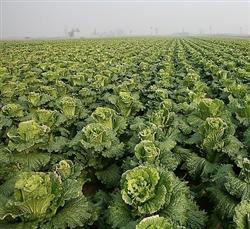
Napa Cabbage Seed Selection Methods and Cultivation Techniques Explained in Detail
Napa cabbage is a leafy vegetable with a large number of leaves, and it forms a head (leaf ball) that is the main harvested organ. Generally, the yield can reach 4000-5000 kg per mu. Napa cabbage has a long growth period, and to achieve high yields, several key techniques must be mastered: 1. Apply sufficient base fertilizer: base fertilizer is the foundation for a bountiful napa cabbage harvest. Generally, old vegetable...
-
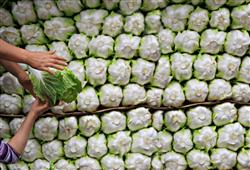
Detailed Explanation of Key Points for Spring Cultivation Techniques of Napa Cabbage
Spring napa cabbage, summer napa cabbage, and early spring napa cabbage do not have a strict harvest period; they can be harvested once the heads have formed. Autumn-winter napa cabbage has a strict harvest period and must be harvested before a low temperature of -2°C occurs. After harvesting napa cabbage intended for storage, orient the heads facing north and the roots facing south, and sun-dry for 2-3 days. Then stack the plants into two rows, ...
-
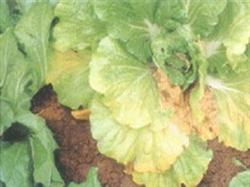
What are the control measures for cabbage yellow leaf disease (defoliation disease)?
Yellow leaf disease in cabbage-type vegetables is a general term for fungal-type yellow leaf disease of cabbage-type crops. Heading cabbage, yellow-bud cabbage and other Chinese cabbages, and pak choi are all affected by yellow leaf disease from north to south. Symptoms appear at the seedling stage. The damaging fungus is Verticillium fusarium of the genus Brassica, belonging to the Deuteromycotina. This disease can be controlled through chemical spraying or field...
-
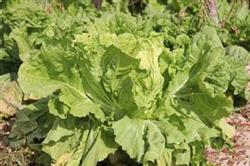
Detailed Explanation of Technical Measures for Chinese Cabbage Disease Control
Downy mildew, viral disease, soft rot, and tipburn are the main diseases of Chinese cabbage. 1. Downy mildew can occur from the seedling stage to the heading stage, mainly affecting the leaves of Chinese cabbage. It first appears on the lower leaves, producing water-soaked, pale yellow, angular lesions on the leaves, which gradually expand and turn yellowish-brown...
-
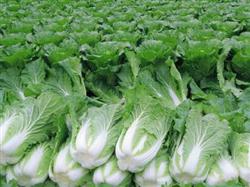
How to apply topdressing to napa cabbage? Fertilizing according to the growth stage works well
Napa cabbage has high yield and a large fertilizer demand. On the basis of applying sufficient base fertilizer, do not rush to apply topdressing. Topdressing should be determined according to different growth stages and seedling conditions. Generally, no topdressing is applied at the seedling stage. If the base fertilizer is insufficient, the first application can be made at the 3-4 true leaf stage, applying 10 kg of ammonium sulfate per mu, broadcast on both sides of the seedlings, and watered immediately, which is called...
-
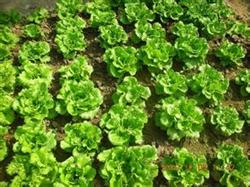
How to efficiently grow multiple crops of cabbage, sweet potato slips, eggplant and cauliflower in succession?
Lettuce prefers a cool environment and tolerates neither cold nor heat well. Therefore, to grow lettuce successfully, the following technical steps should be mastered. 1. Variety selection. For planting lettuce, choose varieties with good cold and heat tolerance and strong stress resistance, such as head lettuce, glass lettuce, curly-leaf lettuce and Caesar, which are better choices. 2. Soil...
-

-
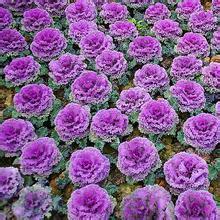
Spring Cultivation Techniques and Management Key Points for Purple Cabbage
Purple cabbage has good cold tolerance, firm heads, brilliant color, strong adaptability, high yield, and good quality. It is suitable for open-field and protected cultivation, with a yield of 2500-3000 kg per mu. 1. Variety selection: Choose varieties with strong winter hardiness and early maturity for spring sowing, such as Purple Cabbage No. 1, Zaohong, and Hongmu. 2. Sowing and seedling raising: Nanjing...
条件筛选