How to efficiently grow multiple crops of cabbage, sweet potato slips, eggplant and cauliflower in succession?
Lettuce prefers a cool environment and tolerates neither cold nor heat well. Therefore, to grow lettuce successfully, the following technical steps should be mastered. 1. Variety selection. For planting lettuce, choose varieties with good cold and heat tolerance and strong stress resistance, such as head lettuce, glass lettuce, curly-leaf lettuce and Caesar, which are better choices. 2. Soil...
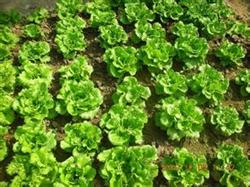 Cabbage (head cabbage), sweet potato slips, eggplant and cauliflower, with four plantings and four harvests a year, give considerable economic returns: per mu, 5000 kg of cabbage, about 80,000 sweet potato slips, 3500 kg of eggplant and 3000 kg of cauliflower, with an average benefit of more than 8000 yuan per mu. Cabbage: choose the high-yielding, early-maturing variety 8398. Before winter, build up soil moisture and prepare the land finely. Apply 5000 kg of decomposed high-quality farmyard manure, 50 kg of ammonium bicarbonate and 50 kg of superphosphate per mu as base fertilizer. Raise seedlings in a small arched shed at the end of December. After sowing, keep 20-25°C during the day and about 10°C at night. At the 2-leaf 1-heart stage, divide the seedlings and transplant them at a spacing of 10 cm between plants and rows to check growth. After 3 true leaves, combine with light watering and apply 10 kg of urea per mu. After February 10, ventilate to harden the seedlings; keep the daytime temperature below 25°C and the nighttime temperature below 10°C. In late February, make beds 80 cm wide. Transplant in early March at 4000-4500 plants per mu. After transplanting, water lightly to keep the seedlings alive, then immediately cover with plastic film. After 3-4 days, water lightly every other row. During the rosette and heading stage, water twice, and with the watering apply 50 kg of ammonium bicarbonate per mu. Use beta-cypermethrin to control cabbage caterpillars. Harvest in mid-April and finish harvesting by late April to early May.
Sweet potato slips: choose Xushu 18. Raise seedlings in a small arched shed around March 20, using 200-250 kg of sweet potato seed per mu. Around April 20, plant them in the cabbage rows at 4000-4500 plants per mu. After the wheat harvest, sell the sweet potato slips. Cut them twice in total; each plant can yield about 20 slips, for a total of 80,000-90,000 slips.
Eggplant: choose the locally saved variety Dazhiheimenqie. Raise seedlings in a small arched shed at the end of January to early February. At the end of April, transplant 1 row of eggplant in the cabbage rows in the middle of the bed, at 1500-1600 plants per mu. Water lightly promptly after transplanting. Apply one topdressing at the early flowering stage, with 1000 kg of decomposed chicken manure and 50 kg of compound fertilizer per mu. During the whole growth period, apply 100 kg of ammonium bicarbonate per mu with watering, split into 2 applications. Control pests and diseases in the field promptly. Market around June 20 and finish in early August.
Cauliflower: choose the Japanese Snow Mountain variety. Raise seedlings around July 20, using a shade net to block sunlight and lower the temperature. Be careful to prevent heavy rain and high temperatures. After emergence, spray cool water every day at 4 p.m. to lower the temperature, and drain promptly after rain. After clearing the eggplant, plow and fertilize, applying 5 cubic meters of farmyard manure, 50 kg of cake fertilizer and 50 kg of compound mixed fertilizer per mu. Make beds 1.1 m wide and plant two rows per bed. Transplant at the end of August with a row spacing of 35-40 cm, about 2000 plants per mu. After the seedling recovery stage, apply 25 kg of diammonium phosphate per mu in holes. In the early growth stage, focus on checking growth; when the curd is about 3 cm, apply 10-15 kg of urea per mu with watering (split into 2 applications). Watering should depend on field temperature; generally water lightly once every 5-7 days. Market at the end of October and finish in mid-November.