Napa Cabbage Seed Selection Methods and Cultivation Techniques Explained in Detail
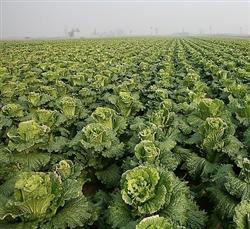
Napa cabbage is a leafy vegetable with a large number of leaves, and it forms a head (leaf ball) that is the main harvested organ. Generally, the yield can reach 4000-5000 kg per mu. Napa cabbage has a long growth period, and to achieve high yields, several key techniques must be mastered: 1. Apply sufficient base fertilizer: base fertilizer is the foundation for a bountiful napa cabbage harvest. Generally, old vegetable...
 1. What is a local variety? What are its advantages and disadvantages?
Answer: Local varieties of napa cabbage are formed through long-term cultivation under specific local ecological conditions through natural selection and artificial selection. Therefore, they have extremely strong adaptability to the environment of their place of origin, and their market quality also suits the needs of the local market. Historically, vegetable growers had the habit of saving their own seed from local varieties. Because napa cabbage is a cross-pollinated crop, variety degeneration is particularly prominent.
2. Why can conventional varieties be saved for a second generation, while hybrid varieties cannot?
Answer: Conventional varieties are produced through artificial selection over generations within a fixed population. Therefore, the second generation differs little from the first. The first hybrid generation is produced by crossing two parents. In the current generation, it shows uniformity and disease resistance. However, the second generation from saved seed is a segregating generation, with an extremely complex genetic background, showing great segregation in the field, with plants severely non-uniform and losing economic value.
3. What is a hybrid variety? What are its characteristics?
Answer: A hybrid variety refers to the progeny produced by crossing a selected male parent and female parent. Hybrid varieties clearly surpass both parents in growth vigor, vitality, reproductive capacity, stress resistance, yield and quality. Their advantage is not just the outstanding performance of one or two individual traits, but the expression of superiority in many aspects.
4. What are the characteristics of the genic male sterile line based on nuclear gene interaction in napa cabbage?
Answer: A. This technology is the most advanced breeding technology at the present stage. This technology filled a gap in world science and technology. B. Hybrid purity can reach 100%. Because the female parent is 100% sterile plants, the hybridization rate can reach 100%. C. Strong hybrid vigor, outstanding disease resistance, and wide adaptability.
5. What economic value does growing napa cabbage have?
Answer: 1. Napa cabbage has high yield and low production cost; its output value is 2-6 times that of field crops. The cultivation method is simple and easy for growers to master. The selling price is low and easily accepted by ordinary consumers.
2. Napa cabbage is resistant to storage and transportation. It can solve the problem of year-round vegetable supply.
3. Besides being eaten directly, napa cabbage can also be processed and pickled.
6. What nutritional value does napa cabbage have?
Answer: Napa cabbage contains a variety of nutrients and is an important source of vitamins, inorganic salts and dietary fiber necessary for human physiological activities. Napa cabbage is rich in calcium, 5 times higher than tomato and 1.9 times higher than cucumber; ascorbic acid (vitamin C) is 4 times higher than cucumber and 1.4 times higher than tomato; carotene is 1.8 times higher than cucumber. Napa cabbage is a health food for preventing cancer, diabetes and obesity. A research institute in the United States specializing in cancer research found: "Eating more cabbage can prevent cancer." It was also recorded in the ancient Chinese book "Compendium of Materia Medica" that napa cabbage also has good medicinal value: its nature is neutral and its taste is sweet; it can relieve fever and irritability, promote the intestines and stomach, tonify the middle and aid digestion, promote urination and bowel movements, clear the lungs and stop cough, and quench thirst and eliminate miasma.
7. How should napa cabbage seeds be stored for a long time?
Answer: The moisture content must be reduced to below 8%. Under low-temperature and dry conditions, they can be stored for 3-4 years.
8. How can new and old napa cabbage seeds be distinguished?
Answer: New seeds have a smooth seed coat; when pressed with a fingernail they flatten into a cake shape, with more oil, and the cotyledons are light yellow or yellow-green. Old seeds have a dull, lusterless seed coat, often with some "white frost"; when pressed with a fingernail they break easily and the seed coat falls off easily, with less oil, and the cotyledons are dark yellow. If more are crushed, a rancid smell can be detected.
9. How should spring heading napa cabbage be selected? What should be noted in cultivation and management?
Answer: Choose early-maturing varieties with strong winter resistance, cold resistance, bolting tolerance and a short growth period. When purchasing, read the variety description carefully. Note: 1. Avoid low temperatures. Maintain temperature during the seedling stage to prevent vernalization from being completed too early. 2. Plenty of water and fertilizer. Cultivate on fertile soil, apply a large amount of quick-acting base fertilizer and topdress at the early heading stage, with sufficient water supply, to promote rapid growth and prevent bolting. 3. High-density planting. This makes it convenient to remove plants that bolt early, leaving enough plants to ensure yield, while also allowing earlier prevention and control of pests and diseases.
10. How should summer heading napa cabbage be selected? What should be noted in cultivation and management?
Answer: Choose early-maturing varieties with high heat resistance and the ability to head under high temperatures. Note: 1. The previous crop must be early-maturing so that the land can be prepared in time. 2. The key to cultivation is to promote rapid growth, so sufficient base fertilizer must be applied. 3. Summer temperatures are relatively high, so cooling and seedling protection should be carried out as much as possible. The main measure is to frequently apply small amounts of water to lower the soil surface temperature. 4. For topdressing, use quick-acting fertilizers together with foliar fertilizer. Ensure sufficient fertilizer and water, and do not carry out seedling restraint. 5. During the heading stage, manure and water should be applied frequently so that the plants grow rapidly and reach maturity.
11. What kind of napa cabbage is suitable for storage?
Answer: The cylindrical type stores better than the round-ball type; the green-petiole system stores better than the white-petiole system; mid- and late-maturing varieties store better than early-maturing varieties; cabbage with "80-90% heart" stores better than cabbage with a firm head; cabbage free of pests and diseases stores better than cabbage with pests and diseases.
12. How is napa cabbage stored?
Answer: Napa cabbage stored in a shed cellar is generally stored in piles. Stop irrigation 10 days before harvest. After harvest, dry it in place for 2-3 days so that the outer leaves wilt and soften, reducing damage during handling. Then remove rotten and withered leaves, pile it in place for pre-storage, and move it into the cellar for storage before the cold wave arrives. In the cellar, stack the cabbage neatly. Generally, along the length of the cellar, pile one stack against each of the two walls. In each stack, lay 4 rows flat; the outer 2 rows have the tips facing outward, and the middle 2 rows have the tips facing inward, stacking 7-10 layers of cabbage in total. The height is 1.5-2.0 m. If conditions permit, it is best to separate each row of cabbage with a layer of corn stalks, which allows the cabbage pile to ventilate and dissipate heat, reduces rot and leaf loss, saves labor, and increases the rate of usable cabbage taken out of the cellar. In addition, leave a 2 m gap at one end of the cabbage pile for turning the cabbage. Each cubic meter of shed cellar stores 300-400 kg of cabbage.
13. How should napa cabbage be managed during storage?
Answer: The suitable conditions for napa cabbage storage are a cellar temperature of about -2°C and a humidity of about 85%. To reduce losses during storage, prevent heat in the early stage, prevent freezing in the middle stage, and prevent rot in the late stage. Early stage: after napa cabbage is first put into the cellar, the cellar temperature and cabbage body temperature are relatively high, so ventilation and dehumidification of the cellar should be strengthened. Piled cabbage should be turned frequently to prevent temperature rise and leaf loss within the pile. Middle stage: in early to mid-January, the temperature drops noticeably. Firewood or straw should be piled on the outside of the cellar roof and at the cellar opening, or straw mats, gunny sacks, etc. should be placed over the cabbage piles for insulation and freeze prevention. Late stage: in March and April, temperatures rise, so warm air should be prevented from blowing into the cellar. Attention should be paid to dehumidification. Frost that often forms on the cellar roof should be swept down to prevent melted water from dripping onto the cabbage and causing rot. At the same time, rodent damage should also be controlled inside the shed cellar.
14. How can napa cabbage diseases be controlled through seed disinfection?
Answer: Downy mildew: 1. Use 10% salt water to select seeds, remove shriveled grains, wash them clean with clear water after selection, dry them, and then sow. 2. Treat seeds with 50% thiram wettable powder or 75% chlorothalonil wettable powder at an amount of 4% of seed weight.
Soft rot: 1. Soak seeds with 45% amobam aqueous solution at 400 times dilution. 2. Treat seeds with Fengling, mix evenly, and sow immediately.
15. What are the symptoms of napa cabbage downy mildew? Under what conditions does it easily occur? How is it controlled?
Answer: Symptoms: At the seedling stage, brown small spots or sunken lesions form on the cotyledons, and in humid conditions a white mold layer appears on the cotyledons and stems. At the true leaf stage, polygonal yellow lesions appear on the upper surface of true leaves, and in humid conditions a white mold layer appears on the underside of the leaves. When there are many lesions, they connect with each other and can cause large-area death of the leaves. Diseased leaves develop from the outside inward, and in severe cases can cause the plant to fail to form a head. Occurrence: Early sowing, poor ventilation, continuous cropping fields, insufficient base fertilizer, fertilizer deficiency during the heading stage, too late thinning, excessive seedling density, severe occurrence of viral disease, and slow growth all favor the development and spread of downy mildew.
Control: A. Choose disease-resistant varieties, such as Lüxing 70, Lüxing 80, Futian 70, Futian 80, etc. These varieties require no application of any fungicide throughout the entire growth process.
B. Seed disinfection, selecting a good plot, sowing at the appropriate time, and timely control.
C. Strengthen field management, such as not letting seedling restraint last too long, rational irrigation and fertilization, cleaning the field after harvest, and deep plowing in autumn.
D. Chemical control, such as 75% chlorothalonil wettable powder at 600 times dilution; 40% fosetyl-aluminum wettable powder at 150-200 times dilution.
16. What are the symptoms of napa cabbage viral disease? Under what conditions does it easily occur? How is it controlled?
Answer: Symptoms: When the disease occurs at the seedling stage, new leaves first lose green along the veins, then gradually develop mosaic patterns of alternating yellow and green, the leaves shrink and become uneven, become brittle, and the heart leaves twist and become deformed. When adult plants are affected, the leaves become hard and brittle, with mosaic patterns, and necrotic lesions appear; in severe cases, they cannot form a head.
Occurrence: Generally, fields adjacent to or continuously cropped with cruciferous vegetables have severe disease, while plots with good soil quality and fertilizer and water conditions have mild disease. Early sowing results in severe disease, while appropriately late sowing results in mild disease. Hot, dry weather makes it severe, while low-temperature, humid weather makes it mild. In addition, green-white petiole varieties are more disease-resistant than white petiole varieties.
Control: A. Choose high-yielding, disease-resistant improved varieties, such as Lüxing 70, Lüxing 80, Lüfeng No. 1, Lüfeng No. 2, etc.
B. Clear the land early, and spray insecticides before land preparation and at the seedling stage to eliminate virus-transmitting insects.
C. Sow at the appropriate time, and do not let the seedling stage lack water.
D. Chemical control: Virus A, 300 times dilution; antiviral agent No. 1, 200-300 times dilution.
17. What are the symptoms of napa cabbage soft rot? Under what conditions does it easily occur? How is it controlled?
Answer: Symptoms: It generally appears after napa cabbage forms a head. Initially, oval spots appear at the base of the petiole, gradually expand and soften, and become dark gray. In severe cases, most of the leaf petiole rots, giving off a foul odor, and finally the whole plant collapses and dies. Heading cabbage is the most severely affected.
Occurrence: There are differences among varieties; cylindrical cabbage is more disease-resistant than heading cabbage. Severe insect damage leads to more severe disease. Low-temperature and humid climates make the disease more likely to occur. Continuous cropping, flat-bed cultivation and too-early sowing all make the disease more likely to occur.
Control: A. Choose disease-resistant varieties. For heading cabbage, Futian 70 and Futian 80 are the first choice. Many years of production verification have shown that these varieties have high resistance to soft rot, clearly superior to other similar varieties.
B. Avoid continuous cropping.
C. Chemical control: 200 PPM streptomycin or streptomycin sulfate; 50% thiram wettable powder at 800 times dilution.
18. What are the symptoms of napa cabbage tipburn (dry heartburn)? Under what conditions does it easily occur? How is it controlled?
Answer: Symptoms: This is a disease of napa cabbage during the heading stage. The outer leaves grow normally, but some leaves inside the head turn dry and yellow from the leaf margins, and the mesophyll becomes semi-transparent and dry-papery. Napa cabbage affected by tipburn is not suitable for storage, its quality declines, and in severe cases it loses edible value. It also easily causes rot, mildew and other phenomena.
Occurrence: Varieties are not disease-resistant. In addition, under conditions such as saline-alkali soil, excessive nitrogen fertilizer application, high cultivation terrain, and uneven watering, the disease occurs more severely.
Control: Choose new varieties, improve saline-alkali soil, increase the application of organic fertilizer, and pay attention to crop rotation. In addition, starting from the rosette stage, spray 0.7% calcium chloride plus 50 PPM naphthalene acetic acid on the leaves once every 7-10 days, for 4-5 consecutive sprays, with good results.
19. What harm do aphids do to napa cabbage? How are they controlled?
Answer: Harm: 1. Aphids suck leaf sap, causing leaves to curl and turn yellow. 2. They transmit viral disease. This causes plants to grow slowly and eventually the whole plant wilts and dies.
Control: Use land rationally, avoid continuous cropping, prepare the land early, clean the field, and spray an insecticide once before plowing; chemical control: 40% dimethoate emulsifiable concentrate at 1000-2000 times dilution or 50% pirimicarb wettable powder at 2000-3000 times dilution, once a week, for 2-3 consecutive sprays.
20. How are cabbage caterpillars (cabbage white butterfly) controlled?
Answer: Clean the field in time, eliminate residual plants and fallen leaves in the field, and avoid continuous cropping; chemical control: 90% trichlorfon crystal at 1000 times dilution; 25% and 30% chlorbenzuron No. 1 or No. 3 at 500-1000 times dilution.
21. What harm does the cabbage moth do to napa cabbage? How is it controlled?
Answer: Harm: In the young larval stage, they feed on the underside of leaves, leaving the epidermis and forming dense membranous transparent holes. Third-instar larvae gradually disperse and cause damage, and can eat leaves until only the veins remain. They can also bore into the head to feed, eating the head into a hollow, messy state and leaving large amounts of excrement.
Control: Deep plow the land at the beginning of winter. Blacklight lamps and sweet-sour-wine toxic liquid (3 parts brown sugar, 1 part wine, 4 parts vinegar, add 2 parts water and then add a little trichlorfon, mix well, put into basins, place on shelves 1 m above the ground, place one basin every 3-5 mu) can also be used to trap and kill adults. Chemical control: should be carried out early, and when spraying, focus on the underside of leaves and the middle and lower leaves. Use the same pesticides as for cabbage caterpillars.
22. How are napa cabbage nutritional disorder symptoms identified?
Answer: The symptoms of napa cabbage nutritional disorders are as follows: Nitrogen deficiency: slow growth, short plants, yellow leaves, slender neck; nitrogen deficiency during the heading stage results in a non-solid head, increased leaf fiber, and reduced quality. Phosphorus deficiency: leaf color becomes darker, leaves are small and thick, and leaf hairs become hard and prickly to the touch. Afterwards, the outer leaves gradually turn yellow, while the inner leaves are dark green. Potassium deficiency: from the lower leaf margins, browning and death occur, gradually spreading inward or to the upper leaves; the lower leaves wither, and resistance to soft rot and downy mildew decreases. Iron deficiency: outer leaves are green, inner leaves gradually turn yellow, and later new leaves are clearly yellowish-white, and the plant type becomes smaller. Boron deficiency: the midrib of outer leaves cracks and necroses; the heart leaves first turn dark green and shrink, then turn yellow and brown until all rot. Calcium deficiency: tipburn occurs, manifested as withered growing points, necrotic tissue at the leaf margins, grayish-white tips and margins of the heart leaves, with obvious dry edges. In severe cases, it is difficult to form a head.
23. What should be noted when purchasing napa cabbage seeds?
Answer: 1. Choose a reputable company to purchase from.
2. Purchase seeds of regular brands that have been trial-planted before, preferably produced by research institutes or academies. At the same time, if the trademark on the packaging has the ? mark, it indicates that the trademark has been registered with the National Trademark Office and is a regular enterprise brand.
3. When purchasing, check the production date clearly [under low-temperature and dry conditions, the shelf life of napa cabbage seeds is 3-4 years].
4. Read the description in detail. If the description does not mention that it can be planted in spring, it cannot be used as a spring heading variety.